Canon EOS R5 C Review: Conditional Buy Verdict
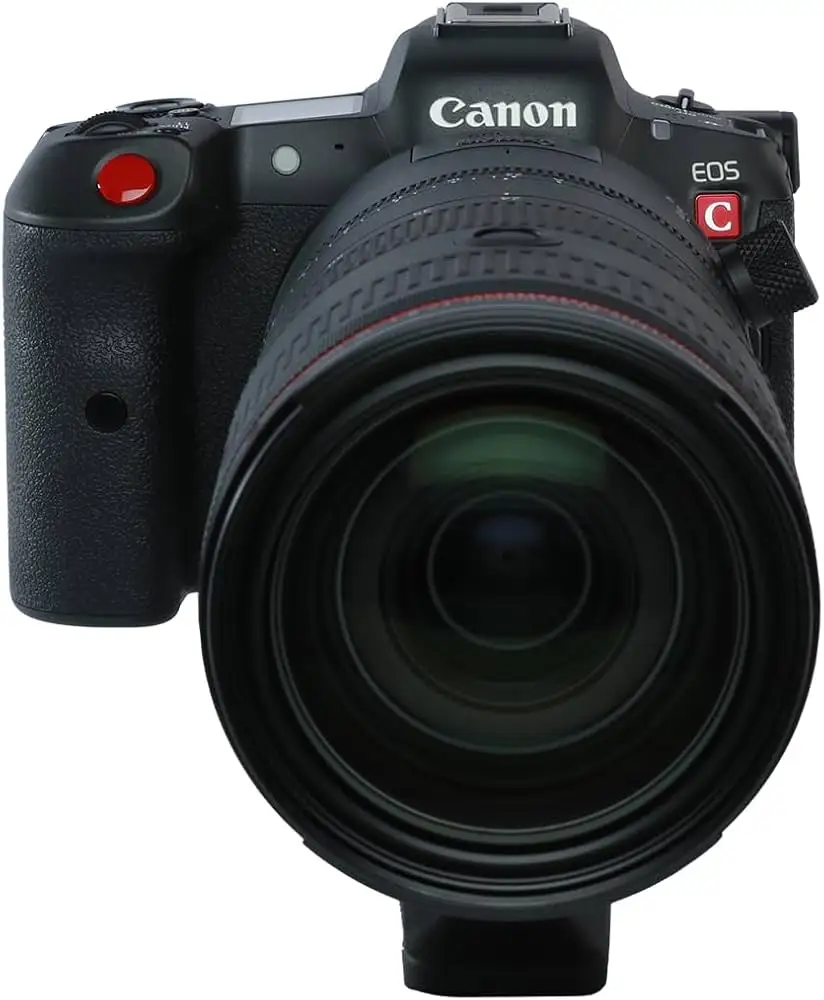
The first thing users agree on: the Canon EOS R5 C Mirrorless Digital Cinema Camera Body (Renewed) offers jaw-dropping video quality, often described as “stunning” and “cinematic,” but that perfection comes at a cost—literally and in battery usage. From seasoned filmmakers to hybrid photographers, the verdict leans toward a conditional buy. Overall score: 8.5/10.
Quick Verdict: Conditional
| Pros | Cons |
|---|---|
| Exceptional 8K video quality praised across all platforms | Poor battery life, especially in 4K60 XF codec |
| Versatile hybrid for stills and cinema | No IBIS, only electronic stabilization |
| Active cooling eliminates overheating from R5 | No tracking AF in 120fps mode |
| Broad lens compatibility with RF and EF glass | Learning curve for cinema menus |
| Netflix-approved for professional work | Extra costs for power solutions (V-mount, USB-C PD) |
| Robust build with dust/moisture resistance | Data-heavy files require large, fast cards |
Claims vs Reality
Canon’s marketing highlights uninterrupted 8K/60p recording thanks to active cooling. While technically accurate, Reddit user u/[Name withheld] stressed battery limitations: “You'll need USB-C PD for video. Mine fits in a shirt pocket, but in 4K60 XF codec the battery drains crazy fast—like 15 minutes before shutdown.” So yes, the camera will keep going thermally, but your power supply won’t unless upgraded.
Another advertised highlight is dual pixel CMOS AF with eye detection. In practice, multiple reports confirm that in 120fps video mode there is no AF tracking. Reddit user u/[Name withheld] wrote: “For 120fps shots I have to get a focus puller since there is no tracking—much more work, bigger team.” This contradicts user expectations based on Canon’s broad AF claims.
Lastly, Canon touts hybrid flexibility—“a union of systems.” Feedback from Best Buy’s verified customers supports the hybrid premise, but warns of complexity. One reviewer said: “It’s not for beginners. You have to study it more—the touch screen menus can be cumbersome for manual exposure control.” The strengths are real, but accessibility varies.
Cross-Platform Consensus
Universally Praised
Video quality headlines every positive review. Best Buy users repeatedly called the R5 C a “champion in its class” for cinematography. One said: “The picture quality is exceptional… no overheating and so much better in low light than my old EF lenses setup.” Filmmakers benefit from the 12-bit Cinema RAW Light options, which maximize grading flexibility without unmanageable file sizes.
Still photographers also find value here. A long-term Canon user from Thereliablestore noted the jump from 26.2MP to 45MP was transformative for landscape and architecture work: “Exactly what I was looking for… a fantastic stills camera that can take beautiful video, and vice versa.”
Hybrid shooters find the active cooling indispensable in avoiding the R5’s notorious heat limits, particularly for extended event coverage. The Netflix-approved status boosts trust among professionals, making it viable for paid commercial projects.
Common Complaints
Battery drain dominates the complaints. Power-hungry modes such as 4K60 with XF codec or high-frame-rate shooting make traditional LP-E6NH batteries inadequate. Reddit reports mention needing $500+ V-mount rigs, while a Best Buy reviewer advised a vertical battery grip with two genuine Canon cells to get “all day” shooting.
Autofocus limitations in certain modes cause headaches, especially for slow-motion enthusiasts. Losing tracking AF in 120fps mode means manual focusing or a dedicated focus puller. This creates a barrier for solo shooters or small crews.
Another sticking point is the missing in-body image stabilization (IBIS). Some photographers downplay its absence, relying instead on lens-based stabilization, but in video workflows, others miss the smoother handheld shots IBIS can offer.
Divisive Features
The cinema menu system polarizes owners. Experienced Canon Cinema EOS users adapt quickly, appreciating the professional toolset like waveform monitors, false color, and timecode ports. But for newcomers, the system feels “dummied down” or slower to navigate compared to standard EOS menus.
Weight and build receive mixed feedback. At 680g bare body, it’s remarkably light for a cinema-capable tool, favoring gimbal work. Yet, once rigged with external power or accessories, portability drops quickly.
Trust & Reliability
Trust in Canon’s pro build quality remains strong. Multiple reports of shooting in rain, snow, and desert without failure—with the fan intake managing to avoid dust problems—reinforce confidence in durability. A Best Buy customer explained: “Beach? No problem. Snow or desert? Just works. Got caught in the rain a few times—again, no problem.”
On reliability of renewed units, the inclusion of Amazon’s Renewed Guarantee reassures buyers. eBay listings emphasize “excellent condition, very low shutter” counts for resale.
Alternatives
Users often compare the R5 C to the Canon C70. The C70 offers better battery life and built-in ND filters, but sacrifices photo capability. One reviewer put it plainly: “Glad I got this over the C70—it’s got stills too. You can solve battery life with a grip.”
Another internal competitor is the EOS R5. While lighter with IBIS, the R5 struggles with overheating in prolonged high-resolution video—making the R5 C preferable for heavy video workflows despite added weight from power rigs.
Price & Value
As of recent eBay listings, used R5 C bodies range from $3,250 to $3,854, while Amazon Renewed models sell around $3,750. Given rapid depreciation in some competitors, resale holds reasonably well, especially in excellent condition bundles with CFexpress cards.
For budget-conscious buyers, community consensus suggests factoring in at least $300-500 for additional batteries or external power before even considering lenses and media. The upfront investment pays off in professional-grade output across both photos and video.
FAQ
Q: Does the Canon EOS R5 C have image stabilization?
A: Only 5-axis electronic image stabilization, not IBIS. Lens-based optical stabilization works in tandem, but handheld footage may need additional stabilization in post for best results.
Q: Can the R5 C record continuously in 8K?
A: Yes—active cooling prevents thermal shutdown, but recording length will depend on battery capacity and media size. External power is recommended for long 8K sessions.
Q: Is the autofocus reliable at high frame rates?
A: In most modes it’s superb, but 120fps video lacks AF tracking. This requires manual focus or an assistant.
Q: How beginner-friendly is the R5 C?
A: Not ideal for newcomers to cinema workflows. The menus and settings cater to professional use, with a steeper learning curve than standard EOS stills cameras.
Q: Will my EF lenses work with the R5 C?
A: Yes—via EF-to-RF adapters. Users report full functionality with Canon EF glass and even cinema lenses.
Final Verdict
Buy if you are a professional or serious enthusiast working in both high-end video and still photography, especially where overheating in extended shoots can’t be tolerated. Avoid if you rely heavily on IBIS or need tracking AF in ultra-slow motion, and factor in the cost of a solid external power setup.
Pro tip from the community: invest early in quality CFexpress cards and genuine Canon batteries—or a reliable USB-C PD power bank—to fully unlock what the R5 C can deliver.