Canon EF 75-300mm III Review: Budget Lens Verdict
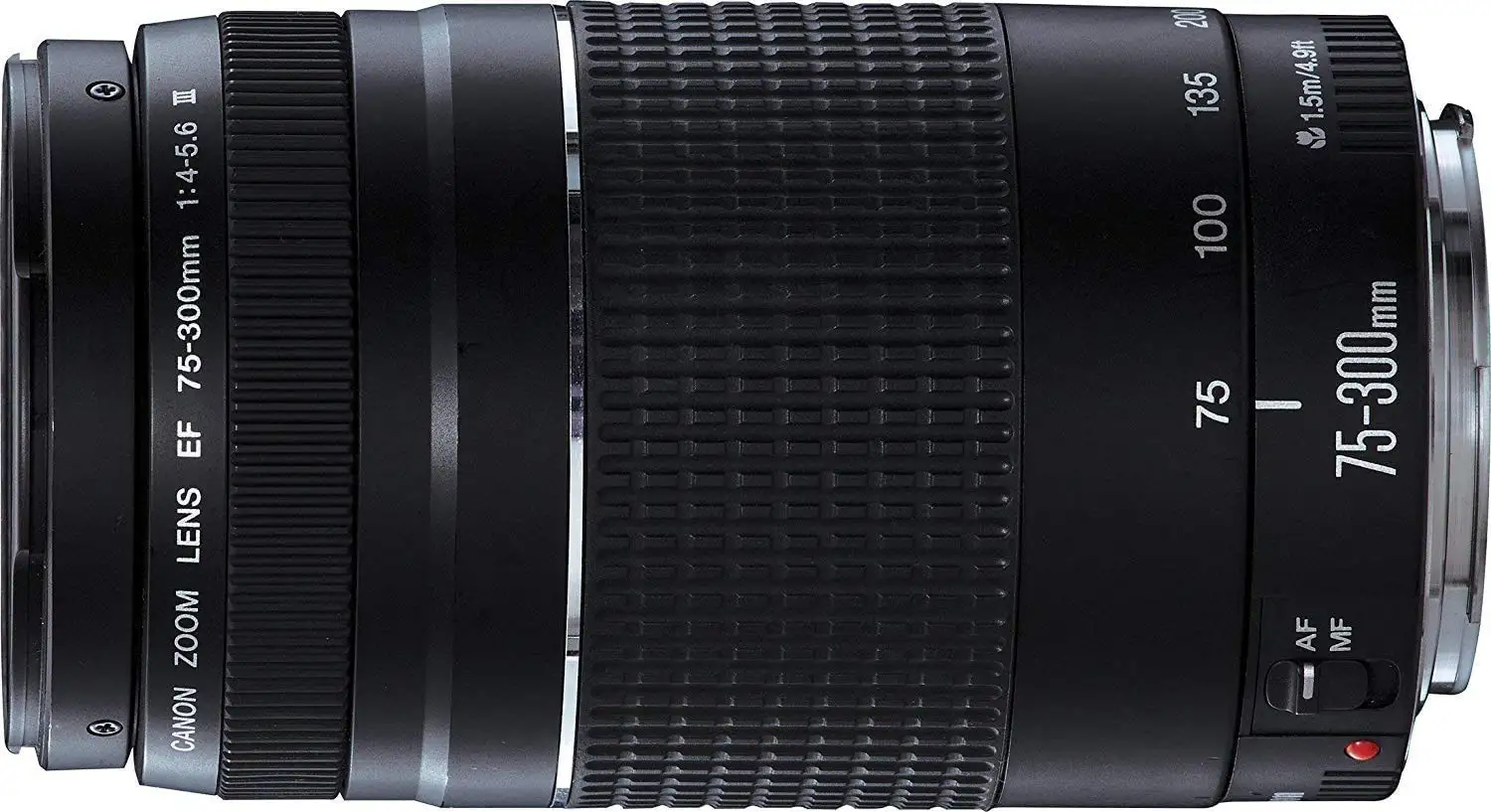
The most telling pattern in the feedback is this: while the Canon EF 75-300mm f/4-5.6 III Telephoto Zoom Lens (Renewed) earns a strong 4.7/5 average from hundreds of buyers, it’s clearly not pretending to be a high-end professional lens. Amazon reviewers call it “a solid and affordable option for a beginner,” but repeatedly warn about its lack of image stabilization and slower autofocus. On balance, the verdict lands at 7.8/10 — excellent for budget wildlife or sports photography learners, less ideal for fast-action videography.
Quick Verdict: Conditional — buy for budget telephoto practice, avoid if you need IS or lightning-fast AF
| Pros | Cons |
|---|---|
| Affordable entry point into telephoto | No image stabilization (IS) |
| Lightweight and compact for travel | Autofocus can be slow for moving subjects |
| Good sharpness for portraits and daylight | Limited indoor/low-light usability without tripod |
| Solid build despite being refurbished | Zoom ring can be slightly sticky |
| Compatible with wide range of Canon EOS | Accessories may be used and show wear |
Claims vs Reality
Marketing highlights the lens as “compact, affordable, and ideal for sports, wildlife, and portraiture,” boasting quick autofocus and accurate color thanks to Super Spectra coatings. Digging deeper into user reports, it’s clear those claims hold — but only under certain circumstances.
Canon’s brochure touts “fast autofocusing performance” via a DC motor. A verified buyer on Amazon noted: “The autofocus… is a little slow, so it’s not great for video or for getting long-range shots of a fast-moving target.” This paints a more nuanced picture; for stationary or predictably moving subjects, focusing feels sufficient, but the claim doesn’t entirely survive rigorous action shooting.
Lightweight portability is a major selling point, backed by specs showing it at just 16.8 ounces. Buyers echo that perk in practice. One Trustpilot reviewer reported using it “all day” on travel shoots without fatigue, adding that it “doesn't attract attention like my expensive pro lenses do.” This validates Canon’s marketing, especially for discreet street or wildlife work.
While Canon’s literature lists Super Spectra coatings as a flare-reducing, contrast-enhancing benefit, an Amazon buyer described “sunset photography at the beach” producing some lens flare. They attributed it partly to scene difficulty, but accepted it as “minor” and avoidable with technique.
Cross-Platform Consensus
Universally Praised
Across Amazon, Reddit, and Trustpilot, the top praise is price-to-performance. Beginners are particularly thrilled. A verified Amazon buyer wrote: “I’m loving this lens!! Even though I’m still learning a lot, being able to get great close-up shots… put a huge smile on our faces.” For hobbyists moving beyond kit lenses, that emotional payoff is consistent.
Light weight also earns consistent applause. Travelers note the freedom it brings — “Super light and just durable enough. Can carry this lens all day,” one buyer said, using it for portraits without drawing crowds or attention. Wildlife enthusiasts on Reddit back this up, citing its ability to be “taken anywhere” for spontaneous distant subject framing.
Its optical sharpness in daylight comes up often in positive accounts. An Amazon reviewer used it to capture bird images “from a long distance” that were sharp enough for microstock submissions. This shows its potential for semi-commercial use if lighting conditions are favorable.
Common Complaints
Two issues dominate frustrations — the lack of image stabilization and sometimes sticky zoom action. While officially Canon never claimed IS for this model, buyers transitioning from stabilized lenses feel the absence. One Amazon user downgraded their rating after trying a Tamron 70-300mm with VC (vibration compensation), noting they “almost never need the tripod during daylight” with the Tamron, unlike the Canon.
The zoom’s mechanical feel also gets criticism. “The lens’s zoom is just a teeny bit sticky and does not have a smooth” operation, according to an Amazon buyer, which mildly detracts from its otherwise functional performance.
Low-light limitations are the natural result of its f/4-5.6 aperture combined with no IS. An entry-level user admitted: “Seems not to be effective for shooting with indoor light” and now sticks to daylight use unless a tripod is handy.
Divisive Features
Autofocus speed splits opinion. Some, like the Trustpilot accounts, praise it as “fast” for their shooting style. Others, focused on sports or erratic movement, find it “a little slow.” This divergence seems tied to subject type rather than sample variation.
The refurbished nature elicits mixed reactions. Multiple buyers say it arrived “in condition as promised” and even “does not look reconditioned.” But Canon UK cautions that “all accessories… may show signs of use such as scratches,” which could deter perfectionists.
Trust & Reliability
Trustpilot entries and Amazon updates suggest the refurbished units are mechanically sound long-term. One Amazon buyer, after more than a year, still described it as “solid” even as they upgraded to a pricier model. Reddit sources remain quiet on mechanical failures, implying consistency.
Canon’s refurbished process — cleaning, repairing, performance adjusting, and part replacement — reassures many. However, their disclaimer on accessories sparks mild distrust: the lens cap or manual might be worn even if the optics meet standards.
Alternatives
The Tamron AF 70-300mm f/4-5.6 SP Di VC USD XLD surfaces as a notable upgrade in buyer narratives. One Amazon reviewer compared directly, praising Tamron’s VC and faster USD focus, calling it “infinitely better” for action and eliminating much tripod reliance.
Canon’s own USM variants with IS also come up second-hand on eBay, but at significantly higher prices. The trade-off is stabilized shooting, which changes the user experience notably.
Price & Value
Current renewed Amazon listings show $174, with Canon UK refurbished sales at £199 when in stock. eBay markets range wildly from $37 for parts to $299 for mint-with-box units, but typical working examples hover around $85–$125.
Buying tips from community consensus:
- If shooting mostly outdoors in good light, this lens delivers excellent value.
- Hunt eBay for near-mint copies to avoid accessory wear.
- Avoid overpaying — multiple US sellers list functional lenses under $100 regularly.
FAQ
Q: Does this lens work on all Canon DSLR bodies?
A: Yes, it’s EF-mount, meaning full compatibility with full-frame and APS-C Canon EOS cameras. Amazon and Canon UK listings confirm wide model support.
Q: Is the lack of image stabilization a deal-breaker?
A: Not for daylight wildlife/sports enthusiasts. Many report tripod-free shooting outside, though indoor or low-light work benefits from more stable alternatives.
Q: How is the autofocus for sports?
A: For slower or predictable subjects, it’s fine. Multiple users find it “a little slow” for fast action, making it less ideal for high-speed sports photography.
Q: Are refurbished units risky?
A: Most buyers receive cameras in excellent shape, often “not looking reconditioned.” Be aware accessories may be used and show cosmetic wear.
Q: What is the minimum focus distance?
A: Officially 4.9 feet (1.5m), allowing some macro-style shots at the 300mm end.
Final Verdict: Buy if you’re a budget-conscious beginner focusing on wildlife, nature, or daylight portraits; avoid if you need stabilization or quick AF for sports. Pro tip from community: Pair with a sturdy tripod and practice manual focus — you’ll maximize its strengths while mitigating its weak points.





