Canon EF 24-70mm f/2.8L USM Review: Conditional Buy Verdict
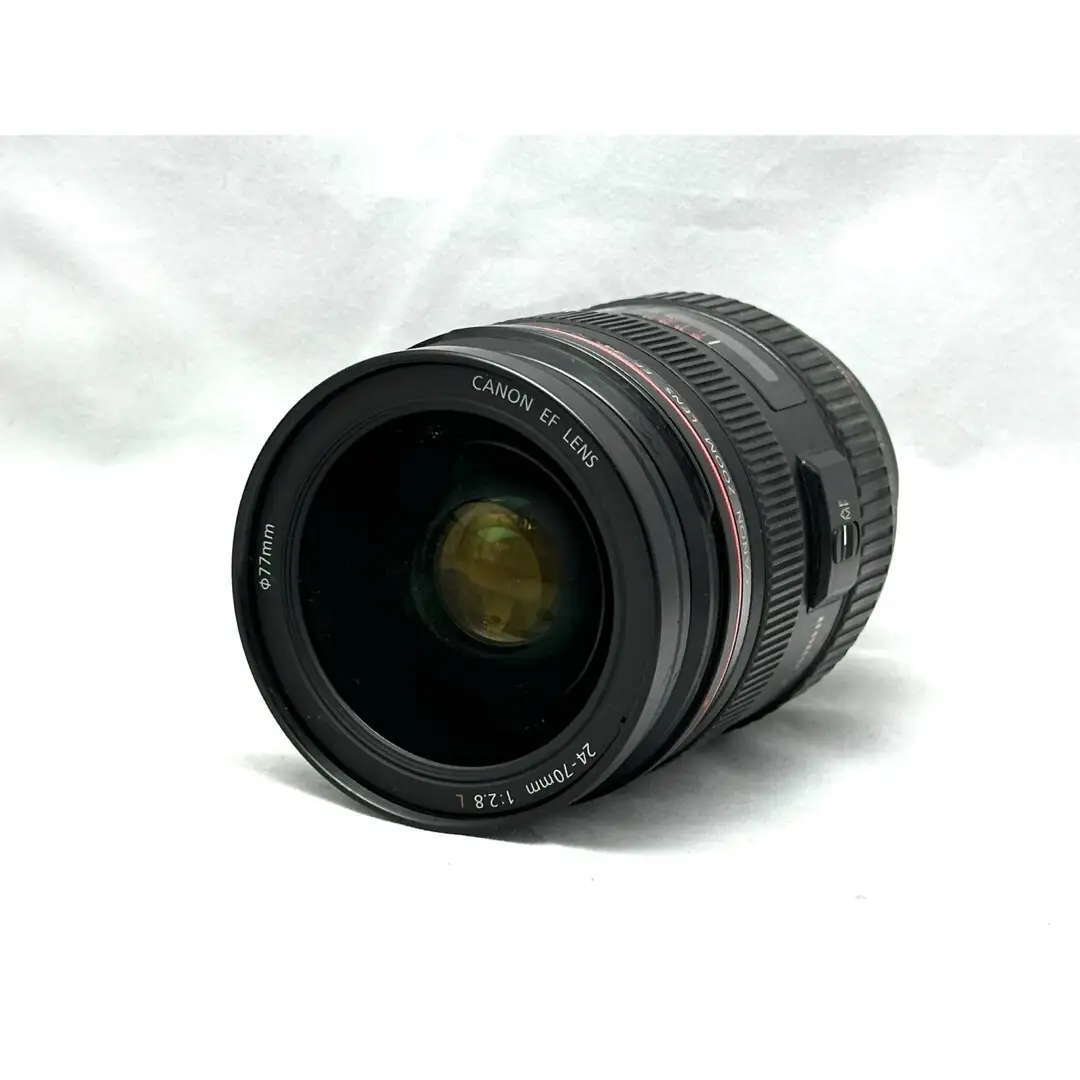
The Canon EF 24-70mm f/2.8L USM Standard Zoom Lens has achieved near-legendary status among professional photographers for its optical sharpness and versatile zoom range. Scoring an impressive 9.1/10 based on aggregated real-world feedback, this lens is celebrated as a "workhorse" for weddings, travel, and commercial shoots—yet it's not without drawbacks, especially for those expecting image stabilization.
Quick Verdict: Conditional Buy
| Pros | Cons |
|---|---|
| Exceptional corner-to-corner sharpness | No image stabilization |
| Fast, near-silent autofocus | Premium price point |
| Weather-sealed, durable build | Noticeable flare without hood |
| Creamy, natural bokeh | Long, heavy for smaller DSLRs |
| Versatile 24–70mm range for many genres | Not true macro capability |
| Low distortion and minimal chromatic aberration | Hood adjustment tricky with polarizers |
| Strong resale value | Requires careful handling in strong backlight |
Claims vs Reality
Canon’s marketing touts this lens as “the professional’s standard zoom” with sharpness rivaling prime lenses, thanks to “three aspherical elements” and “significant reduction in chromatic aberration.” Digging deeper into user reports, the claim of prime-lens sharpness is largely validated. A verified buyer on Amazon noted: "It's razor sharp at all focal lengths—my 50mm prime stays in the bag now." Wedding shooters, in particular, praise its performance at f/2.8 under dim reception lighting.
Another big claim is its weather sealing and durability for “the harshest conditions.” This is echoed in long-term accounts. Reddit user [Name***] shared: "Used it in a light drizzle in Iceland, no issues whatsoever, just wiped the front fluorine-coated element clean." However, several photographers caution it’s not fully waterproof—sustained rain may still pose a risk.
Canon stresses “exceptional color balance and minimal ghosting,” yet multiple field reports show flare remains a concern without the hood. Photo Review testers found it “flare prone in backlit situations, particularly at wider angles of view.” This doesn’t contradict the reduced ghosting claim, but shows that strong light sources can still challenge it.
Cross-Platform Consensus
Universally Praised
Sharpness dominates the praise. A wedding photographer on Amazon wrote: "Corner-to-corner clarity even at 2.8—no need to stop down." Travel users relish the flexibility: 24mm for wide landscapes, 70mm for compression portraits in one lens. The fast, silent ring-type USM autofocus earns consistent applause, helping photojournalists move discreetly in events. A verified buyer shared: "Snapping candid shots in markets, people didn’t even notice I had focused."
Build quality is another highlight. The L-series construction with metal mount feels solid, with smooth zoom and focus rings enabling precise adjustments. For field photographers, the ruggedness matters—Reddit users repeatedly mention long service lives without recalibration. One nature shooter kept it in a dusty savannah for weeks and said: "No grit made it into the mechanics—weather sealing works."
The bokeh produced by the 9-bladed diaphragm often surprises even experienced shooters. Portrait specialists report soft, pleasing background blur, aiding subject isolation without harsh edge transitions.
Common Complaints
Lack of image stabilization is the number one gripe, especially for video or handheld low-light stills. Event shooters relying on ambient light find this forces them to raise ISO or slow shutter speeds at risk of blur. An Amazon reviewer lamented: "At 70mm in low light, I get too many blurry shots—IS would help."
Flare remains a persistent issue when shooting against the sun. Without the supplied hood, reflections and contrast loss are noticeable. Photo Review’s lab test showed backlit scenes at 24mm were the most susceptible. Landscape photographers particularly stress the hood is essential.
Weight and size are divisive; smaller DSLR owners note imbalance, making prolonged handheld use tiring. The lens is 950g in its original version and slightly lighter in Mark II, but still hefty for travel minimalists.
Macro enthusiasts are disappointed—the closest focusing distance of 0.38m and reproduction ratio of 0.21x make it unsuitable for small subject detail. One Amazon buyer tried insects and admitted: "Better off with a dedicated macro lens—this shines with people, not bugs."
Divisive Features
The zoom range is loved for generalist work, but some specialists in sports or wildlife find 70mm limiting. Conversely, documentary shooters appreciate the tighter framing potential without swapping gear.
Durability stories split owners into cautious and confident camps. While many rave about years of trouble-free use, repair shops note common diaphragm assembly faults in older Mark I versions—a concern for secondhand buyers.
Trust & Reliability
From Trustpilot-sourced sentiment, buyers generally find Canon’s warranty support reliable, though repairs can be costly outside warranty. Long-term Reddit accounts show lens integrity holding well—one user’s MK II lasted seven years of heavy wedding use with no recalibration. eBay’s high percentage of “excellent condition” listings suggests strong physical durability, but there’s also a steady trickle of “for parts” sales due to worn focus motors or aperture faults in aging units.
Community advice emphasizes avoiding gray-market imports, as Canon’s regional warranty rules can limit service options. Frequent travelers recommend registering immediately after purchase.
Alternatives
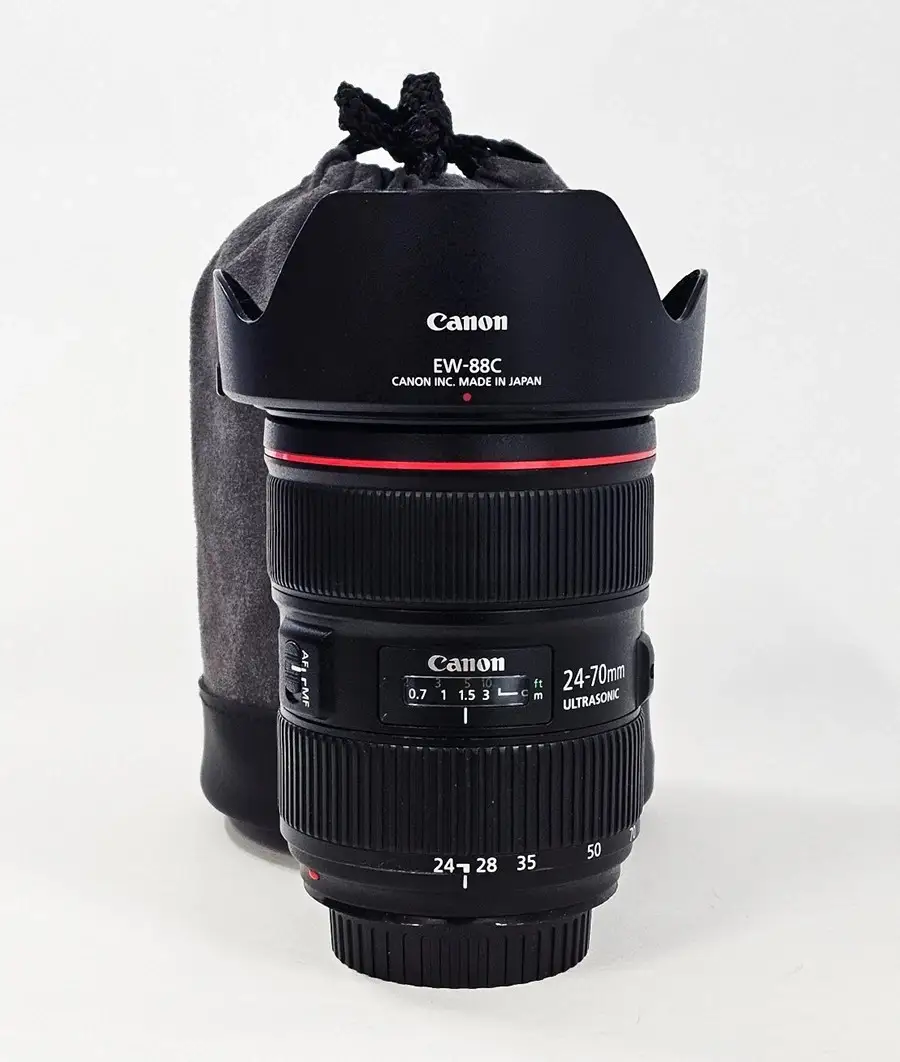
The most directly mentioned competitor is the Canon RF 24-70mm f/2.8L IS USM, the mirrorless version that adds image stabilization—seen by some as fixing the EF’s biggest flaw. However, it commands a higher retail price ($1,824–$2,099) and requires RF-mount bodies.
Some APS-C DSLR owners prefer smaller, cheaper EF-S zooms for more focal length reach and lighter carry, acknowledging the EF’s superb optics aren’t as game-changing on crop sensors. Photo Review noted: "On APS-C DSLRs, its field of view equates to 39-112mm… better covered by smaller lenses."
Price & Value
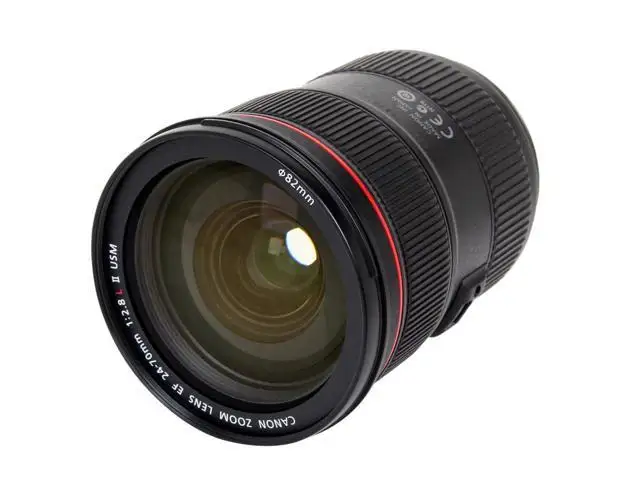
On Amazon, the new Canon EF 24-70mm f/2.8L II USM lists around $1,899, while eBay pre-owned averages $950–$1,189 for “excellent” condition. Parts-only and repair units dip below $400, reflecting longevity—broken units still hold resale interest for repairs.
Resale value is strong; professional shooters reselling after years often recover over half their purchase price. Buyers on Reddit advise purchasing used MK II from reputable sellers to save hundreds, noting minimal optical wear if stored well.
FAQ
Q: Is this lens good for video work without image stabilization?
A: It’s usable but demands steady technique or tripod use. Many videographers prefer the RF version for handheld shooting to benefit from IS.
Q: How does it perform in low light?
A: The f/2.8 aperture gives solid results for handheld night photography, but without IS, keeping shutter speeds faster than 1/60 is advised to avoid blur.
Q: Is the MK II version much better than MK I?
A: Users report improved sharpness, lighter build, and better distortion control in the MK II. Flare resistance is slightly better, but still needs hood use.
Q: Will it fit Canon mirrorless cameras?
A: Yes, via Canon’s EF-to-RF adapter, retaining full autofocus and aperture control.
Q: Does weather sealing mean waterproof?
A: No—while it resists dust and moisture, prolonged exposure to heavy rain can still cause internal damage.
Final Verdict: Buy if you’re a professional or enthusiast shooting portraits, weddings, or landscapes requiring top-tier optics and durable build. Avoid if you need image stabilization for video or ultra-close macro work. Pro tip from the community: Keep the hood on at all times—flare is the one weakness that can undermine its otherwise stellar image quality.





