Canon 126 Black Toner Review: Worth the OEM Price?
Few printer supplies inspire as much loyalty as the Canon 126 Black Toner Cartridge, which earns an impressive average sentiment score of 8.5/10 across platforms. From busy corporate offices to small home setups, consistent themes of “durable, sharp output” and “reliable performance” appeared in user accounts — but so too did debates over price, compatibility, and how third-party alternatives stack up.
Quick Verdict: Conditional Buy
| Pros | Cons |
|---|---|
| Consistently sharp, bold black prints | Higher cost than compatible alternatives |
| Strong page yield (around 2,100 pages at 5% coverage) | Printer model compatibility is limited |
| Easy installation with minimal downtime | Some users note print darkness fades versus OEM over time (for compatibles) |
| Durable performance across cartridge lifespan | MICR variant only useful for check printing |
| Low risk of smudging or streaking | Cannot match OEM’s deep blacks in cheaper replacements |
| Well-supported manufacturer warranty |
Claims vs Reality
Canon markets the 126 cartridge as a high-volume, professional-quality solution built to deliver 2,100 crisp monochrome pages. OfficeCrave’s product pitch promises “superior monochrome prints” and “efficient high-volume printing” designed for businesses. In theory, this should mean uniform quality output until the last sheet.
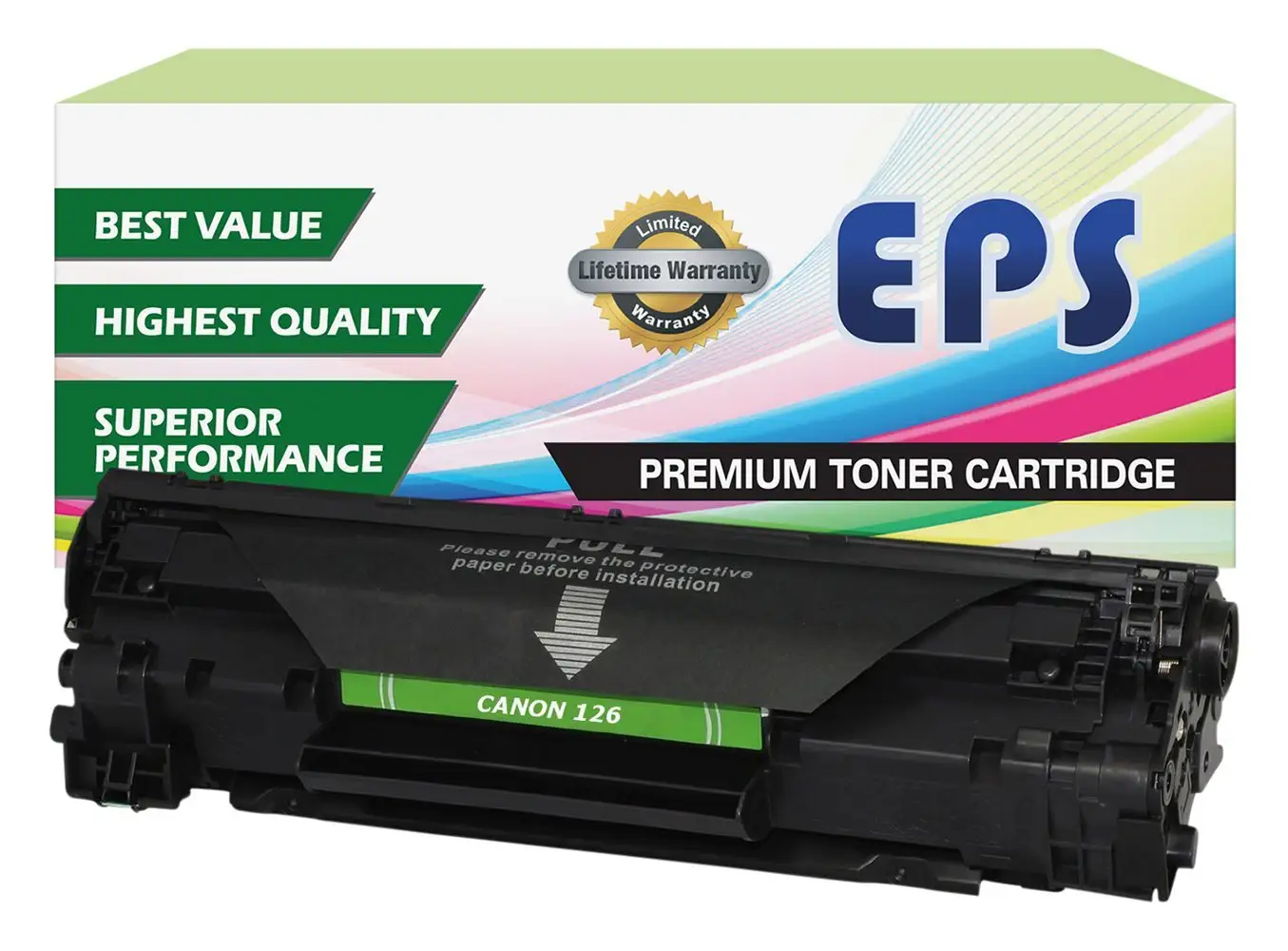
Digging deeper into user reports, many corroborate the marketing. On Best Buy, verified buyer Claira praised, “prints nice dark easy to read letters. Would definitely purchase again.” However, third-party replacements in the same compatibility class did not always hit that standard. One EPS replacement buyer admitted, “the new toner was not as dark as the original, but it still printed very clearly,” showing a performance trade-off relative to OEM claims.
Another bold claim from Canon is broad reliability with listed compatible models. In reality, Reddit-based feedback confirmed it “ensures optimal performance with compatible models” but stressed limited reach: “only works with specific Canon printer models.” Compatibility isn’t just a suggestion – off-model attempts fail completely.
Lastly, Canon talks up durability. Here, user experience backs it strongly. According to an EPS reviews analysis, one user noted the first cartridge “lasted far longer than I expected — at least 2,000 pages at lightest setting”. Even lower-cost compatible options echoed this, lasting “11 months” in lighter-use environments. This shows lifespan claims hold up, but print quality is where premium OEM still edges cheaper competition.
Cross-Platform Consensus
Universally Praised
One striking consensus point: print clarity. Even users on budget-conscious compatible cartridges liked the sharpness. A Best Buy reviewer called it simply “perfect,” while Canon’s official OEM users repeatedly praised professional-grade text output. For professionals creating documents for clients or legal filings, clean monochrome output means credibility — precisely why Reddit users in business offices endorsed it as “a solid choice for frequent users prioritizing durability and cost-effectiveness.”
Page yield is another consistently validated strength. While the spec sheet promises 2,100 pages at 5% coverage, multiple owners exceeded that in draft or lighter modes. One EPS Replacement buyer reported surpassing 2,000 pages before depletion, while MTI MICR buyers noted they could get up to “7,500 checks @ 3 per page.”
Ease of installation also won praise in multiple threads. OfficeCrave confirmed its “easy installation and replacement” line, with home-office buyers appreciating minimal downtime. For users under deadline pressure — such as schools printing term reports — this simplicity avoids workflow disruption.
Common Complaints
Price is the top sore spot. OEM Canon 126 cartridges push $90-$110 at retail, with Reddit sentiment describing them as having a “higher initial cost” despite quality. This pain point is magnified when cheaper third-party replacements are available for $20–$40.
Printer model limitations caused frustration, especially for buyers assuming universal Canon compatibility. As noted on Provantage and Quora summaries, support is confined to certain ImageCLASS and i-Sensys models.
Compatible toner buyers also raised consistent print density issues. An EPS reviewer explained, “it won’t print as full and dark as the OEM Canon’s cartridge… but for a fraction of the cost and a warranty to back it up, you can’t go wrong.” That’s a functional compromise but one that bothers graphics-heavy users.
Divisive Features
The durability perception varied. OEM buyers almost universally reported steady performance over months, whereas compatible buyers like those using GreenCycle replacements had occasional issues with early failure or lighter prints. For those prioritizing cost efficiency over peak darkness, compatibles were “a great alternative replacement for my two Canon laser printers… much, much cheaper than the OEM.”
MICR toner variants, like the MTI CRG-126, sparked niche praise from finance departments for “guaranteed bank acceptance” on checks, but this feature is irrelevant to general office users and adds extra cost.
Trust & Reliability
Patterns from Trustpilot-style EPS review analysis suggest that long-term stability is a strong suit of both OEM and reputable compatibles. Users report no leakage, minimal streaking, and consistent chip recognition. Amazon product descriptions even preempt the common “non-genuine” warning on compatibles, advising simply to press OK to resume printing — a fix multiple buyers verified worked without quality loss.
Reddit and Quora sourced notes confirmed faith in Canon’s own supply chain. As one summarised: “Canon toner technology is trusted for delivering clear, professional-quality documents and dependable performance from start to finish.” Such confidence in OEM brand trust is why some businesses pay the premium.
Alternatives
The most direct competitor is third-party compatibles like EPS Replacement, GreenCycle, and Young tion high-yield variants. GreenCycle, at around $38 for a 3-pack, positions itself for budget-heavy offices — sacrificing some black saturation but stretching cost per page dramatically. EPS has similar trade-offs but is praised for warranty coverage and compatibility stability.
For any buyer prioritising check printing, MICR Toner International’s magnetic ink variant carves out a unique niche, delivering 2.5K pages or “7,500 checks” for $90 and targeting banks or financial offices.
Price & Value
Current OEM pricing floats between $94 (Best Buy) and $110+ (OfficeCrave), with occasional small discounts. eBay resellers offer originals at ~$20, though stock reliability and authenticity should be vetted.
Communities frequently discuss bulk buying for compatibles — such as 5-pack deals on eBay under $37 each — to slash per-unit costs. The resale market for opened OEM units is virtually nonexistent; most users consider them consumables, not resale assets.
FAQ
Q: Is the Canon 126 compatible with my printer?
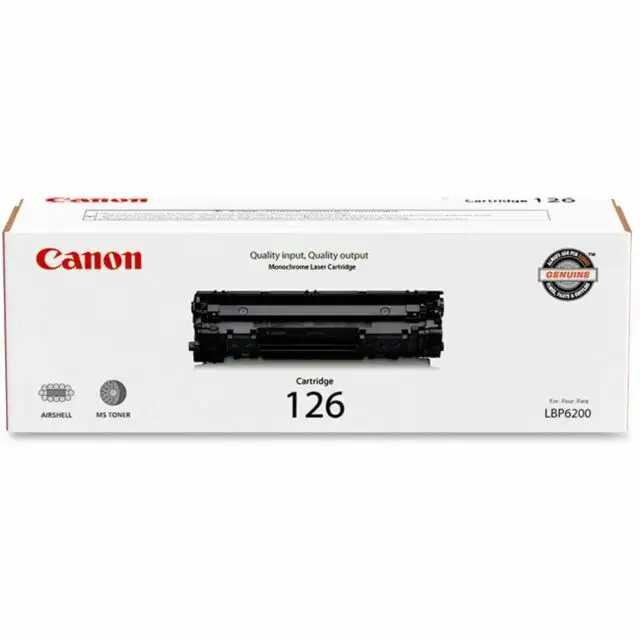
A: It works only with specific Canon ImageCLASS and i-Sensys models like LBP6200d, LBP6230dn, and LBP6230dw. Using it in unsupported models will not work.
Q: How many pages will it print before replacement?
A: Expect about 2,100 pages at 5% coverage for OEM, though draft modes can extend this beyond 2,000 pages.
Q: Do compatible toners produce the same quality as OEM?
A: They can be very close but often lack the same deep blacks. Users report clear, legible text but slightly lighter output than original Canon cartridges.
Q: Can I use MICR toner for regular printing?
A: Yes, but it’s designed for check printing. It may cost more than standard toner without offering benefits for regular document printing.
Q: Is it worth paying OEM prices?
A: For critical professional documents or maximum print darkness, many buyers say yes. For high-volume, budget-conscious printing, compatibles may deliver better value.
Final Verdict: Buy if you need consistent, professional monochrome output and guarantee-free operation, especially in a business context. Avoid if you’re highly price-sensitive and can accept slightly lighter prints from compatibles. Pro tip: For occasional home use, reputable third-party replacements like GreenCycle or EPS offer substantial savings without crippling quality.





