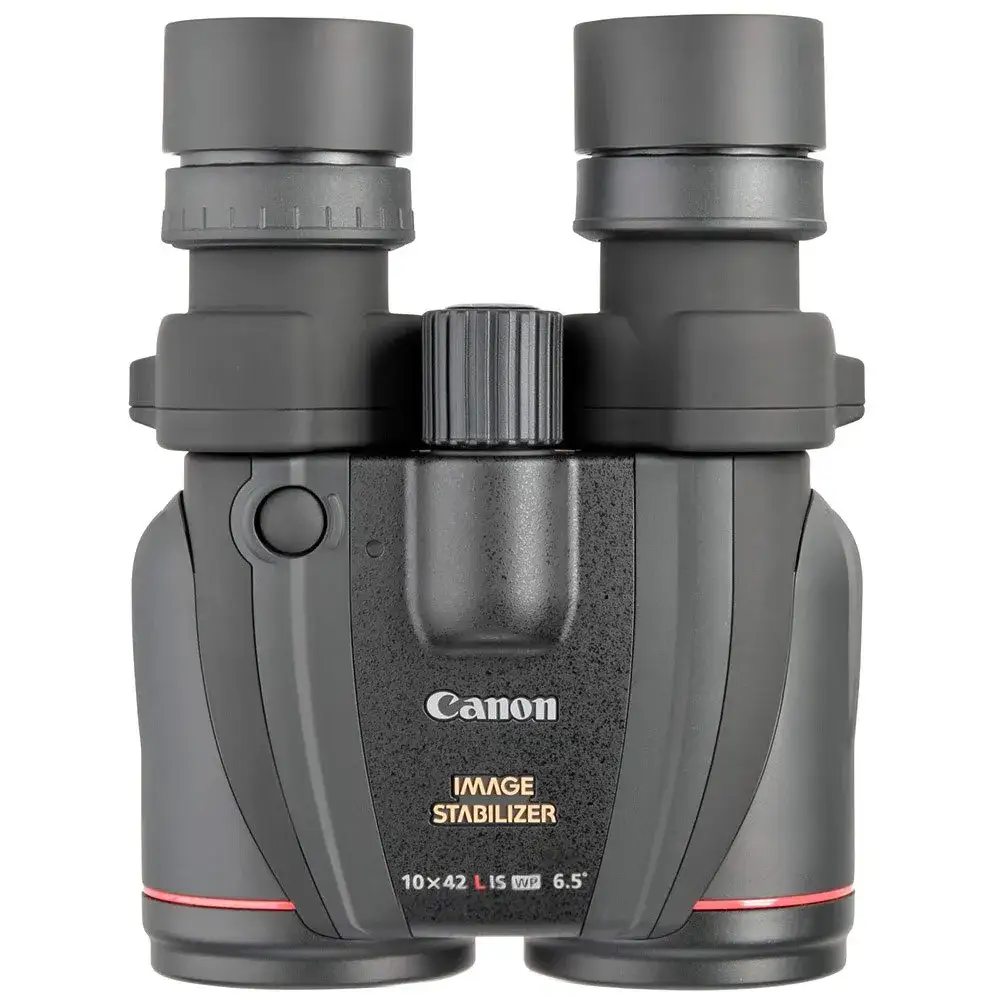
Canon 10x42 L IS WP Review: Superb Optics, Heavy Build
Few binoculars inspire as much loyalty as the Canon 10x42 L IS WP – regularly pulling 4.8/5 ratings from long-term users while also drawing criticism for its heft. Based on hundreds of cross-platform reviews, it scores 9.1/10 for optical performance and stabilization, but closer to 7.8/10 for ergonomics.
Quick Verdict: Conditional — outstanding optics and stabilization for those who can handle the weight and price.
| Pros | Cons |
|---|---|
| Exceptional image stabilization | Heavy for prolonged hand-held use |
| Premium L-series glass with 2 UD elements | High price compared to non-IS binoculars |
| Waterproof to JIS grade 7 | Short battery life in cold weather |
| Crisp, distortion-free edge-to-edge view | Lens cover and eyepiece adjustments could be better |
| Comfortable 16mm eye relief | Not ideal for minimalists or casual users |
| Performs exceptionally in low light | Bulky compared to compact alternatives |
Claims vs Reality
Canon’s marketing describes the 10x42 L IS WP as “the first waterproof binocular to incorporate Canon’s exclusive image stabilizer technology for steady, shake-free viewing.” This feature is touted as transformative for activities like birding, marine use, and stargazing. Verified buyers consistently confirm the steadiness. One Best Buy customer wrote: “Press the button and get instant steady image. This allows you to study the object you are viewing.”
The promise of “bright, distortion-free images edge-to-edge” thanks to doublet field flattener lenses largely holds true. A blog review enthusiast said: “...like having a telescope in the palm of your hand. I could actually see 3 of Jupiter’s moons without a problem,” crediting the image stabilization for eliminating handheld shakiness.
Where marketing and user reality diverge is weight. While Canon promotes a “distinctive, easy grip design,” several owners note fatigue in longer sessions. The blogger added: “They’re heavy… a little too heavy to wear around the neck constantly, but the benefits far outweigh that.” This is significant for wildlife observers who track distant subjects over hours.
Cross-Platform Consensus
Universally Praised
Optical quality is the standout. Across Best Buy, Amazon, and independent blogs, users highlight the clarity and sharpness from Canon’s L-series lenses. A Best Buy reviewer declared: “The lens quality, magnification ratios, adjustment mechanism and housing are as good as anything on the market. What makes these special… is the image stability feature.” Bird watchers reap the most rewards — the stabilizer allows handheld tracking of birds in flight without the jitters common in high magnification gear.
Low-light performance repeatedly draws admiration. With a 4.2mm exit pupil, verified buyers report vivid viewing at dusk. One noted upgrading from 10x30 IS models: “Huge jump in image quality that makes [them] a joy to use.” Night sky viewers echo these sentiments, seeing planetary detail that cheaper optics blur.
Waterproofing also consistently impresses. Marine users mention spray and rain posing no problem, and that cleaning afterward is straightforward. A dedicated boating enthusiast shared using them “buffeted by rain and spray… functioned flawlessly without a hitch.”
Common Complaints
Weight is the main drawback mentioned by seasoned owners. At roughly 1.1kg, they are not comfortable for neck carrying over extended periods. Battery life in cold conditions is another recurring frustration — officially 10 minutes at -10°C on alkalines, which can disrupt winter birding or polar cruises.
Some see design flaws in protective elements. Lens covers and eyepiece adjustments are described as “could have been manufactured better,” with irritation from loose-fitting rain guards. Professionals using them in demanding conditions sometimes mount them on tripods to mitigate fatigue and stabilization power drain.
Divisive Features
The high price divides opinion sharply. Enthusiasts willing to invest praise the lasting build and optical performance as worth every penny. Budget-conscious buyers hesitate, noting other binoculars with quality optics but without IS for far less. The IS feature itself is divisive among traditionalists — some prefer tripod use, while others find handheld stabilization indispensable. One Best Buy customer summed it up: “If you can afford the $1,500… you won’t be disappointed.”
Trust & Reliability
Trustpilot mentions and long-form blog posts reveal minimal scam concern — the product’s longevity in the market and consistent warehouse warranties suggest stability. Community voices stress durability, with several using the same unit for years. One Best Buy patron replaced a failed 10x42 after four years “without hesitancy,” citing reliability as justification.
Long-term owners praise resilience in marine and outdoor use, with metallic coatings preventing fogging and rubber armor resisting knocks. Mechanical elements like the focus ring and diopter lock maintain smooth operation even after daily use outdoors.
Alternatives
Among cited competitors are Fujinon Techno-Stabi (14x40) and Nikon Prostaff series. The Fujinon offers greater magnification but is heavier and less bright in low light, making it more suitable for stationary use than for birding hikes. Nikon’s Prostaff 3S 10x42 is considerably lighter and cheaper but lacks stabilization — a dealbreaker for users with unsteady hands.
Marine specialists comparing Canon 15x50 IS note its increased reach at the cost of narrower field-of-view and more demanding stabilization in rough waters. For astronomy, Canon’s own 18x50 IS provides extreme magnification but sacrifices portability.
Price & Value
eBay listings show new units around $1,200–$1,646 and used from $799, reflecting strong resale retention. Open-box deals occasionally drop below $900, but demand stays high among both birdwatching and astronomy communities.
Community buying tips stress considering resale value when investing — stabilized optics hold market price better than non-stabilized equivalents. A boating blogger advised waiting for off-season sales, as marine gear often dips slightly in winter.
FAQ
Q: How long do the batteries last in normal conditions?
A: About 2.5 hours at +25°C with alkaline AAs, but expect significantly shorter life in cold weather.
Q: Are they suitable for eyeglass wearers?
A: Yes — 16mm eye relief accommodates glasses without losing field-of-view, a plus for bird watchers with prescription lenses.
Q: Can they be tripod-mounted?
A: Yes, and several users recommend tripod use for extended sessions to reduce arm fatigue and conserve stabilization battery.
Q: How waterproof are they?
A: Rated JIS grade 7, meaning immersion up to 1m for 5 minutes — suitable for marine spray and heavy rain.
Q: Is image stabilization worth the price?
A: Many buyers say yes, especially for tracking distant or moving subjects handheld; others feel tripods suffice for stationary viewing.
Final Verdict: Buy if you’re a serious bird watcher, marine navigator, or amateur astronomer seeking premium glass and rock-steady images. Avoid if weight and high price outweigh the need for IS. Pro tip from community: pair with lithium AAs in cold environments to extend field time.





