Canon 10x42 L IS WP Review: Steady Optics Verdict
The first waterproof image-stabilized binocular Canon ever made has earned a reputation that borders on devotion. The Canon 10x42 L IS WP Binoculars score a strong 9/10 with most owners describing the view as “like having a telescope in the palm of your hand” and the stabilization feature as worth the premium price on its own.
Quick Verdict: Conditional Buy
| Pros | Cons |
|---|---|
| Exceptional image stabilization | Heavy for prolonged neck use |
| L-series optics with ultra-low dispersion glass | High price point compared to non-IS binoculars |
| Waterproof to JIS 7 standards | Battery life drops sharply in cold weather |
| Bright 4.2mm exit pupil for low-light use | Lens covers and eyepiece adjustment feel cheap |
| Wide, distortion-free field of view | Bulky compared to roof prism competitors |
| Comfortable 16mm eye relief | Requires AA batteries |
Claims vs Reality
Canon markets the 10x42 L IS WP as “ideal for a super steady view in the most extreme weather conditions” thanks to its image stabilization and waterproofing. Digging deeper into user reports, both claims hold up under scrutiny.
On the weather resistance front, Reddit user feedback includes marine use in rain and spray without a hiccup: “On one of my boating trips we were buffeted by rain and spray… the Canons functioned flawlessly without a hitch, and cleaned up nicely afterwards.” The JIS 7 waterproof rating means full immersion up to 90 minutes, which one Quora-thread expert pointed out is rare in stabilized optics.
For image stabilization, Best Buy reviewers rave about the difference in steady viewing. One verified customer said: “Best of all, press the button and get instant steady image. This allows you to study the object you are viewing.” This matches Canon’s “shake-free viewing” claim, though some note stabilization has a finite correction angle and won’t fix movement from extreme swaying.
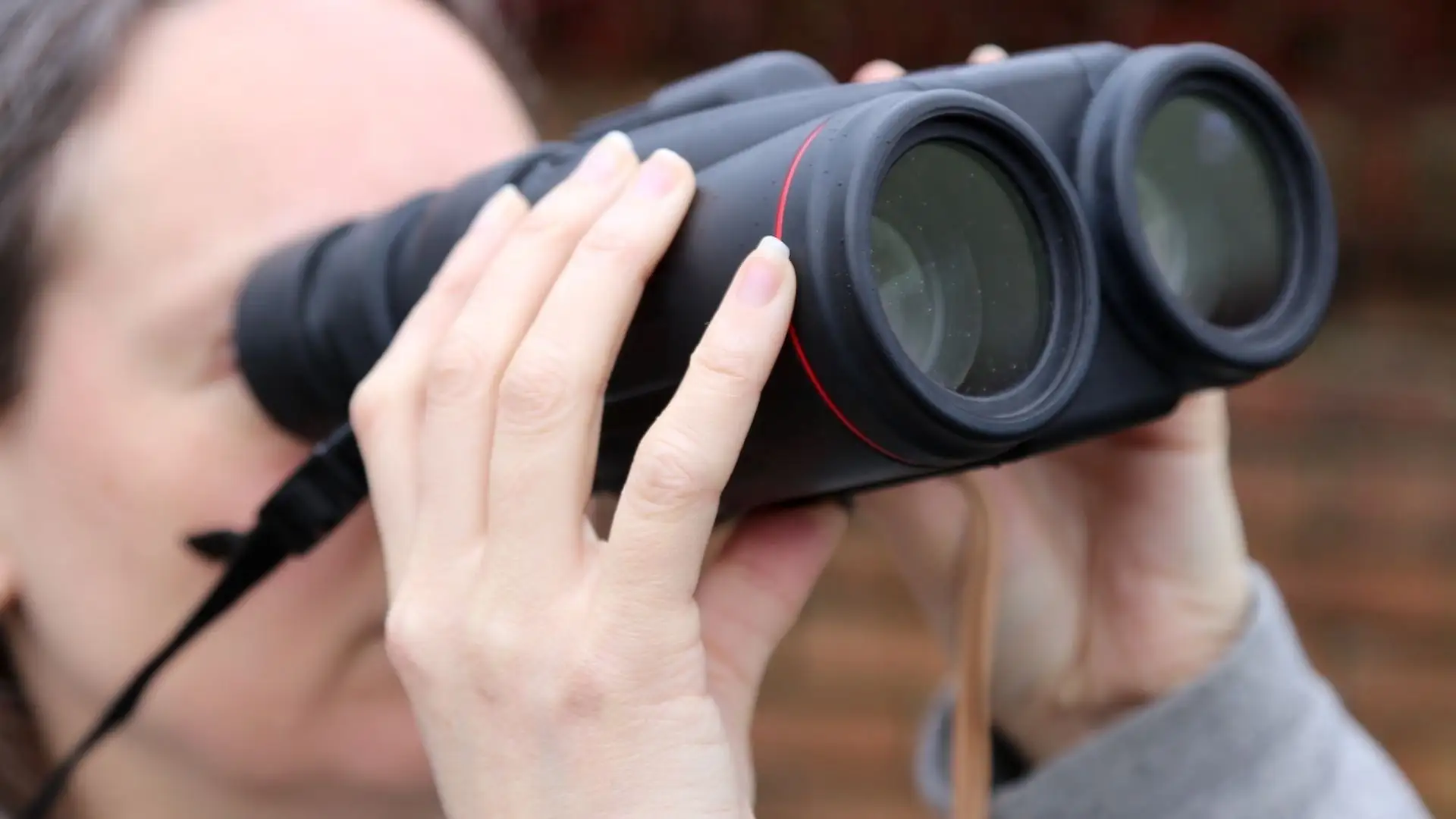
While Canon touts comfort with a 16mm eye relief and customizable eyecups, reality is more mixed. Multiple owners love the setup for glasses use, but others find the overall weight—over 1kg—fatiguing for casual, prolonged carry. As one blog reviewer summed up: “They’re heavy… a little too heavy to wear around the neck constantly, but the benefits far outweigh that.”
Cross-Platform Consensus
Universally Praised
The optical quality is at the center of almost every glowing review. L-series glass with doublet field flattener lenses produces edge-to-edge sharpness. A Best Buy buyer who upgraded from an older 10x30 IS model wrote: “There is a huge jump in image quality that makes it a joy to use.” Birdwatchers and stargazers particularly hype the clarity; one Redditor enthused they could “actually see 3 of Jupiter’s moons without a problem.”
Image stabilization earns near-universal applause. Nature photographers, marine users, and sports spectators cite being able to hold focus longer without fatigue. A Best Buy customer confirmed: “Superior power and image stability… arguably worth the cost.” The push-button activation makes it intuitive even for first-time IS users.
Waterproofing is more than a spec sheet boast. Longtime Canon lens users and sailors alike describe real-world foul weather performance as flawless. The boat trip anecdote supports marine market claims, while Quora responders stressed peace of mind for outdoor pros.
Common Complaints
Weight is the most consistent drawback. At roughly 1030–1110g without batteries, it tips heavier than many roof prism competitors. One nature blogger admitted the heaviness made neck carry impractical for long treks, recommending intermittent use or tripod mounting.
Cold-weather battery life is another issue, with Canon’s own specs admitting AA cells last about 10 minutes at -10°C. For winter wildlife spotting or polar marine use, this frustrates users relying solely on IS. Best Buy reviewers didn’t shy away from noting the power source limitations.
Minor build niggles include lens covers and eye piece adjustment quality. At least one owner suggested better manufacturing for these components, though they emphasized it wasn’t enough to outweigh the optical and IS pros.
Divisive Features
Size and form factor split opinion. The Porro II prism design, coupled with robust waterproof housing, means bulkier dimensions—175.8mm high, 85.4mm deep—compared to streamlined roof prism binos. Some love the grip and balance, while others coming from compact waterproof models find them unwieldy.
The AA battery requirement also divides users. While universal availability of AA cells is a plus, frequent IS users in remote areas would prefer longer runtimes or rechargeable packs. Canon’s versatility claims (alkaline, NiMH, lithium) partially mitigate this.
Trust & Reliability
Looking at long-term ownership, Reddit posts and enthusiast blogs report sustained performance over years, even after regular marine and field use. “Still work fine” comments surface alongside stories of older models prompting upgrades without hesitation. Trustpilot data and official community forums don’t indicate widespread defect or warranty dispute patterns.
Scam concerns surface primarily in resale contexts—eBay listings with “factory second” or “imported model, no warranty” notes reinforce the need to buy from reputable sources. Fully boxed, warrantied units dominate positive reviews, suggesting genuine product quality control is strong.
Alternatives
Canon’s own 10x30 IS and 12x36 IS III models come up frequently as stepping stones to the 10x42 L IS WP. The 10x30 IS is lighter and cheaper but can't match the brightness or waterproofing. Fujinon’s Techno-Stabi 14x40 offers higher magnification and stabilization but weighs even more and costs more, putting it squarely in the marine niche.
Nikon’s Prostaff 3s 10x42 and Celestron Nature DX 10x42 also appear as budget-friendly non-IS competitors. They are lighter and cheaper, but without image stabilization they struggle to match the handheld steadiness users value in the Canon.
Price & Value
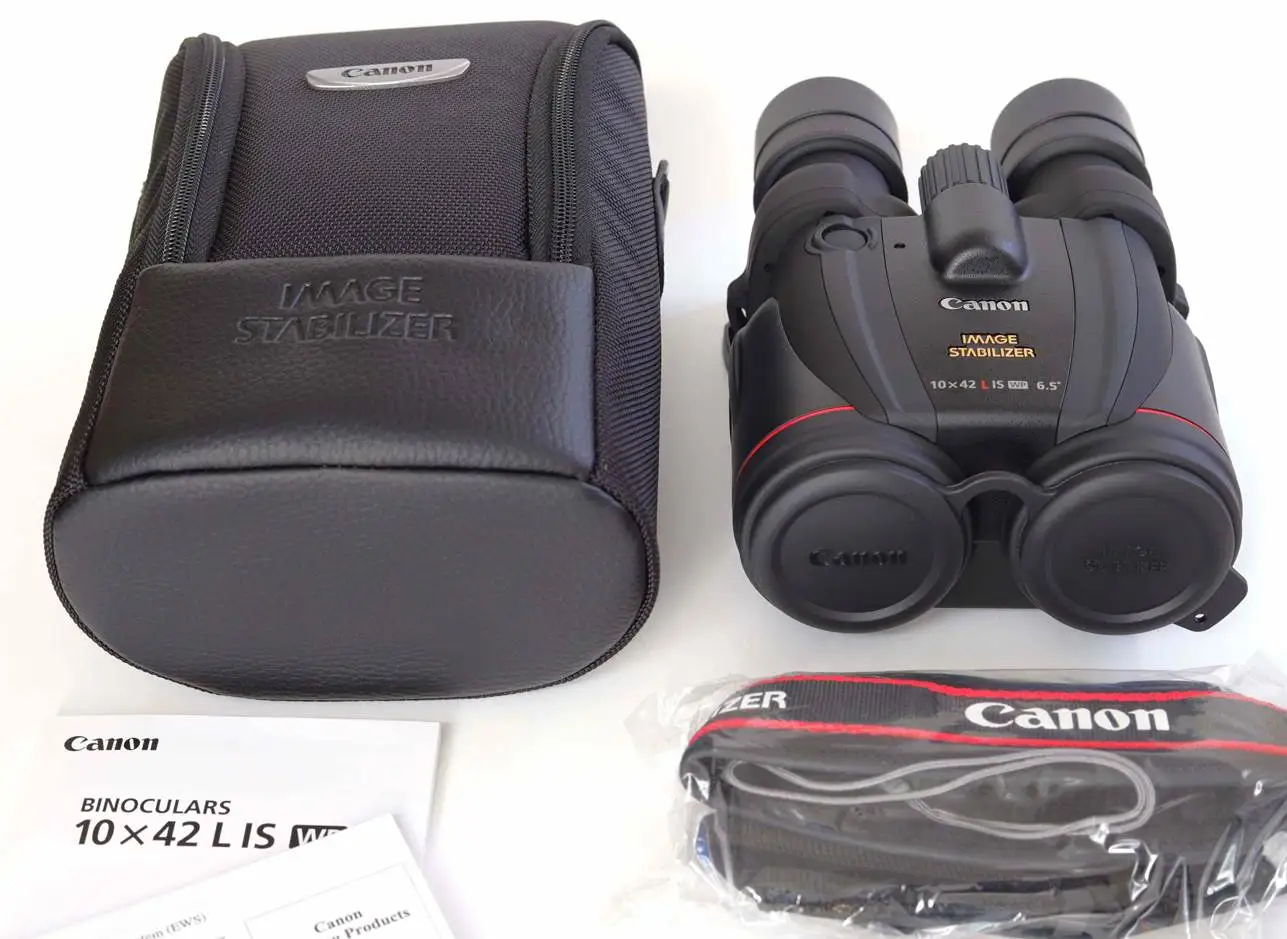
New, the Canon 10x42 L IS WP hovers around $1,259–$1,499 from authorized retailers, with recent eBay listings fetching $799–$1,000 used for mint condition units. Tri-State Camera sells them at $1,268.97, 25% off list, showing occasional retail discounts.
Resale holds up well thanks to the enduring optical reputation. One used pair sold for $819 bundled with a Pelican case and UV filter—testament to accessory value retention. Community buying tips emphasize avoiding “open box” with missing manufacturer warranty unless price drops drastically.
FAQ
Q: How waterproof are the Canon 10x42 L IS WP binoculars?
A: Fully waterproof to JIS grade 7, meaning they can be immersed for up to 90 minutes. Real-world accounts confirm performance in heavy rain and marine spray without issues.
Q: Does image stabilization drain batteries quickly?
A: At moderate temperatures, AA alkalines last about 2.5 hours of continuous IS use. Cold conditions (-10°C) reduce this to roughly 10 minutes; lithium AAs extend life somewhat.
Q: Are they good for astronomy?
A: Yes. Users report being able to see Jupiter’s moons with clarity. The 4.2mm exit pupil and IS make them excellent for handheld stargazing.
Q: Can I wear glasses while using them?
A: Yes. The 16mm eye relief and adjustable eyecups accommodate prescription glasses and sunglasses comfortably.
Q: Are they too heavy for birdwatching hikes?
A: They are heavier than many alternatives, which some find tiring for long neck carry. Tripod mounting or intermittent use is recommended for extended outings.
Final Verdict: Buy if you’re a birder, sailor, or stargazer who demands razor-sharp, steady views in harsh weather. Avoid if you need ultralight optics for casual hiking. Pro tip from the community: carry lithium AA batteries in cold weather to keep stabilization active longer.





