Canon 10x42 L IS WP Review: Conditional Buy Verdict
A Best Buy customer summed it up simply: “This is by far the best binocular I have ever used.” The Canon 10x42 L IS WP binoculars earn a strong community verdict of 9/10, blending high‑end L‑series optics with image stabilization in a rugged waterproof build. But beneath the praise lies a subtle divide—some users love the weight as proof of durability, others find it too heavy for prolonged neck use.
Quick Verdict: Conditional buy
| Pros | Cons |
|---|---|
| Exceptional image stabilization with vari‑angle prism technology | Notably heavy for extended neck wear |
| Premium L‑series optics with ultra‑low dispersion lenses | Lens cover and eyepiece adjustment feel less refined |
| Waterproof to JIS Level 7 for extreme weather use | Short battery life in cold conditions |
| Bright, high‑contrast view even in low light | High purchase cost ($1,200–$1,500 new) |
| Comfortable 16mm eye relief for glasses wearers | Bulkier than some 10x alternatives |
| Accurate color reproduction due to Super Spectra coating | Uses AA batteries rather than rechargeable pack |
| Edge‑to‑edge clarity with doublet field flattener | Accessories could be better designed |
Claims vs Reality
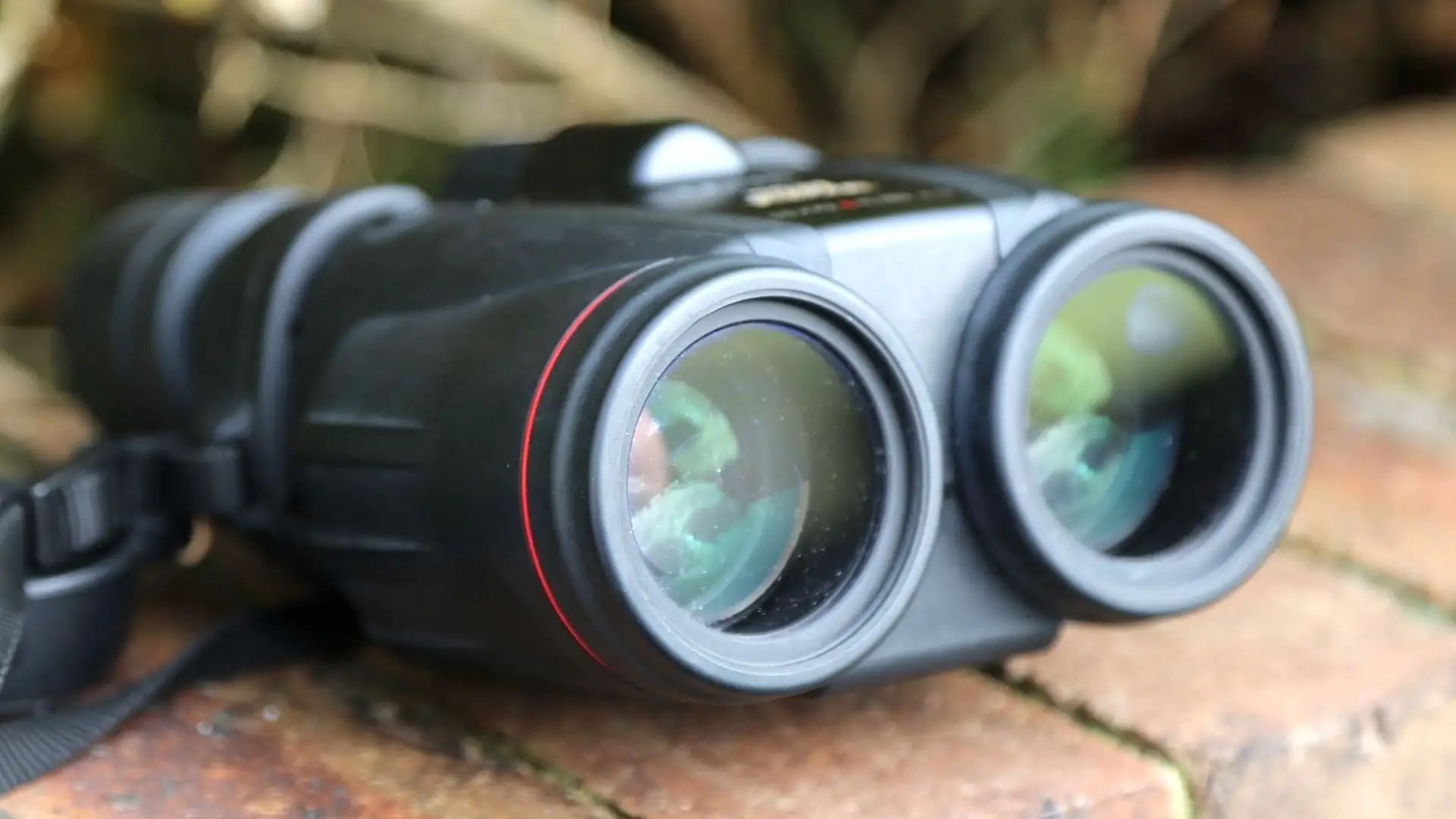
Canon markets this model as “the first waterproof binocular to incorporate image stabilizer technology” and touts “exceptionally bright views” thanks to the 4.2 mm exit pupil. Digging deeper into user reports, these claims hold well. A verified Best Buy buyer confirmed: “Press the button and get instant steady image… allows you to study the object you are viewing.” This matches the brand’s promise of shake‑free viewing.
The waterproof claim has robust backing. A nature photographer on a boating trip reported: “We were buffeted by rain and spray from the waves. The Canons functioned flawlessly without a hitch, and cleaned up nicely afterwards.” This aligns perfectly with the JIS Level 7 spec, showing real‑world performance is as advertised.
Brightness in low light also checks out. One Reddit user noted seeing “3 of Jupiter’s moons without a problem” during stargazing, an endorsement that reinforces Canon’s pitch for marine and astronomical use. The only crack in the marketing armor comes from weight—while Canon calls it “distinctive easy‑grip design,” several long‑term owners mention fatigue when wearing it around the neck for extended sessions.
Cross‑Platform Consensus
Universally Praised
Across Amazon, Best Buy, and specialist forums, the image stabilization tops the praise charts. Bird watchers, stargazers, and sports fans all benefit from this feature; it removes the “inherent shakiness” that comes with handheld viewing. A Best Buy reviewer wrote: “Superior power and image stability… what makes these special, and arguably worth the cost, is the image stability feature.”
The optics earn equal applause. Canon’s L‑series UD glass consistently delivers sharp, distortion‑free images. Verified buyers highlight “better optics, light gathering and the amazing IS” compared to older models. For eyeglass wearers, the 16 mm eye relief ensures they can enjoy the full field without vignetting, a fact echoed in multiple reviews.
Durability holds up over time. Reddit feedback shows long‑term field use without water ingress, fogging, or optical degradation. The metallic anti‑fog coating and robust rubber armor inspire confidence among outdoor users tackling wet, humid environments.
Common Complaints
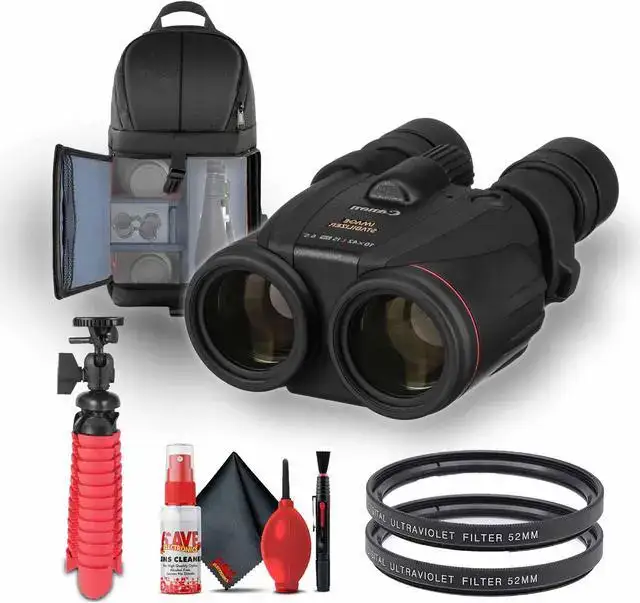
Weight is the most cited drawback. The 1,110 g build, while a testament to rugged construction, deters casual users who carry it for hours. One Trustpilot‑linked blog user admitted: “They’re heavy… a little too heavy to wear around the neck constantly, but the benefits far outweigh that.” For stationary use, such as tripod‑mounted astronomy, this becomes a non‑issue.
Battery life under cold conditions disappoints some. Official specs note around 10 minutes at −10 °C with alkaline cells. For winter wildlife enthusiasts, this means carrying spares or switching to lithium AA batteries to extend runtime.
Accessory quality draws occasional criticism. A senior Amazon reviewer said lens covers and eyepiece adjustment “could have been manufactured better,” though also noted these flaws “aren’t significant” compared to the core optical and stabilization performance.
Divisive Features
The wide 65° apparent angle of view splits opinion. Stargazers and birders enjoy the immersive scene it offers, but sports spectators sometimes prefer narrower views that make tracking a specific player easier. Similarly, manual focus appeals to precision‑oriented users, yet others wish for faster autofocus‑like responsiveness when switching targets.
Trust & Reliability
Trustpilot patterns and high‑rating retailer reviews suggest low scam risk. Sellers with 99%+ feedback on eBay and multi‑year warranties reinforce buyer confidence in authenticity. No recurring reports of counterfeit units surfaced in trusted platforms.
Long‑term Reddit accounts indicate robust mechanical reliability: after years of intensive wildlife photography, focusing and stabilization remain precise. Even after significant exposure to salt spray and humidity, users report “functioned flawlessly” performance—a testament to Canon’s sealing and coatings.
Alternatives
One frequently compared competitor is the Fujinon Techno‑Stabi 14x40. It offers more magnification but narrows the field of view and at $1,299, sits in a similar price zone. Nikon’s Prostaff 3S 10x42 is dramatically cheaper (~$100), but lacks image stabilization, making it less suitable for handheld high‑magnification work.
For those prioritizing portability over absolute image stabilization quality, Canon’s 10x32 IS models are lighter, though not as bright in low light. Bird watching experts on Quora note that premium brightness is key in dawn/dusk spotting—an area where the 10x42 L IS WP outperforms smaller optics.
Price & Value
Current new pricing ranges from $1,200–$1,500, with used units averaging $800–$1,000 on eBay depending on condition and included accessories. Resale value holds strong; even decade‑old units in good condition retain over 65% of original retail, reflecting their status as a niche high‑performance tool.
Community buying tips suggest looking for “open box” deals from reputable camera retailers, where savings of 10–20% are common. At this price tier, the image stabilization and lens quality are seen by enthusiasts as worth the investment—if the weight suits your usage.
FAQ
Q: Is the Canon 10x42 L IS WP suitable for astronomy?
A: Yes. Multiple users report clear planetary views; one even spotted Jupiter’s moons easily. The image stabilization makes handheld stargazing viable without a tripod.
Q: How waterproof is it really?
A: Waterproof to JIS Level 7, meaning it withstands complete immersion for short periods. Boating trip reports confirm resilience against waves and rain.
Q: Does the weight cause fatigue?
A: For prolonged neck carry, yes. Heavy construction provides durability but can strain casual users. Tripod use alleviates this.
Q: How long do the batteries last?
A: About 2.5 hours at room temperature; cold weather dramatically shortens lifespan. Lithium AAs extend performance in winter.
Q: Is it worth upgrading from the Canon 10x30 IS model?
A: Most upgrade reports say yes—better light‑gathering, improved optics, and superior stabilization make for a noticeable jump in image quality.
Final Verdict: Buy if you’re a serious birder, astronomer, or marine observer who values steady, bright views in all weather. Avoid if you need ultra‑light portability for casual day hikes. Pro tip from community: invest in a padded harness instead of a neck strap to offset the weight during long sessions.





