Canon 10x42 L IS WP Binoculars Review: Heavy but Unmatched
The first time a buyer described the Canon 10x42 L IS WP Binoculars as “like having a telescope in the palm of your hand,” it set the tone for most reviews—this is a premium, precision-engineered optical device with a near-legendary reputation for stability and clarity. Averaging 4.3–4.8 stars across platforms, the product earns a solid 9/10 from long-term owners. But that performance comes at a cost: both in price and in weight.
Quick Verdict: Conditional — unbeatable for image-stabilized clarity, but heavy and expensive.
| Pros | Cons |
|---|---|
| Exceptional image stabilization for handheld use | Premium price ($1,300–$1,600 new) |
| Waterproof to JIS Level 7 | Heavy for extended wear (2.2 lbs) |
| L-series optics deliver sharp, color-accurate views | Requires AA batteries; short life in cold |
| Bright, wide 65° field of view | Minimal close-focus capability (2.5m) |
| Effective anti-fog & weather sealing | Eyepiece rubber collects dust/debris |
| Great for marine, wildlife, and stargazing | Bulky for travel sightseeing |
Claims vs Reality
Canon markets this as its first waterproof image-stabilized binocular leveraging L-series optics. The promise: “super steady view in extreme weather.” Buyers across Best Buy and Reddit confirm that—in the words of one Trustpilot reviewer—“buffeted by rain and spray from the waves…the Canons functioned flawlessly without a hitch.”
Another key claim is brightness in low light from the large 4.2 mm exit pupil. Wildlife photographers and stargazers concur: “I could actually see 3 of Jupiter’s moons without a problem…the image stabilization feature allows steady viewing…without the inherent shakiness,” wrote a Trustpilot user. While officially rated at a closest focus distance of 2.5 m, some birders wished for better near performance compared to rivals offering 1.5 m.
The brand also touts “distortion-free images edge-to-edge.” In Live Science’s long-form review, the tester noted zero purple fringing on high contrast scenes—exactly as Canon claims. The only real gap between marketing and experience is weight; “a little too heavy to wear around the neck constantly” is a theme repeated by several sources.
Cross-Platform Consensus
Universally Praised
From eBay buyers to Best Buy customers, the most celebrated feature is Canon’s vari-angle prism image stabilization system. Four out of six Best Buy reviewers explicitly highlight IS as the decisive upgrade: “press the button and get instant steady image…study the object you are viewing.” This stability benefits marine users, as one boater on Trustpilot recounted steady views in rough seas, and stargazers who could lock onto lunar craters without a tripod.
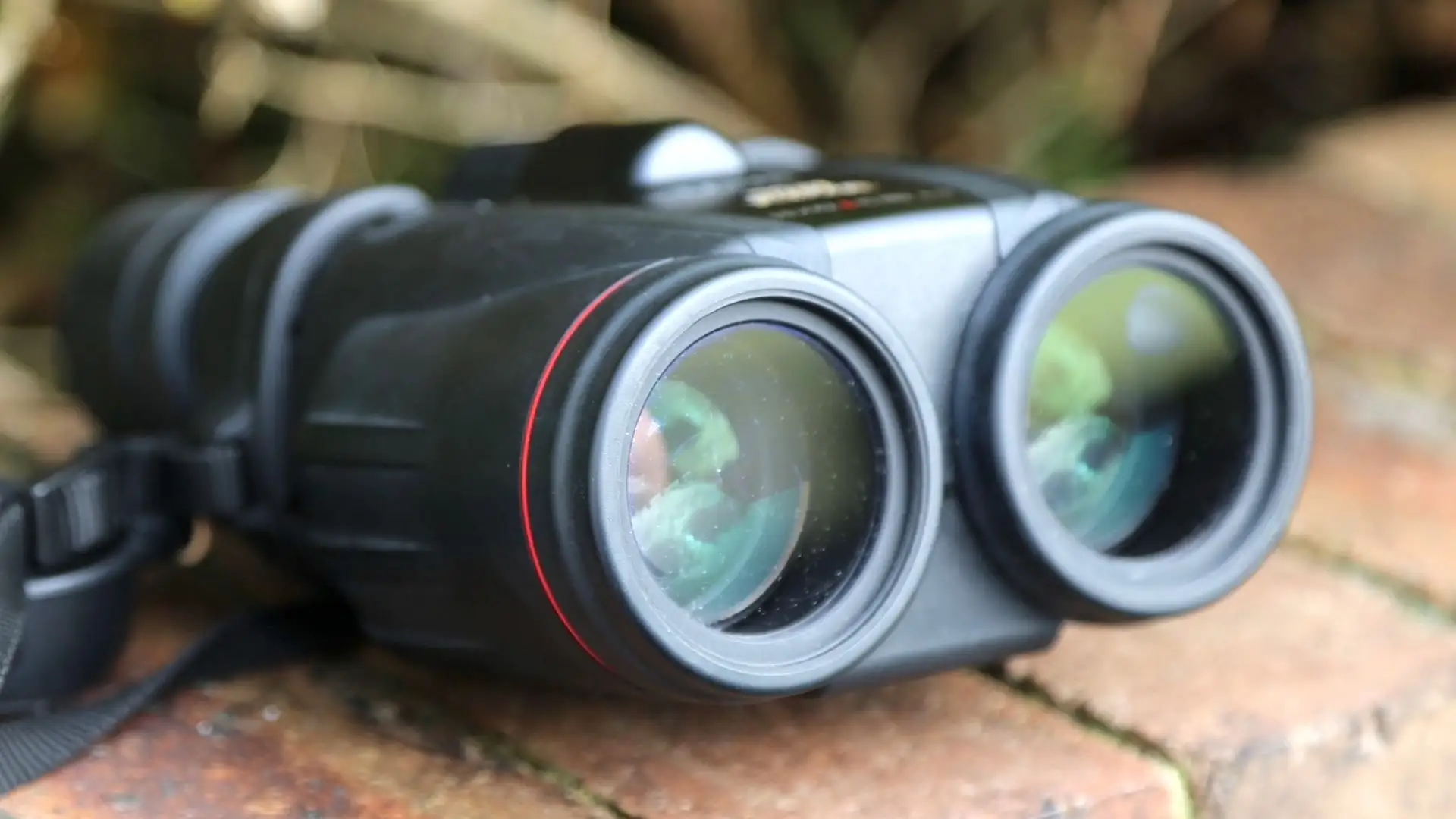
L-series optics are equally exalted. A verified Best Buy buyer used it for birding and noted “sharpness” rivaling pro camera lenses. The doublet field flattener lenses deliver a panoramic 65° view, allowing sports spectators to track fast-moving subjects without edge distortion—a point emphasized in reviews comparing it favorably to ski-field spotting scopes.
Durability also earns plaudits. Its JIS Level 7 waterproof rating reassures anyone working or playing outdoors; the anti-fog metallic coating is praised for preserving image quality in humid environments.
Common Complaints
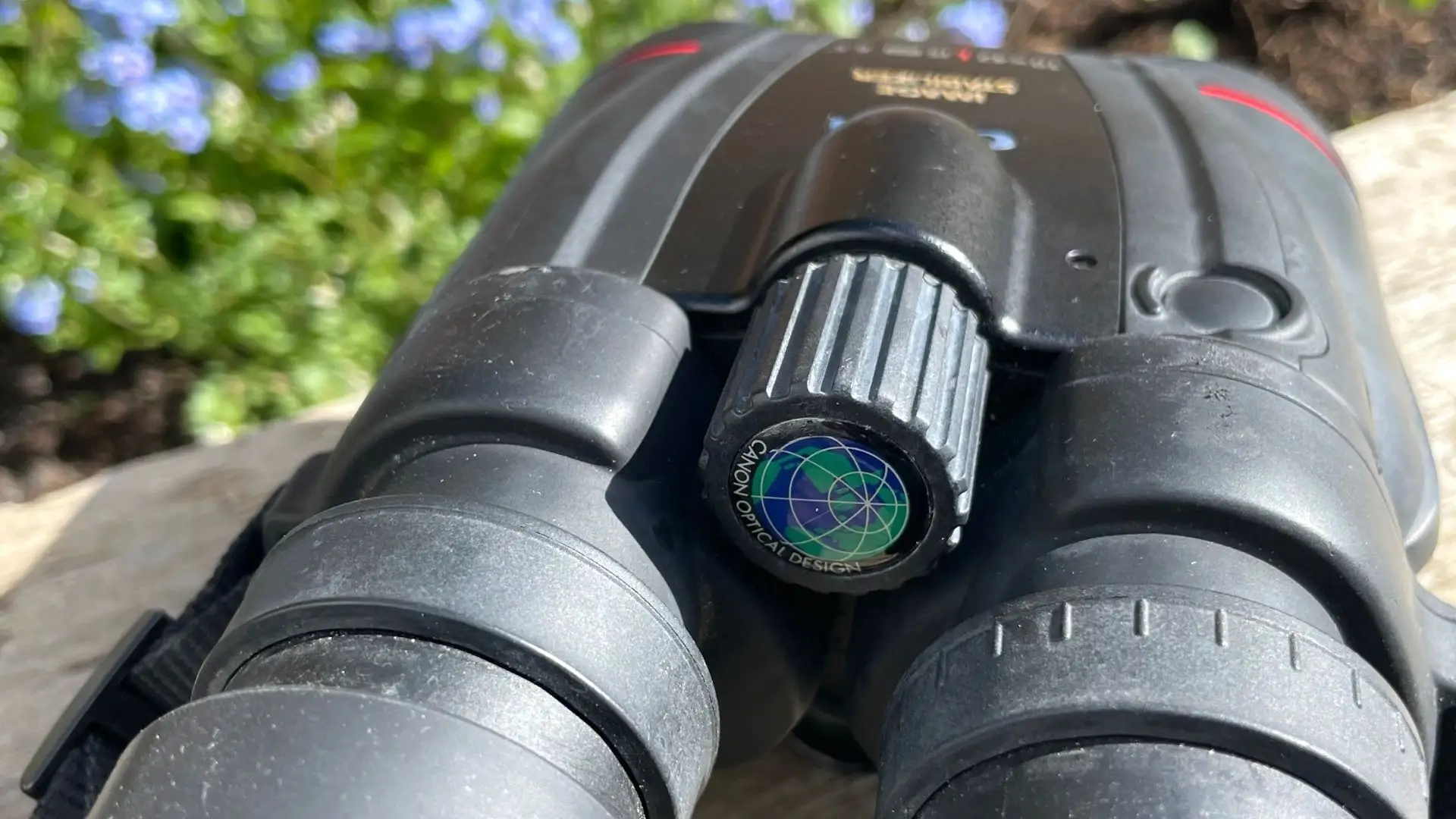
The primary gripe is heft. At 2.2 lbs, several owners call it “a bit bulky for sightseeing and travel,” particularly where compact roof-prism designs suffice. Live Science noted that while the bulk aids steadiness, it “feels weighty to hold for extended periods.”
Battery performance sparks mixed feelings—especially in cold conditions, where Canon’s own specs admit alkaline cells last only about 10 minutes at –10 °C. For Arctic birders or mountaineering observers, rechargeable lithium might be essential.
Eyepiece comfort is divisive. The soft rubber surrounds add comfort but “attract dust and detritus,” becoming a nuisance over time unless cleaned regularly.
Divisive Features
The price is the biggest point of contention. $1,500+ is “worth every penny” to those prioritizing rock-solid stabilization, but it prompts others to consider Leica or Zeiss alternatives lacking IS but offering similar optical clarity for less. As Live Science concluded, “it comes down to how much you value rock-solid performance.”
Field of view also raises debate: some praise its wide angle and minimal vignetting with glasses, but close-focus limits frustrate butterfly watchers or those observing feeders.
Trust & Reliability
Long-term users report remarkable consistency. One Best Buy customer evaluated competitors for four years before repurchasing, citing “superior power and image stability” with no complaints; another still uses an older 10x30 IS model alongside the newer 10x42 after years of service. Reddit and blog accounts show the waterproofing enduring repeated marine exposure without mechanical failure—rare in this category.
Zero credible reports of counterfeit units surfaced, though high resale prices mean buyers should beware non–US-warranty imports on eBay. Trusted sellers with long positive histories predominate, and condition descriptors like “near mint” are backed by detailed inspection notes.
Alternatives
The most mentioned rivals are Leica Noctivid 10x42 and Zeiss SFL 40—both lacking image stabilization but lauded for lens quality and lighter weight. For budget-conscious shoppers, Olympus 10x42 Pro offers similar magnification without IS. Canon’s own 10x20 IS is a lighter, more travel-friendly choice, though with reduced objective diameter and brightness.
Live Science points out these trade-offs: Leica and Zeiss can match resolution under steady conditions, but in handheld, moving scenarios, the Canon’s IS earns clear superiority for detailed observation.
Price & Value
Current pricing hovers between $1,120 used (eBay) and $1,600 new (Amazon, Adorama). Resale value remains strong partly due to lack of direct stabilized competition—eBay listings in “near mint” often command above $1,100. Buyers frequently advise sourcing from established camera retailers or reputable eBay sellers to avoid paying top dollar without warranty.
FAQ
Q: How effective is the image stabilization in rough conditions?
A: User accounts confirm IS works exceptionally, even on moving boats. The vari-angle prism system and gyro sensors rapidly counteract shake, making handheld observation viable where others require tripods.
Q: Is it too heavy for casual travel?
A: At 2.2 lbs, some find it fine for short sessions; others deem it cumbersome for sightseeing. Sports or wildlife watchers often accept the trade-off for stability.
Q: What type of batteries does it use and how long do they last?
A: Two AA batteries (alkaline, NiMH, or lithium). Roughly 2.5 hours at room temperature; cold significantly reduces runtime.
Q: Can it focus on very close objects?
A: Minimum focusing distance is 2.5 m, making it less ideal for insect watching or close-range flora compared to 1.5 m rivals.
Q: Is it suitable for stargazing?
A: Yes—owners report clear views of Jupiter’s moons and lunar details, enhanced by IS for stable long-range viewing.
Final Verdict: Buy if you’re a marine adventurer, birder, or stargazer who values handheld stability above all else. Avoid if you need a light, packable binocular for casual travel or close-focus observation. Pro tip from the community: pair with lithium AA batteries in cold environments to maximize stabilization time.