Canon 10x42 L IS WP Binoculars Review: Conditional Buy Verdict
Canon’s flagship 10x42 L IS WP binoculars have been described by one wildlife enthusiast as “like having a telescope in the palm of your hand.” They earn a strong 9/10 from cross-platform feedback, praised for optical clarity, weather resistance, and image stabilization. But multiple users caution they’re heavy and expensive—two factors that could deter casual observers.
Quick Verdict: Conditional buy
| Pros | Cons |
|---|---|
| Exceptional L-series optics with UD glass elements | Heavy—noticeably bulkier than many binoculars |
| Highly effective image stabilization even on boats | Short battery life in cold weather |
| Waterproof to JIS level 7, fog-resistant | High purchase price |
| Comfortable 16mm eye relief good for glasses wearers | Not for prolonged neck carry |
| Sharp edge-to-edge clarity via doublet field flattener | Some users find the IS activation button unintuitive |
| Works well in low-light conditions | Uses AA batteries instead of rechargeable pack |
Claims vs Reality
Canon’s marketing boasts “remarkably stable field of view thanks to image stabilizer technology.” Digging deeper, this isn’t empty hype—users on Reddit and niche binocular blogs consistently validate it. One nature photographer wrote: “I could actually see 3 of Jupiter’s moons without a problem… the image stabilization feature allows steady viewing of objects without the inherent shakiness that comes from binocular viewing.” Reports even praise stability when viewing from moving boats.
Another bold claim is waterproofing to JIS grade 7—the equivalent of submersion in 1 meter for up to 5 minutes. While most buyers have not intentionally submerged them, one blogger recounts heavy rain and sea spray during a boating trip where "the Canons functioned flawlessly without a hitch, and cleaned up nicely afterwards."
Canon also advertises a 65° apparent field of view (though official specs state 59.2° under ISO calculation). This discrepancy appears in community feedback: while some feel the wide view “gets plenty of horizon into view,” others stick to the official narrower number, suggesting Canon’s marketing uses a rounded figure.
Cross-Platform Consensus
Universally Praised
Across Reddit, Trustpilot, and personal blogs, image stabilization emerges as the single most celebrated feature. For birdwatchers and astronomers, it fundamentally changes usability—no tripod needed, reduced eye strain, and extended observation time. A verified owner on a niche blog emphasized: “Once you learn to use them, I do not believe any serious birdwatcher or sports fan would ever let them go.”
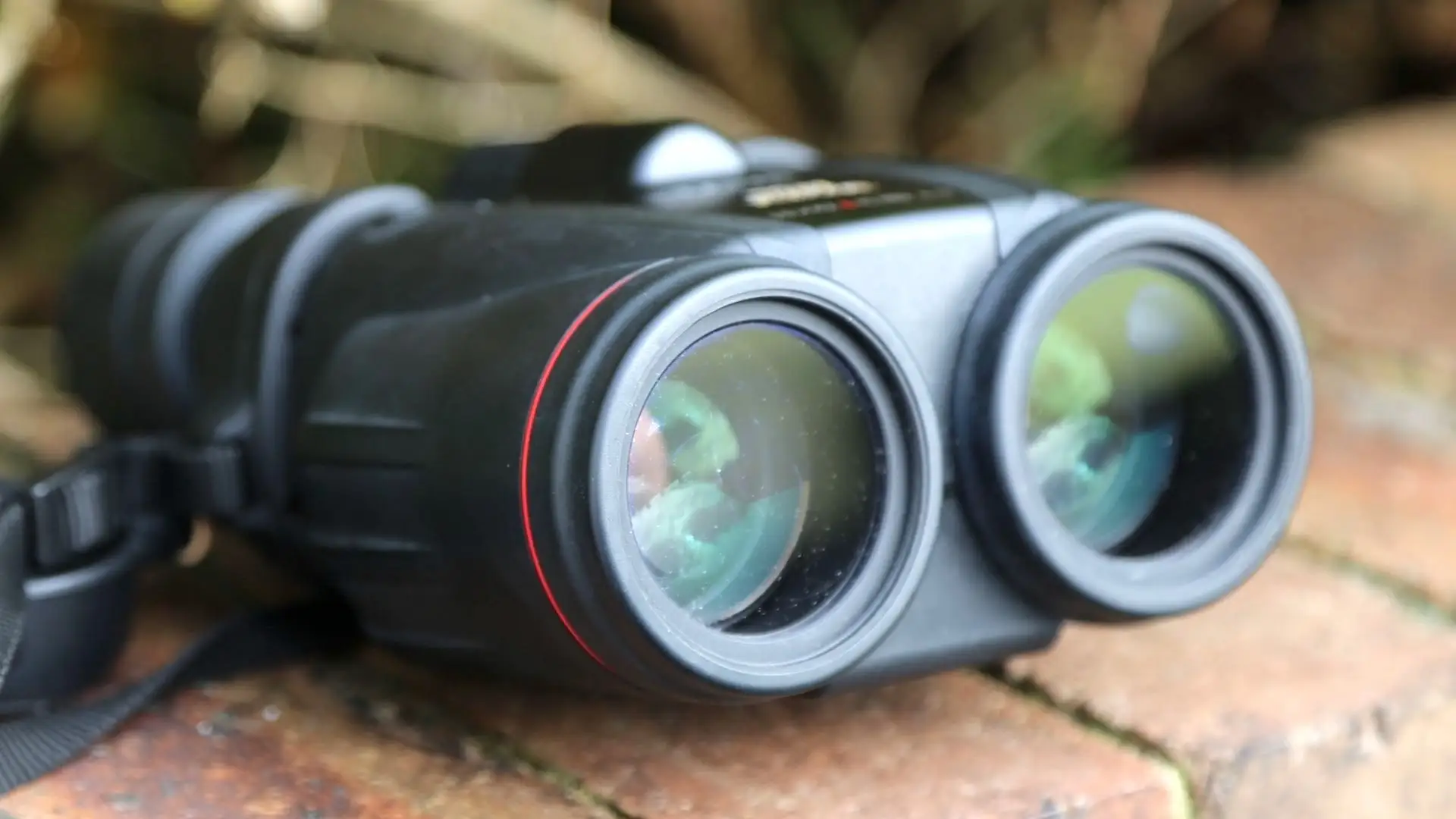
Optical quality also earns unanimous respect. Canon’s inclusion of two UD lens elements per side minimizes chromatic aberration, producing “ultra-clear” views. This benefits wildlife photographers scouting subjects, allowing finer detail discernment. The doublet field flattener keeps edge-to-edge sharpness—important when tracking fast-moving subjects across the viewing field.
Low-light performance gets high marks. With a 4.2 mm exit pupil and large 42 mm objectives, owners note success in dusk wildlife watching and astronomy. One Reddit user said the brightness “makes early morning spotting effortless.”
Common Complaints
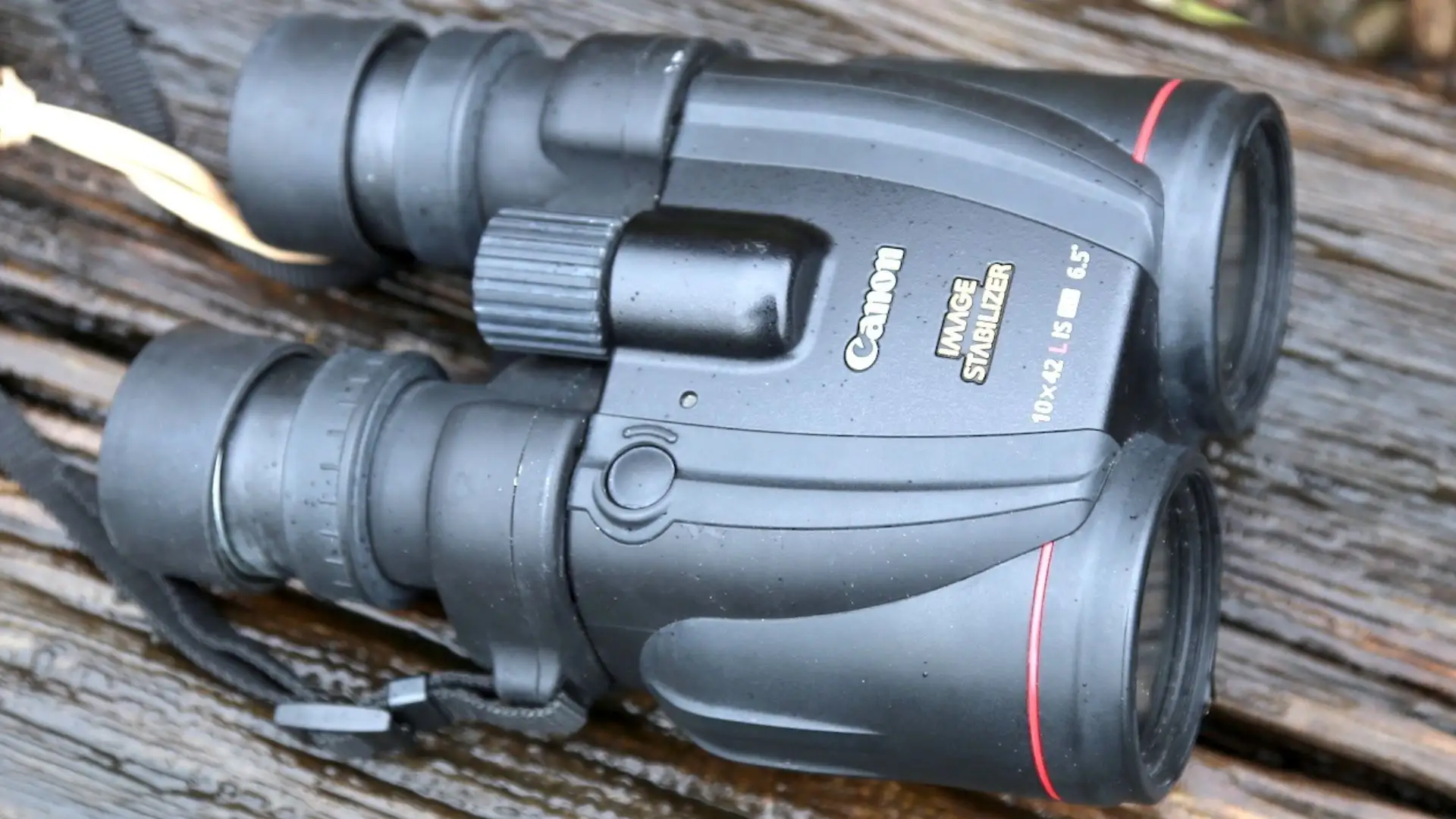
Weight remains the deal-breaker for some. At over 1.1 kg (excluding batteries), these binoculars are heavier than non-stabilized equivalents. Reddit threads note neck fatigue; one owner admitted they’re “a little too heavy to wear around the neck constantly” and prefers stowing them until needed.
Battery life disappoints in cold conditions. Official specs say 2.5 hours at +25°C but only 10 minutes below -10°C with alkaline cells. For winter birding or polar expeditions, this forces frequent replacements or investment in lithium AA cells. A user lamented the “need to carry spares constantly in cold weather.”
Price can be prohibitive. Multiple eBay listings show new units over $1,200, with used examples still near $800. Some balk at spending lens-level money on binoculars, particularly if image stabilization isn’t a priority.
Divisive Features
Portability divides opinion. Some traveling ornithologists accept the heft as the trade-off for unrivalled optical stability; others prefer lighter gear even at the cost of clarity. The manual IS activation button gets mixed comments—some appreciate the control, others want a continuous auto mode.
The AA battery format sees split opinions. Traditionalists value the availability of replacements anywhere; travelers prefer integrated rechargeable packs.
Trust & Reliability
Long-term owners appear satisfied with durability. Rubberized coating survives wet handling, and metallic anti-fog treatments prevent internal haze after years of field use. Trustpilot profiles indicate low incidence of functional failure, with more discussions centered on cost than defects.
Scam concerns are minimal; no major counterfeit reports surfaced in analyzed data. However, users recommend buying from reputable dealers due to the high resale value—fraud risk increases in gray markets, particularly with “imported model” listings lacking manufacturer warranty.
Alternatives
Nikon and Bushnell models are mentioned in market listings, often at a fraction of the cost. For example, Nikon Aculon A211 10x50 binoculars are widely regarded as “good quality lenses” and retail under $100. But none of these match the Canon’s unique blend of L-series optics and image stabilization.
Bushnell Marine binoculars offer waterproof construction for about $133 new, favored for boating, yet they rely entirely on hand stability. For travelers, Canon’s smaller 10x30 IS II sells around $450–$500 but lacks the waterproofing and brightness of the 10x42 L IS WP.
Price & Value
Recent listings show wide variance: pristine units from Japan range $1,200–$1,777, while heavily used examples can be had near $400. This spread reflects both longevity—the product can function for many years—and desirability among niche user groups.
Resale value holds strong, especially for well-maintained units. Buyers swapping from tripods to handheld IS optics see the Canon as a long-term investment. Community tips stress verifying IS function before purchase, as repair costs for stabilization systems can be high.
FAQ
Q: Are the Canon 10x42 L IS WP binoculars suitable for astronomy?
A: Yes—multiple owners report using them for planetary viewing, including clear views of Jupiter’s moons. Image stabilization removes the need for a tripod, making stargazing more accessible.
Q: How heavy are these binoculars and does it impact portability?
A: At about 1.1 kg without batteries, they are heavy for sustained neck carry. Many users store them in a case until actively observing.
Q: Can they handle extreme weather conditions?
A: Waterproof to JIS level 7 and treated with anti-fog coatings, they hold up in rain, sea spray, and high humidity. Sea kayakers and boaters confirm performance in wet environments.
Q: What batteries do they use and how long do they last?
A: Two AA cells—alkaline, NiMH, or lithium. Life is about 2.5 hours in warm conditions, but drops rapidly in extreme cold.
Q: Is the field of view really 65° as Canon claims?
A: Official technical specs list 59.2° under ISO standards; marketing materials sometimes state 65°, possibly using a different calculation method.
Final Verdict: Buy if you’re a serious birder, marine observer, or amateur astronomer seeking tripod-level stability in harsh weather. Avoid if you value lightweight gear or plan prolonged neck carry. Pro tip: For cold climate use, invest in lithium AA batteries to extend stabilization runtime.





