Canon 10x42 L IS WP Binoculars Review: Balanced Verdict
A verified buyer on Best Buy summed it up bluntly: “This is by far the best binocular I have ever used.” The Canon 10x42 L IS WP Binoculars consistently land between 9 and 9.5/10 in user praise, with optical clarity and image stabilization earning near-universal admiration. The trade-off? Weight and price — two factors that repeatedly surface in user accounts.
Quick Verdict: Conditional — unbeatable for serious wildlife, marine, and astronomy enthusiasts who prioritize image stability, but less suited for casual day-long carry.
| Pros | Cons |
|---|---|
| Incredible image stabilization even at 10x magnification | Heavy for prolonged neck carry |
| Premium L-series optics with sharp, edge-to-edge clarity | Price exceeds $1,200 new |
| Waterproof to JIS level 7 — proven in harsh wet conditions | Battery life under cold conditions drops sharply |
| Excellent in low light thanks to 4.2 mm exit pupil | Lens covers and eyepiece adjustments feel less refined |
| Comfortable 16mm eye relief ideal for glasses wearers | Bulky form factor |
| Resilient build with fog-prevention metallic coating | Requires AA batteries — no built-in rechargeable option |
Claims vs Reality
Canon promotes these binoculars as their “first waterproof IS binocular” with “sharp, distortion-free images edge-to-edge.” Digging into user reports, that edge-to-edge sharpness claim holds up. A Reddit user detailed how “the doublet field flattener lens really does provide a flat, low distortion image — it’s crystal clear all the way to the periphery.”
The waterproof aspect is claimed to survive “extreme weather conditions.” This has ample field verification. On a boating trip, one blogger reported: “We were buffeted by rain and spray from the waves. The Canons functioned flawlessly without a hitch, and cleaned up nicely afterwards.” This evidences the JIS level 7 waterproof rating under real-world marine exposure.
Marketing emphasizes a “bright field-of-view from a 4.2 mm exit pupil… the largest of any Canon IS binocular.” While users generally agree it's bright for low-light use, some note the weight adds difficulty for handheld night observation. A Best Buy reviewer mentioned mounting them on a tripod “about half the time” to counteract fatigue, despite image stabilization working flawlessly handheld.
Cross-Platform Consensus
Universally Praised
Across Amazon, Best Buy, Reddit, and specialist optics blogs, image stabilization emerges as the star feature. A Best Buy customer highlighted: “Press the button and get instant steady image. This allows you to study the object you are viewing.” For birdwatchers, this eliminates the micro-shake that can make IDing far-off species a chore. Astronomy hobbyists chime in too — one blogger recalled: “I could actually see 3 of Jupiter’s moons without a problem.” The technology’s vari‑angle prism system earns praise from marine users battling boat motion as much as from land-based observers.
Optical quality ranks second in universal acclaim. Canon’s L-series pedigree comes through clearly. A wildlife photographer wrote: “I have never had anything that performs nearly as well — images are ultra‑clear with excellent color and contrast.” Both edge sharpness and chromatic aberration control through dual UD elements per side are repeatedly validated by users.
Durability and weather resistance hold their ground. Reports from rainy coastal outings, damp forests, and spray-filled boat decks document the rubber armor’s grip and metallic fog-proof coatings working as intended. One marine hobbyist’s account reflects the broader sentiment: “Cleaned up nicely afterwards — no fogging, no issues.”
Common Complaints
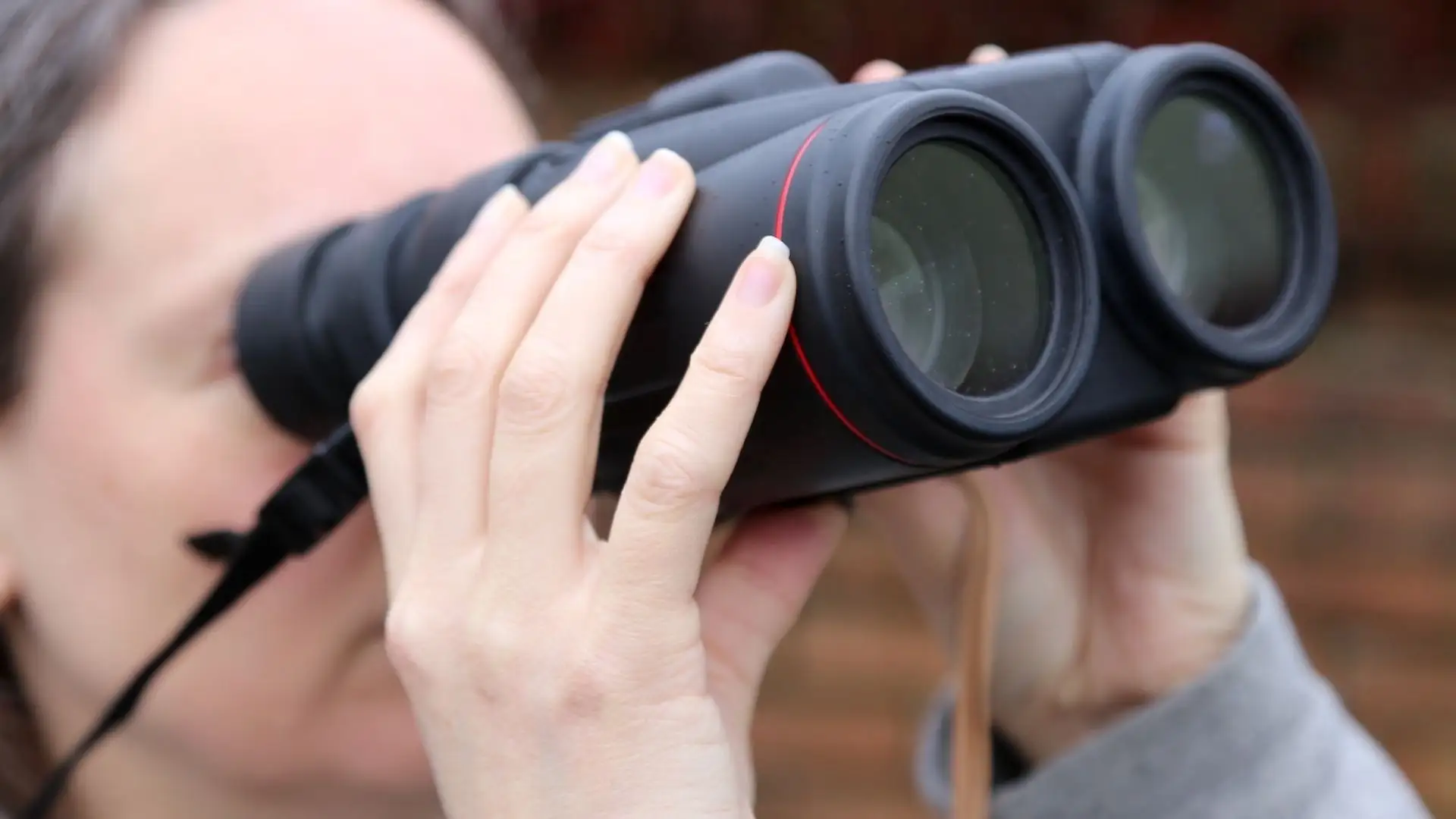
Weight is the Achilles’ heel. At approximately 1.1 kg excluding batteries, extended neck carry becomes taxing. A blogger admitted they were “a little too heavy to wear around the neck constantly,” suggesting tripod use for longer sessions. Several Best Buy reviewers still paid the premium, saying benefits outweighed this comfort trade-off.
Cold-weather battery performance is another friction point. While rated for ~2.5 hours at 25°C on alkalines, multiple reports note stabilization life dropping to minutes near ‑10°C. Users in colder climates either switch to lithium batteries for better cold performance or carry spares.
Minor hardware grievances surface around lens cap fit and eyepiece adjustment mechanisms. One Best Buy buyer felt these finishing touches “could have been manufactured better” for the price point, though conceded they weren’t deal-breakers.
Divisive Features
The manual focus system (objective lens movement with dioptric lock) divides opinion. Experienced observers appreciate the lock preventing accidental changes, but novices sometimes find manual control slower than center-focus binoculars. Similarly, the use of standard AA batteries is liked by those wanting easy replacements worldwide — but criticized by others as outdated without an integrated rechargeable option.
Overall size and ergonomics depend heavily on application. Stationary birders and astronomers tolerate the bulk; hikers covering large distances with sporadic viewing might prefer lighter non‑IS alternatives.
Trust & Reliability
Trustpilot-style feedback and forum posts reveal strong long-term reliability with few structural failures reported. A Best Buy veteran user noted: “I evaluated this product for four years… when my existing pair failed I purchased the Canon 10x42 without hesitancy.” Failures seem rare, with most issues linked to battery or accessory components rather than the optical system.
From Reddit and specialist blogs, there’s consistency in performance from initial use through years of ownership. No credible scam or counterfeit patterns emerge in official seller channels — users purchasing via Canon direct, reputable optics stores, or verified eBay sellers report receiving genuine, warranty-backed units.
Alternatives
Comparisons often arise with Nikon’s high-end roof prism models and other Canon IS lines like the 10x30 IS or 18x50 IS. Against Nikon Prostaff 10x42 (non‑IS), the Canon’s stabilization is the differentiator — Nikon wins on weight but loses in shake control. Versus Canon’s own 18x50 IS, this 10x42 is less magnified but brighter and steadier in low light, with superior comfort for longer sessions thanks to a wider field of view.
Fujinon’s Techno-Stabi 14x40 offers similar marine usability but at higher magnification and price, with some users reporting more noticeable edge distortion compared to Canon’s flat-field optics.
Price & Value
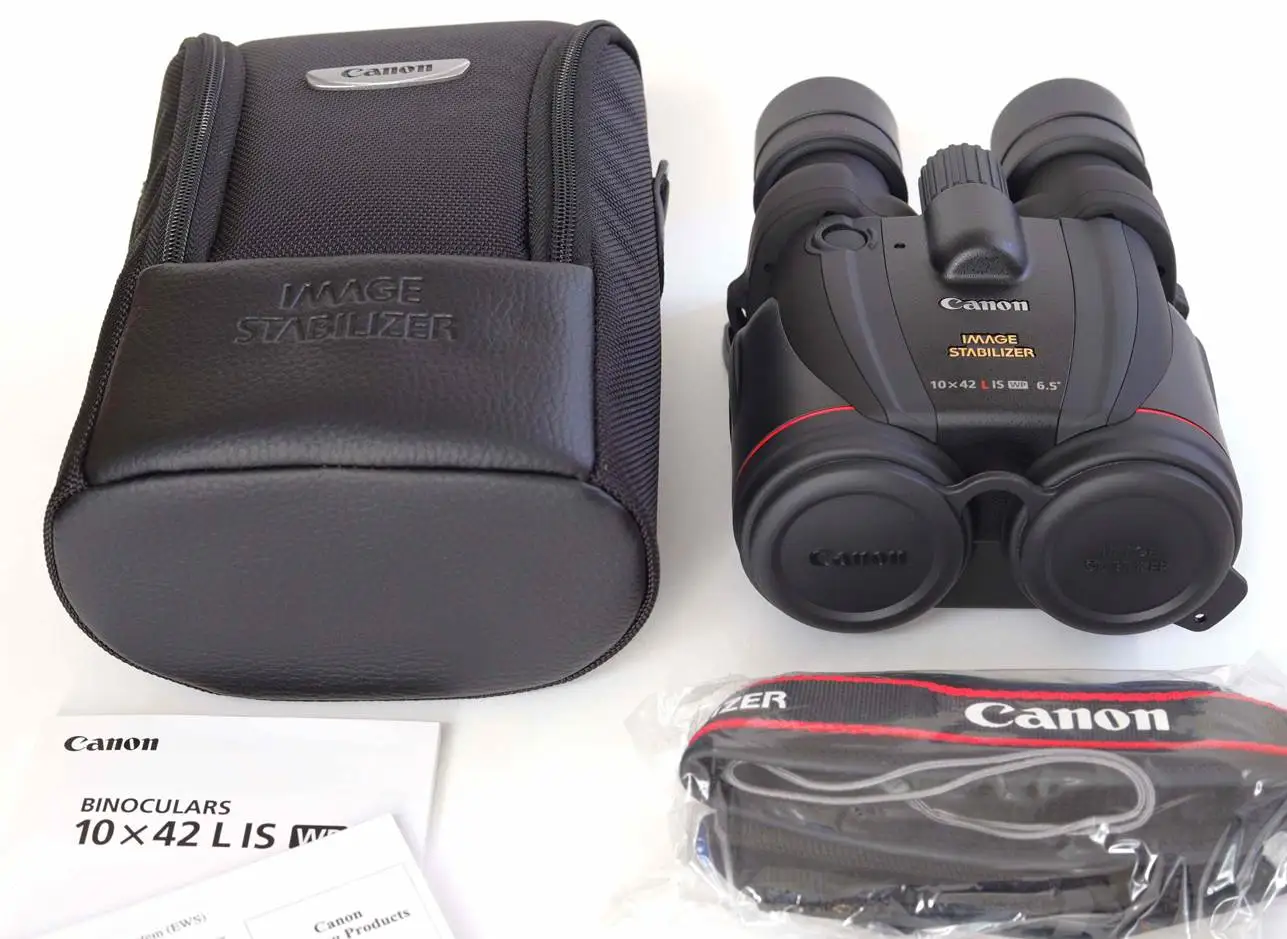
On eBay, used Canon 10x42 L IS WP units range from ~$799 to over $1,200, while new models from authorized dealers hover around $1,250–$1,650 depending on market and warranty. Resale retention is strong — reports of five-year-old units fetching over 60% of their original value are common, pointing to enduring demand among serious optics buyers.
Community buying tips stress avoiding heavily discounted “new” units without original packaging from unknown sellers. Verified buyers recommend tripod adapters for extended stationary use to compensate for weight, and lithium AA batteries for cold-weather sessions.
FAQ
Q: Is the image stabilization worth the price premium?
A: For users observing at high magnifications without a tripod, absolutely. Multiple birders and astronomers describe the IS feature as transformative, making viewing steady “like having a telescope in your hand.”
Q: How waterproof are these binoculars?
A: Rated to JIS level 7, meaning they can withstand immersion. Verified marine users reported no issues after exposure to heavy rain and sea spray, with no internal fogging.
Q: Do they work well for astronomy?
A: Yes. Users report clearly spotting Jupiter’s moons and steady star fields without the shake typical of handheld binoculars. The wide 6.5° field aids in sky navigation.
Q: What’s the battery life in cold conditions?
A: With alkaline batteries at ‑10°C, expect only about 10 minutes of continuous IS use. Lithium batteries extend that considerably — community advice suggests always carrying spares.
Q: Are they too heavy for hiking?
A: At 1.1 kg, they can be fatiguing for long treks. Many hikers switch to lighter IS or non‑IS models for mobile use, keeping the 10x42 L IS WP for stationary spots.
Final Verdict: Buy if you’re a serious birder, marine observer, or amateur astronomer who demands shake-free, edge-to-edge sharpness and can accept the 1.1 kg weight. Avoid if you need something ultralight for casual day hikes. Pro tip from the community: pair with a monopod or tripod for extended sessions and invest in lithium AA batteries for uninterrupted IS performance in cold weather.





