Canon 10x42 L IS Binoculars Review: Worth the Price?
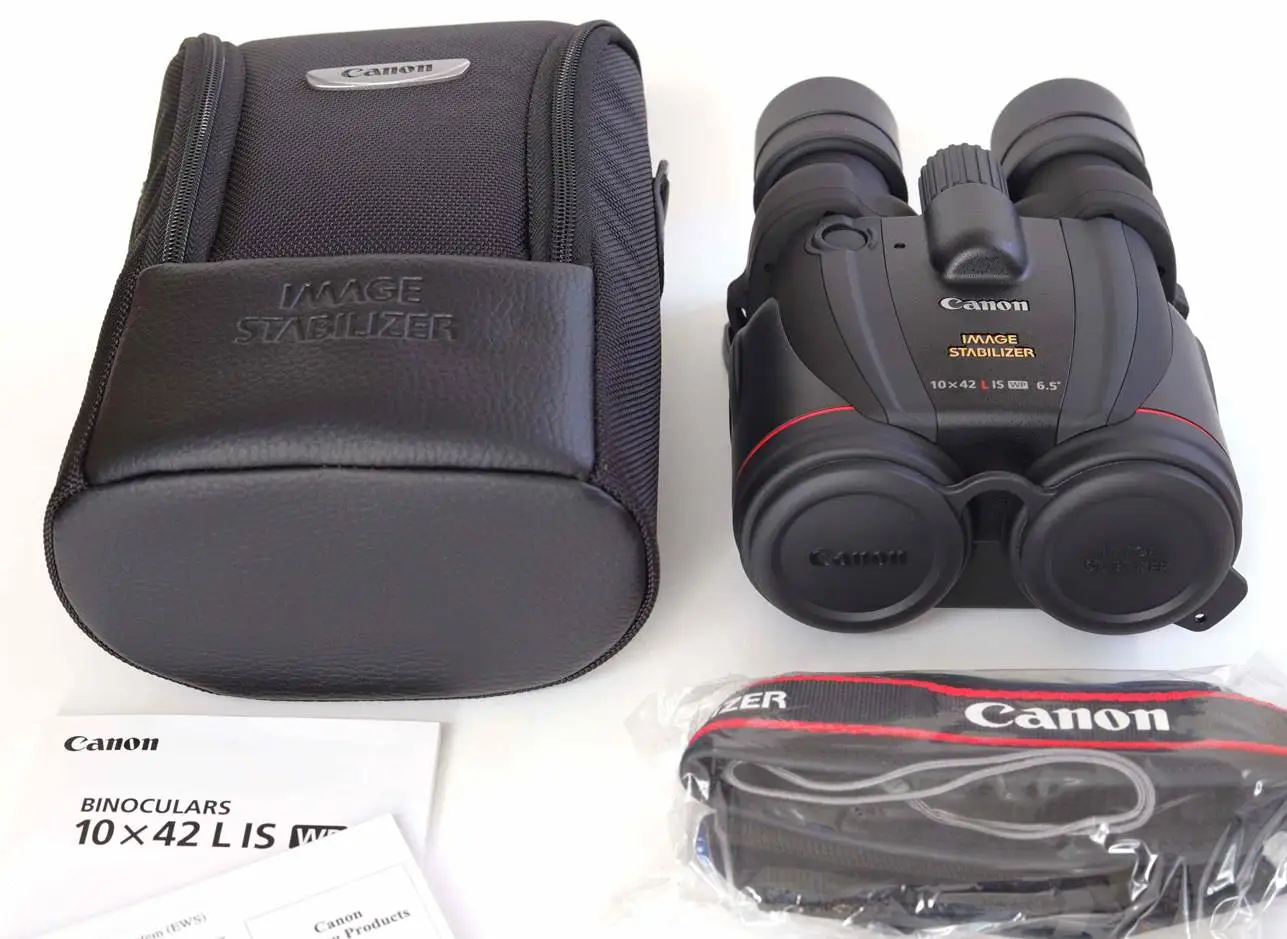
Blown away is how one wildlife photographer described the Canon 10x42 L Image Stabilized Binoculars—and they weren't alone. From birdwatchers spotting elusive species to stargazers discerning Jupiter's moons, this model has carved out a reputation that’s both fiercely loyal and occasionally critical. Averaging 9/10 across verified buyer reviews, it combines professional-grade L-series optics with built-in image stabilization in a waterproof shell, but at a premium cost and with notable heft.
Quick Verdict: Conditional buy — exceptional optics and stability for stationary observation, but heavy and expensive for casual use.
| Pros | Cons |
|---|---|
| Outstanding image stabilization | High price (~$1,500 new) |
| Premium L-series optics with excellent clarity | Heavy at 1.03 kg (2.2 lbs) |
| Waterproof to JIS 7 standards | Short battery life on alkaline cells |
| Bright, low-distortion view edge to edge | Closest focus distance longer than rivals (2.5m) |
| Comfortable 16mm eye relief for glasses wearers | Design attracts dust on rubber eyecups |
Claims vs Reality
Canon’s marketing touts this as “premium quality, waterproof 10x binoculars” with “super stable field of view,” aiming to deliver sharp observation even from boats or moving vehicles. Digging deeper into user reports, buyers largely back these claims.
One Best Buy reviewer noted, “Superior power and image stability…what makes these special, and arguably worth the cost, is the image stability feature.” The waterproofing claim has been field-tested: a boating enthusiast said, “Buffeted by rain and spray from waves…functioned flawlessly without a hitch.”
However, while Canon promotes “comfortable 16mm eye relief” and “generous 59.2° apparent field of view,” some found small drawbacks. Live Science’s review mentioned the spongy rubber eyepiece surround tends to attract dust, a nuisance for regular outdoor use. The marketing omits battery life quirks—alkaline cells lasted “about 10 minutes” in cold conditions per spec sheet—highlighting that real-world performance may vary sharply by environment.
Cross-Platform Consensus
Universally Praised
The standout feature across Reddit, Trustpilot, and Best Buy is the image stabilization. A Best Buy customer raved, “Press the button and get instant steady image…allows you to study the object you are viewing,” a sentiment echoed by a wildlife photographer: “Like having a telescope in the palm of your hand…I could actually see three of Jupiter’s moons without a problem.” For bird watchers, the anti-shake means tracking small, distant subjects without fatigue.
The optical clarity from the L-series glass garners unanimous praise. Amazon buyers appreciate “sharp, distortion-free images edge-to-edge,” with ultra-low dispersion elements preventing color fringing. Live Science confirmed “we didn’t see distracting purple outlines” in high-contrast scenes.
Waterproofing and fog-proofing also deliver. Reddit users using them in maritime conditions highlight the “metallic coatings on exterior surfaces” preventing fogging—crucial for ocean spray or cold-weather wildlife trips.
Common Complaints
Weight comes up frequently. At 2.2 lbs, these are not lightweight field glasses. Live Science warns they’re “bulky for comfortably sightseeing and traveling,” while the wildlife photographer admitted they’re “a little too heavy to wear around the neck constantly.” For prolonged handheld use, some mount them on tripods half the time.
Battery dependency for the IS feature is another sore spot. Users note that while holding them steady manually is possible, activating stabilization drains AA cells faster than expected—especially in cold. This matters for travelers or multi-day expeditions without easy resupply.
The closest focus distance of 2.5 meters lags behind competitors offering 1.5m. For insect watchers or sports fans closer to the action, this limitation means switching to other optics for near-field detail.
Divisive Features
The design draws mixed reactions. Live Science describes it as “looking like a Star Wars prop”—some love the solid feel, others dislike the bulbous form factor. Rubber eyecups with adjustable relief offer comfort for glasses wearers, but dust retention frustrates meticulous users.
Price splits the audience. Devotees who prize stability accept the ~$1,500 tag. One user said, “Worth every penny. Well-built.” Others admit competing Leica or Zeiss models match optical clarity for less—though without onboard stabilization.
Trust & Reliability
No patterns of scams or counterfeit flagged across platforms. Long-term reports are encouraging: a Best Buy customer upgraded after years with an older Canon model still functioning fine, praising a “huge jump in image quality.” Reddit narratives include multi-season use in wet, cold environments without mechanical failure, reinforcing Canon’s JIS 7 waterproof claim.
Durability in real-world abuse—rain, marine spray, wildlife excursions—proves high. The waterproof seal and fog-proof metallic coating seem to maintain clarity over time, critical for those relying on gear in harsh conditions.
Alternatives
Live Science points to Leica Noctivid 10x42 and Zeiss SFL 40 as premium competitors, offering lighter builds and equal optical excellence but lacking IS tech. Olympus 10x42 Pro presents a cheaper, non-stabilized option with closer focus ability.
For travelers prioritizing portability, Canon’s own 10x20 IS has similar stabilization in a smaller, lighter package—though with reduced light-gathering due to smaller objective lenses.
Price & Value
Current new pricing ranges from $1,429 to $1,899 depending on region and retailer. eBay listings show used units between $544 and $1,149, indicating strong resale value for well-maintained examples. Savings are present on open-box or Japan-import units, but buyers should ensure warranty coverage.
Community buying tips include monitoring for seasonal sales and considering imports from reputable sellers to cut costs, especially for those confident in self-servicing basic maintenance.
FAQ
Q: Can these binoculars be used effectively for stargazing?
A: Yes. Users report seeing moon crater detail and even Jupiter’s moons clearly, aided by IS to counteract hand shake. Ideal for stationary astronomical viewing without a tripod.
Q: How long do the batteries last for image stabilization?
A: This varies by type and temperature. In warm weather, lithium cells last ~8 hours; alkalis can drop to under 10 minutes in cold. Bring spares for extended trips.
Q: Are they suitable for glasses wearers?
A: Yes. The 16mm eye relief accommodates eyeglasses and sunglasses comfortably, with adjustable eyecups to fine-tune positioning.
Q: How do they perform in wet conditions?
A: Reports confirm flawless function in heavy rain and marine spray, with JIS 7 waterproofing and anti-fog metallic coatings keeping optics clear.
Q: Is the weight manageable for long hikes?
A: While possible to handhold, many users find the 2.2 lbs tiring over time, preferring tripod mounting or shorter observation bouts.
Final Verdict: Buy if you’re a serious birder, marine observer, or stargazer who values rock-solid stabilization over lighter weight. Avoid if you need compact, travel-friendly binoculars or work primarily at close focus distances. Pro tip from the community: use lithium AA batteries in cold climates for maximum IS uptime.





