Bushnell Golf Phantom 3 Slope Review: Best Value Buy?
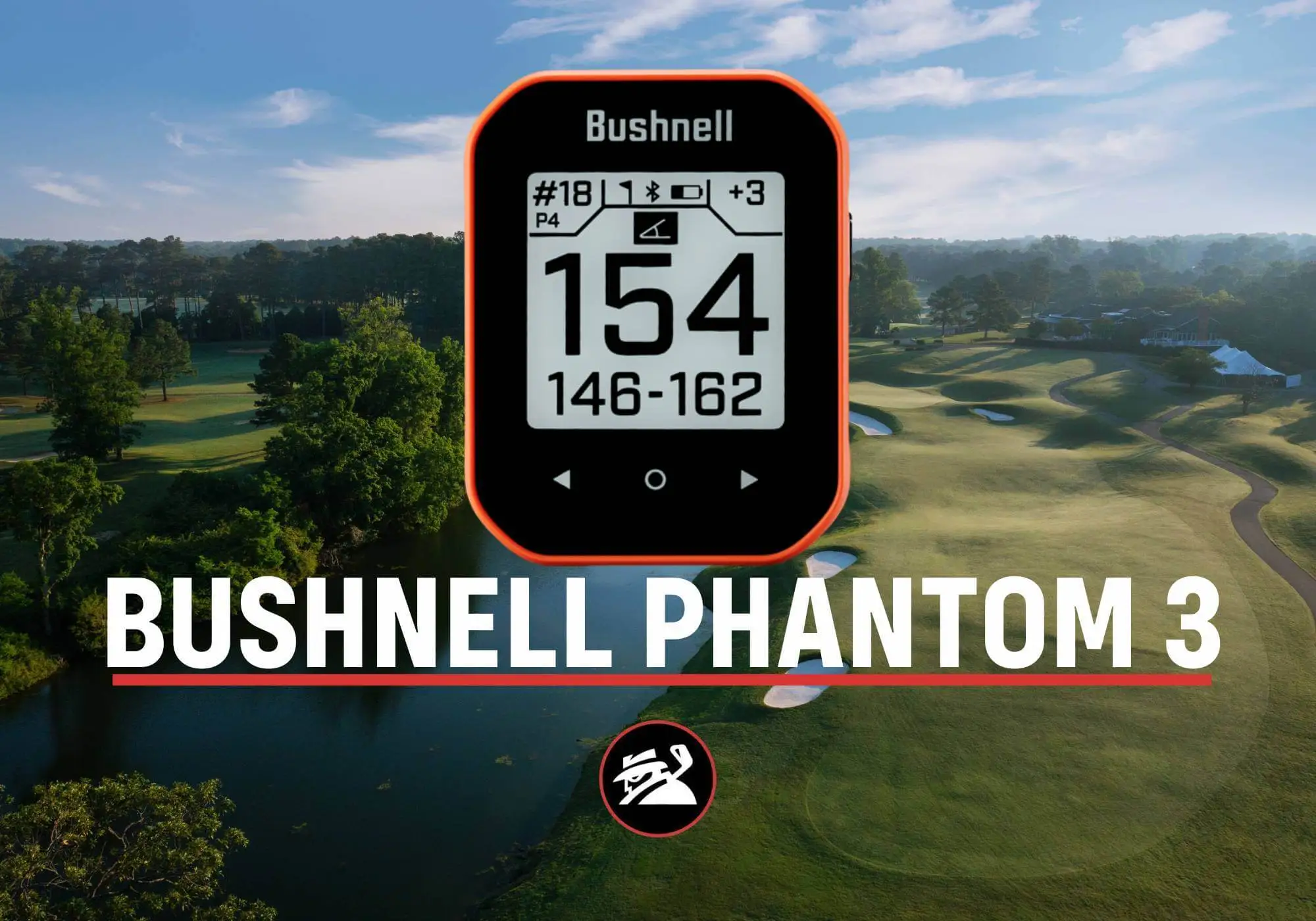
A recurring theme across community reviews is that the Bushnell Golf Phantom 3 Slope feels like “a massive improvement over previous models” largely because it finally swaps buttons for a touchscreen, while staying in the same compact, no‑frills GPS lane. The tone is unusually confident for a $150 handheld: MyGolfSpy even calls it the “best value” handheld GPS of 2025, and several reviewers echo that the device fades into the background during play in a good way. Golf Monthly’s Dan Parker frames that as the core compliment: the Phantom 3 is “how little you notice it out on course.”
That hook matters because this product isn’t trying to be everything. It’s pitched as quick yardages plus slope compensation, and users keep coming back to simplicity and speed rather than bells and whistles. A reviewer on Plugged In Golf summed up the overall impression bluntly: “accurate and easy to use,” with the touchscreen and slope as “a big upgrade from the previous model.” In other words, the Phantom 3’s wins are about friction reduction, not feature sprawl.
From the available feedback, the consensus verdict lands squarely in “strong buy for the right golfer.” It’s repeatedly described as ideal for cart golfers and anyone who wants reliable front/center/back numbers with minimal fiddling. The only real “but” across platforms is that if you want full hole maps or a premium color display, you’ll hit the Phantom 3’s ceiling fast.
Quick Verdict
Yes — for golfers who want fast, slope‑adjusted yardages without a watch or rangefinder.
| What users like most | Evidence from feedback | What users dislike most | Evidence from feedback |
|---|---|---|---|
| Touchscreen usability | GetsGolf says touchscreen “makes navigation a breeze” | No full hole mapping | GetsGolf: “no full hole mapping… not the entire layout” |
| Slope‑adjusted distances | GetsGolf calls it “invaluable for club selection” | Screen not premium‑level | GetsGolf notes screen “not as high‑resolution as… premium golf watch” |
| Strong Bite magnet for carts | GetsGolf: “integrated magnet is super strong” | Black‑and‑white style limits detail | MyGolfSpy warns against buying if you want “color display and hole layout” |
| Accuracy vs other devices | Plugged In Golf found agreement within “a yard or two” | — | — |
| Compact, lightweight carry | GetsGolf: “small and light… easy to clip” | — | — |
Claims vs Reality
Bushnell’s marketing leads with slope technology and an intuitive touchscreen UI, plus “power for 72 holes” battery life and a strong cart magnet. Digging deeper into user reports, most of those claims hold up, but with clear boundaries around what the Phantom 3 is not.
Claim 1: “New patented slope compensated distances” make club selection easier.
The community feedback backs this up directly. GetsGolf labels slope‑adjusted distances “a major plus,” emphasizing the real‑world value: “Knowing the true yardage on an uphill or downhill shot is invaluable for club selection.” Plugged In Golf echoes that slope distances are always on unless toggled off, and frames the benefit around hilly courses where line of sight is blocked. The slope feature isn’t treated as gimmickry; it’s described as the reason to upgrade from Phantom 2.
There isn’t any meaningful pushback in the available sources about slope accuracy. Instead, the “reality gap” is more about scope: slope compensation helps shots, but it doesn’t replace detailed hole visualization. Users who need a full strategic map still have to supplement with an app or another device.
Claim 2: “Touchscreen with intuitive UI” reduces interaction.
Multiple reviewers treat this as the Phantom 3’s defining improvement. GetsGolf calls it “a massive improvement over previous models,” saying it “lets you get to the information you need with a simple tap.” Golf Monthly similarly praises that the touchscreen “seriously enhanc[es] usability” and makes scrolling between screens easier than side buttons.
The nuance is that while the touchscreen is universally praised for speed, the overall display remains utilitarian. GetsGolf is polite but clear: the screen is brighter and clearer than before, yet “not as high‑resolution as what you’d find on a premium golf watch.” So the claim of “intuitive UI” is real in function, but not in premium feel.
Claim 3: “Power for 72 holes / 18+ hour battery.”
Official specs emphasize up to four rounds per charge. Golf Monthly reinforces that in practice, noting “The battery lasts for 4 rounds of golf roughly,” which aligns with the marketing line. Plugged In Golf doesn’t report battery anxiety either; their experience reads as comfortably all‑day.
No sources in the provided dataset contradict that rating. The only small discrepancy is that some official pages list “14+ hour battery life” while Amazon/Bushnell NZ cite “18 hrs.” Without user pushback, the safe synthesis is: while officially advertised between ~14–18 hours depending on region, user reviews describe it as effectively four rounds.
Cross-Platform Consensus
Universally Praised
The touchscreen upgrade is the loudest applause line across platforms. For golfers who hated old button‑driven handhelds, the Phantom 3 feels like a different category of convenience. GetsGolf stresses that the touch interface “eliminates the need to navigate menus using side buttons,” and calls it “sleek and intuitive.” Golf Monthly extends that idea into on‑course psychology: a better screen means you don’t think about the device much. Their reviewer describes the Phantom 3 as something that you almost forget is there, because you can flick to hazards, GreenView, or score entry without stopping play.
Slope‑adjusted yardages are the second pillar of praise, especially for mid‑handicap players trying to avoid mis‑clubbed approach shots. GetsGolf ties slope directly to decision quality, while Plugged In Golf frames it as a practical edge on courses with blind or elevated targets. Their reviewer highlights that even if you still use a laser rangefinder, Phantom 3 gives a fast “middle distance” baseline that keeps the round flowing. That “flow” angle keeps returning: slope distances plus auto‑advance mean fewer distractions and fewer delays.
Cart golfers consistently benefit from the Bite magnetic mount. GetsGolf calls the magnet “super strong,” and Plugged In Golf explains how it becomes a shared reference point for cart mates who glance over or ask for numbers. MyGolfSpy leans on the same use case, saying buy this if you like carts with built‑in GPS screens but often play courses without them. The Phantom 3’s cart‑mounting strength is framed as both convenience and security — it stays put without needing a case or lanyard fuss.
Finally, accuracy is treated as a given rather than a debate. Plugged In Golf compares it to a Garmin S70 smartwatch and a laser rangefinder, finding distances typically within “a yard or two,” and mostly in agreement. GetsGolf doesn’t quantify, but their praise for slope accuracy implicitly assumes reliable baseline GPS yardages. For golfers who want trustable front/center/back numbers without paying for a premium watch, that accuracy story is central.
Common Complaints
A recurring pattern emerged around what the Phantom 3 doesn’t show. If you’re the kind of golfer who wants a full‑color hole layout or detailed green‑side strategy view, the Phantom 3 is repeatedly flagged as limited. GetsGolf is direct: “no full hole mapping… not the entire layout.” MyGolfSpy sharpens the warning, advising against purchase if you’re “wanting a gps with a color display and hole layout.” Golf Monthly puts the same criticism in softer terms, listing “no full hole view, like some handheld gps” as its main reason to avoid.
This complaint affects two user types most: golfers who use GPS to plan tee shots around doglegs, and golfers who rely on visual hole maps instead of hazard lists. The Phantom 3 provides distances to hazards and up to six layups, but not the full landscape. In the feedback, that’s framed as a tradeoff for price and simplicity, but it’s still the primary drawback.
The second common friction point is display quality relative to premium devices. GetsGolf acknowledges brightness and clarity improvements, but says the screen is “not as high‑resolution as what you’d find on a premium golf watch.” For golfers transitioning from high‑end wearables, the Phantom 3 can feel visually basic. That said, even this “con” is tempered with context: GetsGolf adds it “is not designed or built to be” premium‑resolution, suggesting users accept the compromise.
Divisive Features
The Phantom 3’s minimalist approach is divisive mostly by expectation. Some reviewers celebrate that it provides “precise, essential information without any hassle” (GetsGolf), while others caution that the black‑and‑white, number‑first interface won’t satisfy golfers who want a richer graphical experience. Golf Monthly notes Bushnell cleaned up the “rudimentary” 8‑bit feel of older models, but still implicitly positions Phantom 3 as functional rather than luxurious. In short, if you want fast numbers, the simplicity is a feature; if you want a course‑planning tool, it’s a limitation.
Trust & Reliability
No scam or payment‑security concerns appear in the provided Trustpilot‑style material; the text reads like a standard editorial review rather than a complaint thread. The reliability narrative instead centers on brand trust and consistent on‑course behavior. Plugged In Golf anchors that by describing repeat, real‑round accuracy checks against a smartwatch, sprinkler heads, and a laser rangefinder, and calling the results “very well” performing.
Long‑term durability stories aren’t explicitly included in the dataset, but the tone from Golf Monthly and GetsGolf points to confidence in build and day‑to‑day use. Golf Monthly calls the casing “premium” and emphasizes that the Phantom 3 withstands being mounted on a cart frame and handled repeatedly during rounds. The overall durability impression is steady rather than dramatic — it’s treated as a dependable tool, not a fragile gadget.
Alternatives
Only a few direct competitors are mentioned in the feedback. Plugged In Golf compares the Phantom 3 to Bushnell’s own Ion watch line, noting you can “get the same features in the base bushnell ion watch” if you prefer wearability, and that the Ion Elite for about $50 more is tempting for watch‑first users. Their comparison frames the choice around form factor: handheld simplicity and a larger screen versus a smaller, always‑on wrist display.
They also cite the Shot Scope H4 as a similarly priced device that adds “true shot tracking,” which may appeal to golfers more focused on stats and post‑round analysis. The underlying implication: Phantom 3 wins on speed and slope distance convenience, while alternatives win if you want deeper tracking or a different format.
Price & Value
At around $149.99 retail, the Phantom 3 is widely framed as good value for what it does. Plugged In Golf calls the $20 increase over Phantom 2 “reasonable,” given touchscreen, slope, and stat tracking additions. MyGolfSpy’s bottom line pushes value even harder, labeling it the “best value golf gps handheld of 2025,” and warning readers not to underestimate it because of size and price.
Resale signals from eBay listings show new units hovering in the $139–$150 range, which aligns with retail and suggests stable demand rather than heavy discounting. For buyers, that means waiting for deep clearance may not be necessary; the price already sits in “budget premium” territory. The most repeated buying tip in spirit is to match expectations: this is a value handheld for quick yardages, not a full‑map GPS.
FAQ
Q: Does the Phantom 3 Slope provide accurate distances compared to watches or lasers?
A: Reviews describe it as accurate within normal GPS tolerance. Plugged In Golf compared it to a Garmin S70 and a laser rangefinder and found most yardages matched, with only “a yard or two difference” occasionally. Users treat accuracy as dependable for club selection.
Q: What’s the biggest upgrade over the Phantom 2?
A: The touchscreen. GetsGolf says it’s “a massive improvement over previous models” because you no longer navigate by side buttons. Golf Monthly also highlights that the new touch screen “seriously enhanc[es] usability,” making it quicker to access hazards, GreenView, and scoring.
Q: Will it show full hole maps or color layouts?
A: No. Multiple reviews flag this. GetsGolf notes “no full hole mapping,” and MyGolfSpy says don’t buy it if you want “a color display and hole layout.” It shows front/center/back and hazard distances, plus GreenView for the green shape.
Q: Is the magnet strong enough for cart use?
A: Yes, and it’s a standout feature. GetsGolf calls the Bite magnet “super strong,” and Plugged In Golf says it attaches securely to the cart frame and stays put all round. MyGolfSpy frames it as ideal for cart golfers who want built‑in GPS convenience.
Q: How long does the battery last in real play?
A: User reviews match the marketed multi‑round claim. Golf Monthly reports the battery lasts “for 4 rounds of golf roughly,” aligning with Bushnell’s 72‑hole / 18‑hour rating. No feedback in the dataset suggests major battery shortfalls.
Final Verdict
Buy the Bushnell Golf Phantom 3 Slope if you’re a cart golfer or minimalist who wants fast front/center/back numbers with slope compensation and a touchscreen that doesn’t slow play. Avoid it if your game relies on full hole maps, color layouts, or a premium‑grade display. Pro tip from the community: let auto hole advance and slope stay on for everyday rounds, then toggle slope off for competitions.