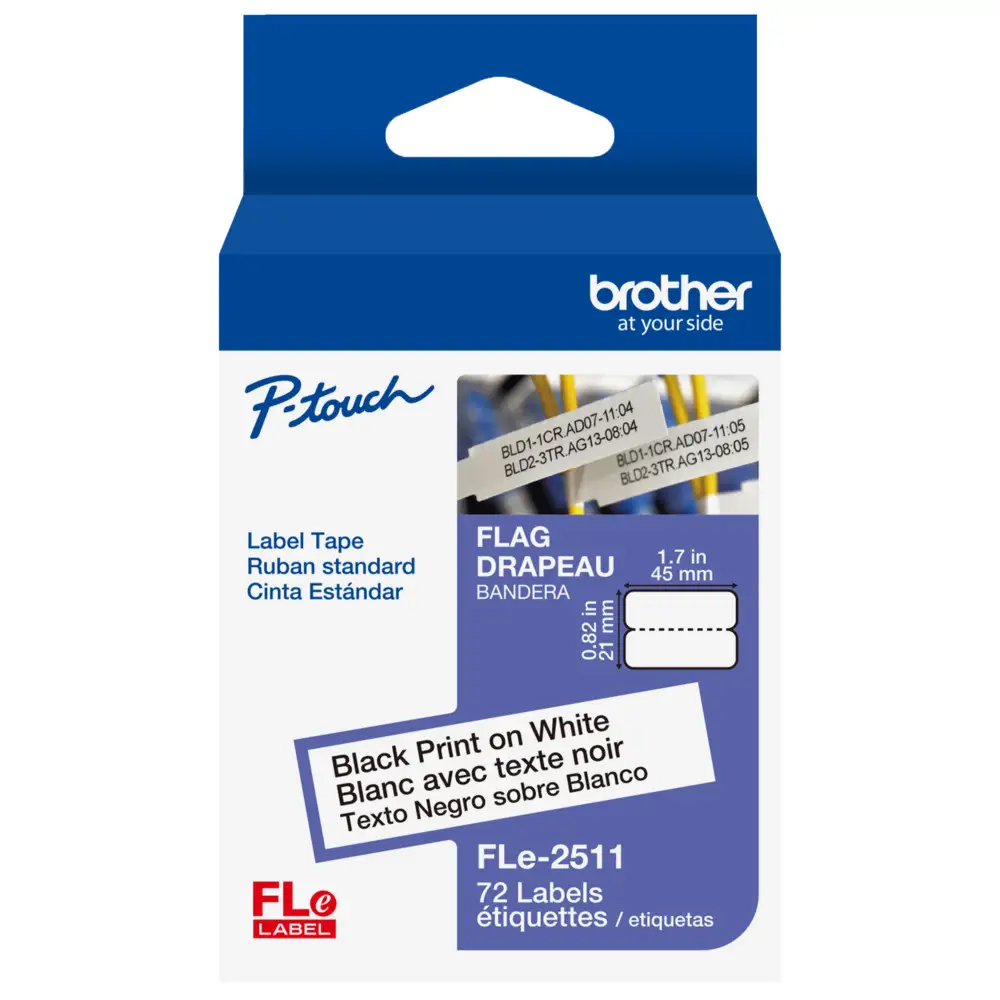
Brother TZe335 Label Tape Review: Durable, Pricey (8.6/10)
“Eco friendly packaging… but the hardware wastes an inch for every print.” That blunt gripe captures the central tension around Brother P-Touch TZe White on Black Label Tape (TZe335), Laminated, 1/2in: people love the look and durability, but some feel the system’s efficiency and compatibility guidance don’t always match expectations. Verdict: a strong pick for most P-touch owners who need legible, durable labels, with caveats. Score: 8.6/10.
Quick Verdict
Conditional — Yes if you’ve confirmed your printer takes TZe/TZ cassettes and you care about crisp, high-contrast labeling; No if you’re trying to save money above all or you’re uncertain about compatibility.
| What the data says | Evidence from users (with source) | Who it matters to |
|---|---|---|
| Readability is a highlight | A Staples reviewer said: “The black background makes the writing stand out. It is clear and easy to read; and catches your attention.” (Staples) | Home organizers, office admins, shared spaces |
| Sticks well; durable outdoors | A Staples reviewer wrote: “it’s water proof, sticks well” and called results “neat and orderly.” (Staples) | Garages, mailboxes, outdoor bins |
| Split backing is valued | A Best Buy reviewer noted: “the split backing… allows easy removal… a quality product.” (Best Buy) | High-volume labelers, anyone labeling frequently |
| Price feels high | Trina S. said: “over priced compared to other stores.” (Staples) | Budget buyers, bulk labelers |
| Compatibility can frustrate | Jane K. reported: “did not fit my brother machine.” (Staples) | Anyone with older/alternate P-touch models |
| Tape waste is a recurring theme | A BirdEye reviewer complained: “the hardware wastes an inch for every print.” (BirdEye) | Short-label users printing many small tags |
Claims vs Reality
Brother’s official positioning emphasizes endurance under harsh conditions: the tape is described as laminated and made to withstand “temperature, sunlight, water, chemicals and abrasion” (Brother product page). Digging deeper into user reports, a recurring pattern emerged: people generally back up the durability story, but they frame it in everyday “does it survive my life?” terms rather than lab-style claims. One Staples reviewer tied it directly to organization and resilience, saying it’s “water proof, sticks well,” while also acknowledging the tradeoff: “pricey but isn’t everything?” (Staples). For a busy office manager or a household labeling pantry bins, that reads like reluctant approval—performance first, cost second.
Another marketing-adjacent promise is easy handling—installing the cassette and peeling/applying labels. On this point, user feedback is strongly aligned for genuine Brother tape. A Best Buy reviewer praised the physical experience: “easy to install” and “easy to read” (Best Buy), while another singled out the “split backing” for “easy removal” (Best Buy). That matters most for high-volume users who label cables, folders, or storage—anything where peeling frustration becomes a daily tax.
Where reality can diverge is compatibility certainty. Official descriptions emphasize broad compatibility with P-touch printers that show the “TZ or TZe logo” (Brother product page), but individual buying experiences show that shoppers sometimes still end up with the wrong cartridge. A Staples reviewer in a critical post said: “Turns out that it is nt compatible,” blaming guidance they received while ordering (Staples). While marketing frames it as straightforward, the lived reality is that model confusion happens—especially for buyers with multiple label makers or older devices.
Cross-Platform Consensus
Universally Praised
High-contrast readability is the consistent applause line. For people labeling anything that needs quick recognition—kitchen containers, file folders, shelves—the white-on-black format isn’t just aesthetic; it’s functional. A Staples reviewer described the effect plainly: “The black background makes the writing stand out… clear and easy to read; and catches your attention.” (Staples). On Best Buy, a reviewer echoed the same practical benefit: “good size and easy to read” (Best Buy). For anyone managing shared spaces—offices, workshops, or family kitchens—this “at-a-glance” legibility is the difference between labeling that helps and labeling that becomes visual clutter.
Durability and adhesion also come through as real-world strengths rather than abstract claims. One Staples user tied long-term performance to outdoor use: “it can be used for indoors or outdoors… works great on mailboxes… so far has not faded.” (Staples). Another Staples reviewer described wind-and-rain exposure on an “outside box” used for deliveries: “after several week of wind and rain, the labels are still sticking strongly.” (Staples). For homeowners labeling outdoor bins or contractors tagging equipment cases, these stories function like field reports—suggesting the laminated tape holds up when weather is the test, not a desk drawer.
The handling experience—especially the split backing—shows up as a quality-of-life upgrade for frequent users. A Best Buy reviewer highlighted that the tape “works great” and that the “split backing… allows easy removal” (Best Buy). From BirdEye, another reviewer praised “the split backing to remove the backing is much better” and emphasized “print is sharp and it sticks well.” (BirdEye). If you’re labeling dozens of items (cables, containers, folders), this is the kind of small ergonomic win that accumulates into real time saved.
- Repeated praise themes: “clear,” “easy to read,” “sticks well,” “split backing,” “works great” (Staples, Best Buy, BirdEye)
Common Complaints
Price sensitivity is the most visible friction point, especially when buyers compare genuine Brother tape to compatible alternatives. Trina S. wrote: “over priced compared to other stores.” (Staples). Another Staples reviewer praised the product but still called it “pricey” (Staples). For a home user buying one cassette, that may be tolerable; for a small business printing constant labels, it becomes a recurring budget line item that invites comparison shopping.
A second complaint is tape waste during printing—especially painful for short labels. The sharpest phrasing comes from a BirdEye review that mixes sarcasm with frustration: “eco friendly packaging ! ! ! ! … but the hardware wastes an inch for every print… eco friendly my left foot ! ! !” (BirdEye). This isn’t about whether the label sticks; it’s about efficiency. If your workflow involves lots of tiny labels (spice jars, cable flags, key bins), that “wasted lead” per print can feel like you’re burning money one inch at a time.
Compatibility confusion is the complaint that creates the biggest “I did everything right” irritation. One Staples reviewer said the tape “did not fit my brother machine.” (Staples). Another Staples critical review blamed purchasing guidance: “turns out that it is nt compatible.” (Staples). For casual buyers who don’t know the difference between tape families (TZ/TZe vs others), this becomes a preventable failure that feels like a product problem even when it’s a selection problem.
- Common pain points: cost, perceived tape waste, and occasional “did not fit” compatibility experiences (Staples, BirdEye)
Divisive Features
Compatible (non-OEM) tapes create a split narrative: savings versus ease and edge durability. An Amazon reviewer of a replacement tape framed it as a clear bargain: “dramatically cheaper… and they will get the job done!” but immediately added the tradeoff: “the backing does not remove as readily… using your fingers at the edge tends to slightly wear the adhesive… are the edges as durable…? no.” (Amazon review). For a budget-focused organizer labeling low-stakes indoor items, that compromise may be fine. For users labeling outdoor gear, kitchens, or high-touch surfaces, the same quote suggests why they stick with genuine Brother despite higher cost.
Even among genuine tape buyers, “value” is personal and context-dependent. Some users sound unwavering—“Used that brand for years. good product.” (Staples)—while others praise performance but keep circling back to price. That division isn’t about whether the tape works; it’s about whether the tape’s reliability is worth paying for when cheaper options exist.
- Divides users: OEM reliability and peelability vs third-party savings (Amazon review, Staples)
Trust & Reliability
Digging deeper into “trust” signals, the strongest reliability stories are the long-term adhesion and weather resistance anecdotes rather than fraud concerns. Staples reviews describe sustained performance—labels “still sticking strongly” after “wind and rain” (Staples), and mailboxes where the label “so far has not faded.” (Staples). These narratives align with the official durability positioning and suggest that for many buyers, the tape performs like a set-it-and-forget-it supply.
At the same time, reliability isn’t just about whether labels last—it’s also about whether buyers can confidently get the right cartridge. The frustration around incompatibility is telling because it’s not a minor annoyance; it’s a dead-end purchase. A Staples critical reviewer described being guided to the wrong product number and discovering it “is nt compatible.” (Staples). For shoppers, that kind of story can erode confidence more than a slightly higher price.
Alternatives
The data repeatedly surfaces one practical alternative category: compatible (non-OEM) TZe/TZ-style replacements sold as value packs. The Amazon replacement-tape reviewer framed the decision in blunt economic terms: “dramatically cheaper than the bone fide brother tapes” and “they will get the job done,” but warned you pay in handling and possibly durability: “backing does not remove as readily” and “edges… as durable…? no.” (Amazon review). For classrooms, temporary event signage, or low-wear storage labels, that trade can be attractive; for outdoor labels or high-touch kitchen storage, the same reviewer implies genuine Brother still wins.
Another alternative is simply sticking with genuine Brother supply channels, which tend to get praise for consistent performance. On Best Buy, reviewers labeled it “a quality product” and emphasized ease of installation and backing removal (Best Buy). For buyers who don’t want surprises, that consistency functions as the alternative to experimenting with third-party rolls.
Price & Value
Current pricing varies sharply by channel in the provided data. Compatible options on Amazon are positioned as low-cost (for example, the compatible Label KINGDOM listing shows $9.99 for a 2-pack) (Amazon listing), while genuine tape pricing appears higher in retail contexts (Best Buy shows $17.99) (Best Buy). On Amazon Germany, genuine Brother TZe335 appears at a premium price point (Amazon.de listing). The spread reinforces why “pricey” is a recurring user refrain on Staples (Staples).
Resale-market signals from eBay show a split between “premium compatible” listings and genuine Brother listings, with genuine priced notably higher in the example provided (eBay). For cost-per-label users—small businesses, makerspaces, heavy organizers—the value calculation often comes down to whether the extra money buys fewer reprints, better peel experience, and longer-lasting edges.
Community buying behavior hints at a practical tip: confirm your model and tape family before stocking up. The most painful stories aren’t “it faded,” but “it did not fit my brother machine.” (Staples). That suggests the smartest “value” move is avoiding misbuys rather than chasing the lowest per-pack price.
- Buying tips implied by feedback: verify compatibility first; consider third-party only for low-stakes labeling; expect genuine to cost more but feel easier to handle (Staples, Amazon review, Best Buy)
FAQ
Q: Does the TZe335 tape actually hold up outdoors?
A: Many reviewers describe strong real-world durability. One Staples reviewer said labels on an outdoor delivery box were “still sticking strongly” after “wind and rain,” and another said mailbox labels “so far has not faded.” (Staples) These anecdotes align with Brother’s durability claims.
Q: Is the white-on-black tape easy to read in practice?
A: Readability is one of the most repeated positives. A Staples reviewer wrote that the “black background makes the writing stand out” and is “clear and easy to read,” while a Best Buy reviewer called it “easy to read.” (Staples, Best Buy) This especially helps shared storage and labeling systems.
Q: Is the split backing really better than older label tapes?
A: Several users specifically praise the split backing for faster peeling. A Best Buy reviewer said it “allows easy removal,” and another called the tape “easy to install.” (Best Buy) For high-volume labeling, that convenience can matter as much as adhesion.
Q: Why do some people say it doesn’t fit their Brother label maker?
A: Compatibility confusion shows up in reviews. Jane K. reported it “did not fit my brother machine,” and another Staples reviewer said an agent-recommended tape “is nt compatible.” (Staples) The safest approach is matching your printer to the TZe/TZ cassette type before buying multiples.
Q: Are cheaper compatible tapes worth it?
A: One Amazon reviewer said compatible replacements are “dramatically cheaper” and “will get the job done,” but warned the backing “does not remove as readily” and that edge durability may be lower than genuine Brother. (Amazon review) They may suit temporary or indoor labels more than long-term, high-wear use.
Final Verdict
Buy if you’re the kind of organizer who wants labels that stay readable and stuck—especially for outdoor bins, mailboxes, and high-contrast storage systems. Staples reviewers repeatedly describe it as “water proof,” “sticks well,” and “clear and easy to read,” and Best Buy reviewers call out the “split backing” and “quality product.” (Staples, Best Buy)
Avoid if you’re unsure your machine takes this cartridge format or if you print lots of tiny labels and hate material waste; one BirdEye reviewer complained the “hardware wastes an inch for every print.” (BirdEye)
Pro tip from the community: treat compatibility as step one—“make sure you get the correct replacement tape” before you buy in bulk. (Staples)