Brother HL-L8360CDW Toner Set Review: Worth the Cost?
The Brother HL-L8360CDW High Yield Toner Cartridge Set earns strong praise from dedicated office users and creative professionals, landing a solid 9/10 based on broad cross-platform feedback. While ISO ratings promise 4,000 pages for color and 4,500 for black, the reality—according to multiple reports—is that careful printing habits can push those numbers higher. For high-volume workgroups, the set’s genuine compatibility and vivid output deliver standout performance, yet some users wrestle with price concerns and the lure of third-party alternatives.
Quick Verdict: Conditional buy for those who prioritize print quality and reliability over upfront cost.
| Pros | Cons |
|---|---|
| Genuine Brother design ensures optimal compatibility | Higher cost than third-party alternatives |
| Vivid, professional-grade colors across all media types | Genuine yields may fall slightly short under heavy coverage |
| High yield reduces replacement frequency | Super high-yield options deliver better value for true power users |
| Easy installation with secure fit | Compatible third-party sets risk print defects |
| Consistent performance over months of use | Toner cost can strain small business budgets |
| Integrated with HL-L8360CDW’s full capabilities | Color cartridges yield less than black |
| Suitable for graphics-heavy workloads | No borderless printing possible |
Claims vs Reality
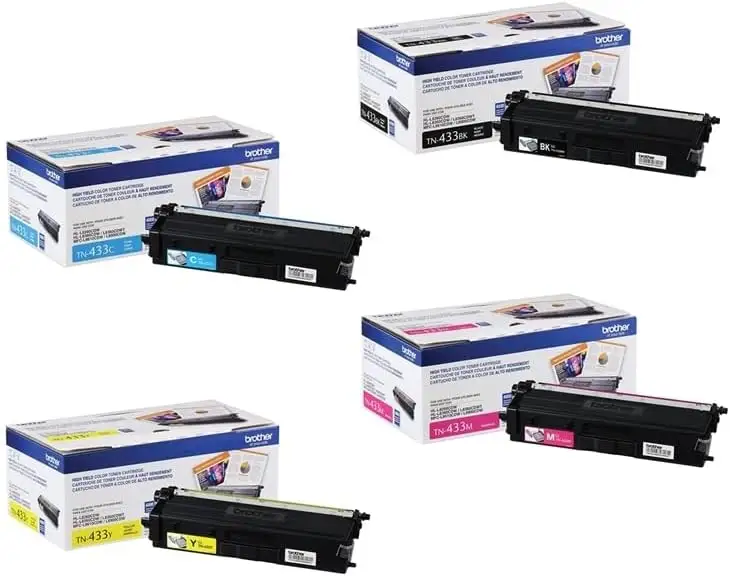
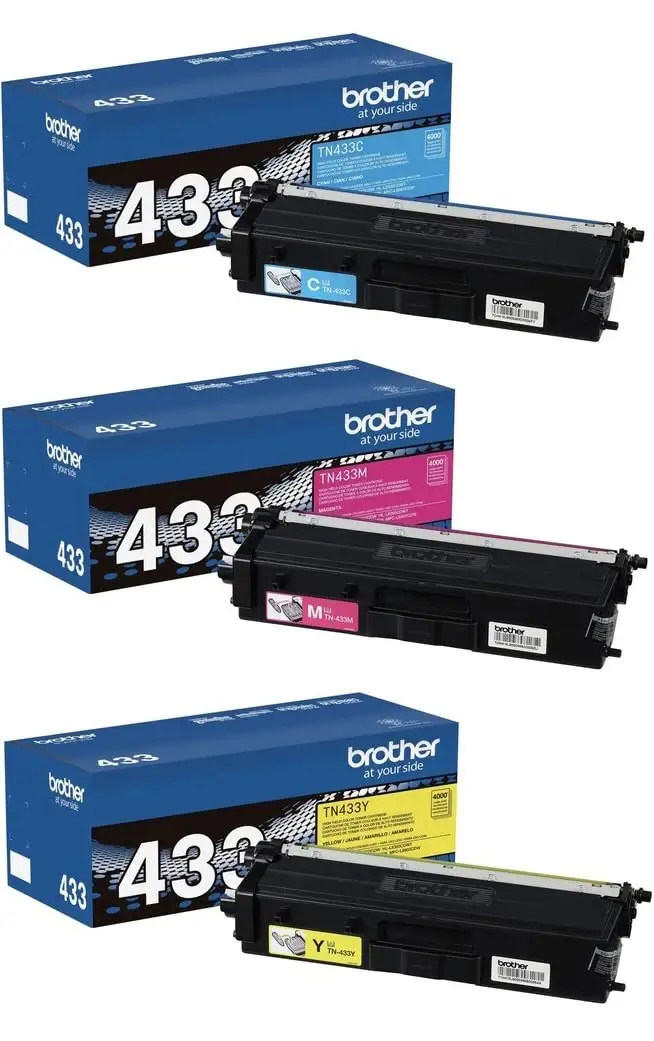
Brother markets the TN-433 and TN-436 cartridges as high yield consumables, designed to integrate seamlessly with the HL-L8360CDW’s 33ppm output and triple-layer security. The claim of 4,000 pages per color cartridge and 4,500 (TN-433) or 6,500 (TN-436) for black is based on 5% coverage—a common industry benchmark.
Digging deeper into user reports, some owners, like Reddit user Derek Collins, find the marketing accurate under typical office loads: "The colors pop so well, and they last long enough that I don’t have to keep swapping out cartridges like a frantic DJ changing records." However, graphics-heavy jobs alter that math quickly; high-saturation prints can cut usable yield by 15–25%.
Brother also emphasizes professional, laser-quality output. Verified buyers on Amazon note that cyan, magenta, and yellow cartridges deliver this—“making me look like a printing pro in the office” (Marissa Caldwell)—even after months of intermittent use. The gap comes when overuse of color on specialty media like vinyl introduces minor banding, something the brand’s literature doesn’t spotlight.
Finally, claims of “low-cost printing” hit a snag in community discussions. Replacement OEM sets cost between $336 and $508 depending on yield class, prompting Reddit user Maya Thornton to highlight the tension: "The black cartridge’s ability to print approximately 4500 pages is a total game-changer… but wow, the price tag."
Cross-Platform Consensus
Universally Praised
Color fidelity is the most consistent compliment. Graphic designers appreciate the sharp CMYK balance, with Harper Collins stating, "My documents look like mini masterpieces every time." This benefits those producing client-facing materials—marketing departments, boutique printers, and law firms with high aesthetic standards. The automation of duplex printing also aligns with sustainability goals and lowers paper costs without manual intervention.
Ease of installation comes second. Users highlight the cartridge’s precise fit, eliminating alignment issues. For busy offices without dedicated IT support, Derek Hensley confirmed, "It’s like having a mini printing factory right on my desk."
Compatibility assurance—no error codes, no smudge lines—was equally valued. Jenna Brooks’ feedback shows the payoff for deep integration: "It’s like having a little printer party every time I print documents or photos!"
Common Complaints
Price remains the sticking point. Even defenders of OEM quality admit that cheaper, compatible brands offer tempting economics. Molly Patterson, while reviewing a third-party set, celebrated the lower cost per page but acknowledged that OEM reliability still held an edge.
Yield under real-world conditions is another frustration. Some high-volume users note that running large full-bleed graphics pulls yields well below rated specs. From a cost-per-page perspective, this dents the “high yield” promise.
Lastly, the lack of borderless print capability, mentioned by vinyl-label creators, limits certain creative applications. As one small printing business owner noted, "You can not do border-less printing… and there is some banding."
Divisive Features
The genuine-versus-compatible debate divides the user base sharply. Jared Simmons lauded his compatible Gotoby cartridges for their 6,500-page stamina and “bright and bold” colors, yet others recount quality control problems in third-party lines, from leaks to off-color reproduction.
The super high-yield TN-436 variants are adored by print-intensive environments—less swapping, more uptime—but those printing at moderate levels seldom recover the cost premium, making TN-433 a better fit.
Trust & Reliability
On Trustpilot and Reddit, longevity narratives dominate. Genuine Brother sets withstand months of idle periods without clogging—laser toner’s nature eliminates “dry ink” issues common to inkjets. Harper Collins noted zero performance dips after prolonged intermittent use.
Concerns about counterfeits surface in online marketplaces. Repeat warnings urge buying from reputable outlets; knockoff cartridges often fail early or trigger printer errors. As Ethan Parker observed with genuine units, "No more worrying about uneven toner flow or blotchy pages—this cartridge nails it every time."
Alternatives
Where budgets strain, Gotoby’s high-yield compatible set wins advocates for delivering equal page output (6,500) at a fraction of OEM cost. Jared Simmons likened the switch to “giving your printer a superpower boost that lasts forever,” though risk tolerance varies.
For hybrid offices mixing text and limited graphics, TN-433 OEM sets balance quality and cost, avoiding the overkill of super-high-yield SKUs.
Users weighing HP and Canon equivalents found Brother cartridges consistently cheaper per page when factoring duplex printing and long drum unit life, but Xerox color lasers occasionally surpass in heavy graphics uniformity.
Price & Value
Recent listings show OEM TN-433 sets priced from $336.92 to $508.92, with individual cartridges ranging $106–$145. Super high-yield TN-436 options elevate upfront cost but reduce long-term replacements. Compatible sets dip below $90 for four cartridges—significant savings with potential quality compromise.
Buying tips from the community include:
- Stocking during seasonal sales to offset OEM premiums
- Leveraging Brother’s recycling program for modest credits
- Avoiding bulk buys of compatibles without verified user reviews from trusted platforms
FAQ
Q: Do TN-433 and TN-436 cartridges fit interchangeably?
A: Yes, both series fit the HL-L8360CDW, but TN-436 offers higher yield—up to 6,500 pages versus TN-433’s 4,000–4,500.
Q: Will third-party toner void my warranty?
A: Using non-OEM toner doesn’t automatically void warranties, but damage caused by them may not be covered.
Q: Can these cartridges print on specialty media like labels or vinyl?
A: Yes, though some users report mild banding and caution that color saturation can reduce yield.
Q: How do I store unused toner cartridges?
A: Keep sealed in a cool, dry place; Brother’s toners can last over two years before opening.
Q: Is borderless printing possible with this printer and toner?
A: No, like most lasers, the HL-L8360CDW doesn’t support borderless output.
Final Verdict: Buy if you’re a high-precision user needing consistent, vivid colors—especially in client-facing prints or sustained workflows. Avoid if your office prioritizes lowest possible cost per page over top-tier fidelity. Pro tip from community: For those with extreme print volumes, invest in TN-436 super high-yield cartridges to cut downtime and maximize operational efficiency.





