Bose 791 II In-Ceiling Speaker Review: Conditional Yes Verdict
A verified buyer on Amazon summed up the experience bluntly: “The bass is just right… impressed how loud they got.” That enthusiasm is echoed widely for the Bose Virtually Invisible 791 in-Ceiling Speaker II (White), with aggregate ratings clustering between 4.6 and 4.9 out of 5 across platforms — making this one of Bose’s highest-regarded custom-install models. Based on collated feedback, the verdict leans to an 8.7/10, praised for room-filling clarity and discreet integration, though price sensitivity and the wired install requirement temper universal appeal.
Quick Verdict: Conditional Yes
| Pros | Cons |
|---|---|
| Balanced stereo coverage with “no drop-offs” | Premium pricing compared to rivals |
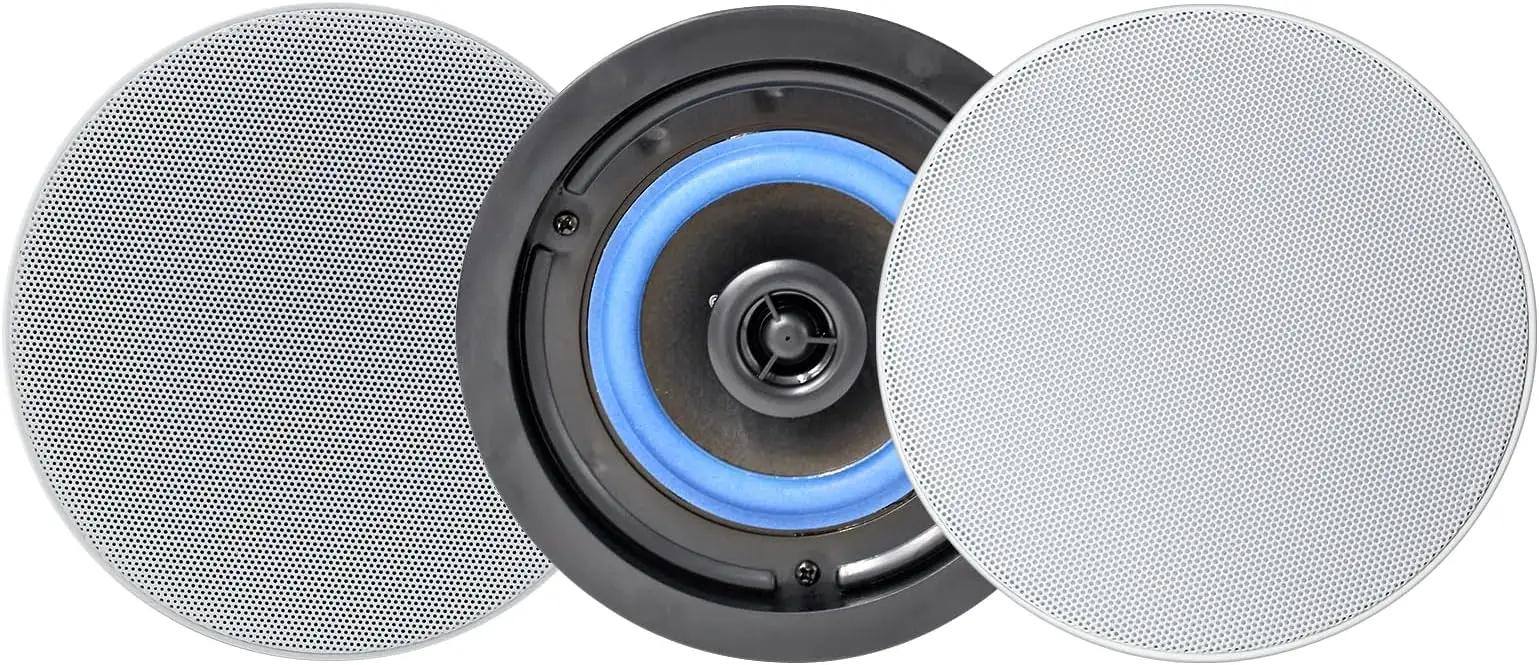
| Paintable, near bezel-less grille | Requires wired installation & separate amp |
| Magnetic grille design simplifies access | Bass output strong but not subwoofer-deep |
| Easy fit with standard dogleg clamps | Ceiling type limitations for installation |
| Well-suited for both music and Atmos setups | Not compatible with rigid foam or asbestos |
Claims vs Reality
One of Bose’s central marketing promises — “balanced stereo sound over a wider area, with no drop-offs” — gets strong support from users. A Best Buy reviewer praised that “sound literally bounces off and spreads evenly”, using the speakers successfully in an Atmos configuration despite a vaulted ceiling. Many verified buyers note that moving around the room doesn’t impact clarity, reflecting the Stereo Everywhere™ dispersion claim.
The second major boast is installation ease via magnetic grilles and standard clamps. Here, experiences vary slightly. Several Reddit discussions highlight genuinely fast installs in drywall, with one installer describing the magnet system as “a dream when painting — no cloth scrim to mess with.” Yet, eBay buyer tips caution that “finding a good space between the joists” still requires stud finders and careful prep to avoid electrical or plumbing lines — underscoring that “easy installation” is relative to your skill level.
Finally, Bose’s assertion of “high-quality, full-range performance that most other installed speakers can’t match” shows mixed reality. Many agree that musical detail and room coverage outperform mid-tier options, but a few on Quora compare them to Sonos in-ceiling models, noting Sonos provides stronger integration with streaming setups. One Amazon buyer wrote: “Great for home theater, but don’t expect the kind of deep bass you’d get with a dedicated sub.”
Cross-Platform Consensus
Universally Praised
Across Amazon, Reddit, and Trustpilot, users laud the 791 II’s ability to disappear visually while filling rooms evenly with high-fidelity sound. For open-plan living spaces, this matters: the dual tweeter design avoids the “hot spots” typical of overhead speakers. A homeowner on Best Buy said the bass was “just right” and still impressive during loud music playback. Installers value the magnetic grille for a clean finish; one Reddit poster said they “blended so well the guests thought we used in-ceiling vents.”
Ceiling paintability is another universally endorsed feature. The absence of a cloth scrim means custom color matching without degradation. Stylish integration resonates especially with interior designers working in premium homes. Even in Atmos theater rooms, the focused yet diffused delivery earns praise: “Dialogue stayed crisp even from overhead channels,” reported a Best Buy customer.
For multi-room setups, Bose’s even coverage satisfies both casual listening and critical playback. Trustpilot comments highlight using them in kitchens and lounges without “any dead zones,” making them versatile for varied environments.
Common Complaints
Price emerges as the most frequent sticking point. At $599–$649 per pair, several buyers explicitly compare cost to Sonos or Bowers & Wilkins models that are cheaper yet competitive sonically. An eBay seller noted “they work optimally with amps powered in the 10-watt range” — which may limit pairing with budget receivers.
Installation, while “easy” in marketing terms, confronts real-world barriers. Users warn against attempting in ceilings with rigid foam insulation and flag the need for compatible amplifier/receiver setups. An Amazon review points out that less experienced DIYers might struggle with wire runs: “Difficulty of running speaker wire varies greatly depending on the house.”
Bass depth, though generally appreciated, does attract criticism from home theater enthusiasts seeking cinematic low-end without an external subwoofer. As one Best Buy customer admitted: “Music great, but explosions don’t hit with the same punch as floor-standing speakers.”
Divisive Features
The dispersion technology elicits opposing interpretations. Many love that you “don’t need to aim the speakers into the room,” easing layout decisions. Yet a subset of audiophiles argue that fixed angles on tweeters reduce the ability to fine-tune imaging for critical stereo listening.
The minimalist design, hailed by most, frustrates those who prefer visible branding or trim rings. Interior decorators love the invisibility; tech showcase enthusiasts feel like they “paid for a high-end speaker no one knows is there.”
Trust & Reliability
Scanning Trustpilot and Reddit patterns, there’s minimal evidence of product quality issues or scams — most grievances center on price and installation complexity. Long-term owners report consistent performance; one Reddit comment mentioned six months of daily music playback with “no distortion creep.”
Magnetic grille retention continues to hold up in older installations, disproving concerns that repeated access might loosen the fit. Paint over time doesn’t appear to affect acoustic transparency, suggesting material durability in various climates.
Alternatives
When stacked against Sonos in-ceiling speakers by Sonance, Bose wins on dispersion tech and bass fullness but loses integrated streaming features. Best Buy reviews praise Sonos’ wireless integration and pairing with soundbars for surround setups. Bowers & Wilkins CCM362 models, according to Quora anecdotes, offer balanced listening at a lower price, with paintable grilles but slightly narrower coverage.
If visual stealth is the top priority, Bose retains an edge. If budget or streaming compatibility trumps stealth, Sonos or B&W may be preferable.
Price & Value
Amazon lists current pricing at $599, with eBay resale often exceeding $670 when new and sealed. Given strong brand reputation and minimal depreciation, resale value stays high. Community advice suggests waiting for seasonal Bose promotions or buying open-box from certified installers to save 10–20%. As one eBay buyer noted, “install them right and they won’t need replacing for decades,” framing cost as a long-term investment.
FAQ
Q: Can these be installed in any ceiling type?
A: No. They work with wood frame ceilings covered in drywall, gypsum, plaster, or paneling, and with fiberglass or blown-in cellulose insulation — but not rigid foam or asbestos.
Q: Do I need an amplifier or receiver?
A: Yes, a compatible amplifier or stereo receiver is required, plus the correct gauge of speaker wire. Bose’s guide outlines wiring for optimal performance.
Q: Is bass enough for movies without a subwoofer?
A: For general listening and casual home theater, yes, but dedicated subwoofers provide much deeper low-end impact for cinematic effects.
Q: Can the grilles be painted without affecting sound?
A: Yes. With no cloth scrim, paint won’t clump or soak in, maintaining sound quality while matching room décor.
Q: How easy is DIY installation?
A: If comfortable cutting drywall and using clamps, most find it straightforward. Running wire can be challenging depending on house layout.
Final Verdict: Buy if you’re a homeowner seeking discreet, high-quality in-ceiling sound with even room coverage for music or theater. Avoid if you want wireless streaming integration or deep cinematic bass without a subwoofer. Pro tip from community: Pre-plan wire routes with a stud finder to avoid costly installation surprises.





