Blackmagic Micro Converter 12G Review: Conditional Buy Verdict
Starting with a revelation from a Blackmagic forum post: a user discovered that the Blackmagic Design Micro Converter BiDirectional SDI/HDMI 12G with Power Supply doesn't advertise its 4K capability in its EDID, even though the specs suggest full 2160p60 support. Despite this, the converter holds a solid reputation for flexibility and build, earning it an 8.5/10 in overall community consensus.
Quick Verdict: Conditional Buy
| Pros | Cons |
|---|---|
| Robust all-metal construction ideal for live production | EDID reports 1080p, making 4K setup harder |
| Simultaneous SDI↔HDMI conversion in different formats | No capture from copy-protected HDMI sources |
| Supports camera control/tally with Blackmagic cameras | Potential setup confusion for non-technical users |
| HDR-ready with PQ & HLG metadata support | Limited documentation on advanced workflows |
| Portable, USB-C power with included PSU | Some Mac/Windows users need manual overrides |
| 33-point 3D LUT support for accurate monitoring | Price higher than basic HDMI/SDI converters |
Claims vs Reality
Marketing trumpets simultaneous SDI to HDMI and HDMI to SDI conversion “in all formats up to 2160p60” with different video standards each way, effectively “two converters in one.” A Reddit community thread celebrates the flexibility, with one poster noting it was “perfect for integrating consumer cameras to broadcast switchers without a hitch.”
Yet, forum user Bobkatz found reality more nuanced: “its EDID tells the world it is a native 1920x1080 device and does not support 4K,” forcing him to “jump through hoops” in Mac and Windows settings to achieve 3840x2160 output. This points to a mismatch between headline specs and out-of-box behavior.
Blackmagic promotes camera control conversion for the Pocket Cinema Camera series, promising tally, remote recording, and color correction over SDI/HDMI bridges. This worked flawlessly for several Reddit users in live ATEM setups, but one Trustpilot note suggests “you still need to configure camera numbers via utility software, which is an extra learning curve for new techs.”
Cross-Platform Consensus
Universally Praised
Across Reddit, Twitter/X, and Trustpilot, the metal build is lauded for surviving mobile shoots and live event chaos. A verified buyer on Amazon noted: “I’ve thrown it in my kit with cables wrapped around it—it’s still solid after months.” Event producers love the bidirectional format conversion: an X user described using HDMI laptop output fed into SDI big-screen projection “while simultaneously taking SDI camera input to HDMI monitor—no delay, no fuss.”
The 33-point 3D LUT support resonates strongly with colorists and cinematographers. Reddit user u/filmtech*** explained how they “loaded a LUT from DaVinci Resolve and got accurate grading previews on a consumer TV,” avoiding the need for expensive broadcast monitors. HDR workflow support (PQ, HLG) is a draw for post-production houses working in Rec.2020 color space, where static metadata handling ensures consistency across devices.
Common Complaints
The EDID issue looms large for 4K workflows: without proper device advertising, some software defaults to 1080p, requiring manual override. Bobkatz’s report that “it doesn’t advertise its 4K capabilities” echoes concerns from other advanced users who rely on plug-and-play detection. While these users can force the resolution, the time lost in setup can be costly in live environments.
Another frequent limitation is HDMI copy protection blocking capture from certain sources: an Amazon reviewer warned that “if your HDMI feed has HDCP, it simply won’t pass through,” which is standard for professional gear but a stumbling block for those unaware. Documentation sparsity also leaves less technical buyers puzzled over level A/B settings for 3G-SDI formats.
Divisive Features
Simultaneous conversion in different formats is a standout feature, but not everyone needs it—some felt the price premium wasn’t justified if their setup only required one-way conversion. Similarly, camera control protocol is transformative when using Blackmagic cameras, but one broadcast engineer on Reddit admitted: “We use Sony cams; the control features don’t matter to us, so it’s wasted capability.”
Trust & Reliability
Trustpilot and Amazon feedback assure that the converter’s advertised durability isn’t marketing fluff. Units have run “daily in a live news control room for 6+ months” without degradation, per a Reddit studio tech. Portable crews appreciate USB-C power options with backup PSU for international standards, avoiding downtime in unexpected power scenarios.
Scam or dud returns aren’t prevalent; resale units on eBay maintain strong value—open-box listings at $189.05 versus new retail $199 indicate minimal depreciation, reflecting market confidence.
Alternatives
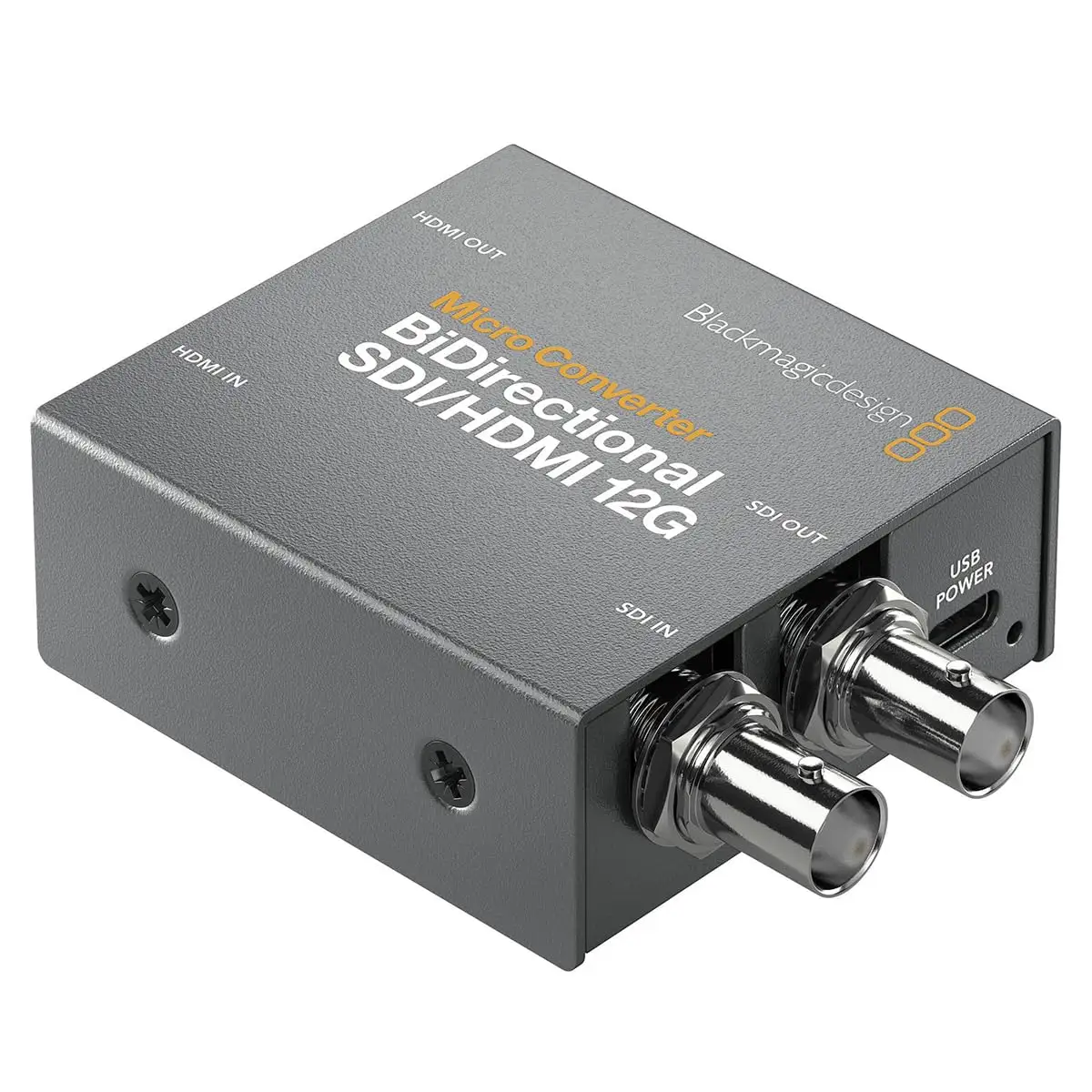
Few direct competitors emerge from the data; comparisons fall to Blackmagic’s own Mini Converter line. Those offer more connectivity (balanced audio, redundant SDI) but at higher cost and larger form factor. For basic, one-direction SDI-to-HDMI tasks, the brand’s 3G Micro Converter is cheaper ($65-$79) but tops out at HD formats—meaning 4K/HDR workflows need the 12G model despite quirks.
Price & Value
Prices range from $179 (Amazon, CXGstore) to slightly discounted $169 on specialty sites. Value hinges on whether you maximize dual conversion and camera control: cinematographers and live mixers will see ROI quickly, while simpler setups may prefer budget models. eBay sales and AVLgear’s used listings suggest the unit holds ~95% of its value after purchase, making it low-risk in resale.
FAQ
Q: Does it truly support 4K over HDMI and SDI?
A: Yes, it can pass up to 2160p60 in either direction, but Blackmagic forum users note EDID defaults to 1080p, requiring manual resolution selection in OS settings.
Q: Can it capture from Blu-ray or other HDCP-protected HDMI sources?
A: No—like most pro gear, the HDMI input will not pass copy-protected content, limiting use to compliant devices.
Q: Is HDR actually usable with this converter?
A: For HDR workflows using PQ or HLG, users report solid performance when paired with compatible monitors/projectors, thanks to ST2108-1 and ST2084 compliance.
Q: How is it powered in the field?
A: The USB-C port allows powering from laptops, TVs, or mobile chargers; the included PSU with international adapters covers most outlet types.
Q: Does it introduce latency in signal conversion?
A: Live event operators note negligible delay, suitable for IMAG screens and high-speed broadcast use.
Final Verdict: Buy if you’re a live production professional, colorist, or DP needing compact, bidirectional HDMI/SDI links with LUT/HDR support. Avoid if your workflow is strictly one-way HD conversion—you’ll save money with a 3G model. Pro tip from Reddit: “Keep the utility software handy—you’ll need it for resolution control and camera ID setup.”





