Avery Removable ID Labels 6460 Review: 7.8/10 Verdict
A recurring complaint surfaced in the most unexpected place: removal. While Avery Removable ID Labels (6460) are sold on the promise that they “stick, stay and remove cleanly,” multiple reviewers describe labels that either “are falling off” or, in the opposite extreme, won’t come off cleanly. Verdict: Conditional buy — 7.8/10.
Quick Verdict
For Avery Removable ID Labels (6460), the dominant story is “works exactly as advertised” — until it doesn’t. Many people praise clean printing and genuinely removable adhesion for organizing, pricing, and inventory. But a smaller, sharper cluster reports residue, tearing, or weak stickiness, with some claiming “something changed” over time.
| Decision | Evidence from user feedback |
|---|---|
| Best for | Organized labeling that needs updates (“easy to change notices”) |
| Risk | Removability inconsistency (“sticky residue” vs “not so sticky”) |
| Printing reliability | Strong reports of smooth feeding (“go through the printer easily”) |
| Removal experience | Polarized (“leave no residue” vs “not removable”) |
| Value | Some pushback (“to expensive”) |
| Niche wins | Auto dealerships, galleries, freezer container labeling |
Claims vs Reality
The marketing claim is blunt: these labels “stick, stay and remove cleanly,” and are meant for “drawers, containers, boxes, shelves and more” across smooth surfaces like “paper, cardboard, plastic, wood, glass and metal” (Amazon listing and Avery product description). Digging deeper into user reports, that promise largely holds for many everyday scenarios—especially office organization and retail pricing—yet it’s also the exact point where dissatisfied buyers focus their frustration.
One Staples reviewer described a textbook match between claim and lived experience: “the labels stick well, but remove easily as needed,” also emphasizing print performance: “the sheets go through the printer easily - no problem, no lifted labels.” Another echoed the clean-removal promise with near-ideal phrasing: “they stay on securely until you want to peel them off, and they leave no residue afterward.” For office managers, teachers, and small retailers, that’s the dream outcome: labels that don’t force reprinting entire signs or permanently marking inventory.
But the contradiction is impossible to ignore. A different reviewer, who bought them specifically for art inventory, reported the opposite: “they are not removable… it sticks and disintegrates to the point where it is useless.” Another long-time user claimed a shift over time: “we have used these for years and… during covid we started having issues removing the labels… there is sticky residue left.” While Avery Removable ID Labels (6460) are officially described as removable and residue-free, multiple users report residue and removal failure under some conditions.
A second marketing angle is printer performance: Avery highlights “Sure Feed technology” to prevent “misalignments and jams” (Amazon “features & details” and Avery description). User feedback aligns more consistently here. One reviewer pointed out “no problem” feeding through the printer. Another summarized satisfaction simply: “performed as advertised. very satisfied.” For people printing batch labels—inventory tags, file folder IDs, or pricing labels—this reliability is central, and it’s where complaints appear less frequent in the supplied data.
Cross-Platform Consensus
Universally Praised
The most common praise for Avery Removable ID Labels (6460) reads like relief from administrative friction: people want labels that can change as fast as their shelves, folders, and pricing. A Staples reviewer captured that practical payoff: “love removable labels. easy to change notices without retyping the whole poster.” For office coordinators or classroom organizers, this isn’t a nice-to-have—it’s time saved every time a bin changes contents or a display needs updating.
Retail and small business use-cases show up repeatedly. One reviewer said: “we needed removable price stickers for our retail products! these work perfect!!” That kind of comment implies two things: adequate adhesion for customer-facing environments, and quick removal when prices change or items sell. Another reviewer broadened the use beyond simple pricing into craft and product labeling: “great for masking card making projects and labeling product.” For makers and boutique sellers, that combination—masking plus labeling—suggests the labels can handle short-term needs without becoming a permanent scar on packaging.
A recurring pattern emerged around specialized inventory workflows, especially where paper documents can’t be damaged. A vehicle dealership reviewer explained: “the removable feature allows us to keep vehicle information on the titles without damaging them when we sell the lable.” For dealerships or any document-heavy operation, the label isn’t just an organizer—it’s a reversible layer that protects the underlying paperwork from repeated handwritten edits.
Printing and handling are another consistent win in the feedback provided. One reviewer emphasized the mechanical side: “the sheets go through the printer easily - no problem, no lifted labels.” That matters most for people running full sheets through laser or inkjet printers for high-volume labeling—any misfeed wastes time and labels. Another person expressed satisfaction without qualifiers: “fantastic results! results were even better than expected, extremely pleased!” Even though it’s light on specifics, it reinforces that many buyers experience these as dependable, “as advertised” supplies rather than finicky stationery.
After the narratives, the praise clusters into a few repeated themes:
- Clean, practical removability for updates: “easy to change notices”
- Retail pricing success: “work perfect!!”
- Smooth printer feed: “go through the printer easily”
- Document-safe labeling: “without damaging them”
Common Complaints
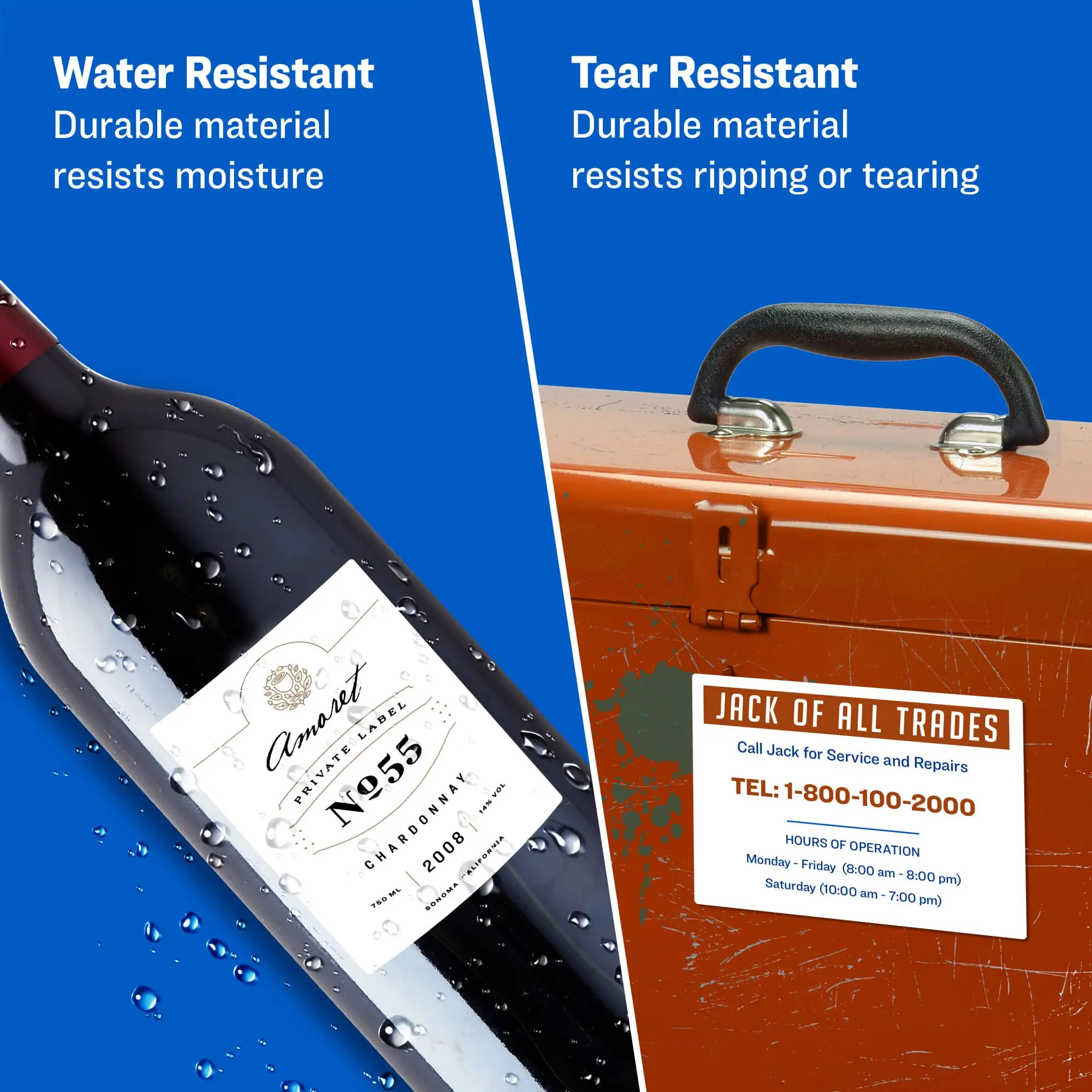
The sharpest criticism targets the very feature that sells the product: removal. One dissatisfied user bought them explicitly for “inventory and pricing my art” and said, “i specifically purchased these for the ‘removable’ feature… they are not removable.” Their experience wasn’t just stickiness—it was failure under stress: “it sticks and disintegrates.” For artists, resellers, and collectors who need to preserve receipts, ledger notes, or product tags, a label that tears becomes an operational problem, not a minor annoyance.
At the other end of the spectrum, some complaints describe weak adhesion rather than over-adhesion. A reviewer who purchased multiple packs reported: “the last ones i have bought the labels are not sticking to the files. they are falling off.” For filing systems, weak stickiness is a slow-motion disaster: labels that slide off or vanish undermine organization, and the user has to redo work. This is especially painful for offices relying on long-term file folder identification.
Then there’s the “something changed” narrative—a recurring pattern in stationery and consumables when manufacturing tweaks happen. One long-time user said: “we have used these for years and… during covid we started having issues removing the labels… there is sticky residue left.” That’s a different failure mode than tearing: even if the label comes off, residue creates cleanup labor and can damage books, binders, or storage bins. While the product is described as removable and clean, this user story suggests a consistency issue over time or across batches.
Cost also appears as a quieter but persistent knock. One reviewer called them “to expensive but was required to use for a specific labeling program.” Another described quantity mismatch frustrations: “i also needed 850 labels and need to buy two packs… 20 extra sheets not being needed.” For procurement teams and small businesses, pricing isn’t only about per-label cost; it’s also about pack sizing that matches real workflows.
After the narratives, the complaints consolidate like this:
- Removability failures: “not removable… disintegrates”
- Weak adhesion: “falling off”
- Residue after removal: “sticky residue left”
- Value/pack economics: “to expensive” and buying more than needed
Divisive Features
The most divisive aspect of Avery Removable ID Labels (6460) is the adhesive behavior across different uses and surfaces. One reviewer described near-perfect control: “they stay on securely until you want to peel them off, and they leave no residue afterward.” Another described the opposite removal experience: “they are not removable… it sticks and disintegrates.” For the reader trying to predict their own outcome, the key implication is that the “removable adhesive” may feel highly surface- and time-dependent, or potentially batch-dependent, based on the “something changed” narrative.
Even “stickiness” itself splits opinion. One user praised that “the labels stick well, but remove easily as needed,” while another complained the latest packs “are not sticking… falling off.” For someone labeling plastic bins in a warehouse versus paper files in an office, that contradiction matters: both users may be correct in their environments, but it creates uncertainty for buyers who need consistent adhesion.
Trust & Reliability
On the brand trust front, broader Avery-related reviews on Trustpilot-like sources skew negative in ways that aren’t strictly about these specific labels, but they shape buyer confidence. One reviewer complained about fulfillment and edits to a custom order: “my labels have been sitting in california… and they edited part of my logo off.” Another long-term user focused on software and support erosion: “we don’t make or update that old program anymore… that’s just too bad,” describing a loss of trust in Avery’s legacy tools and support.
Scam language also appears in that broader pool—though it’s not clearly about Avery label sheets like the 6460 specifically. A reviewer alleged: “there a scam don’t order anything from them.” That kind of claim, even if unrelated to the 6460 pack itself, can influence cautious buyers who rely on the official site for templates or ordering.
For long-term reliability of the Avery Removable ID Labels (6460) product behavior itself, the closest “time horizon” story in the provided data is the “something changed” complaint: “we have used these for years… during covid we started having issues removing the labels.” It reads like a durability-and-consistency warning: if your workflow depends on guaranteed clean removal months later, some users believe that guarantee hasn’t held consistently over time.
Alternatives
Competitors mentioned in the provided data come mostly from a “best removable labels” Reddit compilation list rather than direct user stories. That list ranks “avery removable 1 x 2 5/8 inch white id labels 750 count (6460)” as #1, followed by other Avery sizes like “6737,” “6464,” and smaller removable rectangles and dots. There’s also “DYMO-compatible” removable multipurpose labels and a range of chalkboard label stickers and dissolvable food labels.
However, digging deeper into the available user quotes, the most vivid alternative reference is actually cautionary—aimed at another Avery label model. A reviewer warned about “the 6464 avery stickers” leaving “sticky material” and even claimed “over 500 books completely damaged.” While that’s not a head-to-head comparison of 6460 vs 6464 from the same user, it reinforces the broader theme: removal performance can vary across label lines and use cases, and “removable” isn’t always experienced as residue-free in the real world.
Price & Value
Pricing in the provided data varies by retailer and listing, but the Amazon listing shows a common purchase point around $19–$22 for 750 labels, with a stated per-label cost around a few cents. For value-minded shoppers, that looks economical—until you factor in complaints about pack sizing and waste. One reviewer highlighted real-world procurement friction: needing “850 labels” but having to buy two packs, resulting in “extra sheets not being needed.”
Value perception also depends on whether the labels save labor. A satisfied user framed it as investment: “removable labels are a good investment. saves marking up books etc with a label that leaves marking behind.” For librarians, teachers, and inventory managers, the “value” isn’t just the sticker price—it’s the avoided damage and the ability to update without redoing materials.
But when removal fails, value collapses fast. The art inventory user who experienced labels that “disintegrate” essentially describes a product that can’t fulfill its core job, turning the purchase into waste. Similarly, the user reporting labels “falling off” implies rework and reprinting—hidden costs that dwarf per-label pricing for busy environments.
FAQ
Q: Do Avery Removable ID Labels (6460) actually remove cleanly without residue?
A: Sometimes, yes—but not always. One Staples reviewer said they “leave no residue afterward,” while another long-time user reported that after removal “there is sticky residue left.” If clean removal is mission-critical, user feedback suggests results can vary by batch, surface, or timing.
Q: Are these labels good for retail price stickers and inventory tags?
A: Yes, for many buyers. One reviewer said, “we needed removable price stickers for our retail products! these work perfect!!” But another buyer using them for “inventory and pricing my art” said “they are not removable” and “disintegrates,” so the workflow and surface matter.
Q: Do they feed well through laser/inkjet printers?
A: Generally, the printer-feed feedback is strong. A Staples reviewer wrote: “the sheets go through the printer easily - no problem, no lifted labels.” That aligns with the Sure Feed marketing claim, at least in the experiences included here.
Q: Are they sticky enough for file folders and office organization?
A: Many people find them effective, but there are complaints. One user said the labels “are not sticking to the files… falling off,” while another said they “stick well” and still “remove easily as needed.” For file folders, adhesion consistency appears to be a key risk.
Q: What are common real-world uses mentioned by reviewers?
A: Reviewers mention a wide range: “labeling product,” “vehicle title inventory,” “gallery walls,” and even freezer use—“i even use them on things i put in the freezer.” The common thread is temporary labeling that needs to be updated without damaging the underlying surface.
Final Verdict
Buy Avery Removable ID Labels (6460) if you’re an office organizer, retailer, or inventory manager who values easy printing and expects to update labels frequently—one user summed it up as “does exactly what i wanted it to do.” Avoid if your workflow demands guaranteed clean removal months later, or if you’ve been burned by residue or tearing—because some users insist “they are not removable” and others say “something changed.” Pro tip from the community: for document-sensitive tasks, the dealership use-case stands out—“keep vehicle information on the titles without damaging them.”