Avery Multi-Use Labels Review: Strong Adhesive, Mixed Verdict
A surprising pattern in user feedback reveals that while Avery Multi-Use Permanent Labels, 1" x 2.75", White, 128 Blank Labels score high for adhesive reliability, they face criticism for a lack of printer compatibility and frustrations with Avery’s design software. With a mixed reception grounded in both praise and annoyance, this product lands at 7.2/10.
Quick Verdict: Conditional — strong choice for users who need durable, handwritten labels; less ideal for those seeking printable versatility.
| Pros | Cons |
|---|---|
| Permanent adhesive holds firmly without peeling | Not compatible with printers — handwriting only |
| Versatile use across multiple surfaces | Complaints about outdated or cumbersome Avery design tools |
| Compact, portable packaging | Customers frustrated with misaligned prints on other Avery products |
| Clear white background for visibility | Limited customization unless handwritten |
| Affordable price point | No waterproofing — unsuitable for outdoor/wet applications |
| Works well for storage, moving, and organization | Label size may be restrictive for extensive text |
Claims vs Reality
Avery markets these labels as “ideal for a wide variety of labeling purposes” with a permanent adhesive that “sticks firmly without lifting, curling or falling off.” Digging deeper into user reports, the adhesive claim holds up strongly — several reviewers on Amazon and Staples comment on the labels staying “put” on paper, cardboard, plastic, wood, glass, and metal. A verified buyer on Amazon noted: “They stayed on my moving boxes for months without peeling.”
However, Avery’s description specifies they are “not printer compatible,” and this aligns with reality. Users did not expect printing capabilities with this SKU, but frustration surfaces in broader Avery discussions where customers conflate product lines and express annoyance at the lack of printable flexibility. Reddit user feedback shows confusion when switching between Avery’s handwrite-only labels and printable options, confirming a gap in clarity.
The promise of versatility across surfaces is largely met. Reports from small business owners, parents labeling daycare items, and office organizers all highlight the usefulness of handwrite-only design. But while the company describes them as “easily customizable,” in practice this is limited to pen or marker — some users who relied on Avery’s design software expressed dissatisfaction when they realized these labels cannot be run through printers, pointing to a mismatch between cross-product marketing tone and this SKU’s actual capabilities.
Cross-Platform Consensus
Universally Praised
One consistent positive across Amazon, Staples, and eBay is adhesive strength. For movers and storage organizers, the permanent bond is a relief. A Staples shopper reported: “Months after sticking them to plastic bins, they’re still solid — no curling edges.” Teachers preparing classroom materials praise their versatility, noting how well they attach to folders and supply containers. Parents found them ideal for labeling clothing bags for daycare; even after rigors of transportation, the labels remained intact.
The portability of the plastic package wins approval from users who travel between workstations or projects. Craft hobbyists describe tossing the pack in a supply bag without fear of label sheets bending or adhesive losing tack.
Common Complaints
Complaints are not about this specific SKU’s core function but about wider Avery frustrations spilling over. Sitejabber reports outline ongoing dissatisfaction with Avery’s online design & print platform — slow, unwieldy, and prone to misalignment in printable label lines. While this label is handwrite-only, the negative halo from other Avery products sometimes influences overall brand sentiment. One Trustpilot reviewer lamented: “Even reprints came misaligned. They used to be reliable but no longer.”
For tech-savvy users accustomed to on-demand printable customization, the handwrite-only limitation feels outdated. Corporate buyers expecting integration into their printed workflows are disappointed to discover manual handwriting is the only option. Avery’s current software ecosystem, described by multiple Sitejabber profiles as “garbage compared to the old DesignPro,” compounds frustration for those trying to unify label systems.
Divisive Features
The permanence of adhesive divides audiences. Archivists or anyone needing reusability see permanent glue as restrictive. In contrast, warehouse managers value that permanence for asset tagging without risk of labels detaching. A Reddit contributor advised: “Great for stuff you don’t plan on relabeling. If you want to reuse bins, go removable.”
Handwriting-only also draws split opinions; creatives appreciate the tactile control of pens and markers, while bulk labelers in corporate environments prefer print efficiency. This tension shows the label hitting a sweet spot for low-volume, high-touch projects but stumbling for mass-production contexts.
Trust & Reliability
On Trustpilot and Sitejabber, Avery as a brand faces skepticism for customer service and software reliability. Phrases like “horrible customer service” and “UI is a nightmare” recur, aimed not at these labels directly but at the broader infrastructure — especially for users reliant on printable customization. This indirectly affects perception of handwrite-only products.
Conversely, longevity of adhesion garners trust in physical durability. Reports spanning months after application confirm the labels remain legible and affixed. In Reddit threads, several small operators mention using them to mark storage bins for seasonal goods, with labels intact a year later.
Alternatives
Within Avery’s own catalog, alternatives like the Multi-Use Removable Labels (printer-compatible) appeal to those who value reusability. Competitors mentioned in Staples listings include Dymo and Brother multipurpose labels, which are printer-oriented and integrate with label makers for higher volume scenarios. Those alternatives trade the tactile permanence of the 6113 for speed and reusability.
For handwrite-focused buyers, Maco’s multi-purpose handwrite labels offer similar manual customization but sometimes with removable adhesive, catering to temporary marking needs.
Price & Value
At a current market price around $3.99–$4.00, these labels present a low-cost solution for strong, permanent, hand-applied labeling. Resale isn’t a consideration for consumables, but volume buyers note they can be stocked affordably for ongoing projects. Buying tips from the community suggest purchasing in multiples to avoid mid-project shortages, especially during moves or large organizational overhauls.
FAQ
Q: Are these labels waterproof?
A: No. Staples specifications confirm they are not waterproof, making them unsuitable for outdoor use or wet environments.
Q: Can I print on them with my home printer?
A: No, they are handwrite-only. Users must use pens or markers for customization.
Q: Will the adhesive damage surfaces?
A: They are designed to stick permanently and may leave residue on delicate finishes if removed.
Q: Do they work on curved surfaces?
A: Yes, for mild curves. Reports indicate they adhere well to jars and rounded bins, but extreme curves may cause lifting at edges.
Q: How many labels come in a pack?
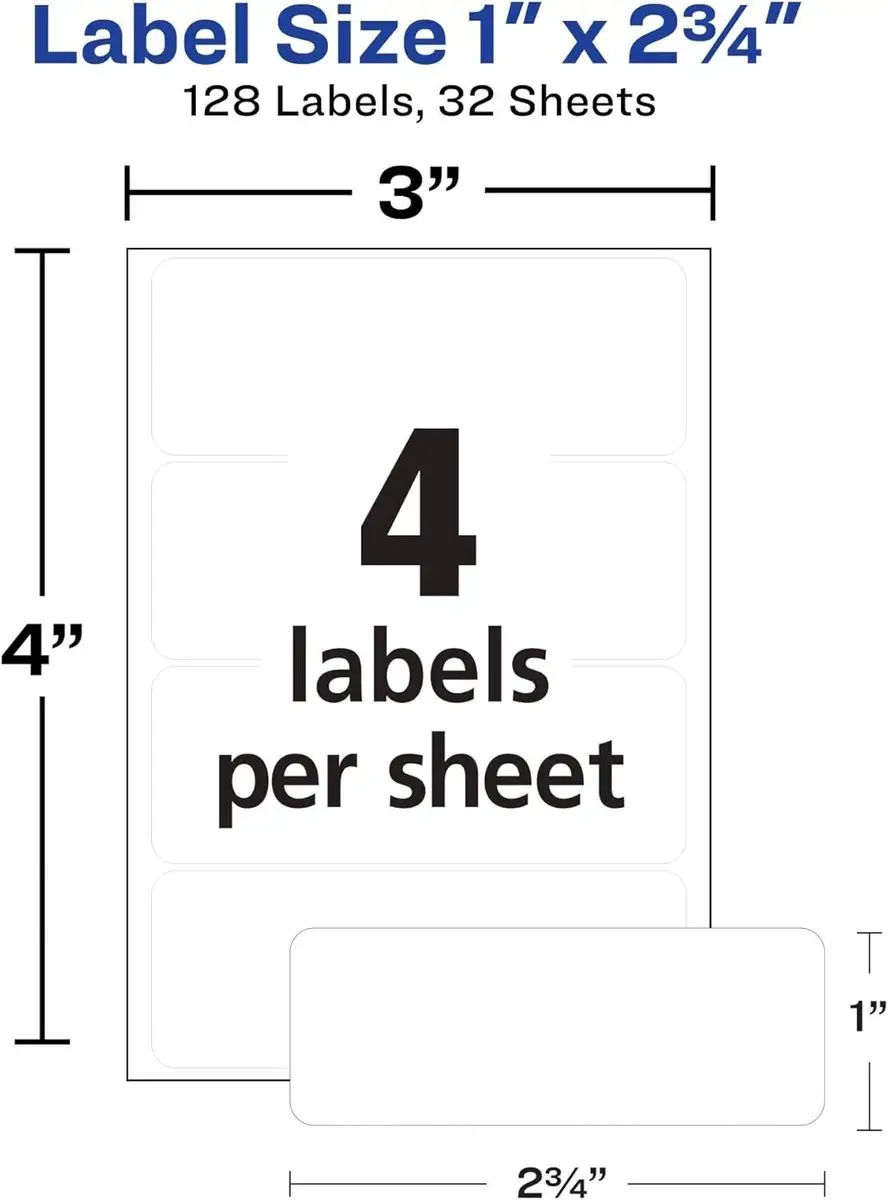
A: Each pack contains 128 labels, arranged in 4 labels per sheet across 32 sheets.
Final Verdict: Buy if you need a cost-effective, permanent, handwrite-only label for varied surfaces — ideal for movers, teachers, and small craft businesses. Avoid if your workflow requires printer integration or removable adhesives. Community pro tip: store your pack in its original plastic case to keep labels clean and flat for long-term usability.