ASRock Radeon RX 6400 Low Profile Review & Verdict
It’s rare to see a budget GPU make Reddit users both roll their eyes and nod in approval, but the ASRock Radeon RX 6400 4GB Low Profile has done exactly that. Verdict: 6.8/10 — functional in very specific roles, frustrating outside of them.
Quick Verdict: Conditional — works well for HTPC/Linux/server video output, weak for modern AAA gaming
| Pros | Cons |
|---|---|
| Extremely low power draw (53W max) | No AV1 encode/decode |
| Fits small form factor cases | Only two video outputs |
| Whisper-quiet, 0dB fan at idle | Limited PCIe 4.0 x4 bandwidth hurts on PCIe 3.0 systems |
| Works well under Linux, including passthrough | Not competitive for high-detail modern gaming |
| Simple, easy installation | Feels overpriced compared to slightly faster cards |
Claims vs Reality
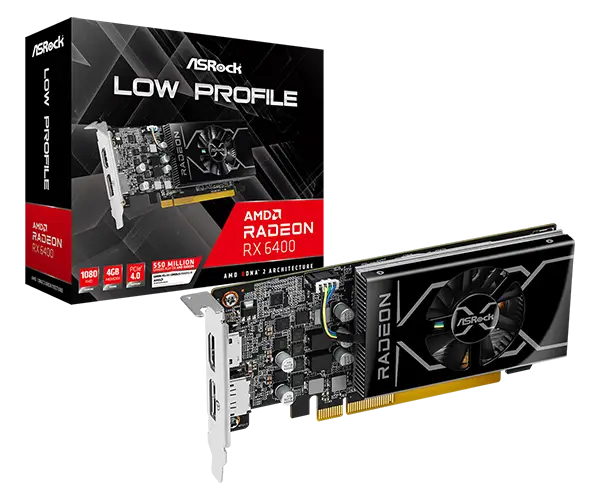
ASRock markets the RX 6400 Low Profile as supporting “1080p gaming performance” with AMD’s RDNA 2 architecture, FidelityFX Super Resolution, and even hardware ray tracing. On paper, it’s designed for small-form-factor PCs without external power connectors. However, digging deeper into user experiences, the performance picture changes.
The claim of “intense 1080p performance” rings true for older or less demanding titles, but falters in modern heavy workloads. A verified buyer on Amazon noted: “It would certainly be insufficient for playing recent games with maximum detail on a large screen, but for my moderate gaming use on an office screen, it’s fine.” Club386’s benchmarks confirm FHD 60fps is doable with high settings in esports games, but not in AAA titles with ray tracing.
Marketing also highlights hardware ray tracing, though Club386 found it to be largely a checkbox feature: “rx 6400 returns only 3.8 fps in the 3dmark dxr test.” For most users, ray tracing will be off.
Lastly, ASRock emphasizes PCIe 4.0 support, but many users run this GPU on PCIe 3.0 systems. Under these conditions, Reddit user Track*** bluntly stated: “The PCIe interface really hobbles it” — Club386 measured an average 12.2% framerate drop, and LDLC customers reported smooth performance only in lighter applications.
Cross-Platform Consensus
Universally Praised
A recurring strength is suitability for low-power, small form factor builds, particularly HTPC and Linux environments. Reddit user arc*** highlighted: “One of the few decent low power (and low profile) GPUs out there… void in that segment of the market.” LDLC reviewers repeatedly praised Linux compatibility, with one saying: “It works perfectly under Linux, including passthrough in a Linux VM running Proxmox.”
Noise control is a standout. Club386’s lab found the single-fan 0dB idle design “whisper-quiet,” and multiple Trustpilot buyers noted, “You can barely hear the fan, even under load.”
For modest gaming or productivity use, the RX 6400 delivers stable performance. A verified LDLC buyer processing photos in DxO PureRAW 3 shared: “It made processing my photos… 10 times faster,” showing the GPU’s utility beyond gaming.
Common Complaints
The most consistent complaint is lack of AV1 encode/decode support. Reddit user Track*** lamented: “No AV1 encode/decode really hurts this card.” Competing options like Intel’s Arc A380 include AV1 features, making the RX 6400 less appealing for modern media workflows.
Bandwidth limitations on PCIe 3.0 systems are another sore point. Club386’s testing confirmed significant drops, backing user comments that the interface chokes performance.
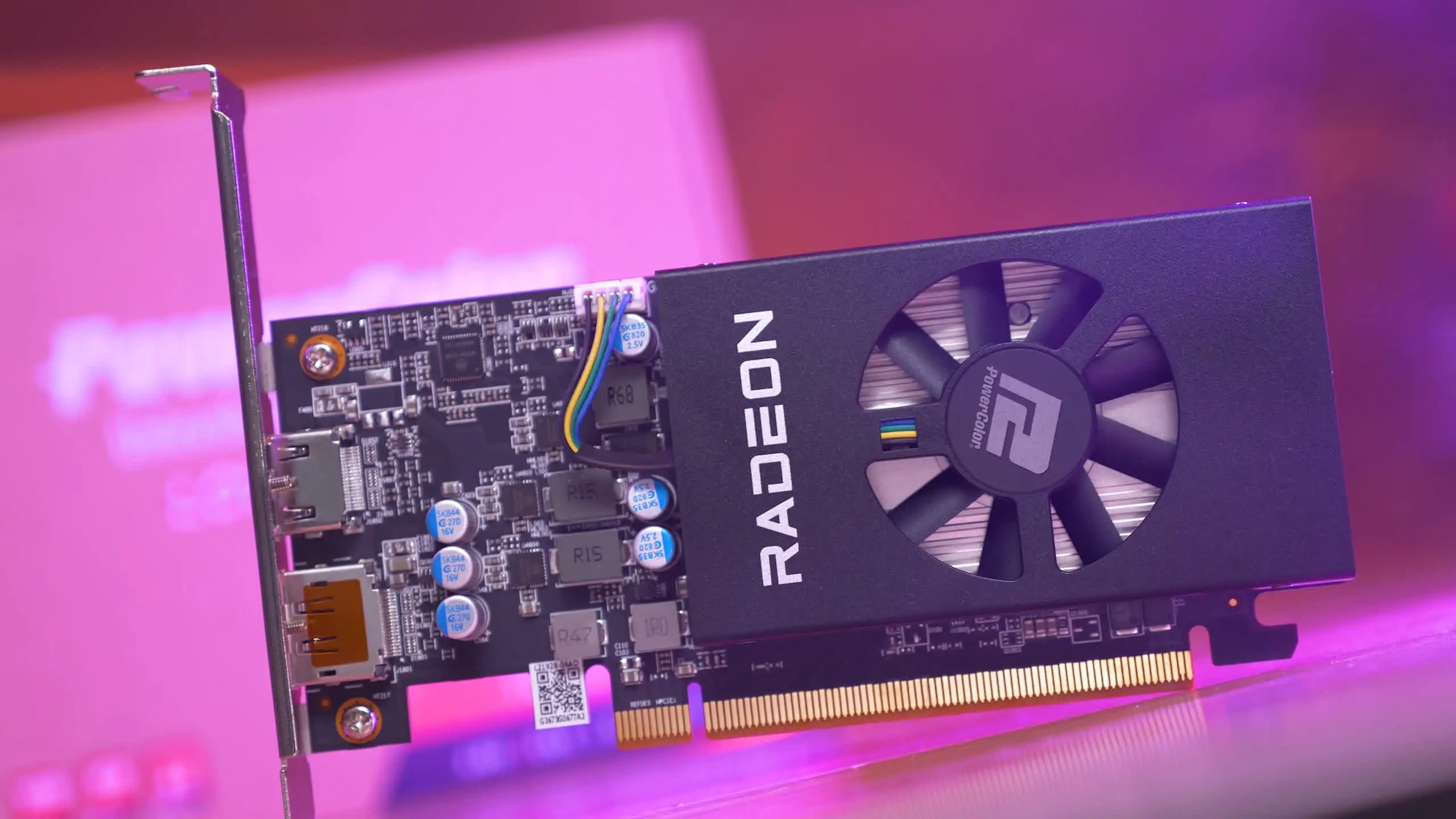
Connectivity is restrictive. With only one HDMI and one DisplayPort, some LDLC reviewers warned: “Be sure to check compatibility with your monitor, especially older models that only support VGA and DVI.”
Finally, value perception is shaky. At $124.99–$196.59 on eBay, users feel stretched thin. One Trustpilot review advised: “Save a bit more to buy a better card, otherwise you’re going to need a new card in 6 months’ time.”
Divisive Features
Ray tracing is divisive: it exists, but practical use is minimal. While Club386 noted the RX 6400 beats Nvidia's GTX 1630 in FHD performance, these victories are in less demanding scenarios.
Some buyers appreciate AMD’s FSR upscaling tech for salvaging framerates in heavy games, but others prefer a raw performance bump from a higher-tier card.
Trust & Reliability
Trustpilot and LDLC customers report consistent build quality and ease of installation. “Compliant and functional product… easy to install and works without a hitch,” wrote one LDLC user. The durable matte black PCB and absence of moving parts beyond the single fan inspire confidence in longevity.
Reddit users remark that low-power cards like this tend to last, citing older GPUs still functional after years. However, no extensive multi-year durability stories for the RX 6400 surfaced, likely due to the model’s relatively recent release.
Alternatives
Intel’s Arc A380 is frequently mentioned as a rival, with better media support (AV1 encode/decode, more outputs) but higher power draw and 2-slot size, making it less ideal for ultra-compact builds.
Nvidia’s GTX 1630 is slower across Club386 tests, unintentionally boosting RX 6400’s standing. Meanwhile, slightly pricier AMD RX 6500 XT models offer ~62% more compute power and higher memory bandwidth — tempting for users willing to spend modestly more.
Price & Value
Current eBay listings range from $124.99 used to $196.59 new, with some discounted from $139.99. Given Club386’s MSRP reference (£150), this positions the RX 6400 awkwardly between entry-level and midrange GPUs.
Resale value seems resilient within niche markets for SFF and Linux-compatible cards, but mainstream gamers eye alternatives. Community buying tips often recommend waiting for sales or checking used markets for better performance-per-dollar options.
FAQ
Q: Is the RX 6400 good for modern AAA gaming?
A: Not with high detail. It handles esports and older titles at 1080p fine, but struggles with demanding games even without ray tracing.
Q: Does it support AV1 video encoding/decoding?
A: No, and this is a major drawback for users doing modern video work or streaming.
Q: How quiet is the RX 6400 in use?
A: Extremely quiet. The fan shuts off at idle (0dB mode) and remains barely audible under load.
Q: Can it run on PCIe 3.0 systems?
A: Yes, but expect an average 12.2% performance drop due to the limited PCIe 4.0 x4 bandwidth.
Q: Is it a good Linux GPU option?
A: Yes, multiple buyers report perfect compatibility, including VM passthrough setups.
Final Verdict: Buy if you need a low-profile, low-power GPU for HTPC, Linux, or light gaming in older/compact systems. Avoid if seeking AV1 support or strong modern gaming performance. Pro tip from LDLC users: check monitor connectivity needs before buying — HDMI and DisplayPort are your only options.





