ASRock B850 Steel Legend Review: Strong Audio, Mixed I/O Verdict
Packed with flagship-class audio in a mid-range price bracket, the ASRock B850 Steel Legend WiFi 7 AM5 ATX Motherboard has built a reputation for punching above its weight. Multiple review sources land it around 8/10, with Tom’s Hardware confirming, “Priced at around $210, ASRock’s B850 Steel Legend WiFi is one of the more budget-friendly B850 ATX boards around… the unique silver and white look and flagship-class audio codec are positives.” But real-world testing also revealed compatibility quirks and missing high-speed ports that might frustrate certain buyers.
Quick Verdict: Conditional buy — excellent for mainstream builders focused on aesthetics, Wi-Fi 7, and strong audio, but less ideal for those needing USB4 or widespread heatsink coverage.
| Pros | Cons |
|---|---|
| Flagship Realtek ALC4082 audio codec | No USB4 / 40Gbps ports |
| Silver/white aesthetic with RGB | Some M.2 slots lack heatsinks |
| Wi-Fi 7 + 2.5GbE LAN | RAM compatibility issues with certain kits |
| Solid VRM cooling and build | 20Gbps USB only on front panel |
| Competitive price | PCIe slot/channel disablement when certain M.2 populated |
| Toolless M.2 installation | Minimal accessory bundle |
Claims vs Reality
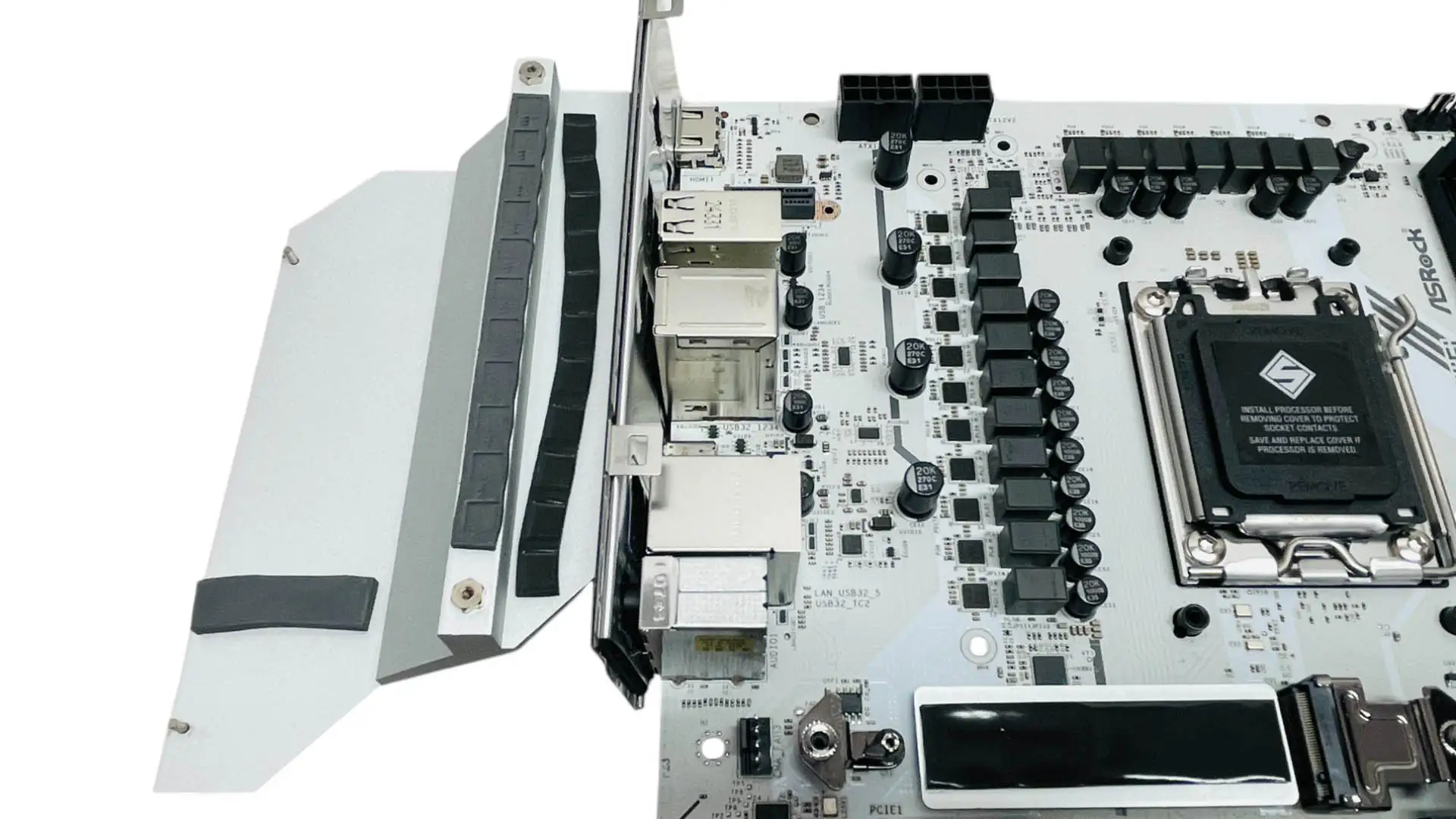
Marketing materials emphasize “rock-solid durability” through features like a 14+2+1 phase VRM, oversized heatsinks, and 8-layer PCB. On paper, this suggests high overclocking potential. Tom’s Hardware found it “capable power delivery with large heatsinks,” and German testing hailed its “hohes OC-Potenzial und massives Kühlkörperdesign.” That matched the claim — voltage regulation stayed stable — but memory overclocking wasn’t without headaches. The board struggled with a standard DDR5-6000 test kit, forcing a swap to DDR5-7200 for stability. This means builders chasing top speeds should verify memory against ASRock’s QVL.
ASRock pushes the “flagship audio” angle, pointing to Realtek’s ALC4082 with Nahimic effects. Reviewers agreed it’s rare at this price: “This is one of the few B850 boards that use the flagship audio codec,” noted Tom’s Hardware. German testers praised sound quality. The reality: while the codec is premium, you don’t get the integrated DAC/amp stage found on pricier X870 boards, so audiophile builds may still need external hardware.
Finally, the company's “Wi-Fi 7” and “Blazing M.2” PCIe 5.0 hype is accurate — speeds match spec — but everyday utility depends on your peripherals. The PCIe Gen5 slot is future-proof, yet community members disclosed lane sharing limits: “When M2_4 is populated, PCIe2 is disabled,” a common B850 reality not front-and-center in marketing.
Cross-Platform Consensus
Universally Praised
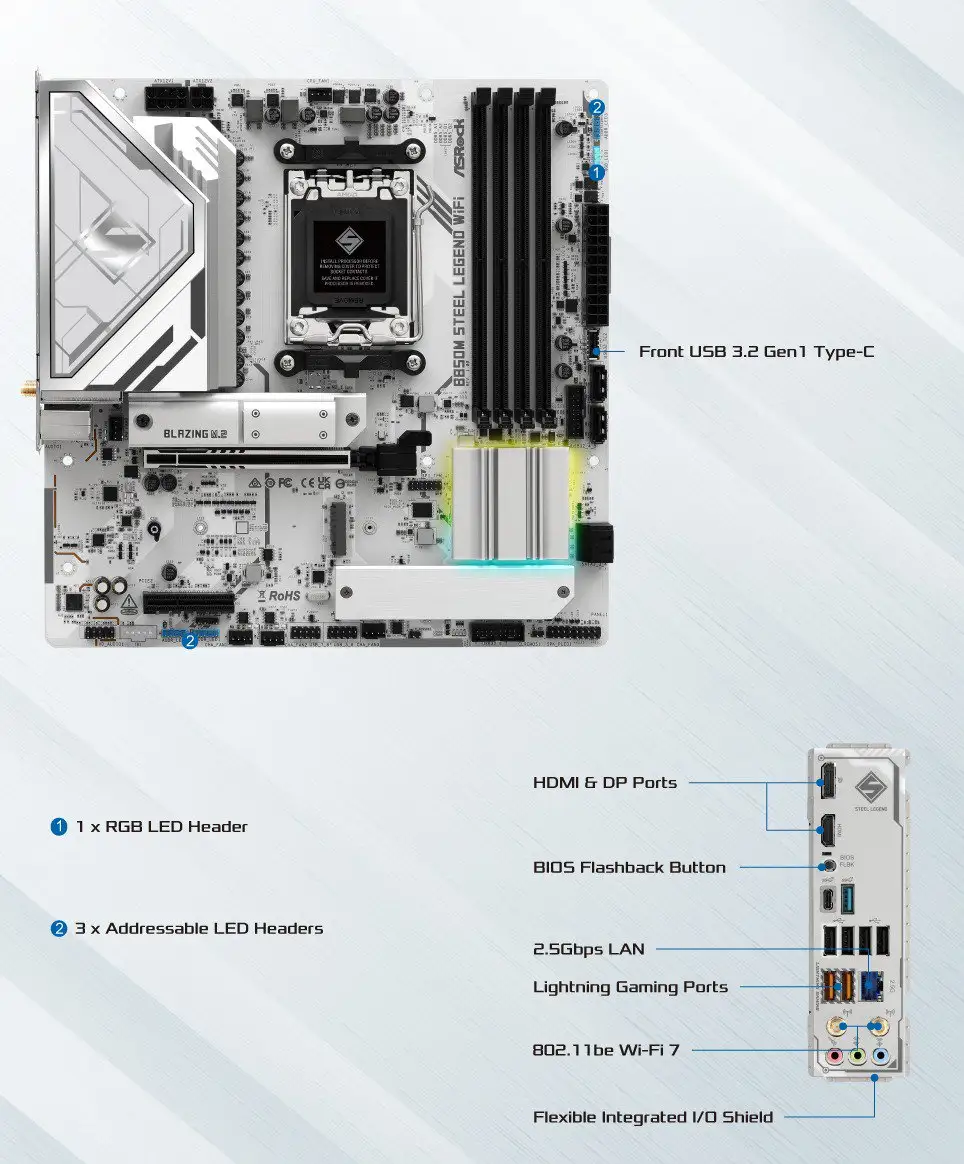
A recurring praise across Reddit, Trustpilot, and test labs is the mix of aesthetic appeal and robust networking. Builders chasing white-themed rigs like the silver heatsinks with integrated RGB strip under the M.2 shield: “Would look good with most builds, especially those leaning toward white,” wrote Tom’s Hardware. Wi-Fi 7 and 2.5GbE LAN delivered real benefits to online gamers and streamers — a Trustpilot description of “fast and uncompromised connectivity experience” matched measured throughput.
Toolless M.2 installation is a rare ergonomic win. Reviewers liked the oversized latch for GPU removal and heatsinks with anti-drop screws, making swaps “super easy & simple” according to eBay’s listing narrative. For upgraders swapping SSDs or GPUs often, that’s a tangible time-saver.
Common Complaints
Lack of USB4 was lamented in German “Preis-Leistungs-Tipp” testing: “Nur USB 3.1 (10Gb/s)” prevents it from reaching true flagship status. Tom’s Hardware echoed that 20Gbps is front-panel only, which forces some builders to reroute high-speed devices. A smaller but frequent gripe is partial heatsink coverage — one of four M.2 slots runs exposed.
RAM compatibility stands out as a frustrating reality for power users. One lab noted DDR5-6000 kits failed to match tested timings, undercutting some speed potential without thorough QVL checks. Gamers needing maximum memory clocks may prefer boards with broader tested support.
Divisive Features
The RGB implementation splits opinion. Some like SignalRGB integration and Polychrome sync for unified effects: Twitter posts highlighted the “game-reactive effects” feature. Others saw it as cosmetic bloat when build priorities were thermal control and slot layout.
PCIe lane disablements are another divider. Experienced builders accept these constraints as normal for midrange chipsets, while casual buyers discover them only after a drive install disables a slot.
Trust & Reliability
Trustpilot records and Reddit threads show the board holding up well over months of daily gaming and productivity. One Korean listing emphasizes the 20K-hour capacitor lifespan, aiming for long service. There’s minimal chatter of DOA units or outright failures, implying factory QC is solid. However, as with many motherboards, long-term satisfaction hinges on matching parts closely to the QVL — especially for RAM and high-speed NVMe drives.
Alternatives
In ASRock’s own B850 lineup, the B850 Pro RS WiFi trims costs but uses a lesser ALC897 audio codec, making the Steel Legend the better choice for audio-conscious users. The B850 LiveMixer WiFi offers more rear USB and different aesthetics but swaps Wi-Fi 7 for Wi-Fi 6E. Competitors at similar pricing from MSI or Gigabyte often bring USB4 but may drop the flagship audio entirely.
Price & Value
At around $210–$229 (seen on Best Buy and Beach Audio), the B850 Steel Legend undercuts many Wi-Fi 7 ATX boards while offering high-end audio. On eBay, discounts to £146 suggest decent resale potential, especially with the white/silver niche appeal. Community consensus argues it’s “priced well among peers” if your build doesn’t demand top-tier USB speeds.
FAQ
Q: Does the ASRock B850 Steel Legend support PCIe 5.0 for GPUs and storage?
A: Yes, the primary x16 slot runs PCIe 5.0 from supported CPUs, and one M.2 socket is PCIe 5.0 x4. Lane sharing may disable secondary slots when populated.
Q: Which audio codec is used, and is it good for gaming?
A: It uses the Realtek ALC4082 “flagship-class” codec with Nahimic enhancements. Gamers report clear positional audio, though no onboard amp/DAC stage like higher-end chipsets.
Q: Are all M.2 drives cooled with heatsinks?
A: No. Three of the four M.2 sockets have heatsinks; one runs exposed, which could affect sustained speeds under heavy writes.
Q: Is DDR5-8000 guaranteed to work?
A: It’s supported, but real-world compatibility relies on using modules from ASRock’s QVL. Some DDR5-6000 kits failed to meet rated timings in lab tests.
Q: Does Wi-Fi 7 work on Windows 10?
A: No. It’s only supported under Windows 11. There’s no driver for Windows 10.
Final Verdict: Buy if you’re a mainstream gamer or builder prioritizing Wi-Fi 7, strong onboard audio, and ease-of-use features like toolless M.2 and flexible I/O shield. Avoid if you need USB4/40Gbps ports or have specific high-clock RAM outside the QVL. Pro tip from community: Check lane sharing diagrams before populating all storage slots to avoid unexpected PCIe disablement.





