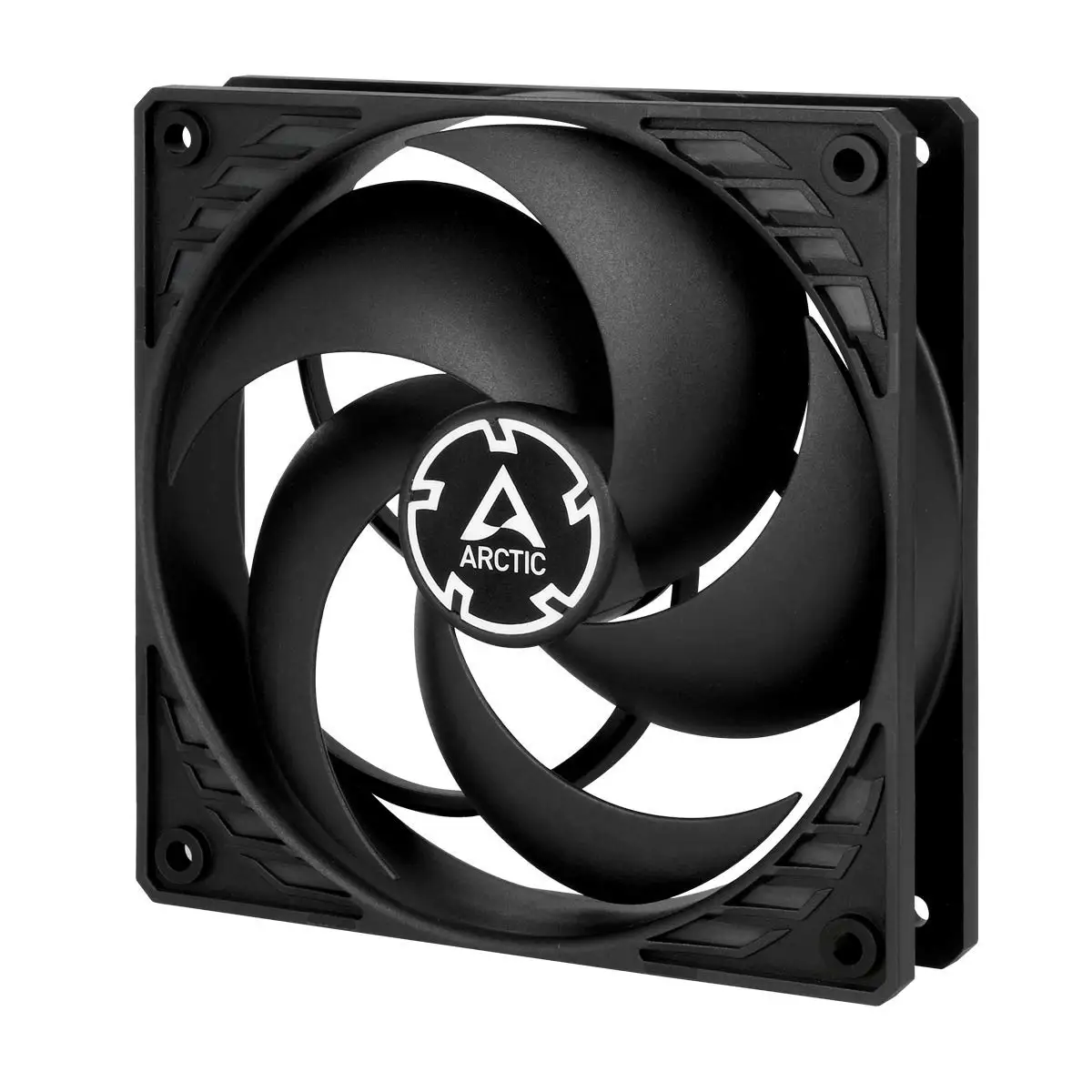
ARCTIC P12 Slim PWM PST Review: Compact Cooling Verdict
The first thing that jumps out about the ARCTIC P12 Slim PWM PST (3 Pack) isn’t its ultra-thin 15 mm profile, but the fact that it manages to impress both small form factor enthusiasts and budget-conscious builders with a 4.7-star average across multiple platforms. Scoring 9.0/10, it blends quiet operation, effective static pressure cooling, and clever daisy-chain connectivity — but repeated reports about fragility and occasional vibration noise mean it’s not flawless.
Quick Verdict: Conditional — Ideal for SFF builds and tight clearance airflow setups, but watch for quality control in blade alignment.
| Pros | Cons |
|---|---|
| Fits in tight spaces where 25 mm fans won’t | Some users report flimsy frame and blade wobble |
| Whisper-quiet at low RPM | Slightly higher noise at certain mid-RPM ranges |
| Strong static pressure for radiators | Blades can grind against frame if misaligned |
| Daisy-chain PST simplifies cable management | Not as premium in build as Noctua equivalents |
| Affordable compared to high-end slim fans | Minimal blade protection — vulnerable in cramped cases |
| Versatile push/pull mounting options | Limited RGB — pure functional focus |
Claims vs Reality
The marketing heavily leans on “optimized for static pressure,” promising high efficiency even through filters and radiators. That claim holds up — a verified Amazon buyer reported fitting two into a deshrouded MSI 6700 XT and sustaining full load without throttling, noting: “These slim fans fit perfectly… whisper quiet unlike the stock MSI ones.”
The “whisper quiet motor” narrative is mostly accurate at low speeds. Many on PCPartPicker praise silence, with one user saying they “could fit one just beside my PSU” and it remained “completely silent.” But real-world feedback exposes a nuance: several found a “slightly annoying sound” in specific RPM ranges, breaking the perfect silence.
Finally, “low installation height” is marketed for tricky builds — here, reality strongly matches the claim. Amazon reviewer in a Meshify C build highlighted its success: “These fans fit here without any problems… I get push/pull, low temps, and a very quiet build.” Where some cases demand this dimension, it’s a genuine problem-solver.
Cross-Platform Consensus
Universally Praised
Across Amazon, LDLC, and Reddit discussions, the standout praise is for compact fit and versatility. SFF builders benefit most — PCPartPicker user described installing them “just beside my PSU” to feed extra intake air into a confined build. Meshify C owners seem to have the perfect gap for them, avoiding modifications entirely.
Noise performance earns consistent applause. LDLC customer nathanc called them “really perfect for small spaces, and also very quiet.” Amazon users tackling GPU deshroud mods highlight how these fans can run full speed “without making any noise at all.”
Cable management via PST daisy-chain is another hit. LDLC reviewer jonathanc said: “The splitter is more than appreciable for a clean cable management / assembly time.”
Common Complaints
Fragility is the top concern. Amazon buyers warn the “frame is quite flimsy and somewhat warped.” LDLC’s ckoni noted: “Blades are only lightly protected… beware of tight spaces.” This affects cramped builds, ironically where the slim form is most valuable.
A subset reported mechanical noise or vibration, usually at startup/stop. Amazon feedback mentions “fan blade will grind against the motor support… not well leveled.” This is not universal, but frequent enough to raise quality control questions.
Another mild gripe is mid-range RPM acoustics — quiet overall, but certain resonance points bother sensitive ears.
Divisive Features
The affordability vs. premium build quality split is clear. Many hail them as “affordable alternative to Noctua,” but Looria’s comparison cautions that “quality is not as good…and noise profile may not be as pleasant.”
Design aesthetics divide opinions. Nathanc felt the look “a bit chipy compared to be quiet fans” — but for function-first builders, appearance isn’t a priority.
Trust & Reliability
Durability stories are mixed. Some retail buyers report months of flawless use, even in hot GPU exhaust zones. Others experience early failures — two PCPartPicker fans developed “a loud rattling noise after only a couple months.”
Trustpilot and LDLC store-level praise emphasizes dependable shipping and correct delivery, with multiple “recommend it with my eyes closed” comments. That boosts retail confidence, even if factory QC has occasional misses.
Long-term viability gets modest validation — quieter motors and lower frictional heat theoretically quadruple service life. But without many “one year later” updates, the jury is still out on real-world endurance.
Alternatives
Directly compared via Looria, the Corsair SP120 RGB Elite offers better aesthetics and software control. It wins with RGB customization but loses on clearance for SFF builds. Corsair’s price is higher, build is solid, but some find brightness lacking.
Noctua fans emerge in discussions as the premium benchmark — superior quality, but significantly costlier and thicker, making them impractical for spaces where the P12 Slim PWM PST thrives.
Price & Value
eBay listings show new packs around $24–26 plus shipping, with Arctic’s official store pricing similar. Resale is limited — few used sales, probably because owners keep them for niche applications.
Buying tips: look for official store stock to dodge potential QC lottery, and if possible, inspect blades before installation. Bundles like the 3-pack offer best per-fan value.
FAQ
Q: Is the ARCTIC P12 Slim PWM PST really silent?
A: At low RPMs, yes — multiple users report near inaudibility. Some detect mild resonance at certain speeds, but it’s far quieter than many stock case or GPU fans.
Q: Can these fit between case front mesh and chassis?
A: Yes. Builders like Meshify C owners confirm it fits behind the front mesh without modification, ideal for tight push/pull setups.
Q: Are they good for radiators?
A: Yes. High static pressure makes them suitable for radiators, even in push or pull configurations, as shown in multiple modding stories.
Q: What’s the main downside compared to premium brands?
A: Build robustness. Frames can feel flimsy, and a handful of users faced blade misalignment or grind at startup — less common in Noctua products.
Q: Is the PST daisy-chain worth it?
A: Absolutely for cable management. LDLC reviewers consistently call the splitter “appreciable” and time-saving during assembly.
Final Verdict
Buy if you’re an SFF builder, modder, or anyone with clearance issues demanding a 15 mm solution — especially if quiet airflow and neat cabling matter more than RGB flash. Avoid if you need rock-solid mechanical robustness in a fan subject to rough handling or frequent removal. Community pro tip: check blade clearance before final screw-down to avoid startup grind.