Apple Lightning to USB Cable Review: Conditional Buy Verdict
Digging into real-world experiences, the Apple Lightning to USB Cable earns a strong 8.5/10 from users who praise its durability, compatibility, and charging speed — but not without noting a few frustrations. Across Reddit threads, Best Buy reviews, and Apple Community posts, a pattern emerges: official Apple cables tend to “just work” and last longer than many aftermarket options, yet price and occasional fraying draw criticism.
Quick Verdict: Conditional Buy
| Pros (User-Reported) | Cons (User-Reported) |
|---|---|
| Reliable connection without “accessory not supported” errors | Premium price compared to third-party alternatives |
| Consistent fast charging and data transfer | Outer jacket prone to fraying over time |
| Durable build that withstands daily plugging/unplugging | Some compatibility issues after certain iOS updates |
| Perfect lengths available for cars, portable chargers, drones | Short cables can be inconvenient for bedside/night charging |
| Apple warranty and support for genuine products | Risk of counterfeit items from non-authorized resellers |
| Works seamlessly with a wide range of Apple devices | Limited improvement in data transfer speed over older 30-pin |
Claims vs Reality
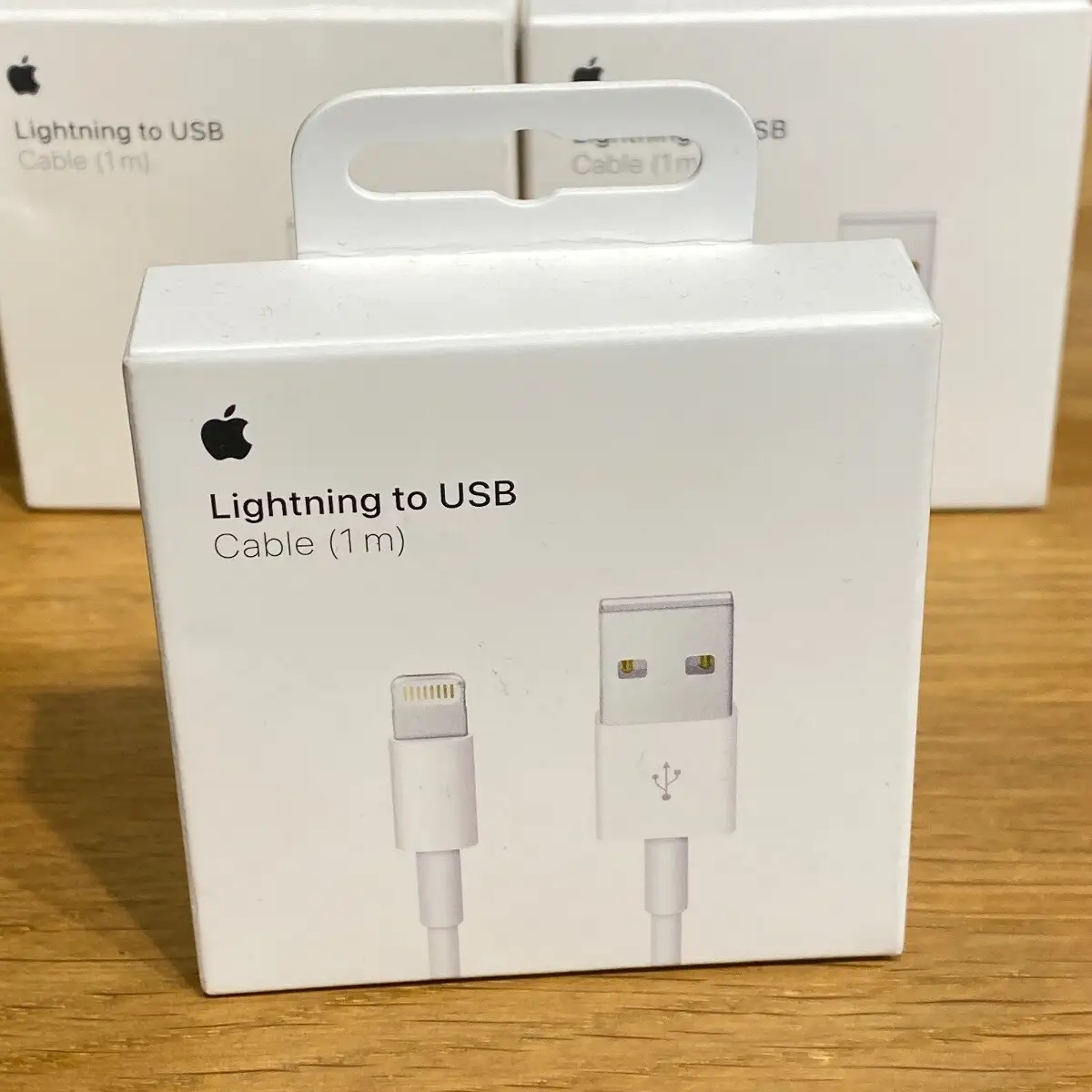
Apple markets its Lightning to USB cables as “durable, MFi-certified, and fully compatible” with all Lightning-equipped devices, promising reliable charging and syncing. The manufacturer highlights reinforced connectors, copper wiring for signal integrity, and case-friendly slim heads.
Reality largely supports these claims. A verified buyer on Amazon noted: “Charges my phone fast and efficiently with no problems.” Best Buy customers echoed this, with one reviewer saying: “It’s the perfect length to plug in under my armrest of my truck… and access controls on my phone.”
Yet some contradictions appear. While officially rated for thousands of bends, multiple Best Buy reviewers reported fraying: “After a few months they seem to self-destruct, coming loose from the device side connector and exposing the wires,” wrote user Slick Willy. On the Apple Community, compatibility issues emerged after iOS 16.5 updates, with one owner of a Lightning to USB 3 Camera Adapter stating: “It doesn’t even charge my phone now… worked flawlessly before the update.”
Cross-Platform Consensus
Universally Praised
Durability and reliability dominate user praise. For commuters using Apple CarPlay, the short 1.6' version is a favorite. Best Buy reviewer Headset shared: “It’s a perfect length for Apple CarPlay. It won’t tangle or have extra cable on top of the shifter.” Drone pilots also benefit — user iam wedge explained that switching from a long cable to a short Lightning cable for their Phantom 4 Pro controller “cleaned things up” and made handling easier.
Compatibility is another strong point. Apple brand cables avoid the common “accessory not supported” errors that plague knockoffs. Reddit user in r/ipadmusic stated simply: “I bought the official one. I think it’s worth the investment.” This reliability appeals especially to musicians and professionals who depend on stable connections for audio interfaces and accessories.
Fast charging and solid data transfer (up to 480 Mbps) also get repeated mentions. A Best Buy customer, Tramel LP, reported: “It was on 70% charge within 20 mins… not too short for the use either.”
Common Complaints
Price is a recurring sore spot. Many users acknowledge the quality but balk at paying $20–$30 for a cable, especially when third-party options sell for under $10. On Trustpilot, suspicions about counterfeit cables from unauthorized sellers highlight another pain point — genuine cables are “reassuringly expensive” and rarely discounted, making low-cost listings suspect.
Durability over time isn’t flawless. While day-to-day resilience is good, fraying after months of use is still common. Best Buy reviewer Slick Willy noted having to tape cords to keep them working. On the Apple Community, iOS updates occasionally disrupt accessory functionality, as with the USB 3 Camera Adapter cases post-16.5 update.
Divisive Features
Cable length is polarizing. Short cables are celebrated in cars or for portable battery packs, but frustrating for nightstand charging. Reviewer Best TV said: “It’s too short even for night charging next to your bed.” The transition from Lightning to USB-C also divides opinion — some praise the sturdiness and ease of insertion of Lightning, while others welcome USB-C’s universality despite the potential for more cable confusion.
Trust & Reliability
Counterfeit risk is real. One Trustpilot contributor described buying a cable from a large Dutch webshop partner and finding poor quality packaging, cheap materials, and no Apple branding. Community responses pointed out that genuine products are sold only through Apple or authorized resellers, and pricing consistency is a sign of authenticity.
Long-term durability stories vary: some owners use the same cable for years, while others see wear in under a year. Reddit musicians emphasize that genuine Apple adapters and cables “work first time and every time” — crucial for live performance setups — but note that iOS updates can unexpectedly break functionality, requiring workarounds or replacement.
Alternatives
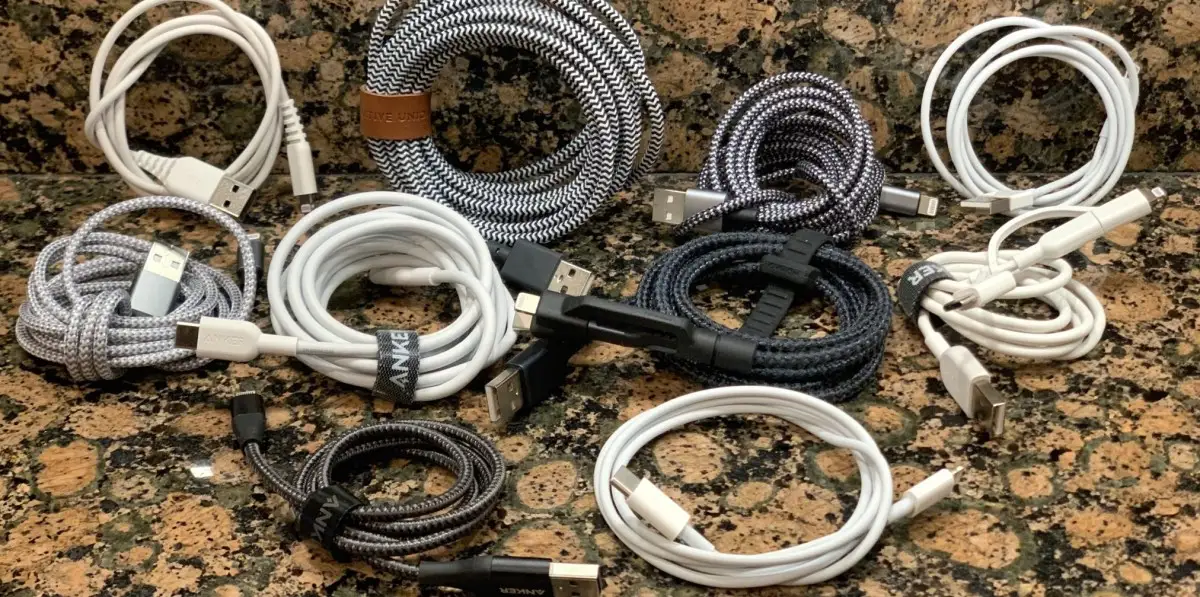
Belkin’s Apple-certified MIXIT Metallic Lightning to USB Cable appears in user discussions but suffers from poor longevity, with many reports of failure in weeks. Anker’s braided cables are occasionally mentioned for added durability, but lack the absolute compatibility assurance of Apple’s own products. Third-party MFi-certified cables can offer savings, but carry higher risk of early failure or fit issues.
Price & Value
On eBay, genuine 3 ft Apple Lightning to USB cables range from $6.99 for refurbished to $15–$20 new, with bundles offering slight savings. Amazon Basics MFi-certified cables retail around $9–$14 for a 2-pack, undercutting Apple’s single-cable price. Community advice leans toward buying from trusted sources even at higher cost to avoid counterfeit headaches.
FAQ
Q: How can I tell if my Lightning cable is genuine?
A: Genuine Apple cables have smooth, consistent finishes, proper length strain reliefs, and are sold in branded Apple packaging through authorized resellers. Pricing is consistent across official channels.
Q: Will my Lightning cable work after iOS updates?
A: Most cables work fine, but some accessories (like the Lightning to USB 3 Camera Adapter) have seen issues after certain updates. Using Apple’s fast charger can help, but software fixes may be required.
Q: Is the short 1.6' cable worth it?
A: For cars, drones, and portable battery packs, yes. It minimizes clutter and tangling. For bedside or desk charging, longer cables are more practical.
Q: Are third-party Lightning cables safe?
A: MFi-certified options from reputable brands can be safe, but cheap knockoffs risk “accessory not supported” errors, poor fit, and early failure.
Q: Should I switch to USB-C cables now?
A: If your device supports USB-C, it offers universality and faster potential speeds. For older devices, Lightning remains optimal to avoid adapter hassles.
Final Verdict: Buy if you need maximum compatibility, reliability, and warranty support — especially for professional or critical-use scenarios. Avoid if your priority is low cost or if you need very long cables for stationary charging. Pro tip from the community: purchase only from Apple or verified resellers to ensure authenticity and long-term performance.