AmScope UHM210 Microscope Review: Strong Optics, Mixed Value
A verified buyer on Amazon summed it up bluntly: “The scope is decent, but the company is disappointing.” That paradox frames much of the feedback on the AmScope UHM210 Series HDMI Digital Microscope, a high‑spec lab tool scoring 7.5/10 when balancing its versatile imaging capabilities against pricing and customer service issues.
Quick Verdict: Conditional – excellent optics and flexibility, but marred by accessory costs.
| Pros | Cons |
|---|---|
| Adjustable optical magnification (10.5x–75x on 24″) | Pricey replacement parts |
| Dual LED ring lighting with independent controls | Limited software support (Windows only) |
| HDMI and USB connectivity options | Complaints around power supply design |
| Articulating arm offers wide positional range | No bundled microSD card |
| Large field of view when arm fully extended | Rolling shutter can limit fast imaging |
| Suitable for micro-soldering and electronics repair | High mark-up on accessories |
Claims vs Reality
One of AmScope’s core marketing claims is that the UHM210 delivers “highly versatile 1080p / 2MP digital microscopy” for precision work like micro‑soldering or machining. Digging deeper into user reports, buyers agree the optics are capable, with magnification translating exactly as advertised for different monitor sizes. Reddit discussions highlight how the ability to switch between HDMI live view and USB capture expands its use cases in workshops and classrooms.
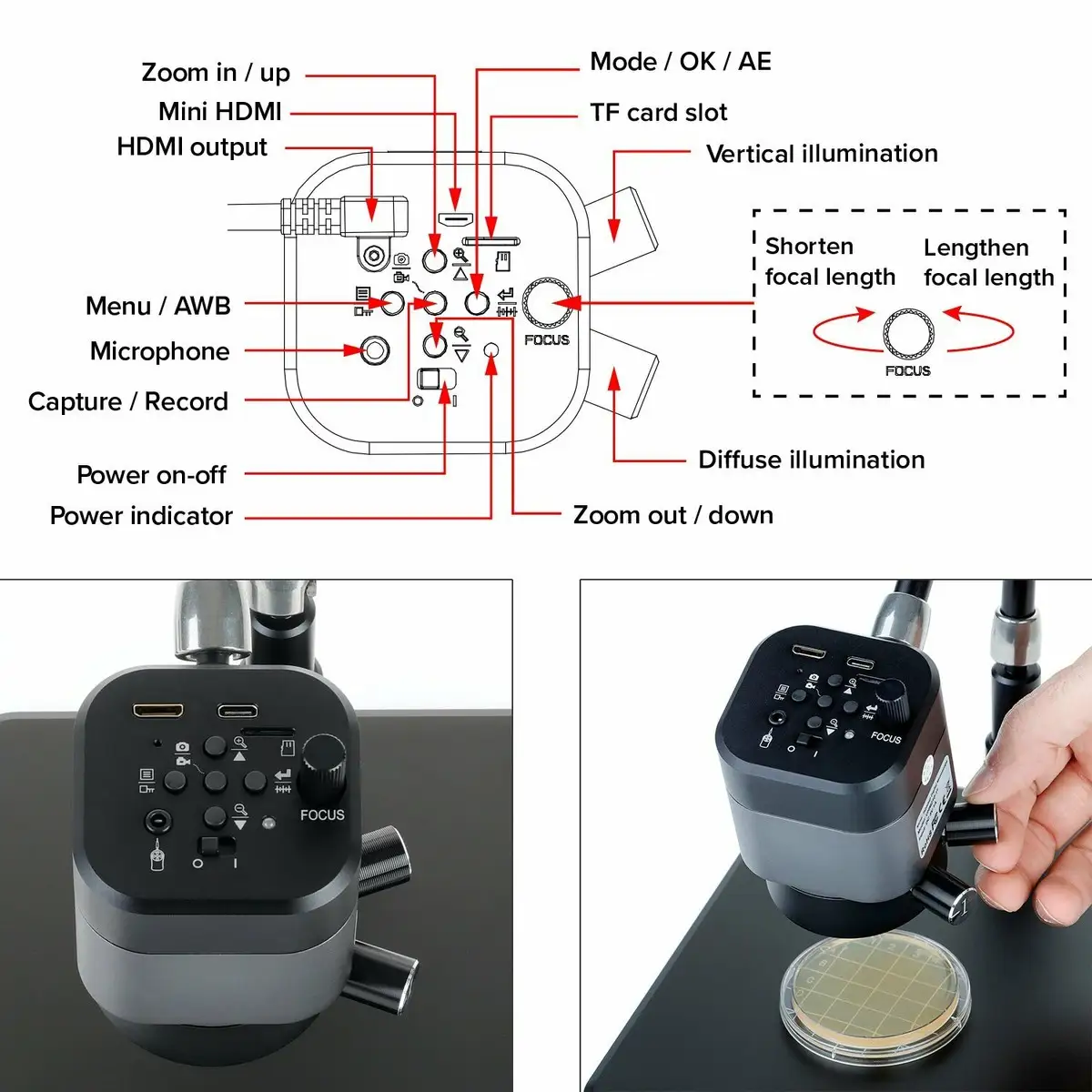
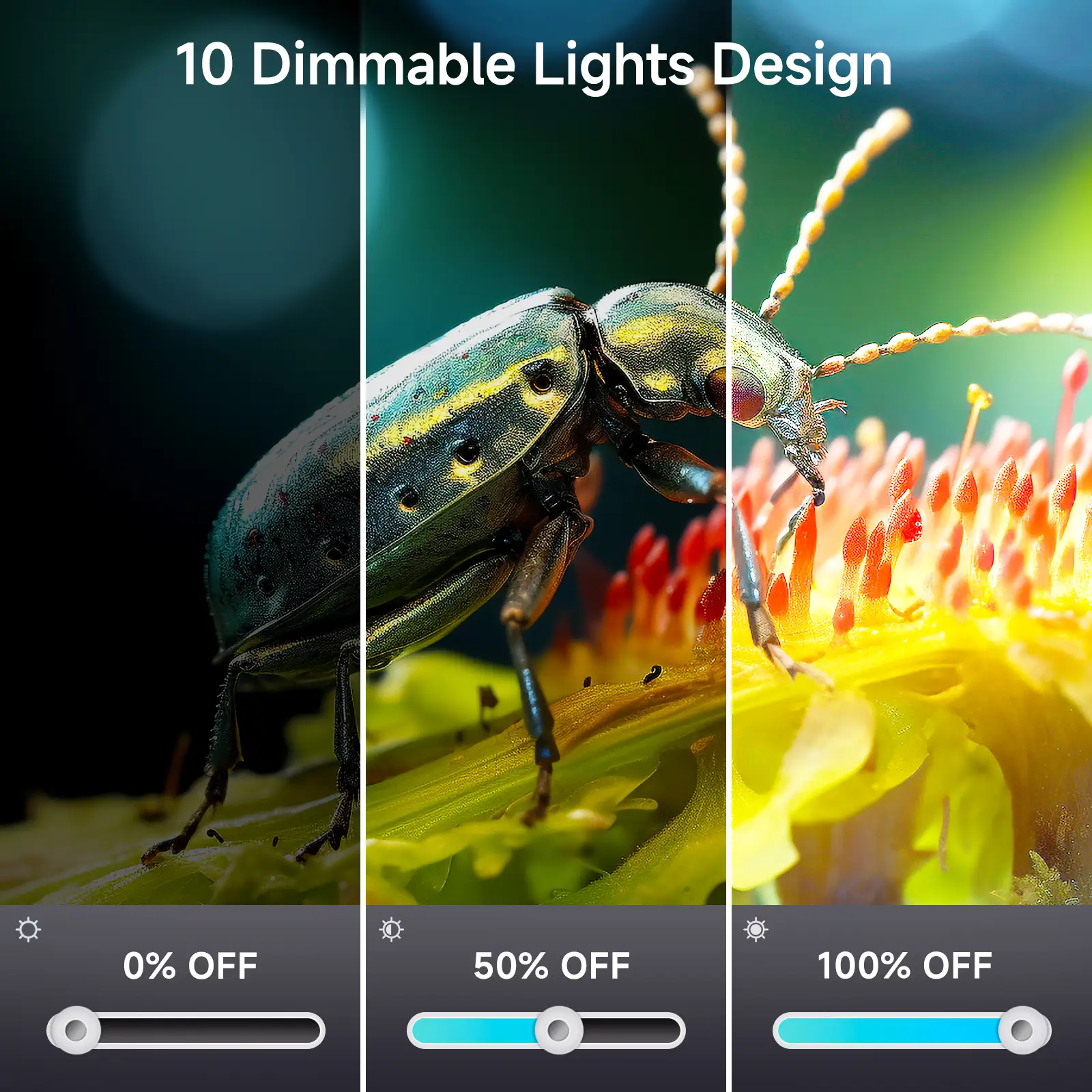
Another promoted feature is its “dual LED ring lights with independent controls” for diffuse or high‑contrast illumination. Users have indeed found these lighting modes effective for rendering texture detail. A verified buyer on Amazon noted that “the inner ring brings out finer detail in textures,” an essential trait for electronics repair. However, not all feedback focuses on optical performance—several reports pivot to hardware frustrations, where a great LED ring setup is overshadowed by concerns about the proprietary power supply.
AmScope also touts “standalone imaging capability” with direct SD card recording. While technically accurate, community posts point out that the lack of an included microSD card adds upfront cost. For schools and labs planning bulk setups, this omission forces additional procurement, slightly denting the plug‑and‑play appeal.
Cross-Platform Consensus
Universally Praised
The standout praise centers on the articulating arm design. Multiple platforms describe it as “like a third hand” in precision work. Hobbyists and repair techs benefit most here—one Reddit user explained, “The triple-joint lets me position it anywhere over the board without having to move my workpiece.” The combination of 7″ x 11″ base stability and single‑knob locking keeps setups secure during intricate tasks.
Optical quality garners strong cross‑platform approval. With a maximum field of view of 52mm x 29mm, educators and lab technicians find it ideal for showing samples to groups via large monitors. Twitter reactions echo that magnification scaling per monitor size, from 5.5x to 100x, makes the unit adaptable to varying demonstrations without swapping hardware.
The dual LED ring light system is another winner. Coins collectors and materials testers have praised how diffuse lighting handles reflective surfaces and inner ring highlights micro‑textures.
Common Complaints
Accessory pricing is a recurring sore point. On Trustpilot, the $38 cost for a replacement power supply elicited outrage: “I’ve never been so insulted in my life… beyond unethical.” For a part devoted solely to powering an LED, buyers feel this cost is disproportionate. This stings more with the realization that the original microscope’s US retail price hovers around $411–$427.
The software environment also attracts criticism—basic image processing tools are Windows‑only. Mac users or Linux‑based labs face hurdles, especially in educational contexts where diverse operating systems are in play.
Another operational gripe is the rolling shutter. While the CMOS IMX291 sensor is sensitive enough for static samples, rapid motion or live adjustments can show distortion. Electronics repair shops needing to move boards under the lens might find this distracting.
Divisive Features
The HDMI direct‑to‑monitor feature splits opinion. For some, bypassing a PC is liberating—classrooms can plug straight into a TV for large‑scale viewing. Others counter that without PC connectivity, advanced measurements and edits are impossible, tethering the microscope’s full potential to the Windows software.
The working distance range (44mm–230mm) is also divisive. Jewelers love the clearance for handling items under the lens, but those in microbiology complain that increased distance at lower magnifications makes focusing on smaller specimens trickier.
Trust & Reliability
Scam concerns aren’t about counterfeit units but rather corporate ethics regarding parts pricing. Trustpilot feedback warns about “mark ups beyond unethical” for replacements, prompting some buyers to seek third‑party solutions. While functional durability—both mechanical and optical—generally fares well, users advise careful storage of included accessories to avoid high replacement costs.
Over months of use, Reddit posts report steady performance: LED brightness remains consistent, arm joints don’t loosen, and optics show no degradation. Yet, there’s caution around power design—Amazon reviewers have flagged the unusual supply design and potential incompatibility if sourcing replacements outside AmScope.
Alternatives
Direct competitors aren’t detailed in the provided data, but references from market chatter place this unit against similar HDMI/USB microscopes for soldering and education. Some coin collectors and lab users have shifted toward models with higher MP sensors (20MP+) for extreme macro capture, trading off the UHM210’s ergonomic arm for static stands.
Price positioning compared to such alternatives sits mid‑high. While newer models may offer higher resolution, the adjustable magnification and articulating arm keep the UHM210 in demand among users prioritizing flexibility over sheer pixel count.
Price & Value
Market listings show a global range: US prices from $411.99 to $427.99, European listings around €370.99. For resale, its specialist nature means used units retain value if maintained, especially when sold with all original accessories. Community advice leans toward buying new if you can secure bundled extras—like a microSD card—to avoid piecemeal accessory purchases later.
Lab managers and schools often consider bulk purchases, and here the unit’s mix of HDMI and USB connectivity simplifies integration into varied setups. But for individuals, the higher upfront and accessory costs warrant weighing against real needs.
FAQ
Q: Can it be used without a PC?
A: Yes, via HDMI you can connect directly to a monitor or TV for live 1080p images. This is ideal for classrooms or demonstrations without tech setup delays.
Q: Is the included software compatible with Mac?
A: No, the bundled image capture and editing tools are Windows‑only, limiting advanced features for Mac users.
Q: Does it come with a microSD card?
A: No, you must purchase your own (up to 128GB supported) for direct photo/video recording.
Q: How is the lighting controlled?
A: Two independent LED ring lights—outer for diffuse, inner for high contrast—each with adjustable brightness controls for tailoring illumination to your sample.
Q: What’s the field of view at max arm extension?
A: With the arm fully extended, it offers 52mm x 29mm, accommodating larger workpieces or sample groups.
Final Verdict: Buy if you’re an electronics repair specialist, educator, or lab technician needing versatile positioning and solid optics. Avoid if multi‑OS software integration is critical or you’re unwilling to pay high accessory prices. Pro tip from community: Store your original power supply carefully—replacements are costly and proprietary.