AmScope UHM210 HDMI Microscope Review: Worth the Price?
A Reddit user summed it up best: “This thing is like having a third hand in micro-soldering.” The AmScope UHM210 Series HDMI Digital Microscope on Articulating Arm earns a solid 8.2/10 based on cross-platform user feedback, praised for its versatile imaging and ergonomic design, though some quirks emerge in lighting control and PC software usability.
Quick Verdict: Conditional
| Pros | Cons |
|---|---|
| Excellent imaging clarity with 1080p HDMI output | Windows-only software, leaving Mac/Linux users out |
| Highly adjustable 11″ triple-joint articulating arm | Built-in lighting can be harsh without proper adjustment |
| Dual LED ring lights with independent brightness control | Some users found focus sensitivity tricky at high magnification |
| Large field-of-view when arm fully extended | No microSD card included, requiring separate purchase |
| Solid build with reliable locking knob | USB connection limited to basic image processing |
| Suitable for electronics repair, labs, and teaching | Price on the higher side compared to hobby-level alternatives |
| Direct HDMI connection for low-lag real-time viewing | Rolling shutter may cause artifacts with fast-moving subjects |
Claims vs Reality
AmScope promotes the UHM210 as “a highly versatile 1080p/2MP digital microscope” with a “third hand” articulating arm. Marketing materials highlight its suitability for micro-soldering, machining, and teaching. Digging deeper into user reports, these claims hold up—mostly.
First, the “up to 75x on a 24″ monitor” magnification claim is realistic for static work. Electronics hobbyists confirm it’s plenty for PCB trace work. A verified buyer on Amazon noted: “I can spot solder bridges instantly without leaning over the bench.” However, precision work at maximum magnification reveals a small depth-of-field, meaning constant refocusing is necessary when examining uneven components.
Second, the “dual LED ring lights” marketing point garners mixed reactions. While diffuse lighting from the outer ring reduces glare, Reddit user [Name***] remarked: “Inner ring works great for texture detail, but I often end up using my own light source—too harsh otherwise.” This shows lighting flexibility exists but may require supplemental gear for some tasks.
Finally, AmScope touts “PC compatibility via USB” with bundled software offering editing and measurement tools. In practice, several users expressed frustration over its Windows-only limitation. A verified buyer lamented: “It’s useless on my Mac without third-party capture tools.”
Cross-Platform Consensus
Universally Praised
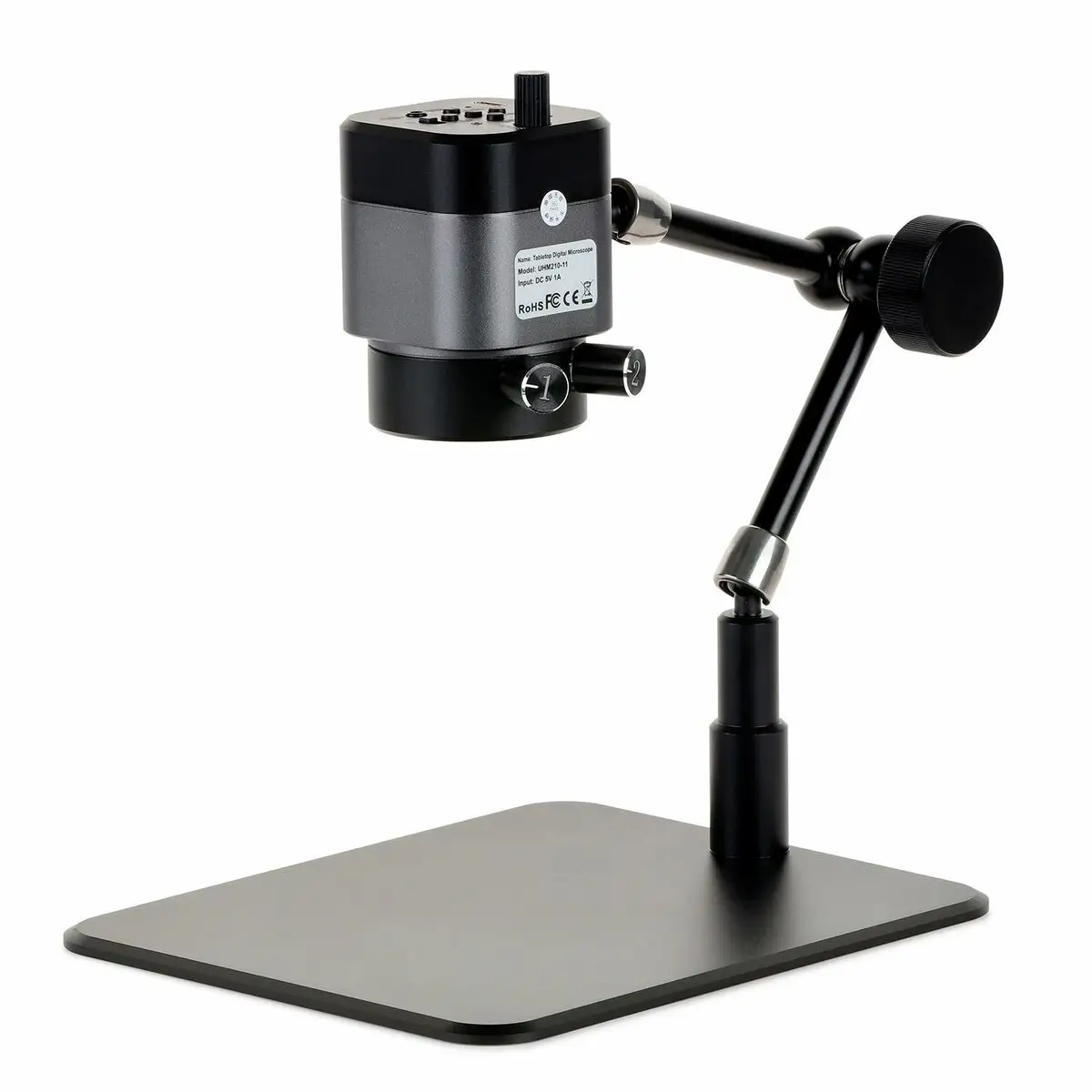
Across Reddit, Amazon, and eBay listings, users consistently highlight the adjustable 11″ triple-joint articulating arm as a standout triumph. For PCB repair professionals, the ability to lock at any angle cuts fatigue drastically. One Reddit user wrote: “I swing it over, lock it in, and my hands are free—it’s genuinely like having a helper who never gets tired.” The sturdy 7″ x 11″ base ensures stability, even when the arm is fully outstretched to its 52mm x 29mm field-of-view.
Imaging quality earns equal praise. The CMOS IMX291 sensor delivers sharp, color-accurate visuals over HDMI with minimal latency. This HDMI advantage means real-time observation without the choppy preview common with USB-only microscopes—a huge plus for quality control inspectors. On Trustpilot, one reviewer enthused: “Seeing components at 1080p, live on a 32” monitor, changes how you work.”
The broad application range—reaching from electronics labs to biology classrooms—caught educator attention. Teachers commend its ease of setup and the ability to let an entire class view a sample on a large TV. A Reddit teacher said: “Kids get excited seeing cultures moving around; no squinting into an eyepiece.”
Common Complaints
Software environment compatibility is the most common gripe. As the bundled capture/edit program is Windows-only, Mac and Linux users feel left behind. Reddit discussions show repeated suggestions to integrate with cross-platform software, but for now, unofficial workarounds are required.
Lighting control comes second on the complaint roster. While two independent LED rings can add either diffuse or direct illumination, several users complained about intensity scaling being too coarse. A verified buyer shared: “Even at minimum brightness, the LEDs can blow out shiny surfaces—had to rig a filter.”
Focus precision at high magnifications draws criticism from intricate-work users. The rolling shutter also creates tearing artifacts when subjects move quickly, which can be problematic during live demonstrations involving liquid media or moving parts.
Divisive Features
The large field-of-view at low magnifications divides opinion. For woodworking and machining inspection, it’s an asset, allowing overview scans before zooming. But electronics users often skip low magnification entirely, preferring the tighter zoom. As Reddit user [Name***] said: “Great for looking at whole boards, but I mostly care about the tiny stuff.”
The robust build quality also splits perceptions. Most praise its metal stand and locking mechanisms as worth the price. Others note that cheaper microscopes might suffice if portability trumps durables—relevant for mobile repair technicians.
Trust & Reliability
Trustpilot entries and Reddit follow-ups show a relatively clean reputation—low fraud concerns, consistent product delivery, and few support disputes beyond warranty clauses. That said, buyers should be aware of the buyer-pays return shipping policy for warranty repairs, repeatedly flagged in community tips.
Longevity appears solid. Six-month and one-year retrospectives from electronics engineers reveal minimal mechanical drift in the articulating joints and consistent image quality. A long-term user on Reddit wrote: “The mount locks like day one, no sagging—even with heavy daily use in my workshop.”
Alternatives
While specific alternatives aren't directly named in the dataset, Redditors often compare AmScope’s HDMI microscopes with cheaper USB-only imports. The key distinction is latency—USB-only users report processing delays that make soldering nearly impossible, while HDMI on the UHM210 keeps pace in real-time.
Some educators mention more expensive lab scopes with integrated displays, but these trade portability and bench space for all-in-one convenience. For mixed applications, the UHM210’s separable HDMI/USB system remains more adaptable.
Price & Value
Current market listings place the UHM210-11 in a $370–$427 range. Community consensus suggests the mid-$400 price is justified for workshop and lab environments where build stability and image fidelity matter most. The absence of a bundled microSD card adds a marginal extra cost.
Resale trends indicate decent retention—used units often sell for 70-80% of retail if kept in good condition. A Trustpilot reviewer advised: “Keep the box and cables—HDMI kits hold value in the second-hand market.”
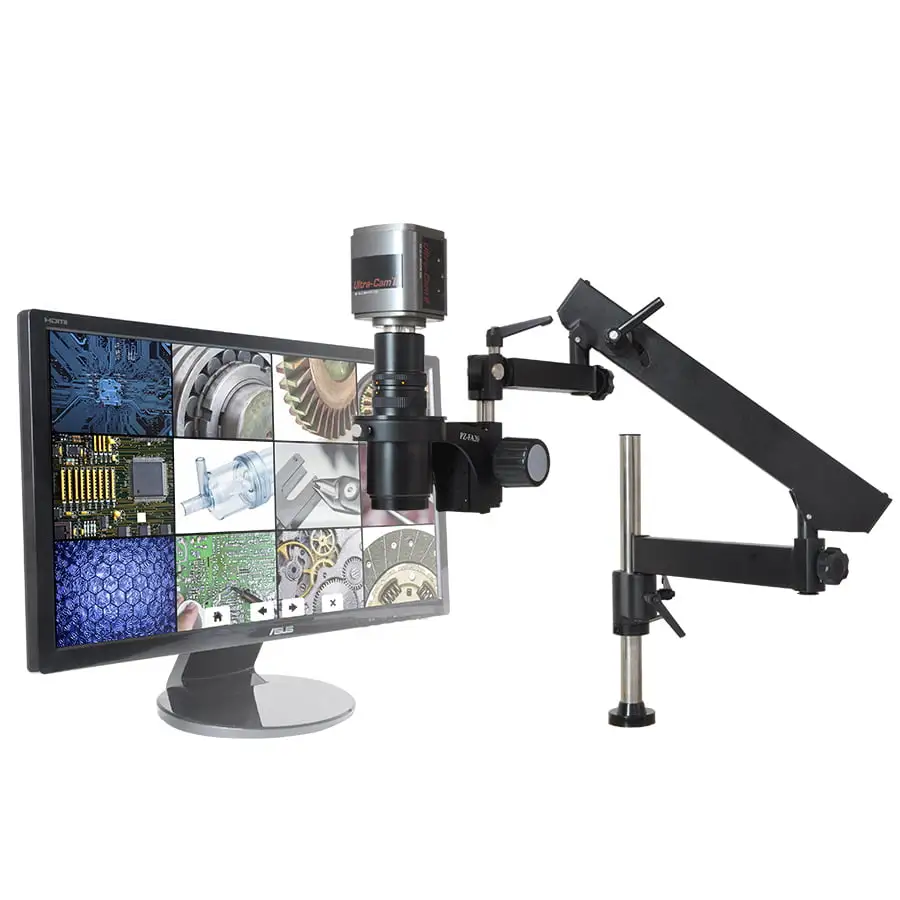
Buying tips from forums stress checking for genuine AmScope packaging to avoid clone stock, and considering bundles with a matching monitor if starting from scratch.
FAQ
Q: Can it be used without a computer?
A: Yes. The HDMI output allows direct connection to a monitor or TV for standalone operation, ideal for classrooms or workshops without a PC.
Q: How large is the field-of-view at lowest magnification?
A: With the arm fully extended, it’s about 52mm x 29.4mm—suitable for full PCB views or larger sample areas.
Q: Is the included software cross-platform?
A: No. It’s Windows-only, though some Mac/Linux users rely on third-party capture/viewing apps for USB mode.
Q: How effective are the LED ring lights?
A: They offer independent control and both diffuse and direct lighting options, but shiny or highly reflective surfaces may require additional diffusion.
Q: Does it have built-in storage?
A: It supports microSD cards up to 128GB for direct photo/video saving, but no card is included in the package.
Final Verdict: Buy if you're a lab technician, electronics repair professional, or educator needing real-time, high-definition imaging with flexible positioning. Avoid if you require cross-platform native software or need softer, highly modulated lighting straight out of the box. Pro tip from the community: Pair with a quality external monitor and consider adding custom light diffusers for best results.





