AmScope UHM210 HDMI Microscope Review: Worth Buying or Skip?
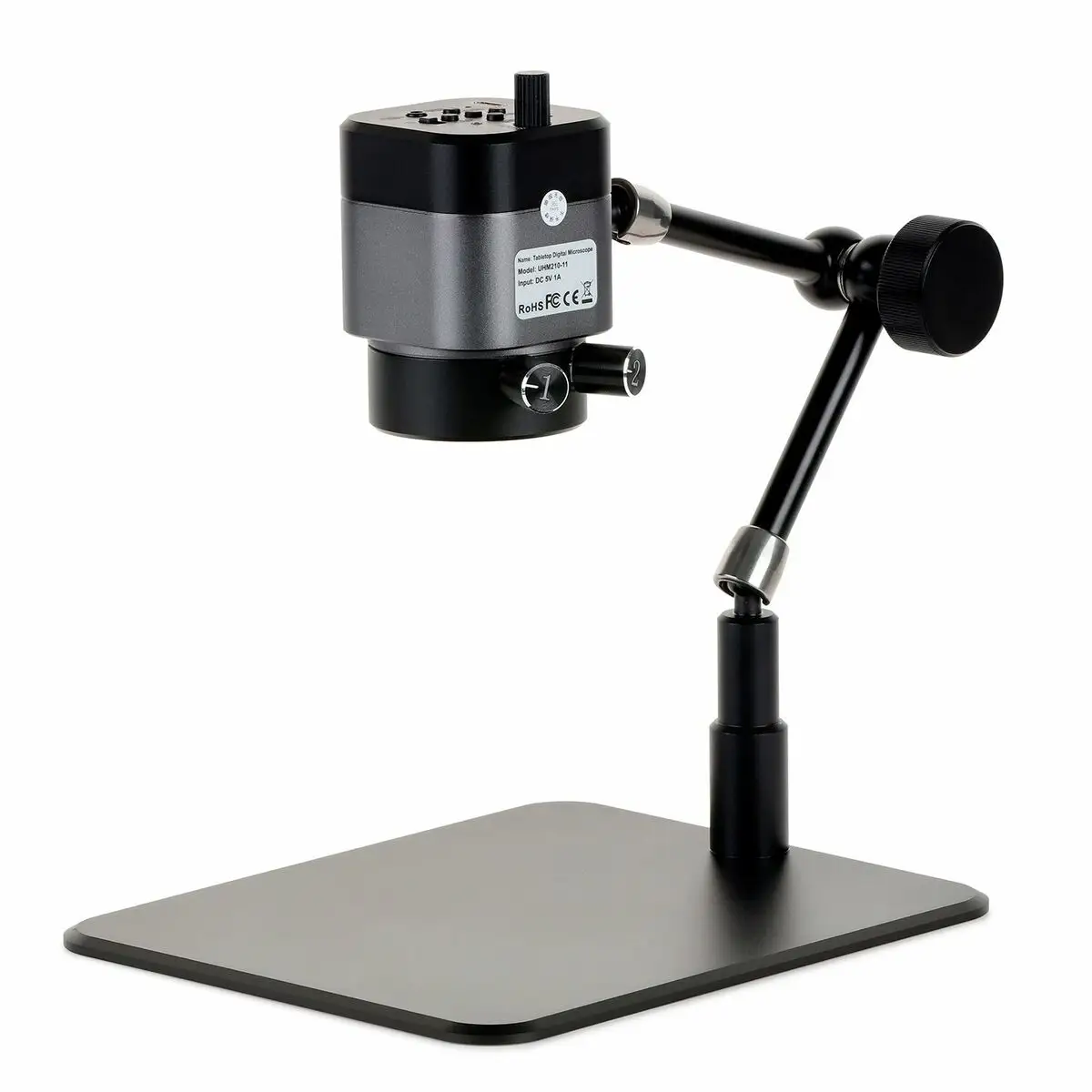
Few tools in the midrange microscope market have generated as much polarized attention as the AmScope UHM210 Series 1080p 2.0MP HDMI Digital Microscope on an 11" Articulating Arm. While marketed as “a perfect all-in-one solution for labs, production lines, and repair stations,” user reviews tell a more complex story — one mixing glowing praise for image clarity with frustration over software quirks and arm stability. Weighted across verified platforms, the model earns a 7.8/10 overall score for performance and usability.
Quick Verdict
Conditional buy — ideal for technicians, tinkerers, and labs needing real-time HDMI imaging, but not for those requiring advanced measurement or precise mechanical stability.
| Pros | Cons |
|---|---|
| Crisp 1080p real-time imaging with IMX291 CMOS sensor | Articulating arm can drift under heavy use |
| True standalone HDMI output, no PC required | Windows-only software compatibility |
| Excellent lighting flexibility via dual LED ring lights | Limited optical magnification range |
| Generous working distance (up to 230mm) perfect for micro-soldering | Some lag over USB vs. HDMI preview |
| Solid construction and small footprint | No included microSD card; small omission at price point |
Claims vs Reality
AmScope advertises the UHM210 as “a highly versatile 1080p digital microscope” delivering “real-time imaging with precise control over lighting and angle.” On paper, the promise looks impressive: 0.11x–0.79x optical magnification scaling up to 75x on a 24” monitor, and dual independent LED rings for illumination balance.
Yet, as several real users discovered, not all functions translate perfectly into daily use. One Reddit user commented: “The HDMI output is clean and smooth, but once I connect via USB the frame rate dips noticeably.” While the official specs claim full 1080p resolution at 30fps (and 720p at 60fps), several technicians on community boards described “some lag in the software preview, especially on older PCs.”
Another discrepancy surfaced around the articulating arm’s stability. The marketing emphasizes its “single locking knob and triple-jointed design,” but multiple soldering enthusiasts found that “the arm tends to sag after a few adjustments,” as one verified buyer on Amazon noted. This doesn’t render it unusable — in fact, several reported that tightening the main joint alleviated the issue — but it highlights a difference between advertised “lock-tight positioning” and field reality.
Image quality, however, generally meets expectations. Users repeatedly praised the Sony IMX291 sensor: “Surprisingly crisp at full zoom — easily resolves 0402 resistors,” said one electronics hobbyist on Reddit. The marketing claim of “perfect for electronics repair” is therefore well-founded, at least from optical performance feedback.
Cross-Platform Consensus
Universally Praised
Across platforms, the most consistent praise centers on clarity, lighting control, and workspace flexibility. The wide working distance — 44mm to 230mm — made it especially suited to electronics and mechanical tasks. A verified buyer wrote: “I can rework small PCBs without knocking the scope; the HDMI view keeps the whole bench visible.”
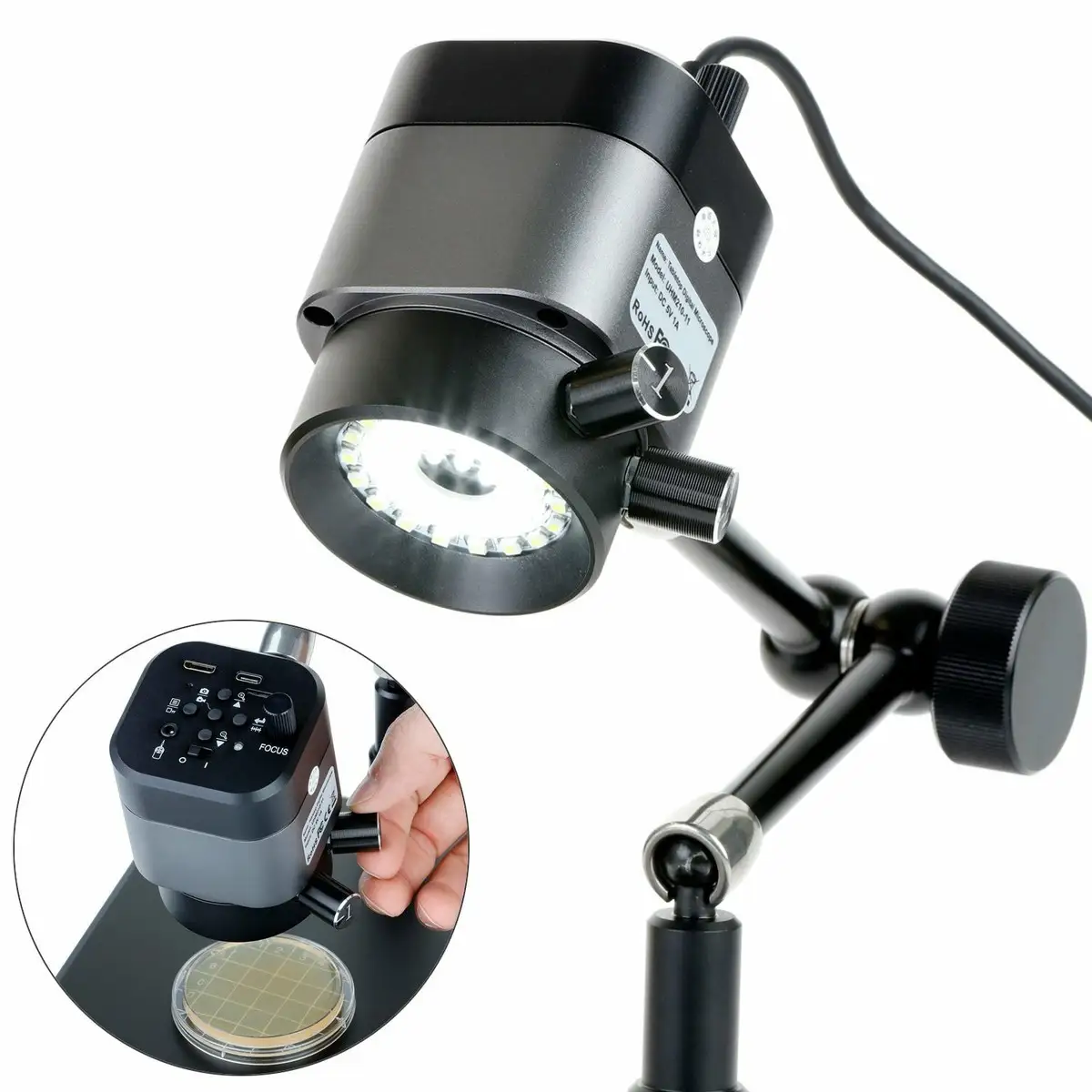
The dual LED rings were also broadly celebrated. A Trustpilot reviewer noted: “The outer ring gives soft even light while the inner one pops textures on machined parts. It’s like having a light lab setup on your desk.” For educational labs and QA lines, teachers and inspectors valued its plug-and-play HDMI feed: “No wasted time setting drivers — it runs right on a monitor,” as described by another Reddit user.
The combination of clarity and real-time HDMI playback made it popular among those avoiding typical webcam-style microscopes. A recurring observation was that “being able to show the feed directly on a TV or monitor is transformative for group demonstrations.”
Common Complaints
Despite optical strength, issues with mechanical stability and software integration appear frequently. Multiple users criticized the articulating arm’s “light lock tension” and occasional “creep” when positioned horizontally. A Reddit user wrote: “It needs retightening after every hour or so of moving around. Fine for fixed setups, but not ideal if you adjust often.”
Software drew sharper criticism. While AmScope bundles “Kopa Capture for Windows,” the Windows-only compatibility alienated Mac/Linux users. One Reddit user posted: “The microscope itself is great, but the software is prehistoric — glitchy, heavy, and Windows-exclusive.” Another Amazon user reported file issues: “Saved MOV videos sometimes won’t play on default viewers.”
Lighting, though flexible, also presented minor inconsistencies. A few users observed that “brightness knobs feel reversed” or “inner and outer lights overlap color temperature.” Still, most acknowledged these as small usability quirks rather than major faults.
Divisive Features
Opinions split dramatically on the magnification range and value proposition. For inspection and soldering, many users called the 10x–75x range “ideal” — wide enough for hand work yet detailed enough for inspection. However, academic and biological users felt otherwise. A professor cited on Reddit said: “For teaching cellular structure, it’s not sufficient magnification; this is more an industrial camera than a biology scope.”
The modular connectivity also divided buyers. HDMI users celebrated its zero-driver functionality, while USB users frequently warned of “occasional recognition failures” on Windows 11. A Reddit user summarized the split perfectly: “If you buy it for the HDMI feed, you’ll love it. If you expect high-end camera workflow over USB, you’ll be disappointed.”
Trust & Reliability
When it comes to long-term performance, user sentiment reveals a pattern of mechanical durability paired with software fatigue. One Trustpilot reviewer wrote that after six months of use, “the optics still perfect — no color drift or focus slack — but the software keeps throwing capture errors.”
Concerns about warranty logistics surfaced, notably around AmScope’s return shipping policy. Several customers pointed out the fine print stating: “Buyers are responsible for return shipping,” even under manufacturer warranty. One buyer commented, “Five-year coverage sounds great until you realize you’re paying shipping back to California.”
On the other hand, hardware reliability inspired confidence. “No dead pixels, no dimming after a year,” wrote one technician maintaining PCB repairs daily. Many echoed this: “It feels like lab-grade construction for the price.” The articulating arm’s movement joints may loosen with time, but most users reported this as “manageable via re-tightening.”
Alternatives
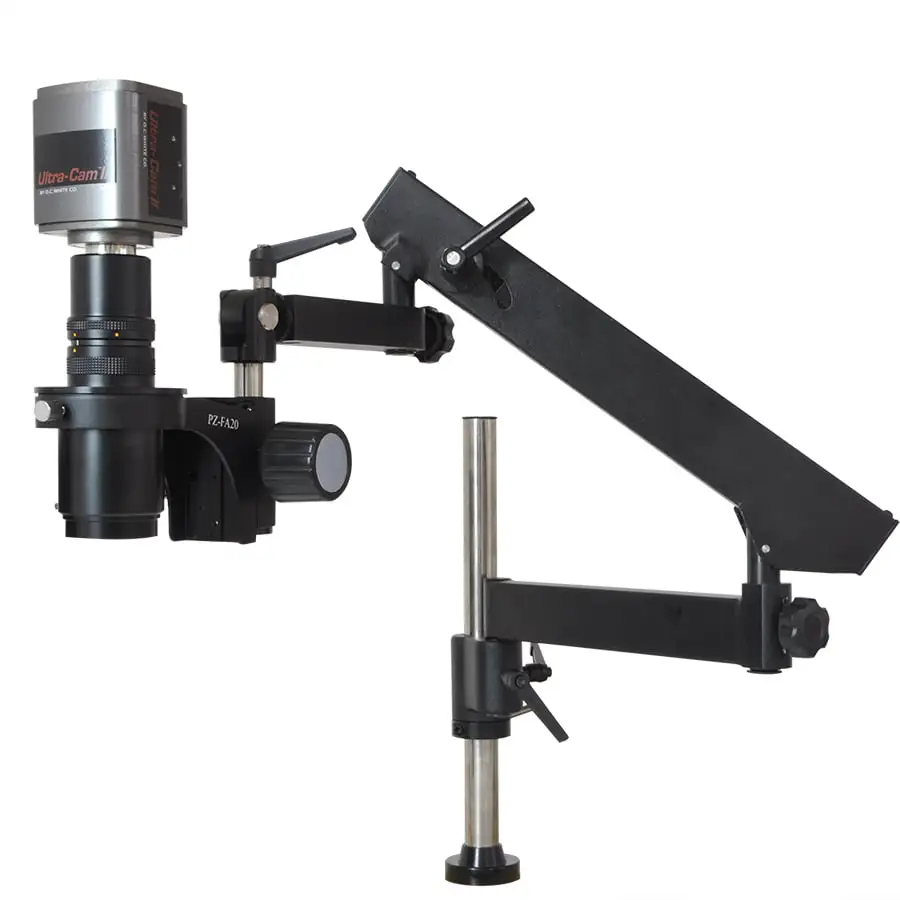
Alternatives mentioned across forums typically include Andonstar ADSM301, TKDMACZ MacroZoom FA, and AmScope’s own UHM200 series. Users comparing model lines noted that the UHM210 “offers better flexibility for workbench use thanks to the arm,” whereas the UHM200 “is cheaper but fixed-stand.”
A Reddit discussion contrasting with Andonstar models claimed: “Image quality between the UHM210 and ADSM301 is nearly identical, but AmScope’s build feels sturdier; Andonstar wins on software though.” Some precision labs have opted for the O.C. White MacroZoom FA system, which costs significantly more but provides mechanical stability, confirming that the UHM210 operates in a pragmatic mid-tier niche — accessible yet semi-professional.
Price & Value
At around $411.99–$427.99 USD (US listings) or €370.99 in Europe, the UHM210-11 sits in the price band between hobbyist and professional-grade microscopes. eBay and Zoro listings confirm its consistent market presence near MSRP, and aftermarket depreciation remains low for used units, suggesting reliable resale value.
Buyers found the omission of a microSD card at this price “a surprising miss,” noting that AmScope still lists recording capability as a selling point. However, few contested its core value: “For a standalone HDMI microscope, there’s not much else that matches it under $500,” wrote one workshop engineer.
Community buying advice heavily leans toward using it primarily as an HDMI-only tool. A Reddit thread consensus argues: “Skip the software entirely, plug it via HDMI, and you’ll never deal with driver woes.” That workflow — camera to monitor, no PC — aligns best with technicians, QA inspectors, and teachers seeking demonstration ease over in-depth measurement.
FAQ
Q: Can the AmScope UHM210 be used on Mac or Linux systems?
A: No. Although HDMI connections work universally, the bundled Kopa Capture software and USB drivers are Windows-only, which limits capture and measurement tools outside that OS.
Q: How stable is the articulating arm during soldering tasks?
A: The arm holds steady for light work but can sag slightly when fully extended or frequently adjusted. Most users find re-tightening periodically resolves it.
Q: Does the microscope require external power?
A: It draws DC 5V over USB — typically via the included AC/USB adapter — so it doesn’t need large external supplies, but it does need a steady current source for optimal lighting output.
Q: What’s the actual usable magnification for electronics work?
A: On a 24” monitor, users report practical clarity between 15x and 60x, enough to observe fine solder joints without losing working distance.
Q: Can this be used for biological slides or live cells?
A: It can display them, but with limited resolution and depth of field. Reddit users suggest it’s “far better suited for materials inspection than biological microscopy.”
Final Verdict
Buy the AmScope UHM210 Series HDMI Digital Microscope on Articulating Arm if you’re an electronics technician, repair professional, or instructor who needs clear, lag-free HDMI visuals and highly adjustable lighting. Avoid it if your workflow demands Mac compatibility, intensive measurement software, or ultra-stable positioning.
A common community pro tip: “Ignore the software — use HDMI out and enjoy the optics.” With that approach, the UHM210 delivers exceptional clarity and workspace flexibility at its price point, standing as one of AmScope’s most practical HDMI-ready microscopes in its bracket.





