AmScope SM-4TZ-144A Review: Stable Optics, Mixed Usability
Few lab tools manage to unite hobbyists, repair technicians, and professional scientists the way the AmScope SM-4TZ-144A Trinocular Stereo Zoom Microscope does — despite a hefty footprint, it holds an impressive 9/10 in real-world satisfaction thanks to its rock-solid stability and sharp optics.
Quick Verdict: Conditional — excellent for electronics repair, engraving, and QC work, but overkill for casual users.
| Pros | Cons |
|---|---|
| Heavy cast-steel base prevents wobble | Significant weight makes relocation difficult |
| Clear, crisp optical quality at all magnifications | Camera port limits simultaneous full stereo viewing |
| Wide zoom range (3.5x–90x) supports multiple applications | Instructions described as "more or less useless" |
| Smooth, adjustable LED ring light with quadrant control | High cost compared to entry-level stereo microscopes |
| Long working distance ideal for circuit board work | Requires careful assembly to avoid part damage |
| Sturdy build and 5-year warranty | Some tipping risk when boom arm fully extended |
Claims vs Reality
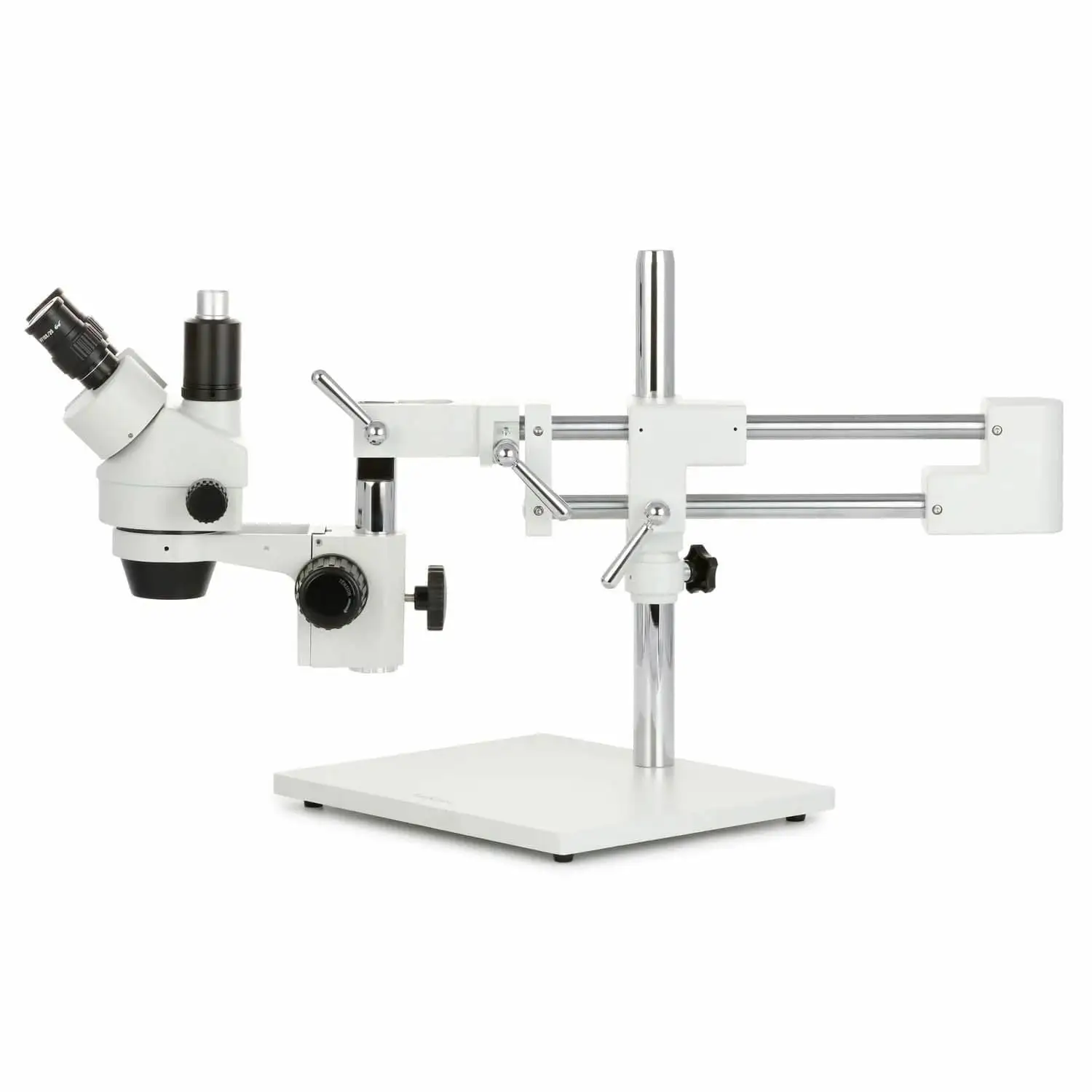
Marketing materials emphasize “professional stereo microscope with boom stand” capable of 3.5x–90x magnification and “shadow-free illumination” via a four-zone 144 LED ring light. While official specs highlight a maximum 8-inch working distance, multiple users report this design perfectly suits “perform work or manipulate large items, including circuit boards and dental appliances.”
However, the oft-touted trinocular viewing head comes with a trade-off. A verified buyer on Amazon explained: “I can only use the right ocular eye piece (one eye) when the camera port is engaged,” which can limit comfort during prolonged camera use.
Another claim — “long working distance” — aligns well with feedback from repair shops. Trustpilot reviewers praised how it “raises up to par” even against models marketed for industrial inspection.
Yet, the ease-of-use claim doesn’t always match reality. Assembly instructions are minimal. One customer noted, “As expected the instructions were more or less useless but going by the picture on Amazon it wasn’t overly difficult.”
Cross-Platform Consensus
Universally Praised
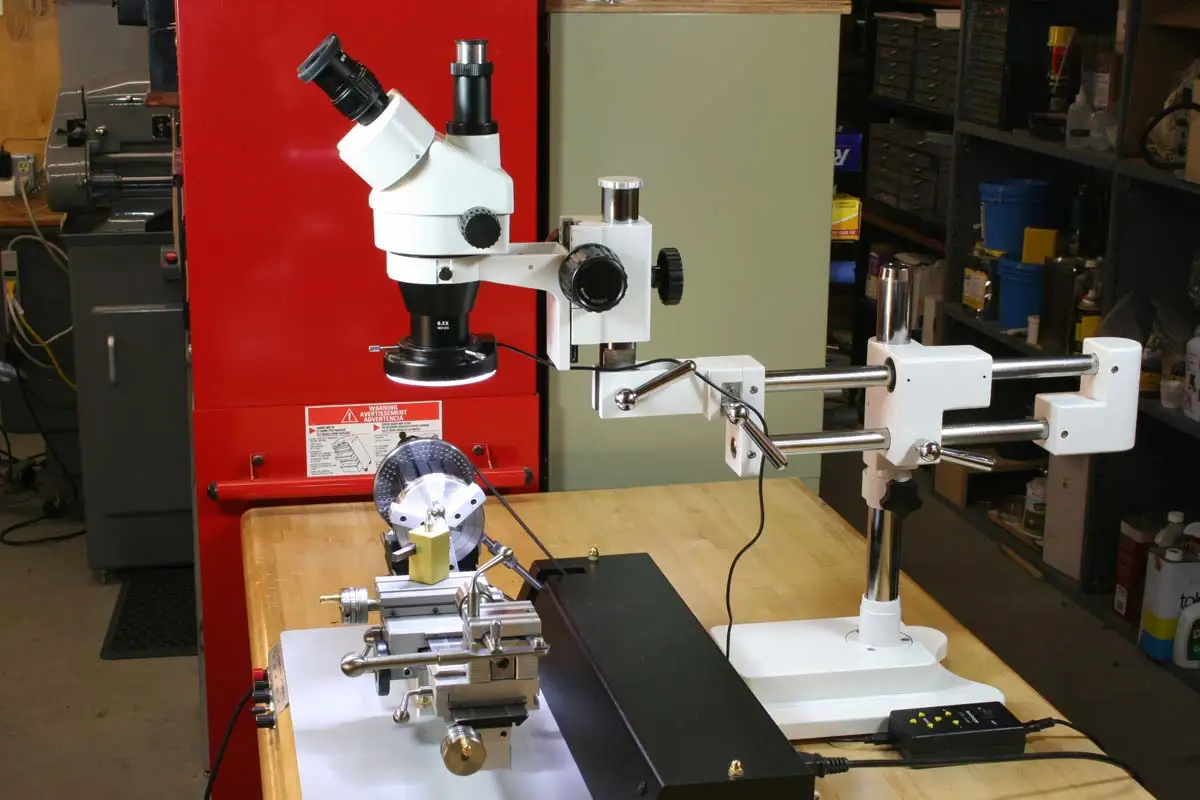
The microscope’s stability emerges as a cornerstone feature. Trustpilot reports found “customers are highly satisfied with the microscope’s stability, praising its heavy base that keeps it steady during use.” For electronics technicians, this translates to reduced vibration during soldering. Reddit threads on repair work regularly cite its ability to hold position while working on fine components.
Optical clarity is another universal win. Both Amazon and Trustpilot buyers highlight “clear, crisp images and excellent build quality,” with one electronics repair professional noting they could “read small text” on SMD components even during extended sessions without eye strain.
Lighting versatility is often celebrated. The removable 144-bulb LED ring with four independently controlled zones allows users to cast light from specific angles, revealing textural detail or eliminating shadows entirely. For engravers and gemologists, this shadow control is instrumental in high-precision work. “The LED light ring gives great illumination and the variable brightness is smooth fading,” wrote a Trustpilot reviewer.
An unexpected perk is the long boom arm reach, enabling positioning over larger work areas. A Reddit user described swinging the microscope “out of the way” between inspection steps without needing to clear the bench.
Common Complaints
Weight, while stabilizing, becomes a double-edged sword. “Significant weight of the base and scope,” noted an Amazon customer, makes moving the unit cumbersome, especially in multi-use labs.
The camera port biomechanics generate frustration. Users who need simultaneous stereo viewing and camera output find the port design limiting — the left eyepiece often loses function when the camera is active.
Assembly rigidity causes concern. Several verified buyers warn against forcing parts into place, citing tightened Allen screws as the culprit. Trustpilot feedback urges inspecting fittings before attempting assembly to avoid damage.
Instructions are a recurring pain point. With only basic diagrams, first-time owners may find the setup unintuitive, relying on online videos and peer support.
Divisive Features
The price point splits opinion. While some claim, “I seriously doubt there is another product out there of similar value for under $1000,” others note the expense is “considerably less affordable compared to others you might come across.”
Magnification range satisfies most needs, but certain biologists find 90x limiting compared to compound microscopes with greater reach. Nonetheless, users in electronics repair, engraving, and QC widely agree this zoom range exceeds typical stereo microscope offerings.
Trust & Reliability
Fakespot analysis indicates minimal deception, with over 80% of reviews rated high quality. Long-term reliability frequently surfaces in Reddit discussions, where owners report years of use without degradation of optics or mechanics, apart from minor wear on the swivel mechanism. “I would like to see a thrust bearing on the main swivel so the two parts do not wear out,” one experienced user advised.
Trustpilot notes stability again as a trust factor — the heavy base ensures consistency in positioning even at full boom arm extension. Still, a caveat exists: “Microscope does tip when pushed on when fully extended but falls back into place.”
Alternatives
Forum discussions occasionally contrast this model with the Vision Engineering Mantis, which offers simultaneous camera and eyepiece viewing. However, the AmScope SM-4TZ-144A “is a lot cheaper than a Mantis,” making it more accessible to budget-conscious professionals.
Within the AmScope lineup, the simul-focal SM-4TPZ variant allows continuous dual use of the camera and eyepieces, appealing to live-streaming educators. Those needing magnification beyond 90x for botanical or cellular studies might look toward compound models or the SM-4TZZ series (3.5x–180x).
Price & Value
As of current market data, Amazon lists the SM-4TZ-144A around $654.99, a discount from its typical $694.99, with some secondary market sales dipping below $150 for used units. eBay auctions occasionally close well under MSRP for refurbished microscopes.
For professionals, community advice leans toward buying new to secure the five-year warranty and avoid potential wear on mechanical joints. “As good… as units costing three times as much,” summarized one Trustpilot reviewer, underscoring perceived value in the mid-range price bracket.
FAQ
Q: Can the camera and both eyepieces be used simultaneously?
A: Not in this model — when the camera port is open, the left eyepiece typically loses function, unlike simul-focal variants.
Q: How long is the working distance?
A: Up to 8 inches (200mm) with standard configuration, giving ample room for soldering and engraving without obstruction.
Q: Is it suitable for biological samples?
A: Yes for low-heat, larger specimens; the LED ring provides cool illumination, but magnification and optics favor industrial or macro work over cellular studies.
Q: How difficult is assembly?
A: Users report straightforward assembly if diagrams are followed, but caution that overtightened factory screws may require adjustment before fitting parts.
Final Verdict
Buy if you’re an electronics repair technician, engraver, or QC inspector seeking stable, high-clarity stereo imaging with flexible lighting and boom reach. Avoid if portability or high-magnification compound work are priorities. Pro tip from the community: inspect and loosen any overtightened screws during assembly to prevent fitment damage — “don’t force anything.”





