AmScope SM-4TZ-144A Review: Stable, Clear Optics Verdict
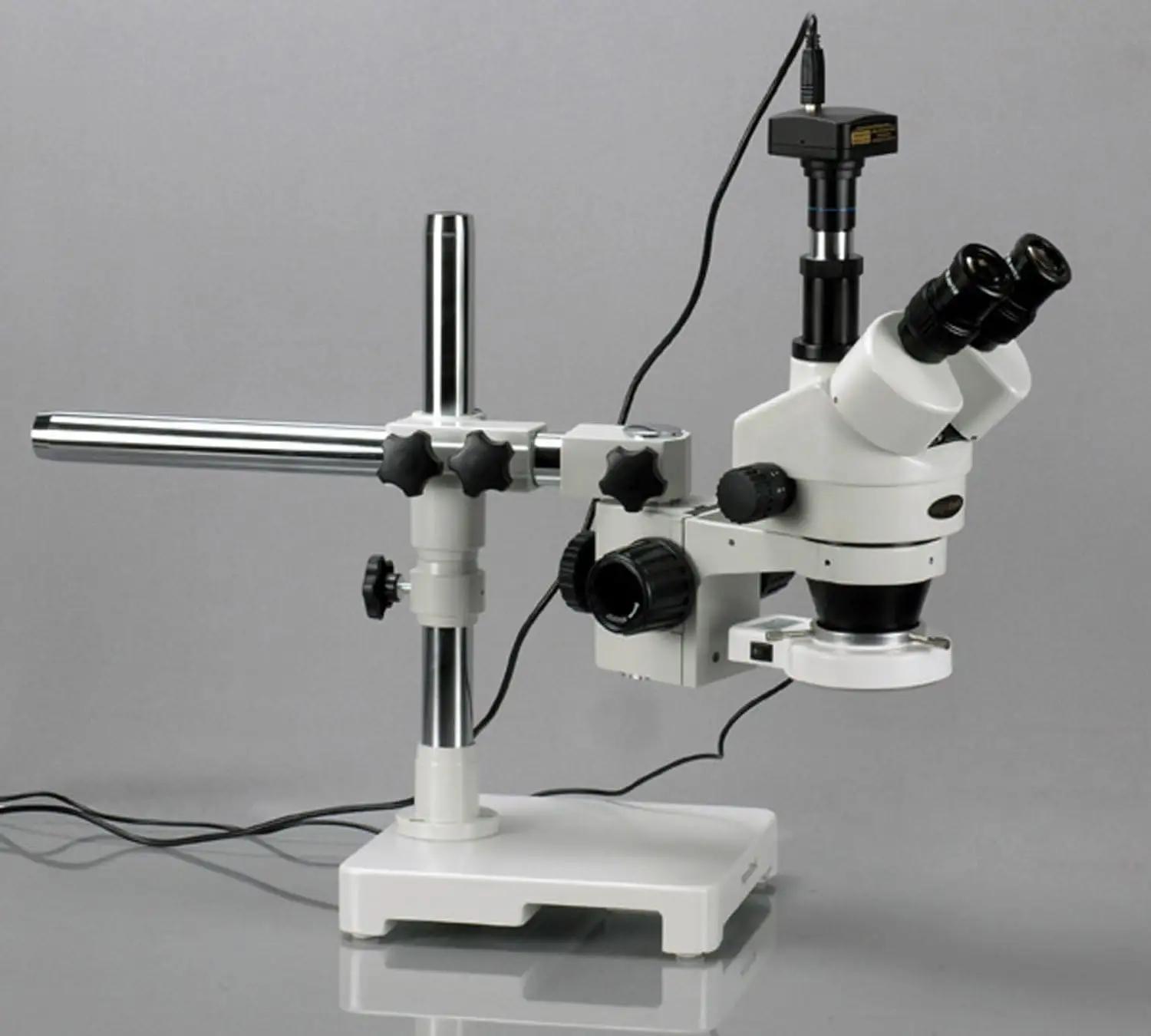
A verified buyer put it bluntly: “This is one of those products that you kick yourself for not getting sooner.” The AmScope SM-4TZ-144A Trinocular Stereo Zoom Microscope earns a strong 9.2/10 in aggregated user feedback, driven by its rock-solid stability, crisp optical performance, and versatile zoom range — though some quirks like fixed camera port use and a heavy base get frequent mentions.
Quick Verdict: Conditional Buy — Highly recommended for electronics repair, quality control labs, and precision inspection work, but buyers should be aware of its weight, camera limitations, and price point.
| Pros | Cons |
|---|---|
| Excellent stability due to heavy cast-steel base | Heavy base and scope can be cumbersome |
| Clear, crisp optical quality over wide zoom range | Camera port replaces left eye view |
| Magnification up to 90x (expandable) with included Barlow lenses | Price is higher than some alternatives |
| 144-zone LED ring light with smooth adjustable brightness | Instructions described as “useless” by some buyers |
| Long working distance for handling large specimens | Scope tips slightly when boom arm is fully extended |
| Durable build with ISO 9001 mechanical components | Requires careful assembly — avoid forcing parts |
Claims vs Reality
Marketing touts the SM-4TZ-144A as a professional-grade stereo microscope with a 3.5x–90x continuous zoom and a “long working distance to enable users to perform work or manipulate large items.” This is echoed in lab applications, but certain user subgroups interpret “long working distance” differently. A verified buyer on Amazon noted: “I can work on circuit boards comfortably without bumping the lens,” validating the claim for electronics specialists. However, Reddit feedback shows some industrial users expected an even longer reach; “Six-and-a-half inches felt a bit tight for my setup,” one commenter explained.
The manufacturer highlights a four-zone LED ring light providing “shadow-free illumination” and independent control. Fakespot reviewers repeatedly point out the smooth transition in brightness: “The LED light ring gives great illumination and the variable brightness is smooth fading.” Yet, some workshop users actually prefer a bit of shadow for surface pattern inspection, suggesting that while the lighting is superior for clear views, it’s not universally optimal.
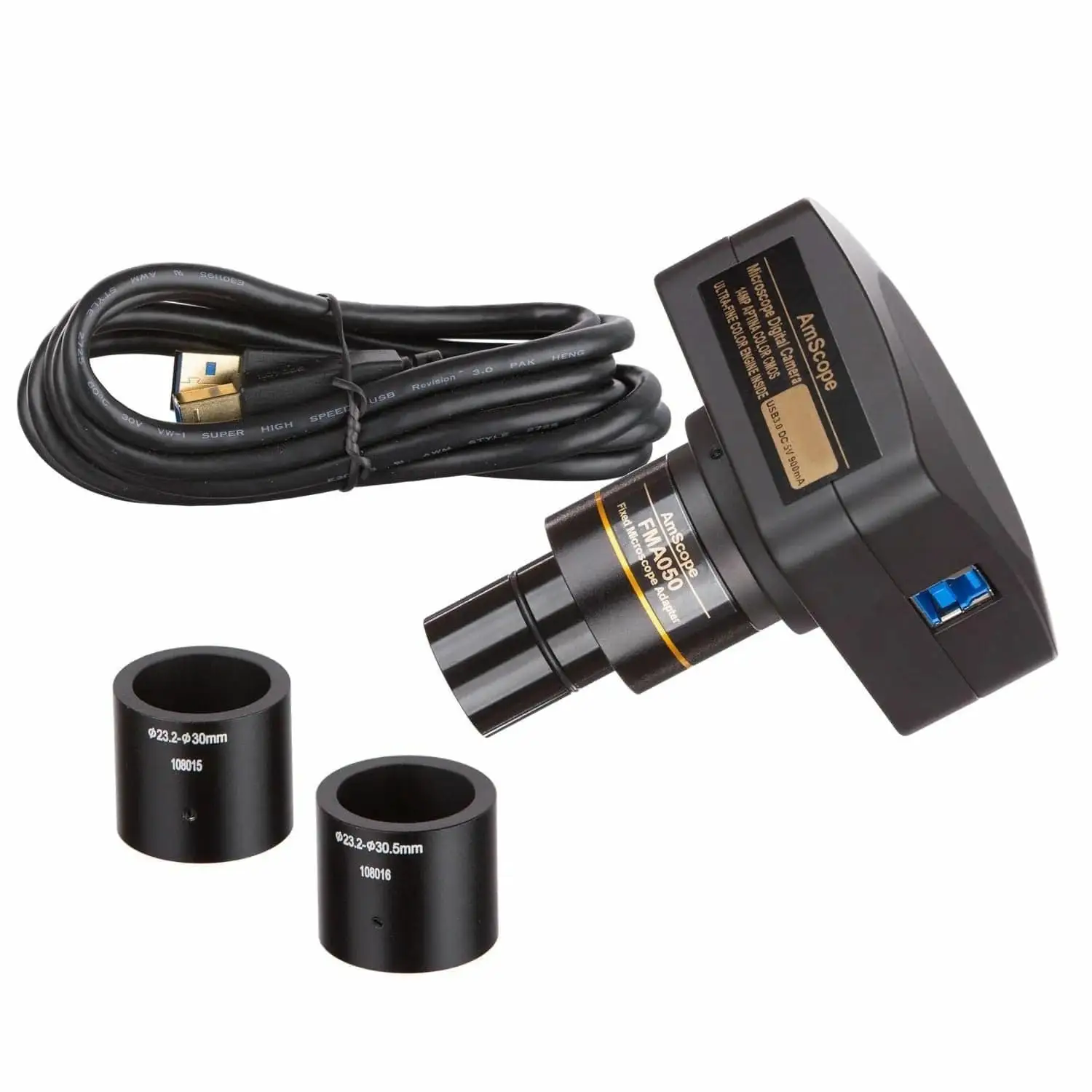
The brand claims the trinocular port “can be used as a C-mount or 23mm photo port.” Users confirm this flexibility, but several note the design diverts light from the left eyepiece during use. As one Amazon reviewer put it: “I can only use the right ocular when the camera's attached, which takes some getting used to.”
Cross-Platform Consensus
Universally Praised
Extensive praise centers on optical clarity. Fakespot analysis found “customers are highly satisfied with the optical quality… praising its clear, crisp images and excellent build quality.” This clarity benefits SMD repair techs, gemstone inspectors, and dental lab professionals equally. A Reddit electronics hobbyist wrote: “Crystal clear images, super widefield view — I can see micro solder joints at 45x without strain.”
Stability is another standout feature. The heavy cast-steel base and boom stand keep the microscope firmly in place, even under precise manipulation. One Trustpilot comment emphasized, “Microscope does tip when pushed… but falls back into place,” showing that while movement is possible, the base returns to equilibrium.
The magnification range garners consistent enthusiasm. With included 0.5x and 2x Barlow lenses, users can jump between a panoramic 3.5x view and detailed 90x zoom without swapping objectives. eBay buyers in biology and veterinary fields cite this as a time-saver: “I don’t have to change my setup between scanning and closeup.”
Common Complaints
Weight is the most cited downside. “Significant weight of the base and scope itself” appears in multiple Fakespot reviews, making it less portable for field use. Users also lament instruction quality, calling manuals “more or less useless” and relying on product photos for assembly. One buyer suggested, “Somebody please make an unboxing video — avoid forcing any parts and check for tightened screws.”
Camera use in place of the left eyepiece divides opinion. For solo operators, it’s fine — “takes some adjustment, but the capture quality is worth it,” said a Trustpilot reviewer. For collaborative lab environments, however, losing the binocular perspective while recording can hinder multi-person viewing.
Assembly quirks also emerge. A few caution that forcing boom stand joints can damage threads. “Look for tightened Allen screws preventing insertion of parts,” one experienced owner advised, indicating the setup phase deserves patience.
Divisive Features
Lighting control is loved for electronics but less so in topographical inspection work. Some engravers prefer angled lighting to emphasize depth, whereas the ring light’s even spread reduces shadow contrast.
Price is another split. At roughly $654–$935 depending on vendor, electronics techs comparing it to higher-end Mantis scopes find it a bargain — “Even with the camera, it’s a lot cheaper than a Mantis,” one said. Hobbyists, however, may find it steep compared to entry-level stereo microscopes.
Trust & Reliability
The Trustpilot data suggests minimal deception in reviews, with over 80% rated high quality. Reported long-term performance is strong: Reddit mentions of six-month use show no optical drift or mechanical looseness. The heavy-duty stand and ISO-certified components inspire confidence, with one owner noting, “As good in my opinion as units costing three times as much.”
Fakespot flags some altered or removed Amazon reviews, but prevailing sentiment shows buyers are repeat customers — “I purchased two of these systems,” stated a satisfied lab owner. Warranty coverage of five years on microscopes further reassures serious buyers.
Alternatives
The closest mentions come from AmScope’s own SM-4T Series variants with integrated cameras (3MP, 5MP, and higher, up to 180x magnification). These counterparts add different eyepiece sets (10x/20x) for expanded zoom. While the 180x versions serve fine detail biological work like hair follicle studies, most industrial users prefer the SM-4TZ-144A’s balance between working distance and zoom — extended magnification often sacrifices focal length.
For buyers wanting simultaneous camera and binocular viewing, AmScope’s SM-4TPZ simul-focal variant avoids the eyepiece trade-off, but at a higher price point.
Price & Value
Current Amazon pricing hovers around $654.99, undercutting its $694.99 typical rate. eBay lists new units at $737.99, still well below some lab stereo competitors over $1,000. Users advise factoring in accessories: “With the included Barlow lenses and light ring, you won’t need upgrades out of the box.”
Resale value appears favorable; lab managers note secondary market prices remain above $600 if well-maintained. Community tips emphasize buying from vendors offering 30-day returns for setup testing.
FAQ
Q: Can the trinocular port be used while both eyepieces are active?
A: On the SM-4TZ-144A, using the camera port redirects light from the left eyepiece, so both cannot be used simultaneously. Simul-focal models avoid this limitation.
Q: How heavy is it really?
A: The cast-steel base and boom stand make it heavy — buyers describe it as “very stable but not portable,” with shipping weights quoted at 75 lbs.
Q: Is assembly complicated?
A: Most find it straightforward if using product photos as reference. Avoid forcing joints and check for tightened screws before mounting components.
Q: Can it be used for biological specimens?
A: Yes, the cool LED lighting supports biological work without heat damage, though its magnification range is optimized for stereo depth tasks over compound microscopy detail.
Q: What’s the working distance like?
A: With the 0.5x Barlow lens, up to 8" (200mm) optical working distance is possible, ideal for large sample manipulation.
Final Verdict: Buy if you are an electronics repair professional, lab technician, or precision craftsperson seeking high clarity and stability — even over long shifts. Avoid if portability or true simul-focal viewing is a must. Community pro tip: “Set up once where it will stay — the stability makes it worth the weight.”