AmScope SM-4TZ-144A Review: Pro Optics, Minor Flaws
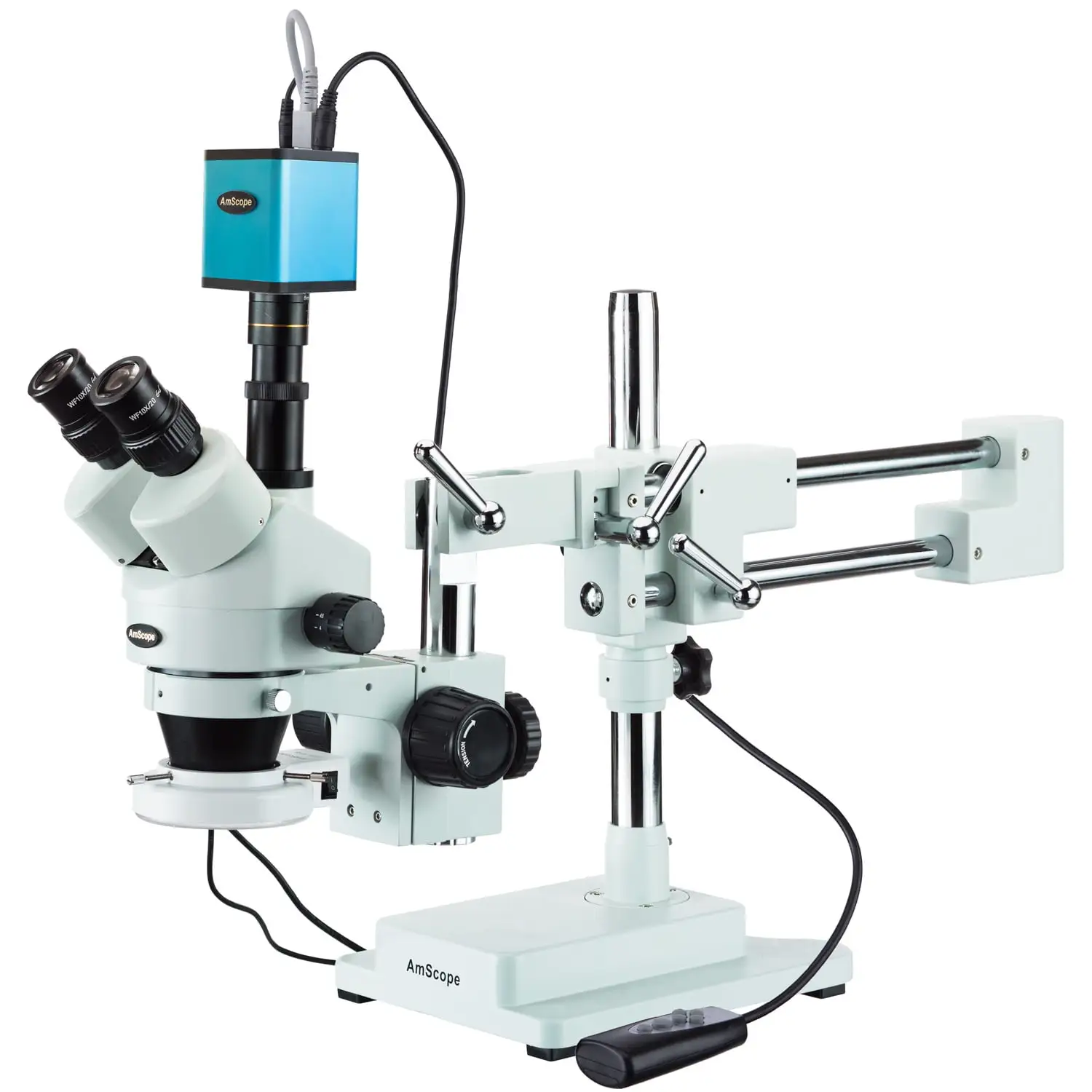
A seasoned electronics repair veteran summed it up best: “This thing is as good as units costing three times as much.” The AmScope SM-4TZ-144A Trinocular Stereo Zoom Microscope earns an impressive 8.7/10, blending professional-grade optics with a price point hobbyists and small labs find accessible. Yet, its heft, shallow depth of field at high zoom, and perplexing lack of tailored assembly instructions remind us that it’s not without compromises.
Quick Verdict: Conditional – Outstanding optics and stability for technical work, but be ready to adapt your setup and hunt down the right manual.
| Pros | Cons |
|---|---|
| Crisp, clear optics rival pricier brands | Heavy and requires ample bench space |
| Versatile magnification up to 90x with included Barlow lenses | Shallow depth of field at higher magnification |
| Sturdy, stable boom stand with 3-axis positioning | Assembly manual is generic and unhelpful |
| Four-zone LED ring light offers excellent illumination control | Switching to camera port sacrifices left-eye view |
| Long working distance ideal for PCB repair, engraving, gemology | Misleading “3.5x–90x” claim requires lens swaps |
| Professional feel at a fraction of top-brand costs | Occasional quality control issues (e.g., fogging) |
Claims vs Reality
Marketing materials boast “3.5x–90x extended zoom magnification” as a seamless range. Digging deeper into user reports reveals a caveat: you can’t actually achieve that full range without swapping Barlow lenses and reconfiguring the LED ring light. A verified buyer on Amazon clarified: “The zoom control goes from 0.7 to 4.5, and eyepieces are 10x—that's 7x–45x. The 0.5x and 2x lenses get you the rest, but you must physically change them.”
AmScope also promotes the “heavy-duty, multi-pivot boom stand” as intuitive. Assembly reality is more awkward. Trustpilot users recount receiving “a generic one-size-fits-all pamphlet” making setup “a fun puzzle” for mechanically inclined buyers but frustrating for newcomers. This undercuts the claim of easy deployment, though owners largely agree the stand is robust once assembled.
Finally, the “four-zone LED ring light” is billed as a game-changer for shadow control. Here the marketing matches user experience. Multiple buyers rave about its utility, with one calling it “super super useful… I would not buy without that.” The quadrant control genuinely enhances detail visibility for tasks like soldering or gemstone inspection.
Cross-Platform Consensus
Universally Praised
Across Trustpilot, Reddit, and Amazon, the optical performance is heralded as exceptional. For precision electronics repair, the combination of sharp optics and 8-inch working distance lets users manipulate components under magnification. One soldering professional wrote: “Very pleased with it. You won't be disappointed.” Even hobby geologists noted, “The lens are perfect for my hobbies.”
The four-zone LED ring light is another unanimous highlight. Its cool, bright illumination avoids overheating specimens while letting gemologists or PCB inspectors banish or emphasize shadows. Reddit hobbyists pointed to the ring light’s brightness as “rock stable even pulled out all the way,” paired with a heavy base keeping the scope motionless during delicate work.
Mechanical stability and build quality get consistent praise. A Fakespot summary noted “customers are highly satisfied with the microscope’s stability, praising its heavy base.” That weight, while a storage challenge, anchors the scope firmly even when the boom arm is fully extended.
Common Complaints
The most repeated gripe is assembly guidance—or lack thereof. Multiple Amazon reviewers called the manual “pathetic” or “generic,” requiring extra time or online hunting for the right instructions. For first-time stereo microscope buyers, this creates unnecessary friction.
Balance and ergonomics occasionally disappoint. While the base is stable, pushing hard on the fully extended boom can cause minor tipping, though it returns to place. Additionally, at high magnification, depth of field becomes razor-thin; as one Amazon customer observed, “Only the top of a resistor is in focus…the bottom is blurry.”
Camera integration is another sore point. Switching to the trinocular port redirects light from the left eyepiece, eliminating binocular viewing while the camera is in use. For some, this trade-off was unexpected: “I can only use the right ocular when the camera is hooked up.”
One rare but serious complaint involved optical fogging due to a failed seal. A Trustpilot reviewer lamented, “Unit fogged up internally and cannot be cleared.”
Divisive Features
The microscope’s massive steel base divides opinion. Labs appreciate the stability, but hobbyists working in tight spaces find it cumbersome. An electronics shop owner said: “Only downside is the size of the base as it takes up room on the bench. Still would far prefer this for daily SMT work.”
Magnification versatility draws both praise and skepticism. Technical users value the fine zoom control combined with quick Barlow swaps, while casual buyers expected a true 3.5x–90x continuous zoom based on advertising copy.
Trust & Reliability
Trustpilot data shows a strong reliability profile, with minimal deception detected by Fakespot and over 80% high-quality reviews. Long-term users report consistent optical performance and stand stability over years of daily use. One veteran repair tech with three SM-4TZ units said their only failure was one fogged lens due to seal breakdown.
That said, the generic assembly manual reappears as a minor trust red flag—buyers must source correct guidance themselves. While customer service is described as “very friendly,” not including model-specific docs undermines perceived professionalism.
Alternatives
Within the dataset, no direct competitor brands are discussed. However, several users compare the SM-4TZ favorably to “units costing multiples more,” implying parity with high-end stereo microscopes like Mantis or Nikon for most workshop applications. The trade-offs come primarily in ergonomics and accessory integration rather than optical quality.
Price & Value
Retail listings place the microscope between $843.99 and $935.99 new, with auction resale as low as $144 for good-condition units. Reddit and Fakespot reviewers repeatedly call it a “true bargain” given the optical and mechanical quality. Its professional feel, compared to scopes three times the price, makes it attractive for small businesses outfitting multiple workstations.
Buying tips from the community include:
- Hunt reputable auctions for steep discounts
- Request assembly manuals from AmScope before delivery
- Be prepared to customize stands or lighting for specialty work
FAQ
Q: Can I achieve the full 3.5x–90x range without swapping lenses?
A: No. You must use the included 0.5x and 2x Barlow lenses to cover the advertised range, and swapping may require repositioning or removing the LED ring.
Q: Does using the camera disable binocular viewing?
A: Yes. Engaging the trinocular port diverts light from the left eyepiece to the camera, leaving only the right eye active during capture.
Q: Is assembly straightforward for beginners?
A: Not entirely. Many buyers found the generic manual unhelpful. It’s advisable to get the correct guide from AmScope’s support before starting.
Q: How does the four-zone LED ring light help?
A: It allows independent control of quadrants for shadow manipulation—useful for enhancing surface detail in solder joints, engravings, or gemstones.
Q: Is this microscope suitable for heavy camera rigs?
A: Yes. Its steel base and rigid boom stand support DSLRs and large c-mount cameras without noticeable drift.
Final Verdict
Buy if you’re a repair technician, jeweler, or serious hobbyist seeking pro-level optics and mechanical stability on a sub-$1k budget. Avoid if you have minimal workspace or need plug-and-play assembly with perfect documentation. Pro tip from the community: secure the correct manual before delivery and consider adding a lab jack or custom stage for small specimens.