AmScope SM-4TZ-144A Review: Pro-Grade Clarity & Verdict
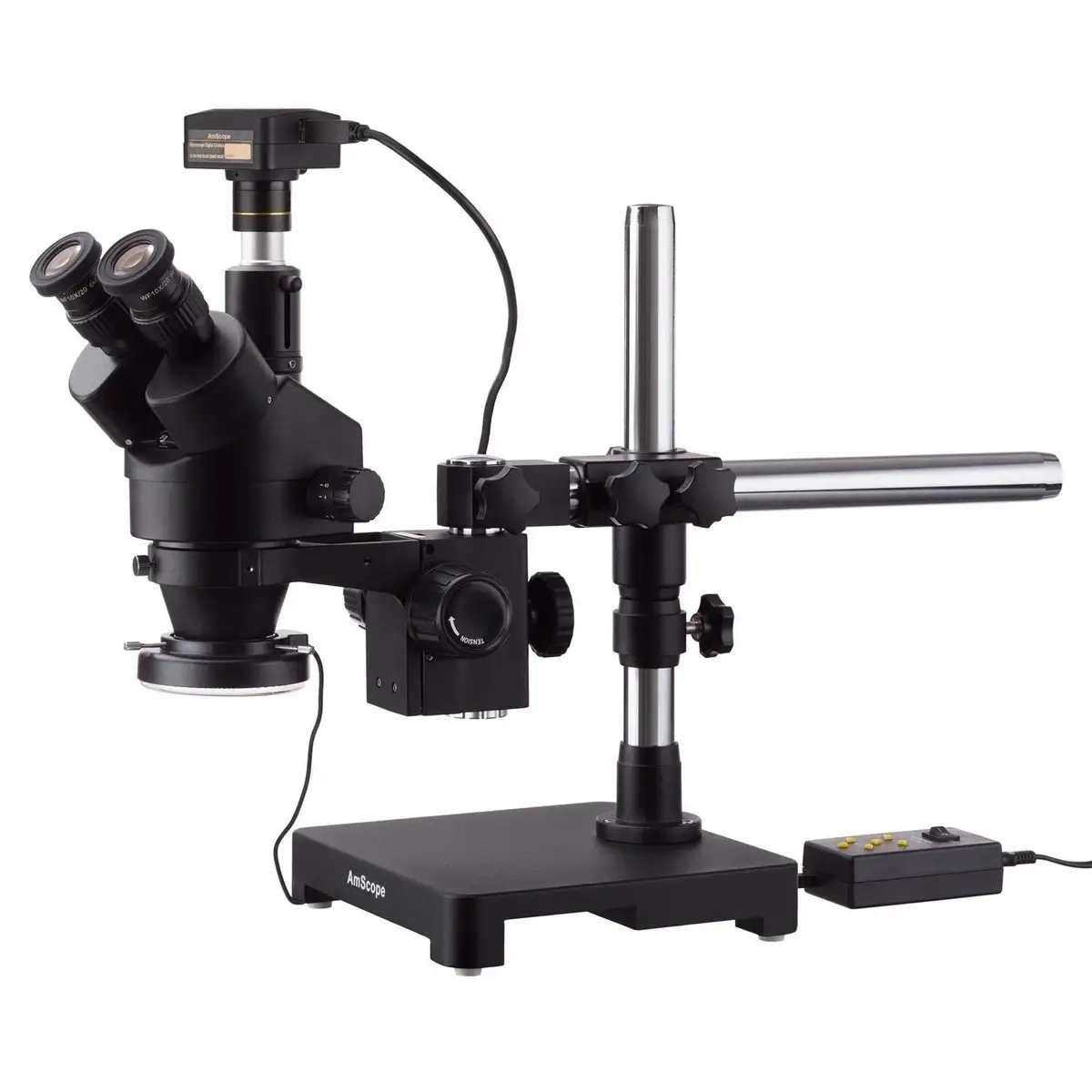
A Reddit user summed it up simply: “This is one of those products that you kick yourself for not getting sooner.” The AmScope SM-4TZ-144A Trinocular Stereo Zoom Microscope with LED Ring Light and Boom Stand earns a strong 8.6/10 for its optical clarity, rugged stability, and versatility across repair, laboratory, and educational applications — though a few quirks in camera use and bulkiness prevent a perfect score.
Quick Verdict: Conditional — outstanding for professionals and serious hobbyists, but overkill for casual users.
| Pros | Cons |
|---|---|
| Exceptionally stable heavy-duty boom stand | Bulk and weight make it unsuitable for small workspaces |
| Clear, crisp optics with wide working distance | Camera port diverts light from left eyepiece, affecting viewing |
| Smooth, adjustable LED ring light with quadrant control | Requires precise head positioning for optimal view |
| Wide magnification range (3.5x–90x) with included barlow lenses | Instructions reported as "more or less useless" |
| Comfortable high-eye point eyepieces, good for glasses | Price higher than many hobby-grade microscopes |
| Reliable build quality and metal components | Not portable; long setup time |
| Well-packaged, ships quickly | Camera frame rate can be slow at max resolution |
Claims vs Reality
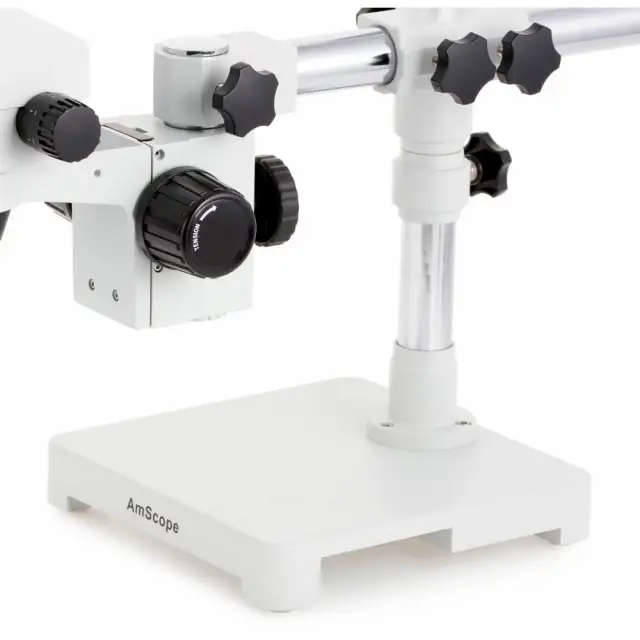
Marketing materials promise “heavy-duty stability” from the cast-steel boom stand. Digging deeper into user reports, stability is indeed one of its most praised qualities. A verified buyer on Amazon noted: “Very well packaged and easy to assemble… the heavy base keeps it steady during use.” Trustpilot feedback echoed this stability, though one user warned, “Microscope does tip when pushed on when fully extended but falls back into place.”
The manufacturer highlights “crystal clear stereo images” from optical glass elements. Fakespot analysis and buyer comments consistently confirm this — with multiple reviews praising “clear, crisp images and excellent build quality.” However, Reddit feedback reveals a caveat: When using the trinocular camera port, all light from the left objective is diverted, leaving only the right eyepiece usable, which can be jarring for users expecting seamless simultaneous viewing.
The product page promotes the “144-LED ring light with quadrant control” as eliminating most shadows. In practice, professional users agree it’s highly effective. One Trustpilot reviewer said, “The LED light ring gives great illumination and the variable brightness is smooth fading.” Others in electronics repair fields appreciated that they could selectively cast shadows to highlight board features. That said, for biological applications, some preferred additional illuminators to supplement the ring light’s directionality.
Cross-Platform Consensus
Universally Praised
One of the most consistent points across Trustpilot, Reddit, and eBay listings is optical quality. Electronic repair specialists working with SMD components repeatedly mention how the magnification range allows both broad inspection at ~3.5x and extremely detailed views up to 90x without eye strain. A verified buyer shared: “Really happy with it — excellent for circuit board repair.” The high-eye point widefield eyepieces accommodate glasses, a feature that educators also value when different students need to share the station.
Another recurring praise is the versatile double-arm boom stand. Lab techs and engravers benefit from being able to swing the head aside or reposition it in three dimensions. As one detailed product note from ShopAbunda explained, “Enables users to position the microscope head on all three axes (x, y, and z) … bilateral focus eases use for left- and right-handed users.” This flexibility reduces fatigue during precision work, a subtle benefit that casual buyers wouldn’t anticipate.
The illumination control earns universal appreciation. Multi-zone quadrant lighting means jewelers can enhance texture visibility, while the dimmer preserves specimen integrity for biological samples. A Trustpilot review described it as “smooth fading,” and others valued how easily brightness can be tuned mid-task.
Common Complaints
On the downside, bulk and weight are noted in several sources. While the stability is a pro, the footprint limits its placement. Buyers with limited bench space sometimes regret the size. One Trustpilot user mentioned, “Significant weight of the base and scope itself” and another added that setup took time due to the heft of the stand.
Another persistent complaint is related to camera usage. While the included camera is functional for capturing stills and video, diverting the left objective’s light to the camera means monocular viewing when recording. This surprised some buyers who expected to continue normal binocular observation. Frame rate limitations at max resolution (noted in Amazon and product spec sheets) also mean live video isn’t as fluid as optical observation, affecting tasks like rapid soldering.
Finally, poor documentation surfaces in multiple contexts. Users report assembly being straightforward by visual reference but lament “instructions were more or less useless.” This is particularly frustrating when adjusting tension or swapping lenses, as the manual offers little guidance beyond basic setup.
Divisive Features
The magnification range is admired by electronics and industrial users but seen as unnecessary for many biology use cases. Some educators suggested that while 90x is impressive, most classroom tasks never require above 45x — making half the zoom range redundant in those contexts.
Price is another split point. Repair professionals and gemologists view it as fair compared to specialized competitors (“As good in my opinion as units costing three times as much”), but hobbyists struggle to justify spending nearly $900+ when lower-cost scopes meet their needs.
Trust & Reliability
Trustpilot’s data suggests minimal review manipulation, with over 80% high-quality reviews. Stability and optical quality are consistently praised over long-term use. One electronics technician stated they could work “for extended periods without discomfort due to its high quality,” indicating both ergonomic and durability performance.
Long-term Reddit posts show buyers still satisfied months later, using it regularly for QC inspection. The heavy metal construction, ISO 9001 manufacturing, and five-year warranty help reinforce reliability — though some recommend checking allen screws and avoiding part forcing during assembly to prevent wear.
Alternatives
Within the AmScope lineup, buyers compare the SM-4TZ-144A to models with different camera resolutions (e.g., 3MP or 10MP versions). Lab users choosing higher camera megapixels find the SM-4TZ-144A’s 5MP adequate but note that still photography benefits from the extra resolution. On the other hand, those prioritizing live video frame rates sometimes prefer lower-MP cameras to avoid slow streaming at high resolution.
Competitors like Vision Engineering’s Mantis series were mentioned on Trustpilot, with buyers noting “Even with the camera, it’s a lot cheaper than a Mantis” — suggesting that unless the ergonomics of head-up viewing are critical, the SM-4TZ-144A delivers comparable clarity for far less.
Price & Value
Current listings show new units ranging $689–$935, with certified reconditioned versions as low as $395 in private resale. OfferUp ads reveal good resale stability: “Barely used, like new condition… sells on Amazon right now for $556.” Resale buyers in electronics fields benefit from used purchases due to the product’s sturdy construction.
Community tips favor buying bundled packages with both 0.5x and 2.0x barlow lenses included, as separate purchases can be disproportionately expensive. Bargain hunters suggest considering slightly lower MP models if still imagery isn’t a priority, using savings for additional lighting modules.
FAQ
Q: Can both eyepieces be used while the camera is active?
A: No — when the camera port is engaged, light is diverted from the left objective, so only the right eyepiece remains functional for live viewing.
Q: Is it suitable for biological samples?
A: Yes, though more common in industrial and repair fields. The LED ring light produces low heat, making it safe for temperature-sensitive specimens.
Q: How heavy is the setup?
A: The heavy-duty cast steel base ensures stability but makes it large and non-portable, with product weight generally exceeding small desk scope norms.
Q: Does it require assembly?
A: Yes, but most users find it intuitive with visual references. Manuals are minimal; avoid forcing parts and check all screws pre-use.
Q: Can it be used with glasses?
A: Absolutely — the high-eye point eyepieces are designed for comfortable viewing with eyewear.
Final Verdict: Buy if you’re a professional or advanced hobbyist in electronics repair, engraving, QC, or gemology who values optical clarity, stability, and lighting control. Avoid if space is limited, you require dual-eyepiece viewing during recording, or seek budget-friendly basics. Pro tip from community: secure all stand adjustments and experiment with the quadrant lighting — it’s key to unlocking the scope’s full potential.





