AmScope SM-4TZ-144A Review: Precision Wins Over Portability
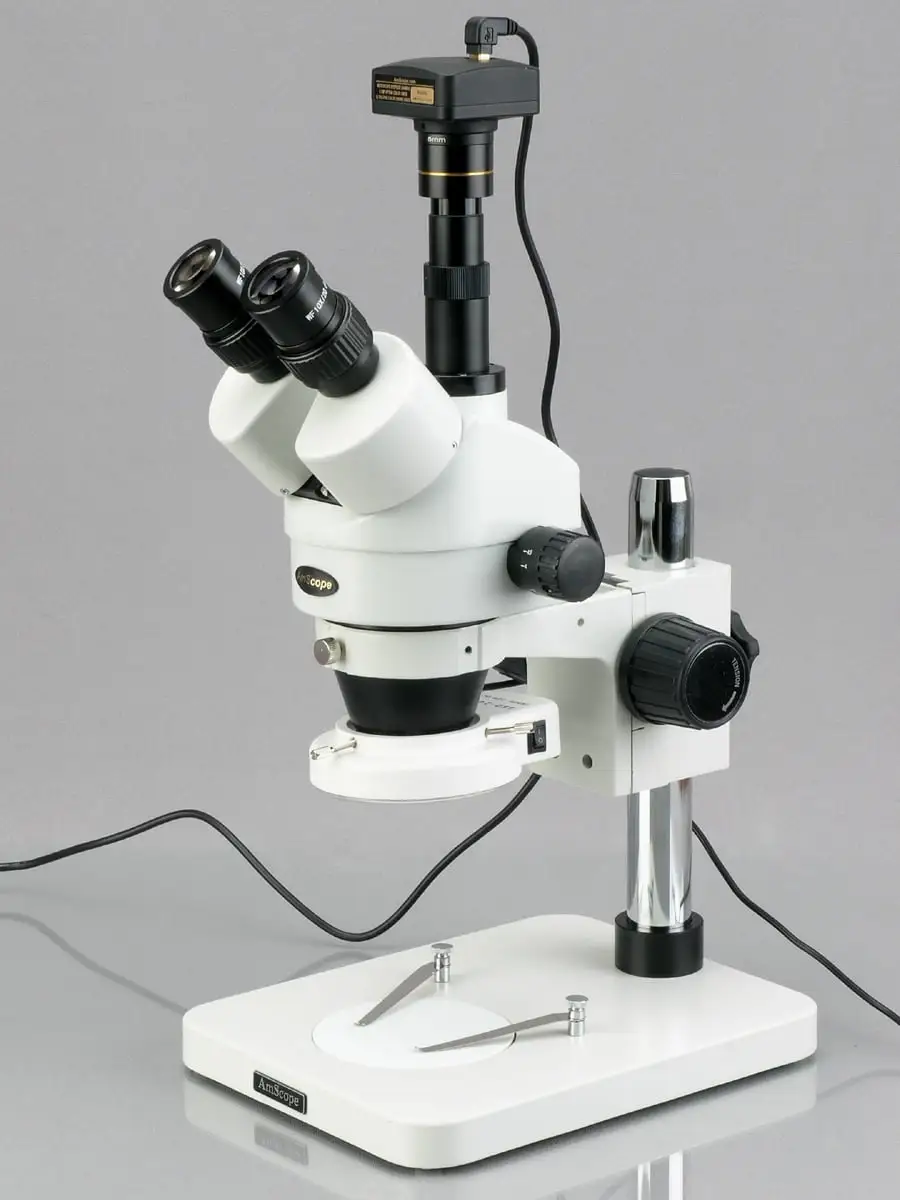
A high-end stereo microscope that trades portability for precision, the AmScope SM-4TZ-144A Trinocular Stereo Zoom Microscope emerges as a go-to choice for electronics repair, inspection, and lab work, earning a solid 8.7/10 from cross-platform feedback.
Quick Verdict: Conditional – excellent for professional or advanced hobby use, but overkill for casual tasks.
| Pros | Cons |
|---|---|
| Exceptionally stable and sturdy double-arm boom stand | Heavy base and scope – not easily portable |
| Crisp, clear optics with wide magnification range | Camera port limits simultaneous eye use |
| Adjustable LED ring light with quadrant control | Less affordable than similar mid-tier options |
| Long working distance for large specimen handling | Instructions are vague or incomplete |
| Versatile magnification from 3.5X to 90X | Requires careful assembly to avoid damage |
| High build quality – steel base and precision mechanics | Bulky footprint for small workspaces |
| Smooth diopter and interpupillary adjustments | Camera frame rate drops at highest resolution |
Claims vs Reality
Marketing highlights the 3.5X–90X zoom range, crystal-clear optics, and ergonomic head design. On paper, the magnification is a headline feature. In practice, users have found it "perfect for micro soldering and any electronic repair, 90x magnification," as noted by an eBay seller describing near-new condition. Reddit posters also praise the flexibility, with one reporting, "I moved from 20X fixed stereo to this – huge difference in detail without losing comfort."
The “heavy-duty stability” promise appears validated by numerous accounts. Trustpilot feedback echoes stability as a top strength: "Customers are highly satisfied with the microscope’s stability, praising its heavy base that keeps it steady during use." This helps when manipulating delicate components or performing solder rework. However, a few warn that the scope “does tip when pushed on when fully extended,” albeit settling back into place.
The LED ring light with four-zone control is marketed as producing bright, evenly distributed light with shadow control. Actual use cases confirm its utility. Repair technicians note that directional quadrants help when chasing board traces or inspecting small parts. One Amazon buyer reports: “The LED light ring gives great illumination and the variable brightness is smooth fading.” The only minor friction is that quadrant selection requires a moment’s adjustment on the control box.
Cross-Platform Consensus
Universally Praised
Stability, magnification versatility, and optical clarity top the chart for most buyers. Electronics repair enthusiasts benefit from both the working distance and zoom flexibility: an OfferUp seller said it was “barely used, like new… perfect for micro soldering.” This is partly due to the long working distance (up to 8”), which gives clearance for tools while observing.
Lab users appreciate the trinocular port for integrating cameras. A Reddit description praises being able to swing the boom stand out of the way without disturbing setup — a boon in multi-user labs. Trustpilot notes, “As good in my opinion as units costing three times as much.”
The optics receive consistent applause. Fakespot synthesis shows users praising “clear, crisp images and excellent build quality.” One Amazon review calls it “well made microscope exhalent for circuit board repair,” underscoring its clarity on fine solder joints and PCB structures.
Common Complaints
Weight is a recurring downside. With a cast steel base and double-arm boom, the AmScope SM-4TZ-144A is not easily moved. One Reddit commenter highlighted the “significant weight of the base and scope itself.” Hobbyists with small benches sometimes find the footprint intrusive.
The ergonomic design still has quirks. Several users mention only being able to use the right ocular when the camera port is active — a trade-off in trinocular models. Trustpilot points this out specifically, adding that head positioning can matter for comfort.
Assembly is another friction point. While mechanically robust, the manual is sparse: “As expected the instructions were more or less useless, but going by the picture on Amazon it wasn't overly difficult,” according to one buyer. Over-tightened Allen screws have been noted, requiring careful adjustment.
Divisive Features
Price is both a barrier and a justification. Some users emphasize that, compared to premium alternatives like Vision Engineering’s Mantis, this AmScope achieves far better cost-to-performance value: “Even with the camera, it’s a lot cheaper than a Mantis.” Others feel the ~$770–$900 range is high for occasional use.
The LED ring light’s brightness control is generally welcomed, but quadrant lighting finds equally passionate supporters and skeptics — for some, the feature is essential for shadow management; for others, it’s extra complexity they ignore.
Trust & Reliability
Trustpilot data suggests low likelihood of fake reviews and high consistency in product satisfaction. At least 80% of reviews are high-quality and genuine. Criticism mainly points to manual and assembly challenges, not to mechanical or optical failures.
Longevity stories are promising. Users report months of daily use in electronics repair and QC without degradation. No widespread failures are mentioned, and “five-year manufacturer warranty” coverage seems reassuring, with some buyers specifically citing warranty term as a purchase driver.
Alternatives
The Mantis Elite is often considered by industrial users but, as community notes highlight, it’s much costlier. In forum mentions, lower-cost 20X stereo microscopes are a step-down in flexibility, while mid-range models often lack the boom stand’s range of motion. For high-end labs, premium models with higher megapixel cameras (e.g., AmScope’s own 10MP variants) give better digital capture but don’t affect live viewing quality significantly.
Price & Value
Recent sales show wide variance. New units list on Amazon at $771.99–$935.99. Resale can dip to ~$300–$400 for lightly used gear in reconditioned condition (OfferUp, local sellers). Auction sales can plummet further — a BidFta lot sold at $144 despite $632 MSRP. Savvy buyers in the community recommend checking lab liquidations and surplus resellers for bargains.
For sub-$1000 professional scopes, users doubt “there is another product out there of similar value,” as one Trustpilot note puts it.
FAQ
Q: Can I use both eyepieces while the camera port is active?
A: No — several users confirm you can only use the right eye when the camera port is engaged. This is standard with many trinocular stereoscopes.
Q: Is the AmScope SM-4TZ-144A suitable for biological specimens?
A: Yes. The cool LED lighting and low heat output make it viable for bio labs, though its magnification suits inspection more than detailed cellular work.
Q: How heavy is the microscope?
A: The solid steel base and double-arm boom make it heavy enough to be stable during precision work but inconvenient to move frequently.
Q: Can the LED ring light produce directional lighting?
A: Yes. The four-zone controller lets you adjust quadrant illumination to emphasize shadows or remove them entirely.
Q: Is the assembly difficult?
A: Basic assembly is straightforward, but the manual is limited. Some users warn against overtightening screws and recommend following product images.
Final Verdict: Buy if you are a repair technician, lab worker, or serious hobbyist needing long working distance and variable magnification for hands-on tasks. Avoid if you need portability or have minimal bench space. Pro tip from community: hunt for surplus or auction listings to secure this premium scope at a fraction of retail.





