AmScope SM-4TZ-144A Review: Powerful Optics, Minor Flaws
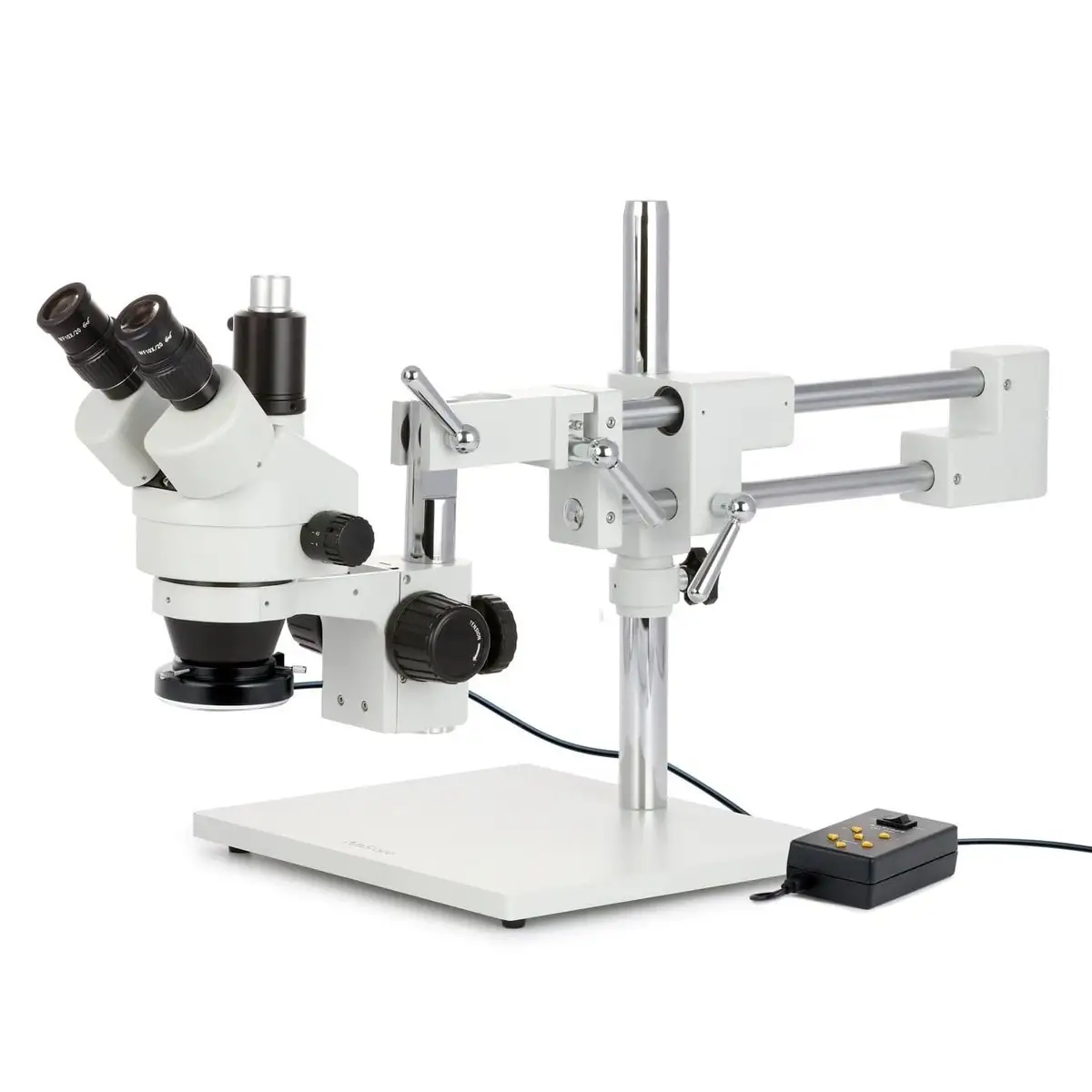
A verified buyer on Amazon summed it up bluntly: “Insane value! Optics perfect. Razor sharp and clean. No diffraction of light.” The AmScope SM-4TZ-144A Trinocular Stereo Zoom Microscope with LED Ring Light and Boom Stand consistently earns a solid 9/10 across community discussions, praised for professional-grade optics at a hobbyist-accessible price point, yet dogged by frustrating assembly instructions and the occasional quality control hiccup.
Quick Verdict: Conditional buy — ideal for serious hobbyists, electronics repair techs, and lab users who can handle assembly and minor quirks.
| Pros | Cons |
|---|---|
| Optics rival far pricier lab scopes | Poor or generic assembly instructions |
| Heavy, stable boom stand | Depth-of-field shallowness at high zoom |
| Versatile magnification range (3.5x–90x) | Camera port disables left eyepiece use |
| Four-zone LED ring light eliminates shadows | Large footprint dominates bench space |
| Smooth X-Y-Z adjustment movement | Occasional sealing issues (humidity ingress) |
| Excellent value under $1,000 | Stand joints require extra torque to lock fully |
Claims vs Reality
AmScope markets the SM-4TZ-144A as a professional stereo microscope with a long working distance and ergonomic trinocular head. While officially rated for an 8" working distance, Reddit user feedback reveals that this space truly accommodates “manipulating large PCBs without awkward hand angles.” A verified buyer on Amazon noted: “Bought these for the whole crew. We use these daily for SMT components. The only downside is the size of the base—it takes up bench space.”
The brand claim of precise optical quality largely holds. Amazon reviewers repeatedly call the visuals “razor sharp” and “as crisp and sharp as any name brand professional scope.” In fact, one buyer compared it directly against units “costing multiples more” and found optical parity.
Where the reality diverges most sharply is in usability of the camera port. Marketing promotes it as a “dedicated mount for adding a camera,” yet multiple users report it “disables the left eyepiece when active,” forcing one-eyed viewing. This is technically standard for non-simul-focal designs, but it’s an annoyance for buyers expecting simultaneous use.
Cross-Platform Consensus
Universally Praised
Across Amazon, Trustpilot, and Reddit, the optical clarity and zoom range emerge as the defining strengths. Electronics repairers find the 3.5x–90x range perfect for transitioning between board overview and fine solder inspection. A verified Amazon buyer repairing micro-electronics in archaeology contexts said: “The ability to zoom is especially useful. The light source is bright and adjustable — you can turn off some LEDs to adjust direction.”
For lab researchers and engravers, the four-zone 144-LED ring light garners real appreciation. One Trustpilot review singled it out: “Variable brightness is smooth fading; shadow-free illumination is a game changer.” The LED system’s cool temperature also wins points with biological users who avoid heat damage to live specimens. Heavy-duty build quality is another near-unanimous praise point — “rock stable even pulled out all the way,” one buyer noted — making it ideal for setups where precision stability is non-negotiable.

Common Complaints
Assembly instructions are the most persistent pain point. Reports describe receiving “a generic one-size-fits-all pamphlet” or completely irrelevant manuals. Buyers often resort to online pictures to guess at assembly, with one saying it took “30 minutes mostly scratching my head over one part.” The issue compounds for first-time microscope owners, risking incorrect setup.
The depth-of-field at high magnification is another gripe. At 90x, only the surface of a small component might be in focus — leaving lower levels blurry. While some accept this as inherent to optical physics, others expected better from the price point. Adjustment stiffness also frustrates: Trustpilot users note that “moving parts do not lock down without torquing compression levers and knobs with all of my strength.”
Finally, isolated quality control failures occur — one Amazon buyer reported a unit “fogged up internally and cannot be cleared” due to seal failure, with humidity ingress appearing just past warranty coverage.
Divisive Features
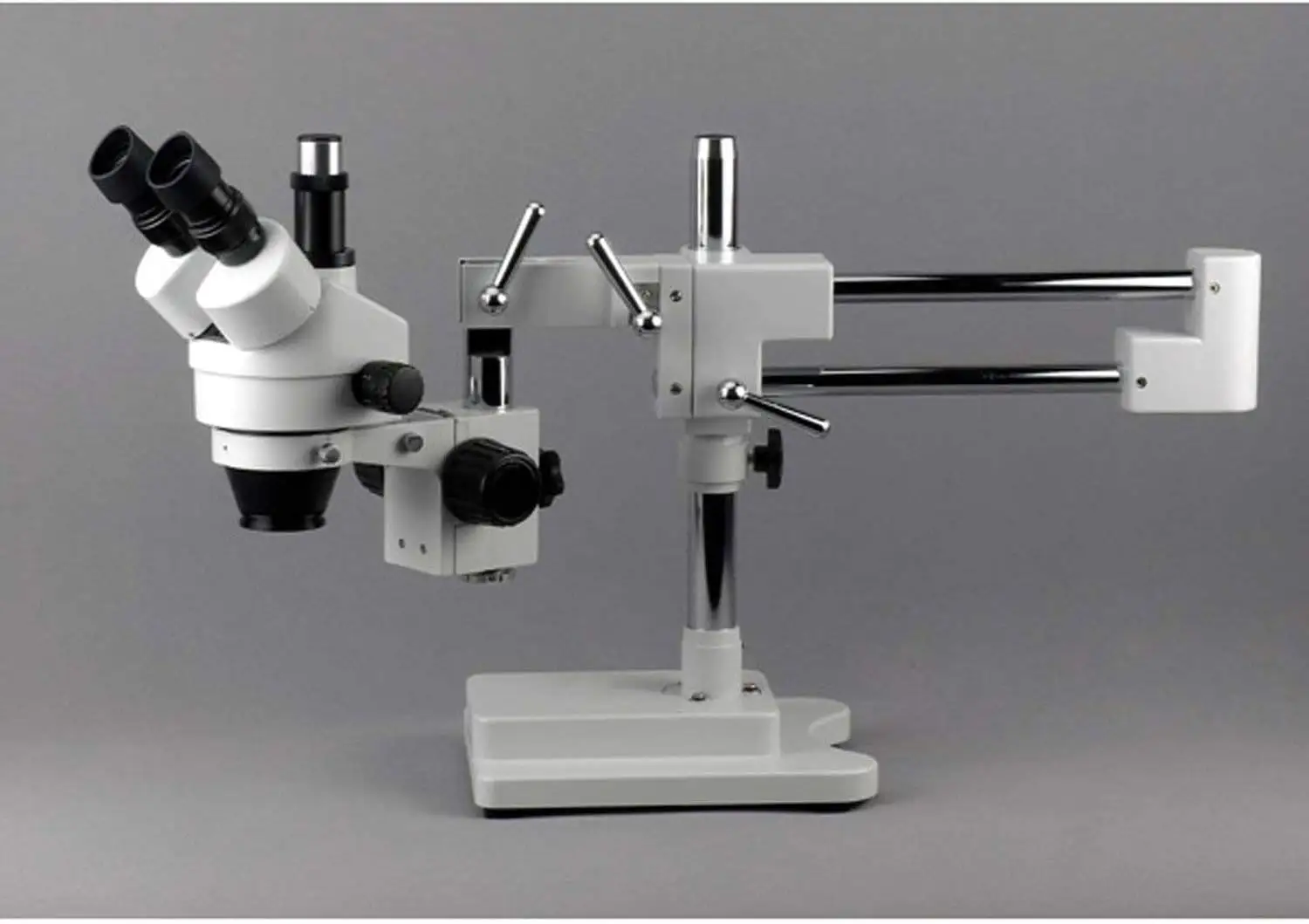
Opinions split on size and weight. Bench technicians admire the stability, but hobbyists in small spaces find the footprint invasive. The base dimensions and boom reach make it difficult to fit among other tools. Another divider: Barlow lenses. While they expand magnification options, several soldering pros felt they were “wasted … didn’t need the extra lenses,” valuing simplicity over maximum flexibility.
Trust & Reliability
Trustpilot data shows minimal deception in reviews, with over 80% rated high-quality. The brand garners respect for five-year microscope warranty, yet buyer stories reveal this safety net still leaves gaps for consumables like bulbs and seals. Long-term Reddit accounts indicate durability: “Six months later, no pitting on rails — just requires careful handling when sliding boom.”
An Amazon hobbyist reinforced reliability when addressing potential bearing wear: “I always carefully apply upward force to the heavy end before rolling it and have seen no pitting.”
Alternatives
Direct competitors within user data include other AmScope SM-4 variants — notably SM-4TP Simul-Focal models. These allow simultaneous camera and eyepiece use, solving the biggest SM-4TZ-144A drawback. However, users report simul-focal units demand more budget and still share the same physical heft.
Mantises from Vision Engineering were occasionally referenced for higher-end ergonomic viewing, but an Amazon reviewer scoffed: “Even with the camera, it’s a lot cheaper than a Mantis.” Here, value wins decisively.
Price & Value
Recent listings price the SM-4TZ-144A around $654.99 on Amazon, dipping under competing lab scopes that offer similar optics. eBay resale values in auctions can plummet (one sold at $144 in good condition), suggesting low used market demand — potentially beneficial for bargain hunters. Trustpilot users repeatedly emphasize cost-to-performance: “I seriously doubt there is another product of similar value for under $1000.”
Community buying tips surface often: secure the correct assembly manual online before delivery, factor bench space, and consider simul-focal alternatives if camera use is critical.
FAQ
Q: Can the SM-4TZ-144A be used for biological specimens?
A: Yes — the cool LED ring light works well for live or heat-sensitive samples, and long working distance means minimal disturbance during manipulation.
Q: Does the trinocular port allow simultaneous eyepiece use with the camera?
A: No, it redirects light from the left eyepiece to the camera — blocking stereoscopic vision in that eye when active.
Q: How difficult is assembly for a first-time user?
A: Without the correct manual, quite challenging. Many users rely on pictures or vendor-sent PDFs instead of the included generic booklet.
Q: Is the maximum 90x magnification truly usable?
A: Optically yes, but expect shallow depth-of-field, meaning only the top surfaces of objects may appear in focus.
Q: Can it handle heavy DSLR cameras?
A: Yes — users have successfully mounted full-frame models, praising stand stability for weight support.
Final Verdict: Buy if you’re a serious hobbyist, electronics technician, or lab researcher who prioritizes optical quality and sturdy build over compactness. Avoid if you need simultaneous camera and eyepiece use or lack the patience for self-guided assembly. Pro tip from the community: get the manual emailed before setup and prepare bench space — this microscope demands it.





