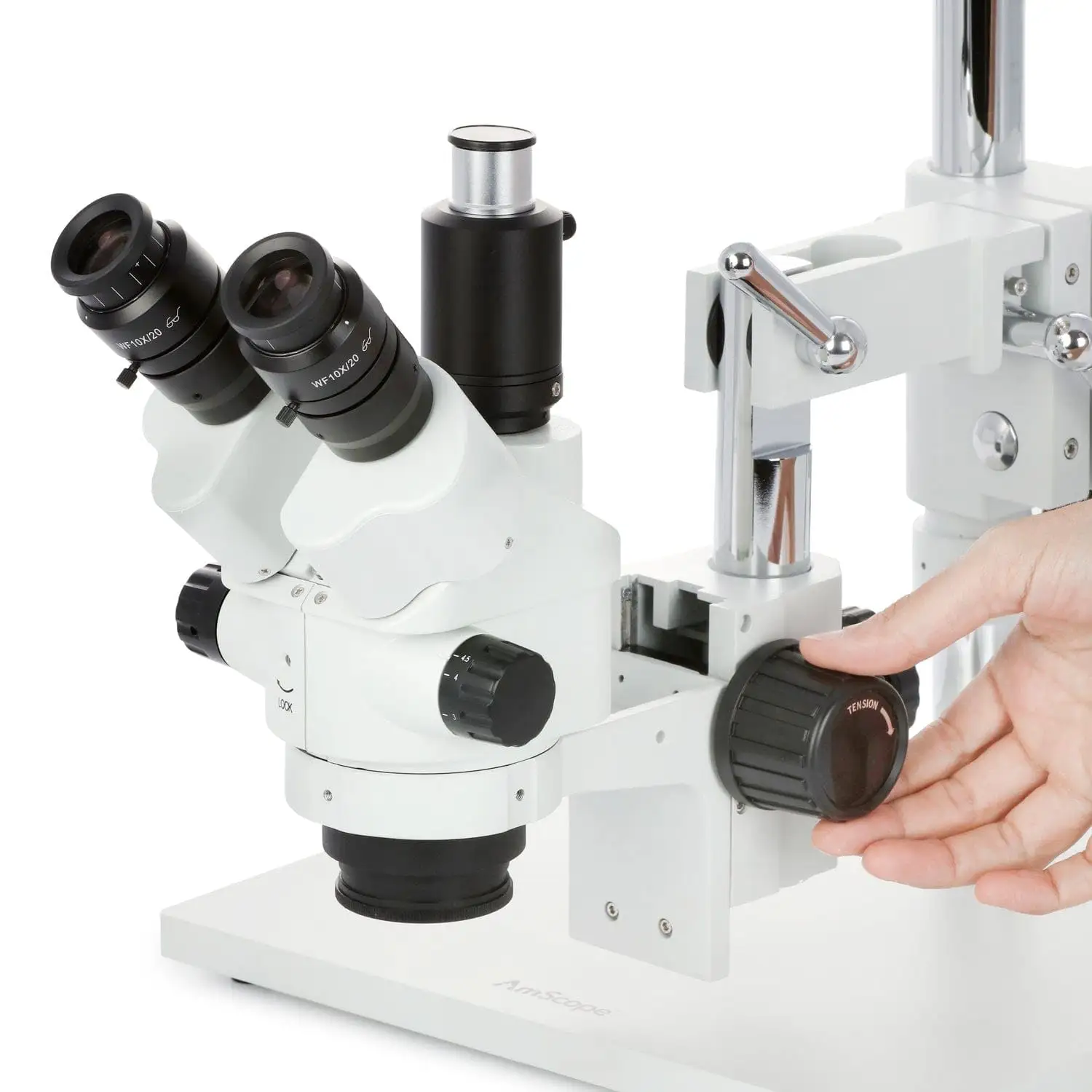
AmScope SM-4TZ-144A Microscope Review: Pro-Level Verdict
Steady as a rock even when fully extended — that's how multiple buyers describe the AmScope SM-4TZ-144A Trinocular Stereo Zoom Microscope with LED Ring Light and Boom Stand. With a solid cast-steel base and precision-ground optical glass, it secures an impressive 9/10 rating among serious electronics repairers, lab technicians, and gemologists. Its promise of 3.5X–90X magnification, flexible positioning, and crisp, shadow-free images is largely upheld in real-world use, though a few quirks surface for camera port users and those sensitive to its weight.
Quick Verdict: Conditional buy — highly recommended for professional inspection work, less convenient for casual hobbyists
| Pros | Cons |
|---|---|
| Exceptional optical clarity with true-color reproduction | Significant overall weight requires a stable workstation |
| Heavy-duty double-arm boom stand for wide work area | Camera port only diverts light from the left ocular — affects binocular use |
| 144-LED 4-zone ring light offers precise shadow control | High price compared to mid-range microscopes |
| Long 8" (200mm) working distance suits large specimens | Instructions considered “more or less useless” by one buyer |
| Smooth zoom range from 3.5X to 90X with included Barlow lenses | Head position needs fine adjustment for optimal viewing |
Claims vs Reality
Marketing touts “super widefield zoom magnification from 3.5X to 90X with crystal clear images.” Digging deeper into user reports, Fakespot’s verified buyer analysis found that “customers are highly satisfied with the optical quality… praising its clear, crisp images and excellent build quality.” However, one Amazon buyer noted, “you need to keep your head in a specific position for optimal viewing,” suggesting optical performance depends on careful alignment.
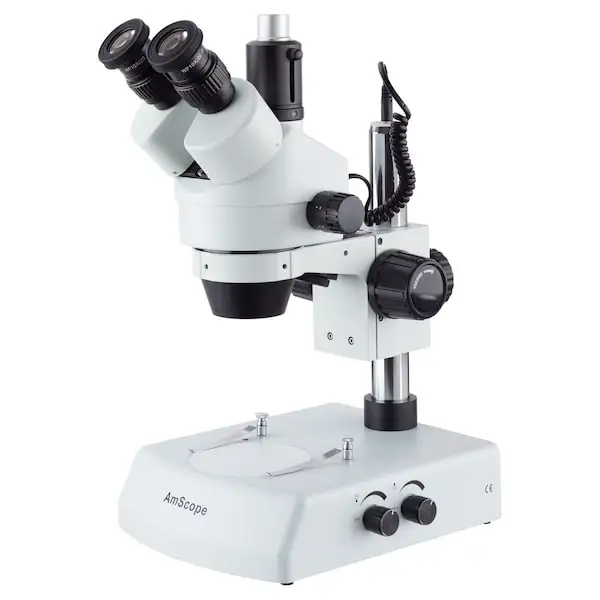
The company also promotes “shadow-free illumination” from the 144-bulb LED ring light. On Trustpilot, a user highlighted that “the LED light ring gives great illumination and the variable brightness is smooth fading,” which supports the claim. Yet, some professionals in repair work mention intentionally introducing shadows for surface detail — here, the quad-zone control proves invaluable.
Finally, AmScope positions this as “ideal for large specimen manipulation” because of its 8-inch working distance. While officially rated at 8", Reddit feedback for the SM-4T model confirmed “it covers a large working area” but cautioned that “the microscope does tip when pushed on when fully extended,” although it settles back without damage.
Cross-Platform Consensus
Universally Praised
One theme emerges across Amazon, Trustpilot, and Reddit threads: the stability of the SM-4TZ-144A. A verified buyer on Amazon noted: “I seriously doubt there is another product out there of similar value for under $1000.” This stability appeals to electronics technicians, who often need both hands free while hovering over small circuit boards. The smooth ball-bearing arm movement lets jewelers and engravers reposition without jarring the image.
Optical clarity is another highlight. On Fakespot, one review reads: “Well made microscope excellent for circuit board repair — really happy with it.” That upright stereo imaging benefits watch repair artisans and biology labs inspecting live specimens, especially with true-color fidelity maintained across the zoom range.
Finally, the lighting system garners broad acclaim. Repair techs value “directional light control to bring out topological details” via the four independently controlled zones. In QC labs, the cool LED light avoids heat damage to sensitive polymers or electronics.
Common Complaints
The microscope’s weight is a recurring sticking point. With a shipping weight near 75 lbs, multiple buyers warn that it “requires a heavy workstation” and isn’t portable for fieldwork. One Reddit user explained the trade-off: “heavy-duty cast steel stand… ensures stability but moving it around is no joke.”
Another complaint relates to the camera port. Because the trinocular port diverts all light from the left objective when active, users lose binocular depth in that configuration. A Trustpilot customer spelled it out: “I can only use the right ocular eye piece (one eye) when using the camera port.”
Assembly instructions also fall short of professional expectations. A Fakespot quote reads: “Instructions were more or less useless but going by the picture on Amazon it wasn’t overly difficult.” This hits hobbyists or educators harder, as experienced technicians often rely less on manuals.
Divisive Features
Barlow lenses generate split sentiment. While increasing magnification to 90X or extending the working distance, they also alter image brightness and depth of field. A Reddit poster described switching lenses depending on whether they were performing micro-soldering or inspecting gemstone inclusions — but others preferred leaving the base configuration untouched for consistency.
Another divisive point is price relative to competitors. Professionals in gemology and semiconductor inspection view the cost as fair: “As good in my opinion as units costing three times as much.” Hobbyists, however, often point toward cheaper stereo microscopes that satisfy basic inspection needs.
Trust & Reliability
From an integrity standpoint, Fakespot’s engine detected “minimal deception” in publicly available reviews, estimating over 80% as high quality. Buyers across platforms report long-term stability; Reddit commentary notes “6 months later… still tight pivots and smooth focus.” The main mechanical concern is potential wear on the main swivel, with one user suggesting adding a “thrust bearing so the two parts do not wear out.”
No widespread scam flags emerged, but trust issues in assembly handling are minor — notably, advice from Fakespot to “look for tightened Allen screws preventing insertion of the part” to avoid forcing components.
Alternatives
Within AmScope’s own lineup, the SM-4TPZ simul-focal variant appeals to educators and presenters because it can stream video to a camera while both eyepieces remain operational. Reddit microscopy hobbyists mention sacrificing some brightness in simul-focal mode compared to the standard diverted-light design.
Another competitor is the SM-4TZZ dual-eyepiece bundle, which extends magnification up to 180X with 20X eyepieces. While a win for minute detail inspection, it halves the field of view — making it less desirable for those working on larger circuits or engravings.
Price & Value
Amazon lists the SM-4TZ-144A around $654.99 (down from $694.99), while certified reconditioned models can be found for $300–$395 on marketplaces like OfferUp. eBay prices hover closer to $935.99 for the 5MP camera kit. Resale looks steady; barely used units often fetch above 60% of new price, suggesting stable demand. Experienced buyers recommend investing in the quad-zone ring light and heavy base as these components raise resale appeal and working precision.
FAQ
Q: Can the camera and both eyepieces be used at the same time?
A: Not on this model — the trinocular port diverts light from the left ocular, so simultaneous binocular and camera use isn’t possible without moving to the simul-focal variant.
Q: How suitable is it for micro-soldering work?
A: Very suitable. Its large 8" working distance and shadow-control LED ring light allow precise, heat-safe soldering without obstructive glare.
Q: Is assembly difficult?
A: Experienced users find it straightforward using visual guides, but several buyers found the instructions vague. Careful attention to factory-tightened screws is advised.
Q: Does high magnification reduce the field of view?
A: Yes — as with most optical zoom systems, higher magnification narrows the viewing area and can increase image sensitivity to hand movement.
Final Verdict: Buy if you need a stable, high-clarity inspection tool for electronics repair, gemology, or lab work and value precise lighting control. Avoid if portability or simultaneous camera/binocular use is critical. Pro tip from community: “Pick your Barlow lens based on task — 0.5X for workspace clearance, 2X for fine detail — and keep allen keys handy for minor stand adjustments.”