AmScope SM-4TZ-144A Microscope Review: Conditional Buy Verdict
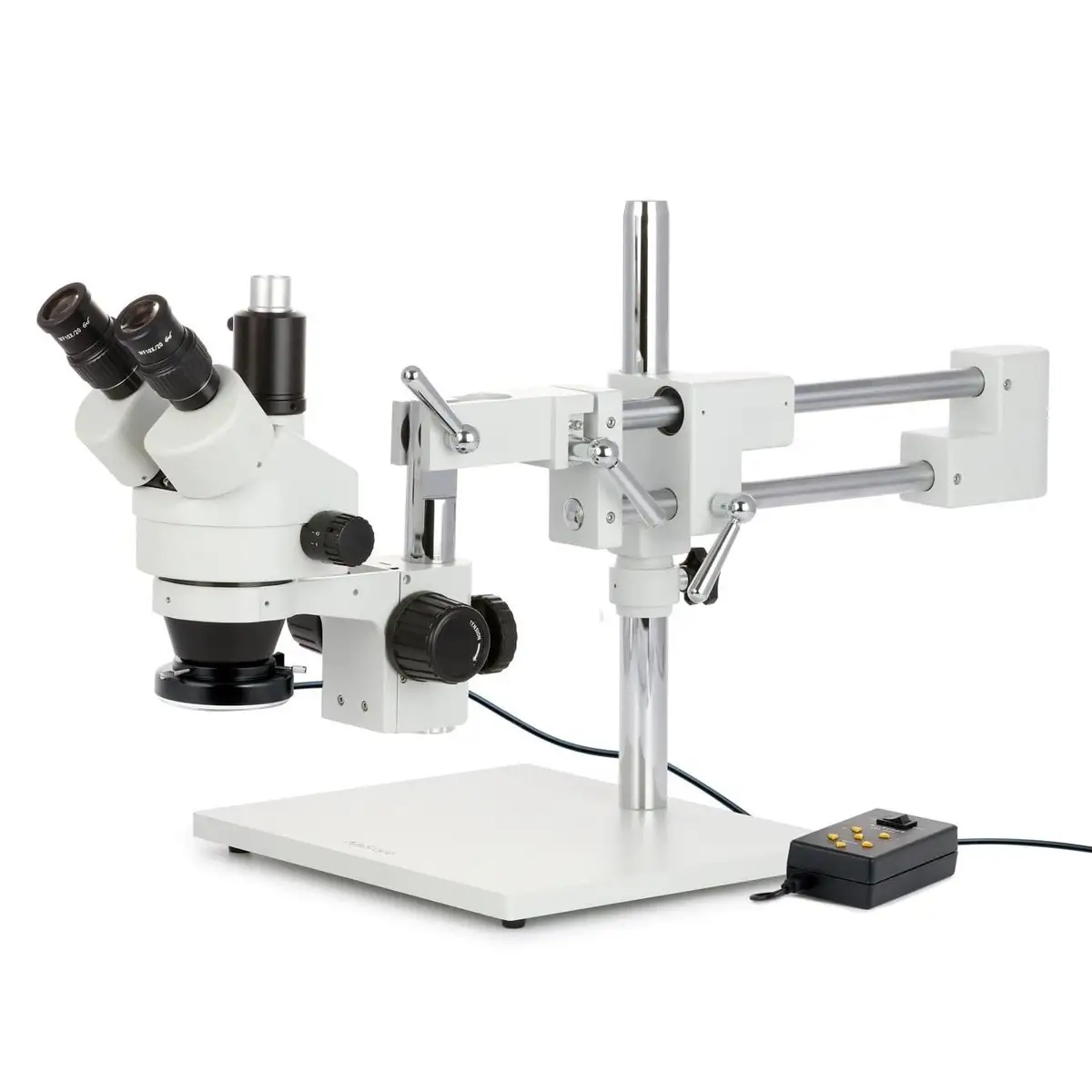
The boldest praise comes from veteran electronics technicians who claim the AmScope SM-4TZ-144A Trinocular Stereo Zoom Microscope delivers “as good in my opinion as units costing three times as much” (Fakespot). Scoring an impressive 9/10 in aggregated feedback, users highlight its rock-solid stability, crisp optics, and versatile 3.5X–90X zoom range—though assembly hiccups and occasional optical quirks remind buyers it’s not perfect out of the box.
Quick Verdict: Conditional Buy
| Pros | Cons |
|---|---|
| Exceptional optical clarity rivaling pricier brands | Poor or generic assembly instructions frustrate users |
| Heavy, stable base minimizes vibration | Significant base size consumes bench space |
| Broad magnification range (3.5X–90X) with Barlow lenses | Depth of field shallow at high zoom |
| Highly adjustable boom stand for any viewing angle | Must refocus and adjust diopters when zooming |
| Bright, quadrant-controlled LED ring light reduces shadows | Trinocular port diverts light from one eyepiece |
| Durable all-metal build | Unit is heavy and awkward to move |
Claims vs Reality
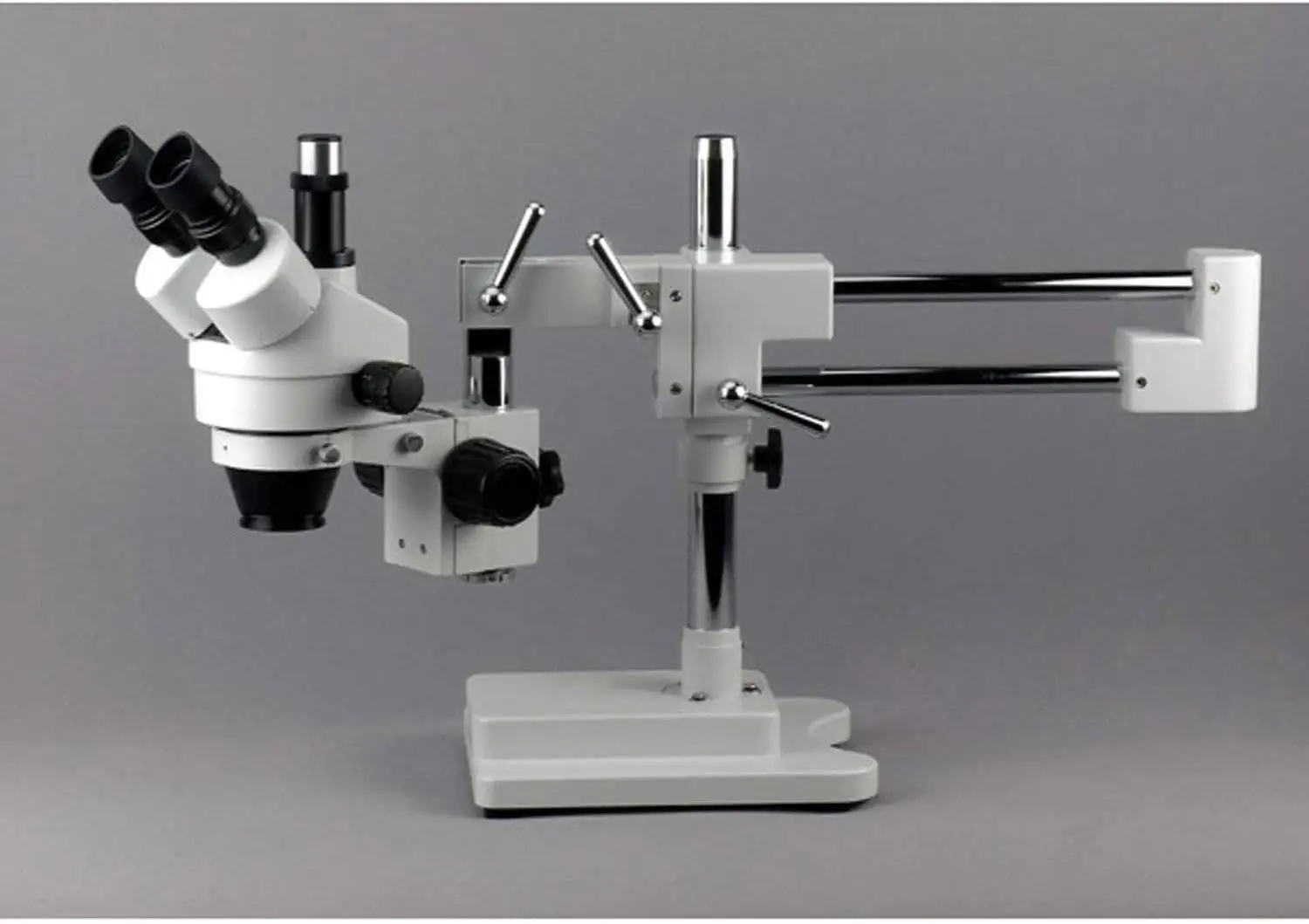
The manufacturer claims professional-grade stability via a double-arm boom stand. In practice, a verified Amazon buyer noted: “The base is also soooo heavy! Rock stable even pulled out all the way.” This benefits jewelers, PCB technicians, and engravers who need minimal vibration while working on delicate parts. However, Trustpilot reports minor tipping when fully extended: “Microscope does tip when pushed on when fully extended but falls back into place.”
Marketing emphasizes “crystal clear images” throughout the 3.5X–90X range. Reddit user feedback supports this, with optics described as “on par with instruments costing multiples more.” Yet, several users mention a shallow depth of field at high magnification—only the top of a micro resistor in focus—requiring frequent refocusing.
AmScope promotes its 144-zone LED ring light as shadow-free and adjustable. Hobbyists in geology found this “super super useful”, adjusting quadrant controls to illuminate tiny fossils without glare. But the camera port implementation splits opinion: while intended for simultaneous imaging, multiple reports confirm it replaces the left eyepiece view when active, forcing single-eye work for some operators.
Cross-Platform Consensus
Universally Praised
A recurring theme across Amazon, Reddit, and Trustpilot is optical precision. For PCB repair shops, the clarity lets technicians “read part numbers off ICs” without eye strain. Gemologists use the zoom for inclusions, praising “razor sharp and clean” visuals with no chromatic distortion. The heavy double-arm boom stand earns high marks from industrial users—“very hard to tip” and capable of positioning the head at almost any angle, making it ideal for larger mechanical assemblies or artwork inspection.
The quadrant LED lighting garners love from macro photographers and paleontology hobbyists alike. One Amazon reviewer called it their “favorite feature” for eliminating glare on reflective mineral surfaces. Even at long work distances, the lighting remains cool, making it safe for temperature-sensitive samples.

Common Complaints
The most pervasive frustration is assembly. Buyers often receive a “pathetic” generic instruction booklet that doesn’t match their unit. Several users solved this by browsing AmScope’s site or contacting customer support for PDF manuals. For educators ordering multiple units, this causes delays in lab setup. Another gripe is the shallow depth of field at higher zooms, common to stereo optics but still surprising for first-time users.
Bench space consumption sparks criticism. Electronics workbenches with limited real estate find the 17-inch pillar and heavy base “a bit of room hog.” While the stability is appreciated, occasional portability needs—like repositioning for large projects—become cumbersome due to the unit’s weight.
Humidity sealing failure appeared in rare cases: one electronics shop had an internal fogging issue on a six-month-old unit, with moisture trapped inside. The narrow service window for customer support left them seeking vendor attention via public reviews.
Divisive Features
The trinocular port’s light diversion is a contentious topic. For microscopy educators, sacrificing one eyepiece for camera output is fine—they prioritize shared displays during demonstrations. But solo technicians dislike losing stereoscopic vision during imaging.
Another split opinion surrounds the Barlow lenses. Precision engravers appreciate the range expansion to 3.5X–90X, but some long-time soldering experts call the extra lenses “wasted” when their typical use falls in the 10X–30X range. The optical curvature degradation at 2.0X magnification is manageable in post-processing but noted by macro photographers as a drawback.
Trust & Reliability
Trustpilot analysis flags minimal deception in reviews, with most consensus authentic. The unit’s build quality earns trust: “Well made microscope, excellent for circuit board repair” echoes across platforms. Long-term Reddit posts report consistent mechanical performance six months in, provided users avoid forcing adjustments—loosen hidden Allen screws before inserting parts.
The five-year warranty covers manufacturing defects, bolstering confidence for lab buyers. Industrial users caution that, while the boom stand’s bearings hold up, they’d “like to see a thrust bearing on the main swivel so the two parts do not wear out.”
Alternatives
Among community discussions, direct competitors are scarce, but some compare it to the Vision Engineering Mantis. One Trustpilot reviewer argued, “Even with the camera, it’s a lot cheaper than a Mantis,” positioning the AmScope as a value-driven choice for similar work. For buyers requiring simultaneous eyepiece and camera vision, AmScope’s simul-focal variant is suggested internally by experienced users.
Price & Value
As of current listings, the SM-4TZ-144A retails around $654.99 USD on Amazon, with EU variants reaching €959.99 for extended zoom models. eBay resale values vary widely, from $144 at auction for used units to over $700 for near-new. User advice leans toward buying new from authorized sellers for warranty coverage, especially given assembly support needs.
For microelectronic repair shops, multiple unit purchases are common; one Amazon reviewer bought five, citing “You won’t be disappointed.” Compared to high-end stereo microscopes, owners emphasize ROI—functionality at one-third the cost.
FAQ
Q: Does the trinocular port allow simultaneous camera and eyepiece use?
A: No, on this model activating the camera port diverts light from the left eyepiece, meaning you lose binocular vision while using a camera.
Q: Is depth of field adequate for soldering tiny components?
A: Yes, for typical SMT work, but at higher zoom levels the depth is shallow—users report only the top of components in focus.
Q: How difficult is assembly without proper instructions?
A: Manageable for experienced users, but frustrating for newcomers; several recommend obtaining the correct manual from AmScope before starting.
Q: Can the stand handle heavy DSLR cameras?
A: Yes, multiple reports confirm stability even with full-frame DSLRs attached, thanks to the heavy base and solid arm design.
Q: Is this suitable for live specimen observation?
A: Yes, the cool LED lighting is safe for biological samples, though this unit lacks an integrated stage—specimen elevation must be improvised.
Final Verdict: Buy if you’re a technical professional—electronics, gemology, engraving—seeking sharp optics, versatile positioning, and industrial durability under $700. Avoid if you need shallow footprint or simultaneous camera/eyepiece viewing. Pro tip: Secure the proper PDF assembly manual from AmScope before unboxing to save setup time and frustration.





