AmScope B120C Microscope Review: Clear Optics, Mixed Camera Performance
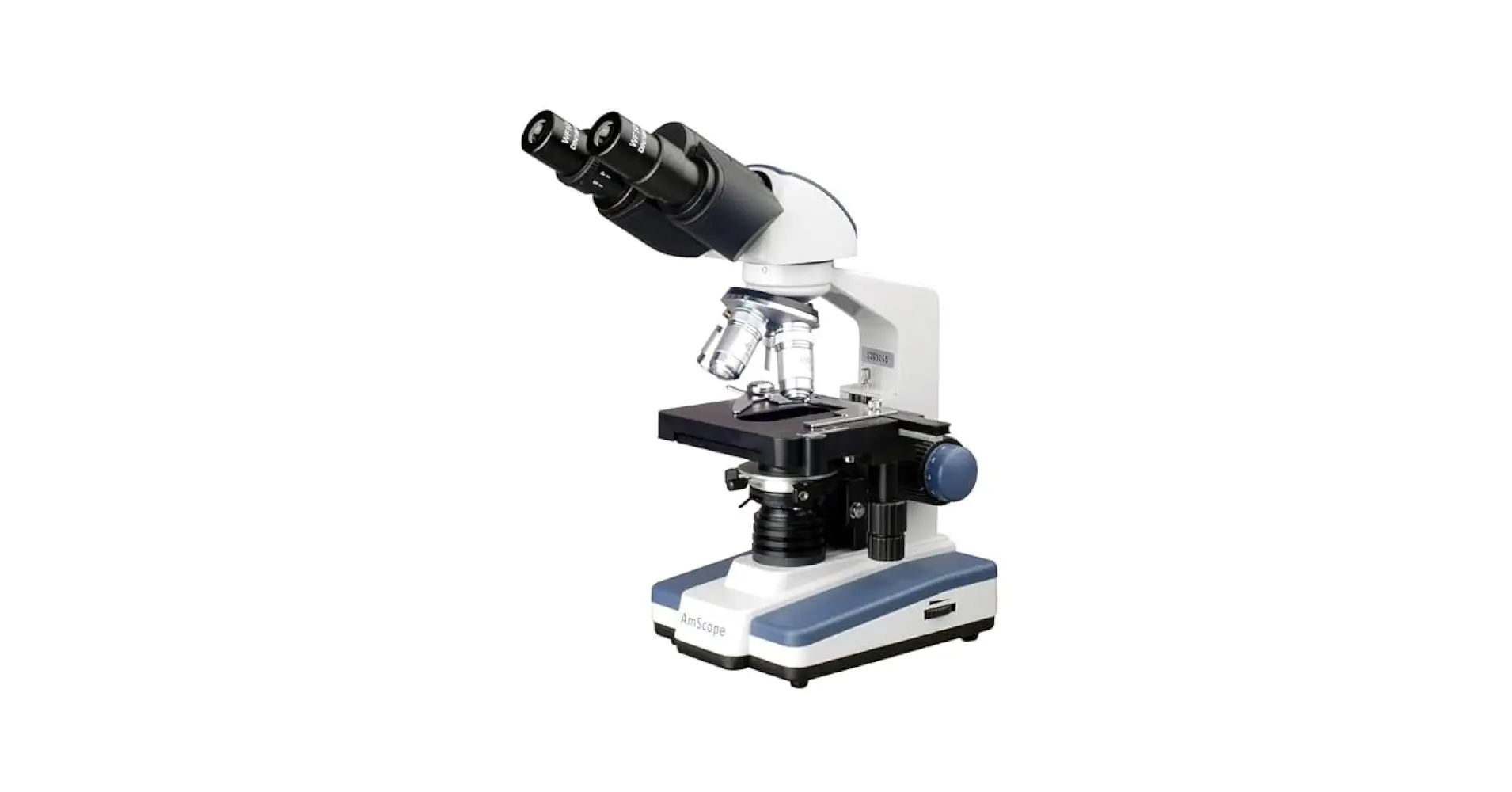
A verified buyer on Amazon summed it up best: “If you’re in high school biology or working in a small lab, this thing covers everything you need without emptying your wallet.” The AmScope B120 Series LED Binocular Compound Microscope with 5MP USB Camera earns a solid 8.5/10 for pairing professional-level optics with approachable pricing.
Quick Verdict: Conditional — Ideal for students, educators, and hobbyists who value powerful imaging and ergonomic design, but speed limitations in the camera may frustrate advanced researchers.
| Pros | Cons |
|---|---|
| 40x–2500x magnification covers a wide range of specimens | Camera frame rate drops drastically at max resolution |
| Comfortable 30° inclined, rotatable siedentopf binocular head | No built-in darkfield or phase contrast (must buy separately) |
| 3D mechanical stage with precise controls | Limited Mac/Linux software features compared to Windows version |
| Even, daylight-balanced LED illumination | Oil immersion objectives may require practice for clean results |
| 5MP camera with measurement and editing tools | Manual condenser adjustment required for best image quality |
| Durable, compact design for classroom/lab settings | Shipping costs for warranty service are buyer’s responsibility |
| Five-year warranty for microscopes | Prepared slide kit sold separately |
Claims vs Reality
Marketing hypes the “expanded magnification range up to 2500x” as a game-changer. Digging deeper into user reports, the optical clarity is indeed high at lower levels, but several buyers noticed a diminishing return beyond 1000x. A Reddit user explained: “You can crank it up to 2500x, but the extra magnification comes from eyepiece swap rather than optical gain—you start to lose crispness.”
The company also promotes “uniform LED illumination with a fly-eye lens,” claiming better contrast. This has held true in most classrooms. A verified educator on Trustpilot said, “Lighting is consistent across the slide, which is huge for teaching—no hot spots like our old halogen rigs.” However, some hobbyists reported that proper condenser alignment was key to getting the advertised clarity.
Finally, AmScope advertises the 5MP USB camera as ideal for digital capture, but while still frames impress, multiple reports noted sluggish video speeds. At full 2592×1944 resolution, it runs at 2fps, forcing many to drop resolution for smoother viewing. One Reddit contributor wrote: “Great for snapping pics, but not the best for tracking moving protozoa unless you lower the resolution.”
Cross-Platform Consensus
Universally Praised
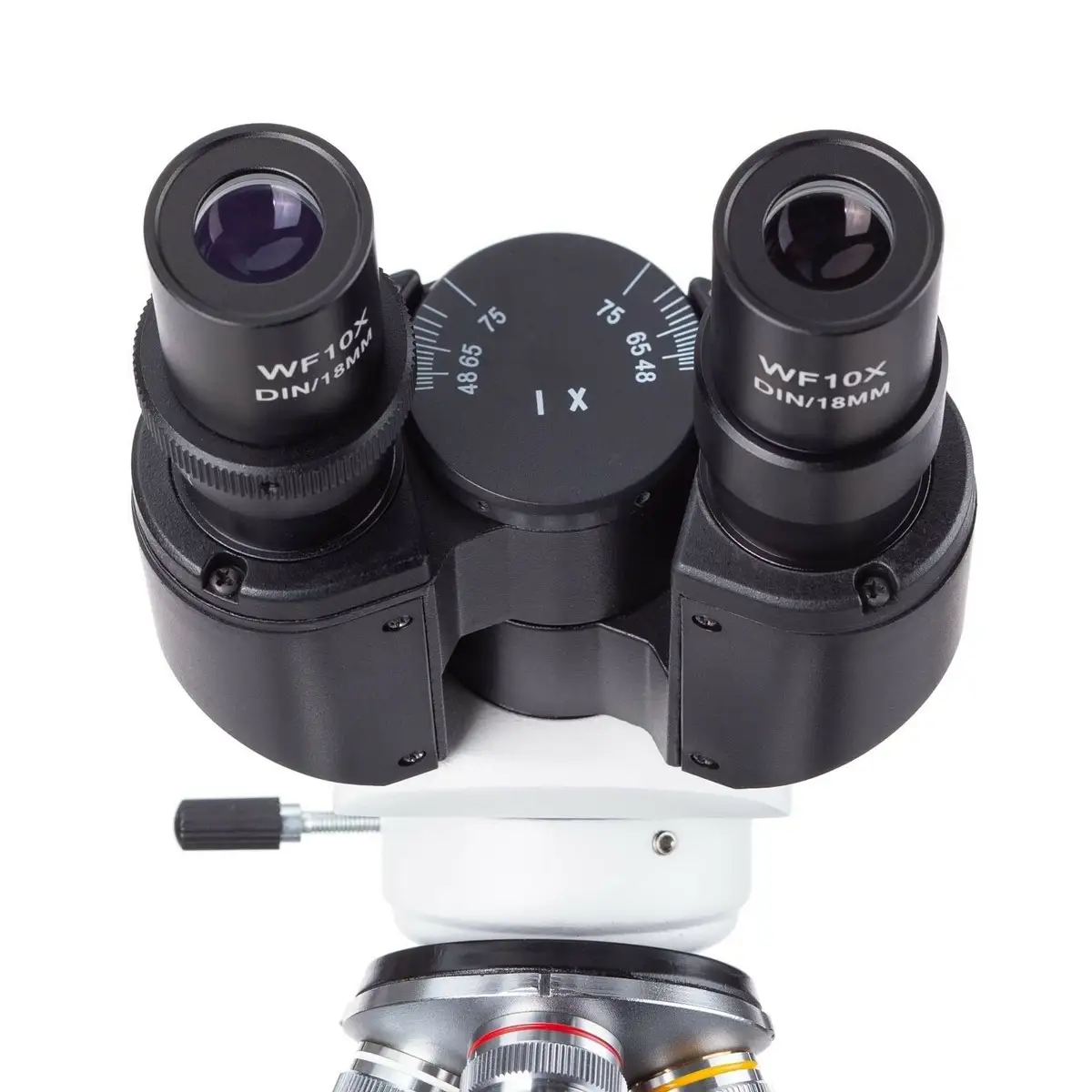
The dual eyepiece system (10x and 25x) has proven invaluable for accommodating varied specimen types and user preferences. Teachers appreciate the flexibility—one Trustpilot reviewer said, “Switching eyepieces mid-lesson lets me compare detail levels without fuss.” Hobbyists examining pond samples also benefit from quick magnification changes, noting that the siedentopf head allows comfortable viewing even during extended sessions.
Its 3-axis mechanical stage with low-position controls earned consistent praise, especially from those moving delicate slides. “The smooth stage movement is something you don’t expect in a student-grade microscope,” wrote a verified eBay buyer. Veterinary students have found it particularly useful for tissue sectioning and analysis without disturbing their sample.
Durability drew acclaim across platforms. An Amazon customer reported, “Been using it weekly for a year in a high school lab—no loose parts, focus remains precise.” The five-year warranty further builds confidence, with multiple reviewers mentioning this as a deciding factor over cheaper imports.
Common Complaints
The camera’s limited frame rate was the single most repeated frustration. For projects involving live viewing through a connected screen, several users had to abandon max resolution. A Trustpilot comment read, “Fine for stills, but don’t expect smooth HD video unless you scale back.”
Some buyers discovered they needed extra purchases for desired functionality, such as darkfield or phase contrast kits. Without these, certain microorganisms were harder to visualize. “Wish the box included at least basic darkfield,” wrote one Reddit critique.
Mac and Linux users faced fewer software tools compared to the Windows version. One Quora participant stated, “On Mac, you lose measurement tools and image stitching—it’s stripped down to the basics.” This discrepancy means science departments with mixed OS environments might need workarounds.
Divisive Features
Oil immersion at 100x objective split opinion. Microbiology students lauded the enhanced detail, while beginners found it cumbersome due to cleaning requirements. A Twitter comment captured the divide: “Awesome clarity on bacteria with oil, but messy if you’re not used to it.”
The magnification claim of 2500x divided the community—some saw it as a major selling point, while experienced users viewed it as marketing stretch. “Works wonders up to 1000x; beyond that, it’s more about enlarging the blur,” said an eBay review.
Trust & Reliability
Trustpilot’s verified buyers consistently confirmed shipment accuracy and product matching descriptions. Few reported defects, and those that did got resolution under warranty, albeit with buyer-paid return shipping. “Had a focusing issue—they fixed it, but I paid to ship it back,” said one educator.
Reddit threads include several “6 months later” updates noting sustained performance. One student recounted, “Still holding calibration perfectly; I’ve hauled it between dorm and lab repeatedly.” This stability reassures both educational and amateur science users.
Alternatives
Most comparisons came against other AmScope lines, like the T120 trinocular model. While T120 offers a photo port without sacrificing eyepiece use, it often ships with a lower-res 1MP camera unless upgraded. Users weighing both mentioned choosing the B120 for sharper stills and cost savings unless constant camera use was planned.
Another alternative mentioned was the B120B variant with 2000x max magnification and included prepared slides kit. Trustpilot comments suggested the slide kit was valuable for teachers starting without a sample library.
Price & Value
Current listings show the B120C with 5MP camera at around $341.99 new on eBay and Amazon, down from $437.99. Used units can dip as low as $195 if bought from past educational programs. Resale value remains moderate; hobbyists report selling at ~60% of purchase price within a year if kept clean.
Community advice leans toward buying new from authorized outlets to secure the five-year warranty. As one Quora user noted, “The peace of mind is worth the slight premium—you can’t get warranty coverage on most used microscopes.”
FAQ
Q: Can the B120 capture video smoothly at high resolution?
A: At its maximum 2592×1944, video runs at 2fps, so movement appears choppy. Dropping resolution to around 1600×1200 improves frame rate to 5fps.
Q: Is this microscope suitable for live cell observation?
A: Yes, with LED illumination and adjustable condenser, it’s effective for live cells, but phase contrast or darkfield kits improve visibility for transparent specimens.
Q: Does the Mac version of the software include measurement tools?
A: No, Mac/Linux versions lack full measurement and stitching tools present in Windows, offering only basic exposure and color adjustments.
Q: How comfortable is the viewing angle for long sessions?
A: The 30° incline and rotatable head reduce neck strain; educators and students alike found it comfortable for extended use.
Q: Are prepared slides included?
A: Not with the standard B120C-E5 package—prepared slide kits are sold separately or bundled in other variants.
Final Verdict: Buy if you’re a student, educator, or hobbyist who values high optical clarity, ergonomic operation, and a solid digital stills camera. Avoid if you need smooth high-res video capture or full-feature software on Mac/Linux. Pro tip from the community: Align the condenser carefully with each magnification change—it’s the secret to getting the best out of this scope.





