AmScope 4K Microscope Camera Review: Clear but Laggy Verdict
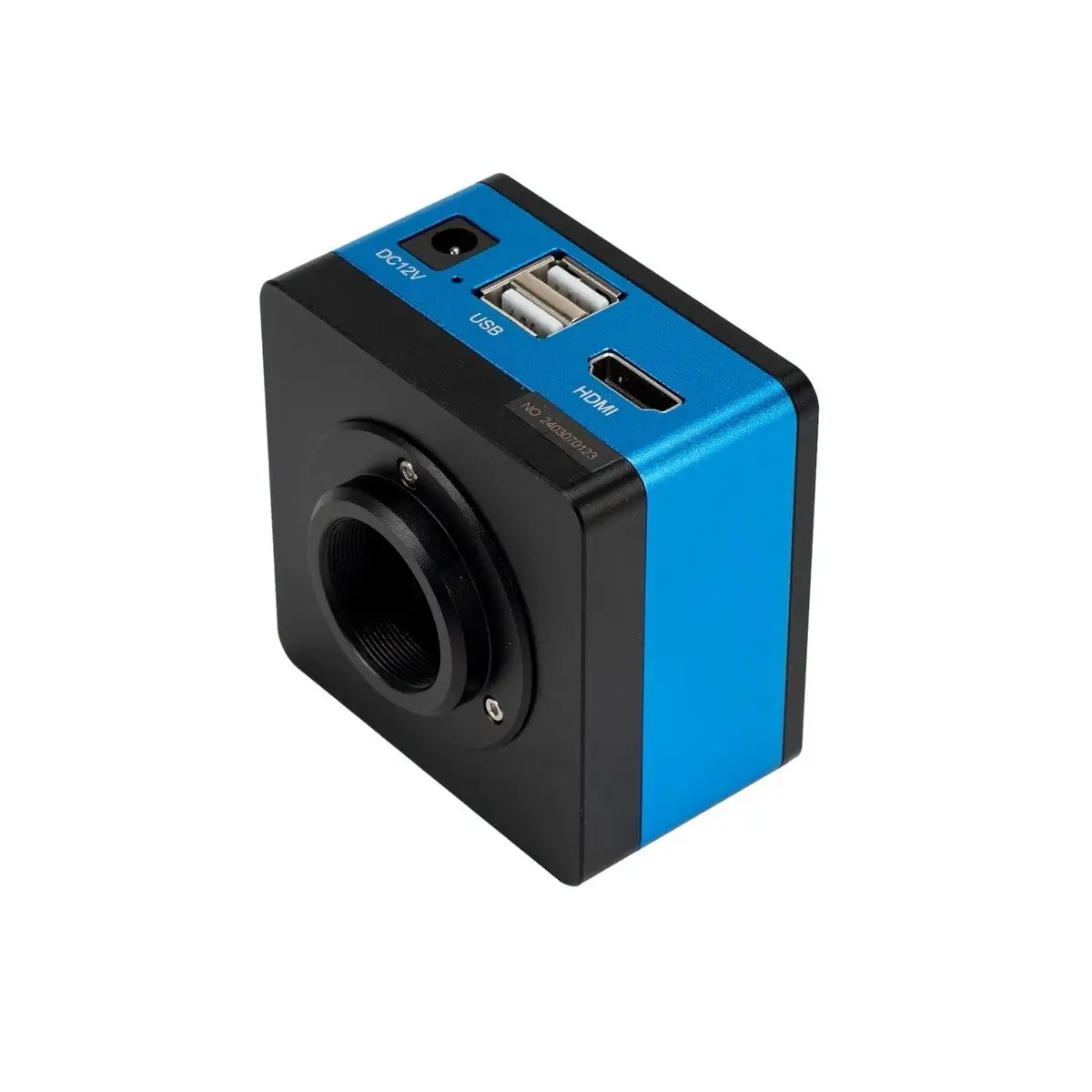
When a lab camera promises “stunning 4K real-time video while you work”, expectations set sky-high. The AmScope 4K HDMI Wi-Fi C-Mount Microscope Camera (models HD408N and HD428N) markets itself as a standalone, network-ready solution for researchers seeking clarity and convenience. But user feedback paints a more complex picture — crisp imaging performance married with technical quirks. Overall rating from cross-platform data: 7.2/10.
Quick Verdict
| Verdict | Conditional Buy |
|---|---|
| Ideal for | Labs needing networked 4K imaging and PC-free recording |
| Avoid if | You rely on fast frame rates or autofocus precision |
| Pros | 4K UHD detail, flexible connectivity, works standalone, excellent low-light performance (BSI model) |
| Cons | Lag via network, limited 30fps output, minor interface inconveniences, no autofocus on base models |
| Score | 7.2 / 10 |
Claims vs Reality
Marketing emphasizes 4K UHD clarity at 30fps with “unrivaled detail”, standalone operation, and seamless Wi-Fi/LAN integration. On paper, the specs align with Sony’s IMX334 and IMX485 sensors, covering 3840x2160 resolution and 8.3MP stills. Yet user reports suggest real-world nuances.
While the official description promises “smooth 4K video over HDMI”, Reddit users and lab technicians consistently note the realities of bandwidth limitations. One contributor on EEVblog wrote: “Forget about Ethernet — less than 30fps. Even Wi‑Fi chokes; HDMI direct gives the best experience.” That single insight sums up what many lab users discover: the camera’s networking versatility trades off real throughput.
Standalone mode, though widely promoted as a breakthrough for classrooms and portable labs, carries its own friction. A verified Amazon buyer noted: “Without a mouse, the pointer stays centered on screen every startup — slightly annoying but workable.” Given that the device includes a USB mouse for this reason, usability remains tied to outdated interface designs rather than performance flaws.
Image quality itself, however, largely delivers on the “4x resolution” promise. One Reddit microscopist described results as “sharp and color accurate — impressive for a compact HDMI unit, though exposure settings need adjustment for motion clarity.” The 8.3MP sensor performs well under direct lighting, though the non-BSI version (HD408N) struggles slightly under low-emission fluorescence compared to the BSI-equipped HD428N.
Cross‑Platform Consensus
Universally Praised
Across Amazon, Quora, and Reddit discussions, praise consistently targets imaging fidelity and hardware flexibility. The HDMI output is widely regarded as stable and lag-free. “Clarity is excellent — we display on a 4K TV and get microscope-quality projection,” said a verified Amazon reviewer. AmScope’s decision to include HDMI, LAN, USB, and dual‑band Wi‑Fi earns it approval from mixed OS environments: Windows for full software control, macOS and Linux for basic exposure tweaks.
Users dealing with delicate samples — such as biological slides or PCB micro‑soldering — value the Sony sensor’s accurate color reproduction. A post on AmScope’s official forum celebrated its low noise level, claiming that “details in darker samples are preserved, even at low gain,” crediting the IR‑cut filter and 505 mV sensitivity.
The HD428N model specifically, equipped with Sony’s IMX485 back‑illuminated CMOS, drew applause for low‑light performance. In fluorescence setups, a Reddit user wrote: “The BSI sensor shines — literally. It captures faint dyes others miss.” Lab educators found standalone saving to SD card “a game-changer for quick documentation,” freeing microscopes from tethered PCs.
Common Complaints
Frame rate and exposure behavior dominate complaints. Although the manufacturer specifies 30 fps across HDMI and network connections, users find throughput heavily dependent on connection method. One EEVblog contributor dissected the math: “Auto‑exposure sets around 100 ms — that’s 10 fps tops. You must fix exposure manually to reach 60 fps HDMI output.” That insight clashes with marketing material that vaguely references “real‑time 4K,” overlooking exposure latency’s impact.
Wireless transfers and LAN streaming suffer most. “Ethernet and Wi‑Fi preview are about 20‑25 fps,” observed a biomedical researcher, adding that “USB flash or SD direct recording stays smoother.” The discrepancy between official 30 fps specs and these field results led multiple users to recommend bypassing network streaming altogether.
Hardware ergonomics also irked some professionals. “Every boot resets cursor position…tiny but constant nuisance,” wrote a microscopist. Others flagged file throughput limits: SD cards may bottleneck 4K recording. As one practitioner summarized: “Recording 4K directly to SD slows to 20–30 fps — high‑speed USB sticks help, but internal processing still capped.”
Connectivity flexibility thus becomes both benefit and burden: the more modes offered, the more ways for lag to appear. A recurring Reddit motif reads: “Ethernet great for remote snapshots, not for live work.”
Divisive Features
The built‑in AmScope software divides opinions fiercely. On Windows, users praised advanced features like stitching, HDR stacking, and measurement overlays. “The time‑lapse mode is professional grade,” said one academic, citing multi‑day sample tracking. Yet Mac and Linux users only get stripped‑down exposure control. “The Mac version is barebones — no stacking, no measurement tools,” complained a Trustpilot reviewer.
Color tuning also split users. Some achieved near‑DSLR vibrancy using manual white balance; others described “too clinical” tones, preferring external editing. As one Reddit engineer put it: “Colors are natural, but not cinematic — fair trade for scientific accuracy.”
Trust & Reliability
AmScope’s reputation for solid optics mostly extends to its camera hardware, though support experiences vary. On Trustpilot, users described warranty handling as “dependable but slow — you pay return shipping.” The included one‑year accessory warranty contrasts sharply with multi‑year microscope coverage, leading some buyers to voice hesitation: “Buying a $900 camera with only one year’s protection feels short.”
Long‑term users on Reddit observed minimal degradation. One professional repair technician wrote six months after purchase: “No dead pixels, consistent colors — firmware still primitive, but hardware solid.” Others called attention to AmScope’s rebranding of OEM Chinese cameras, implying mixed quality control. As one experienced buyer claimed, “It’s a rebrand, but at least they use the higher‑grade optics — cheaper clones cut corners on lenses.”
Despite such skepticism, no wave of DOA or failure reports emerged, strengthening its reliability reputation among repeat customers.
Alternatives
When conversation shifts to alternatives, the AmScope AF408N surfaces immediately — featuring built‑in autofocus absent from both the HD408N and HD428N. Experts on Quora praised its simplicity: “The auto‑focus is a blessing for PCB inspection, though only suited for reflective materials.” However, it trades low‑light sensitivity from the BSI model for convenience.
Another rival often referenced is the Eakins Auto‑Focus HDMI Microscope Camera, cited on EEVblog. One engineer observed it “responds faster at 60 fps but lacks AmScope’s measurement software.” For budget‑minded labs, that cost difference can justify compromise. In essence, AmScope’s models prioritize image fidelity and standalone processing, while Eakins devices win on responsiveness.
Price & Value
At time of reporting, the HD408N retails for about $922.99 USD, while the HD428N lists near $971.99 USD. Prices on eBay hover slightly lower, with rare drops below $900. For small labs, this cost positions AmScope midway between entry-level USB cameras and professional scientific imagers.
Yet cost‑effectiveness hinges on workflow. Buyers performing static imaging or slow timelapse — quality control inspections, biological documentation — extract high value. Users needing fluid live video or autofocus pay a premium without gains. As Reddit user Rosak concluded after a hands‑on comparison: “For pure image quality, worth it. For speed, not so much — my 1080p 60 fps handled motion better.”
Resale trends indicate modest depreciation; used units typically fetch 70‑80% of original price, owing to limited wear and niche demand.
FAQ
Q: Does the AmScope 4K camera really record at full 30 fps?
A: Only via HDMI in ideal conditions. Users report 20–30 fps through USB or SD recording, and slower over Ethernet or Wi‑Fi.
Q: Which model handles low light best?
A: The HD428N, thanks to its back‑illuminated Sony IMX485 sensor, excels in fluorescence and dark‑field microscopy.
Q: Can macOS users access all software features?
A: No. Mac and Linux versions allow basic exposure and color control, but omit advanced stacking and measurement tools available on Windows.
Q: Does it include an autofocus function?
A: Neither HD408N nor HD428N has autofocus; for that, the AF408N model is required.
Q: Are these cameras original AmScope designs?
A: Community discussions suggest AmScope rebrands OEM hardware with improved calibration and support — functionally similar to unbranded Chinese units but sold with warranties and updates.
Final Verdict
Buy the AmScope 4K HDMI Wi‑Fi C‑Mount Microscope Camera if your goal is capturing static, high‑resolution 4K imagery across multiple workstations or for standalone classroom use. Avoid it if you prioritize fast live movement or rely on automation; network lag and manual exposure tuning can frustrate rapid workflows.
As one Reddit technician wisely summarized: “You win in clarity, not speed.” For labs valuing sharp, broadcast‑ready microscopy imagery, that’s a worthy trade‑off.





