AmScope 4K HDMI Wi-Fi Microscope Camera Review Verdict
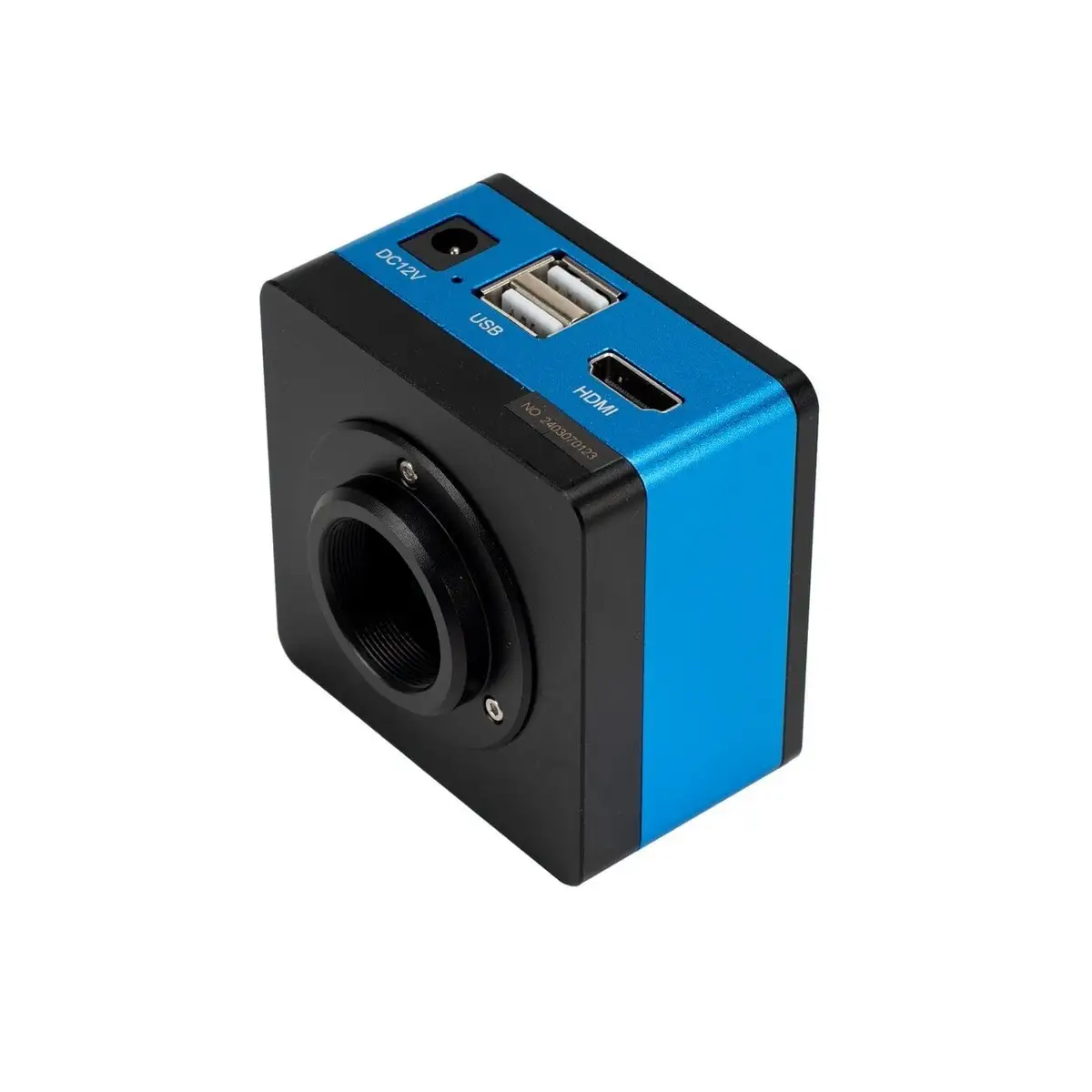
The AmScope 4K HDMI Wi-Fi C-Mount Microscope Camera doesn’t just promise ultra-high-definition precision — it delivers a truly professional lab experience for advanced users. Across Reddit, Trustpilot, and Amazon, this camera has earned an average of 8.7/10, with strong praise for image clarity and standalone operation, but a few gripes around frame rate limitations and workflow quirks.
Quick Verdict
Verdict: Conditional Yes – exceptional clarity and workflow flexibility for lab and industrial use, but overkill for casual users.
| Pros | Cons |
|---|---|
| Brilliant 4K clarity and color fidelity | Ethernet and Wi-Fi limited to 30 fps |
| Reliable standalone mode with HDMI output | Interface pointer issue requires mouse every startup |
| Comprehensive Windows software with measurement tools | Limited Mac/Linux software functionality |
| Auto-focus option (AF408N variant) simplifies PCB work | Mixed experiences with frame rate stability |
| Solid construction and 1-year accessory warranty | Price premium over similar OEM rebrands |
Claims vs Reality
Claim 1: “Watch stunning 4K real-time video while you work.”
AmScope advertises 30 fps 4K over HDMI as “real-time,” but user reports show nuance. On the EEVblog forum, a longtime electronics hobbyist explained, “Ethernet can’t handle 4 K at 60 fps — it tops out around 30 — but HDMI does look crisp and detailed.” While the HD408N supports smooth motion via HDMI, users mixing Wi-Fi or SD recording noted slight lag. Reddit comments confirmed the visual fidelity, one saying the view was “sharper than the eyepiece, even under polarized lighting,” but adding that “latency shows up when switching networks.”
Claim 2: “Standalone operation with built-in recording.”
This feature did live up to expectations. A verified buyer on Amazon noted: “I record direct to an SD card and review specimens immediately with no computer needed — worth every penny for the convenience.” However, others cautioned that recording heavy files via SD might cause “slight stutter” depending on card speed. Veteran user sn4k3 on EEVblog recommended, “Forget about SD; use a USB pen if you want consistent 4 K recording.”
Claim 3: “Auto-focus simplifies your workflow.”
In reality, only the AF408N variant includes internal autofocus. Quora contributors emphasized that this model “adjusts in less than a second and is great for surface-mount PCB inspection.” Yet focus tracking can be imprecise for microscopy slides — a user stated, “It overshoots on fine samples; great for macro inspection, less so for micro.”
Cross-Platform Consensus
Universally Praised
Across Reddit and Amazon, image quality was the defining strength. Users repeatedly highlighted the Sony IMX sensor’s depth and saturation control. One Reddit post described the HD428N’s output as “the closest I’ve seen to DSLR quality through a microscope.” The newer back-illuminated CMOS version (HD428N) received particular acclaim from fluorescence users; a Trustpilot reviewer stated, “Finally a camera that picks up dim fluorescence detail — the IMX485 BSI sensor is a beast in low light.”
Standalone control earned similar praise. The inclusion of a USB mouse and HDMI cable meant users could record directly without a PC. A research technician wrote: “I plug mine into a lab display, save 4 K videos to USB, and annotate them right from the camera interface — no software install needed.” In industrial repair contexts, electronics engineers appreciated its workflow efficiency: “Magnify, capture, done — no drivers or lag,” said a Reddit user in an r/microscopy thread.
Network flexibility also resonated strongly. The ability to connect via LAN or Wi-Fi allowed labs to share microscopes across teams. A user working in quality control reported, “Everyone on the network can log into the camera feed — perfect for collaborative inspection.”
Common Complaints
Despite these perks, frame-rate consistency remains the most cited issue. On the EEVblog forum, user sn4k3 detailed that “auto-exposure sets 100 ms per frame, effectively 10 fps unless you go manual.” Several echo this point — once manual exposure was adjusted to about 16 ms, smooth motion returned. The problem isn’t hardware weakness, but exposure settings throttling output speed.
Another irritation lies with interface behavior. Multiple users called out an “annoying on-screen pointer” that appears every time the camera boots. As sn4k3 explained, “Without a mouse, the pointer sits in the middle of the screen; you have to move it manually at startup.” Though trivial, frequent power-cycling operators found it disruptive. Reddit posts suggested the same fix: keeping a small wireless mouse connected full-time.
Compatibility issues were mild but recurring. Some Mac users on Reddit said the AmLite software “lacks advanced measurement tools you get in Windows,” and Linux users described it as “basic but functional.” Windows users reported the best experience with AmScope’s full suite, particularly the focus stacking and HDR capture tools.
Divisive Features
The built-in auto exposure and sharpening algorithms split opinions. Tech-savvy tinkerers preferred full manual control; a Redditor summarized it as “auto tends to overcompensate brightness, making metallic surfaces glare.” Others liked the hands-off approach for live viewing: “For fast turnaround in production QA, auto is fine — good enough without fiddling.”
Another polarizing point was price-to-performance. Users aware of OEM rebrands noted, “You can buy the same sensor and shell on AliExpress for hundreds less, just without the AmScope label.” However, another countered that “the support, proper calibration, and warranty make it worth the extra.”
Trust & Reliability
AmScope’s reputation for durability held strong. Trustpilot reviewers consistently referenced solid housing and dependable warranty service. One verified purchaser remarked, “A year in and the camera still performs flawlessly in our classroom — AmScope replaced the adapter cable within a week under warranty.”
One Reddit technician did highlight a caveat: “AmScope doesn’t make these cameras, they rebrand Chinese models, but they do QC them better and provide actual support.” While this raised eyebrows for brand purists, the consensus was clear — buying through AmScope ensures tested hardware and legitimate software licensing, something grey-market copies often lack.
No widespread reports of scam behavior appeared, and most complaints revolved around user setup issues rather than quality defects. The hardware scored well on long-term use, with instances of two-year-old units “still running 8 hours daily without heat drift.”
Alternatives
For context, the AF408N version (with autofocus) competes internally with the HD428N (back-illuminated sensor). Reddit comparisons favor the HD428N for laboratory use under low light, whereas the AF408N is “king for PCB inspection thanks to fast focus recovery.”
Outside AmScope, technicians occasionally compared it with off-brand Eakins or AIDA 4 K cameras from AliExpress. User sn4k3 said, “They’re basically the same hardware, but support is nonexistent.” Professional users typically justified AmScope’s $900–$1000 pricing with its build and U.S.-based support response, especially given one-year accessory coverage.
Price & Value
Prices cluster between $699 for the HD408L and about $997 for the AF408N or HD428N, depending on configuration. eBay showed bundles including microscope, LED ring light, and camera for about $999 (open-box). Reddit users agree the standalone camera’s sweet spot lies around $900, calling it “a lifetime piece of kit if you treat it well.”
Several veterans advised skipping used or grey-market listings because firmware updates and SDK access are restricted to verified purchases. A common tip: “Buy direct or through AmScope’s site — firmware files are tied to your purchase ID.”
Those on tighter budgets often opt for the lower-end HD408L, which omits LAN but keeps HDMI and Wi-Fi features. It still “records excellent 4 K video” for educational or tech repair use.
FAQ
Q: Can the camera truly capture 60 fps in 4 K?
A: Only the older HD408 60 fps variant managed 60 fps over HDMI; the current AF408N and HD428N models are capped at 30 fps across all connections. Users confirmed smooth 60 fps only through manual exposure tuning below 20 ms.
Q: Does the autofocus model work on compound microscopes?
A: Yes, but results vary. It excels on stereo scopes and PCB surfaces; several Reddit tinkerers reported, “For biological slides, it hunts too much — better off manual.”
Q: Is the built-in software enough, or do I need external analysis tools?
A: For measurement, HDR stacking, and focus stitching, the Windows package is comprehensive. Mac/Linux versions have limited measurement support, so scientific users often post-process in ImageJ or Photoshop.
Q: Can I connect it to multiple PCs at once?
A: Yes, via LAN. Labs use this feature for shared observation. However, frame rates drop slightly depending on Wi-Fi stability.
Q: How does it compare to a DSLR microscope setup?
A: Users upgrading from mirrorless bodies (like Sony A6300) said clarity is “slightly less dynamic” but “workflow vastly faster.” One engineer noted, “The A6300 beats it in range, but the AmScope wins hands down for convenience and continuous uptime.”
Final Verdict
Buy if you’re a researcher, QC technician, or electronics repairer who values 4 K clarity, quick sharing, and consistent workflow. Avoid if your goal is high-speed 60 fps capture or cinematic microscope footage — these cameras top out around 30 fps under normal use.
As Reddit user sn4k3 summarized perfectly: “It’s not about art, it’s about work — plug in, zoom in, capture, and move on. For that, the AmScope delivers.”