AMD Ryzen 9 9900X Review: Powerful but Not for All
The AMD Ryzen 9 9900X arrives with the promise of being “the world’s best gaming desktop processor” — yet user benchmarks and gaming tests reveal a more nuanced reality. While it offers strong productivity and multi-thread gains over the previous generation, its gaming performance sometimes trails cheaper 8-core competitors. Based on cross-platform feedback, it earns a 7.9/10: powerful, efficient, but not the automatic choice for every buyer.
Quick Verdict: Conditional — excellent for mixed gaming and productivity, but overkill or mismatched for pure gaming builds.
| Pros | Cons |
|---|---|
| Noticeable multi-thread uplift over Ryzen 7000 series | Gaming performance lags behind 7800X3D in many titles |
| Lower power draw and temperatures than 7950X | Still runs hot under sustained load |
| Strong productivity and content creation performance | Occasional stability issues reported (CPU failure cases) |
| Efficient eco modes with minimal performance loss | Price premium over similarly performing CPUs |
| PCIe 5.0, DDR5-5600, ECC support | No included cooler |
| Integrated Radeon graphics for troubleshooting | Core parking behavior can hinder performance in some games |
Claims vs Reality
AMD’s marketing positions the Ryzen 9 9900X as “ultra-fast 100+ FPS performance in the world’s most popular games.” While synthetic benchmarks support high single-core scores, multiple gaming comparisons show it trailing the Ryzen 7 7800X3D. One Russian-language test found that at 1080p, the 9900X achieved only “92% of the performance” of the 7800X3D across ten games, winning in just one title — Alan Wake 2.
Another claim centers on efficiency improvements over Zen 4. Reddit user feedback supports this partially: “eco mode 105 has a less detrimental impact on performance for the 9900X compared to the 7900X,” with reported gains of “+21% efficiency” in certain workloads. However, while officially rated at 120W TDP, Notebookcheck data shows spikes to ~170W under heavy loads, meaning real-world efficiency depends heavily on cooling and power settings.
AMD also touts “lower operating temperatures” versus previous-gen flagships. A verified PCPartPicker reviewer noted temps around 80°C under Cinebench load with a 360mm AIO — lower than the 7950X’s near-instant 95°C — but still hot enough to require robust cooling.
Cross-Platform Consensus
Universally Praised
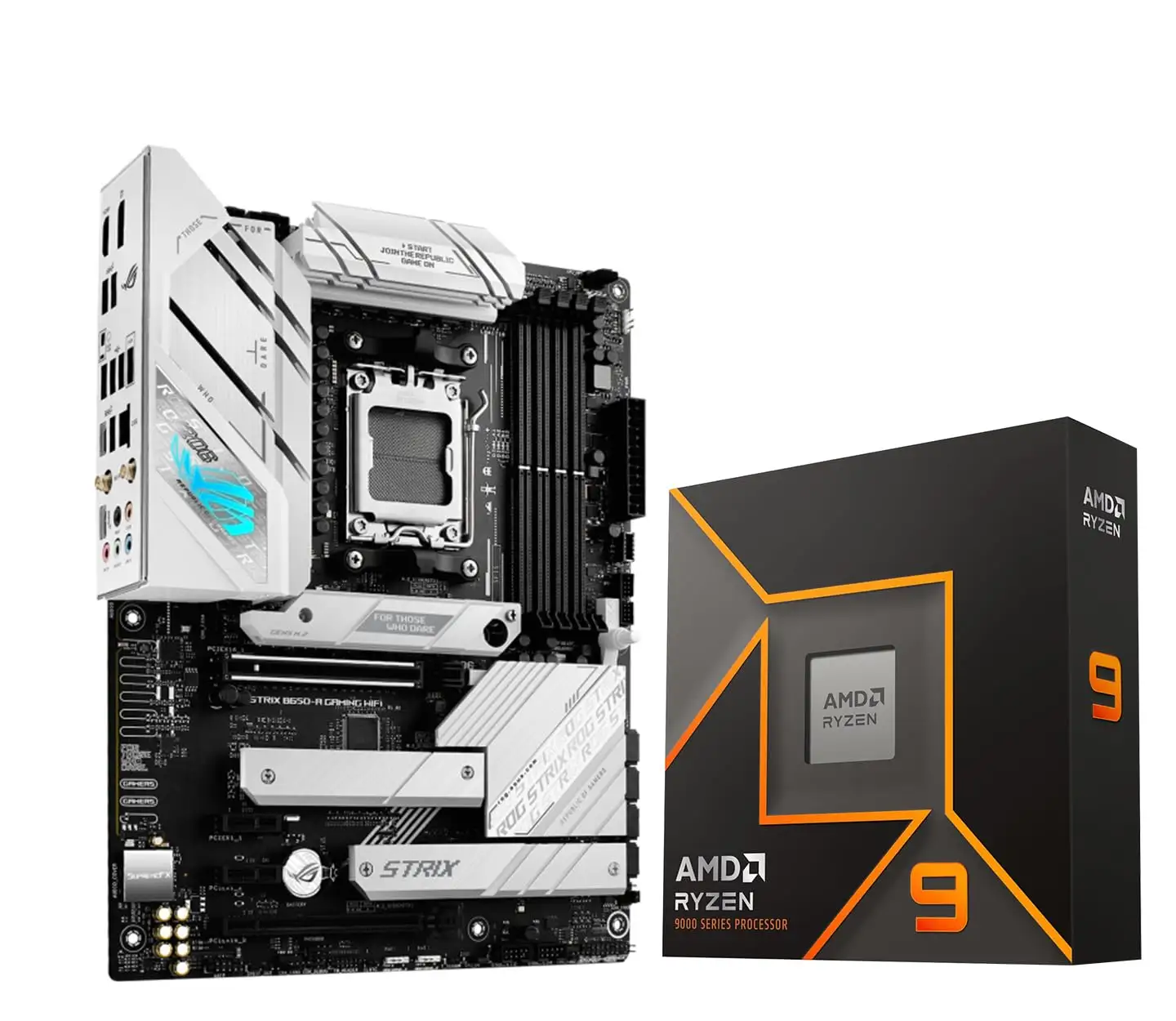
For mixed workloads, users praise the 9900X’s balance of cores and efficiency. A Reddit user upgrading from a 5800X called it “great so far… got it for $250 (part of a combo at Micro Center).” Content creators benefit from its strong multi-thread scores, with Cinebench R23 multi-core hitting 32,172 points — close to the 7950X despite lower power draw. The integrated Radeon graphics, though basic, has saved builds when a discrete GPU fails, enabling troubleshooting without extra hardware.
Gamers who also stream or run heavy productivity apps appreciate the headroom. One Trustpilot reviewer highlighted “consistent generational performance uplift… 10–15% in the better examples (Call of Duty, Baldur’s Gate 3, The Witcher 3).” Eco modes (65W/105W) are especially valued in small-form-factor builds, maintaining high performance while reducing thermal strain.
Common Complaints
The most consistent complaint is gaming performance relative to price. Video reviewers and Reddit benchmarks show that the 7800X3D outperforms the 9900X in most games due to its larger L3 cache (104MB vs 64MB). As one AMD.news piece explained, “almost any modern game doesn’t need more than eight cores… better to take an eight-core CPU with higher frequencies and bigger L3.”
Thermals, while improved over the 7950X, remain high under sustained load. Trustpilot feedback warns that “it is still a hot running chip” and needs quality cooling. Core parking behavior on dual CCD designs frustrates some; one PCPartPicker user disables AMD’s provisioning driver and Game Mode entirely to avoid reduced performance in lightly threaded titles.
There are also isolated reliability concerns. A Best Buy customer reported their 9900X3D “died mid-game with no warning… no overclocking, no abuse — just a clean build that randomly failed,” leading to an RMA.
Divisive Features
The integrated GPU splits opinion. Builders appreciate having video-out for setup and troubleshooting, but gamers note it’s “only just sufficient for pre-2020 games” at low resolutions. Efficiency modes are loved by SFF enthusiasts but dismissed by those chasing maximum benchmark scores.
Price positioning is contentious. Some Redditors argue the uplift over the 7900X is “barely an improvement… I’d just get whatever is cheaper unless there’s a small price difference.” Others see value in pairing it with high-end GPUs for all-round use.
Trust & Reliability
Trustpilot and Best Buy reviews reveal a generally solid reliability profile, but rare catastrophic failures shake confidence. The isolated CPU death case occurred within a month under normal gaming use, underscoring the importance of warranty coverage.
Longer-term Reddit reports (several months in) show stable performance when paired with quality cooling and tuned power settings. “Been great so far… still seeing overall gains in games,” said one upgrader from a 7950X, suggesting no degradation over time.
Alternatives
The Ryzen 7 7800X3D emerges as the top pure gaming alternative, delivering higher FPS in most titles for less money, thanks to its 3D V-Cache. For mixed workloads, the Ryzen 9 7900X offers similar core counts at lower cost, albeit with higher TDP. On the Intel side, the Core i7-14700K matches or slightly trails the 9900X in multi-thread but can win in certain single-threaded tasks.
Notebookcheck’s multi-benchmark comparison shows the 9900X performing “on par with the AMD Ryzen 9 7950X and the Intel Core i7-14700K” in multi-thread, making it a competitive but not dominant choice.
Price & Value
At the time of writing, Amazon lists the 9900X around $409.99 (down from $499), with rare Micro Center combos dropping effective prices to ~$250. This makes it more palatable compared to early $500+ launches. eBay prebuilt listings range from $1,899 with RTX 4090 setups, though community advice warns against overpriced prebuilts.
Reddit consensus: buy during sales or bundle deals, and consider whether your workload justifies 12 cores over an 8-core X3D part. Resale value is expected to hold moderately due to AM5 platform longevity and PCIe 5.0 support.
FAQ
Q: Is the Ryzen 9 9900X good for pure gaming?
A: Not always — many modern games run faster on the cheaper Ryzen 7 7800X3D due to its larger L3 cache. The 9900X shines more when gaming is combined with streaming or productivity.
Q: Does it run cooler than the 7950X?
A: Yes, typically ~80°C under heavy load with quality cooling, versus 95°C spikes on the 7950X. Still requires a strong cooler, preferably liquid.
Q: Can the integrated GPU handle gaming?
A: Only for older or low-demand titles; its 128 shaders at 2.2GHz are aimed at display output and troubleshooting, not modern AAA gameplay.
Q: What’s the best eco mode setting?
A: Many users prefer 105W for a balance of performance and thermals, with minimal FPS loss compared to full power.
Q: Is core parking an issue?
A: Yes, for some dual CCD designs. Disabling AMD’s provisioning driver or Game Mode can prevent reduced performance in certain games.
Final Verdict: Buy if you’re a hybrid user running games alongside heavy productivity or creative workloads, and value efficiency tweaks. Avoid if your sole focus is gaming — an 8-core X3D will likely deliver more FPS for less. Pro tip from Reddit: “Grab it in a Micro Center combo for under $300 — that’s when it’s a steal.”