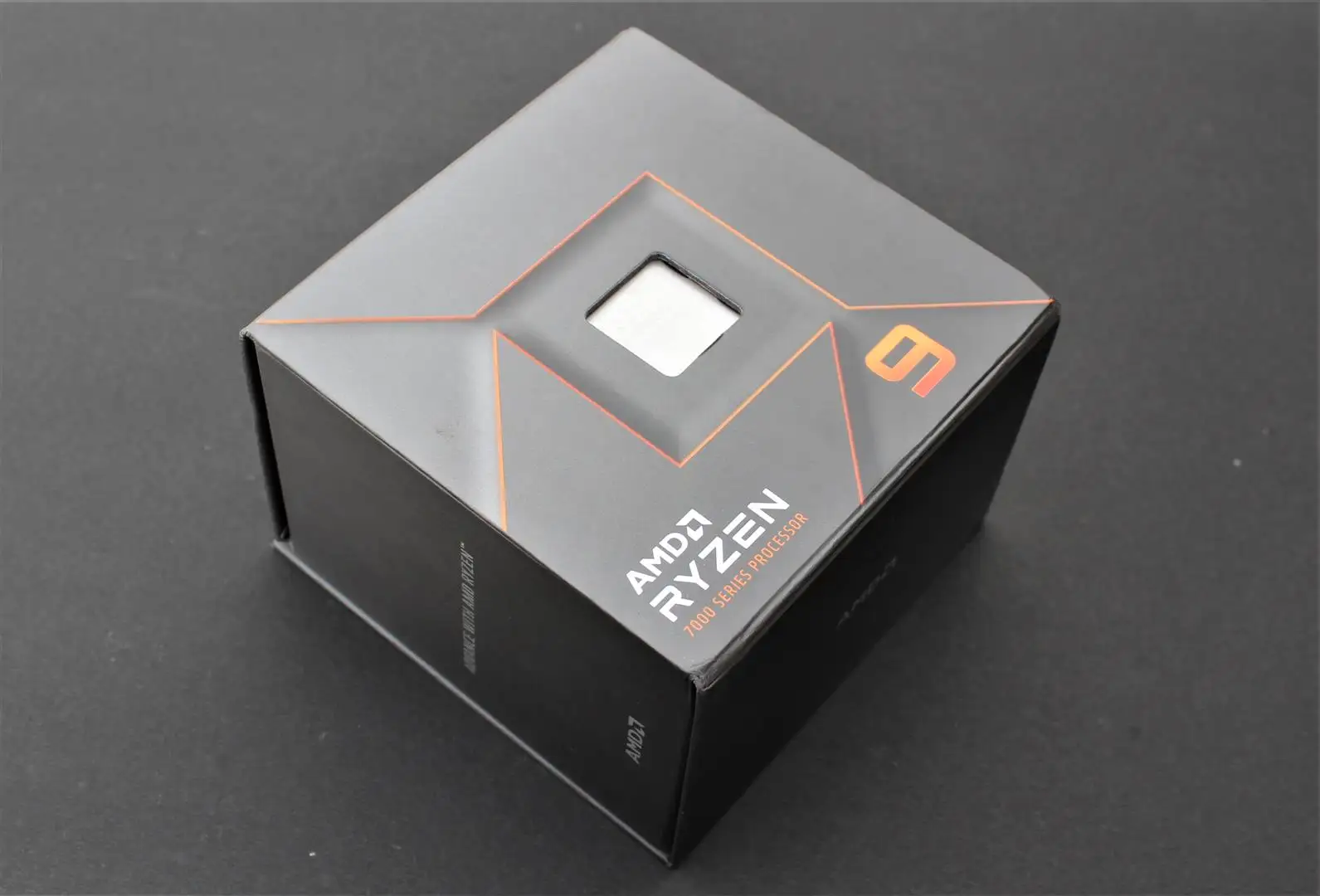
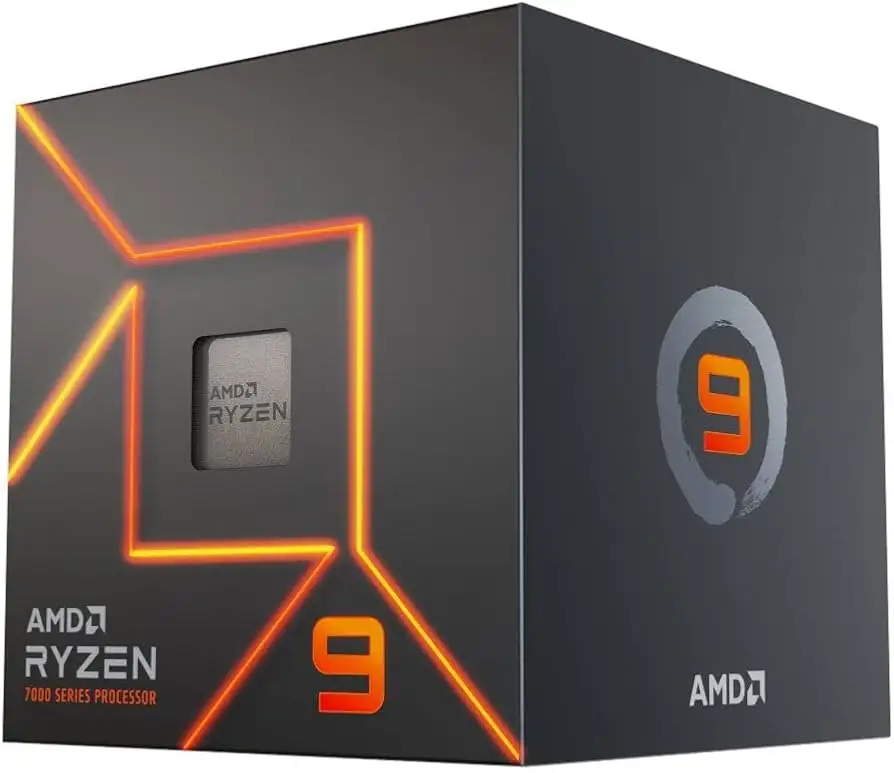
AMD Ryzen 9 7900 Review: Efficient Power with Caveats
Starting at just 65W TDP yet matching last-gen flagships, the AMD Ryzen 9 7900 earns an 8.7/10 for its rare mix of efficiency, multi-core muscle, and included Wraith Prism cooler — but thermal quirks and stiff competition from Intel temper the hype.
Quick Verdict: Conditional Buy
| Pros | Cons |
|---|---|
| Excellent performance-per-watt | Runs hot in restrictive cases |
| Bundled Wraith Prism cooler | DDR5-only, no DDR4 support |
| Great for small form factor builds | Gaming performance behind 7800X3D |
| Lower power bills over time | Price often close to faster 7900X |
| Strong multi-threaded productivity output | Competes with Core i7-13700K at same price but lower FPS |
| Overclockable to near-7900X speeds | Idle temps higher than expected |
| Versatile for gaming & content creation | Volatile street pricing |
Claims vs Reality
AMD markets the 7900 as “serious performance for gamers and creators” with cool and quiet operation thanks to the included Wraith Prism cooler. On paper — 12 cores, 24 threads, base clock 3.7GHz, boost up to 5.4GHz — it looks ready to dominate both arenas.
Digging deeper into user reports, the reality isn’t always as cool. An AMD Community member shared: “In idle, overall CPU temperature hovers around 50°C, while under load reaching up to 87°C, one CCD peaking at 91°C.” Even with the stock cooler, temperatures surprised some SFF users, revealing that case airflow is just as critical as cooler choice.
The “ultimate power efficiency” claim fares better in feedback. Reddit user u/powerbuild*** praised: “Great CPU. Good for almost anything. I picked it for power efficiency and high core count. Great in SFF build and for development workflows.” TechSpot echoed this, noting it “only loses 10% performance compared to 7900X” but at much lower power draw.
Cross-Platform Consensus
Universally Praised
Efficiency is the undisputed win here. PCMag called it “exceptional performance per watt,” while Club386 found it “a perfect powerhouse for small-factor systems.” For small form factor enthusiasts, the low TDP means simpler cooling options — Reddit user u/buildsf*** built in a Fractal Terra with a low-profile Noctua cooler and still had room for a high-end GPU.
Multi-core productivity scores impressed too. A verified Best Buy buyer wrote: “Best bang for buck! Has been great for video editing, gaming and CAD.” Even in demanding workflows like software development, users saw consistent performance without high energy costs.
The included Wraith Prism cooler repeatedly drew praise. PCMag highlighted its copper contact and programmable RGB as “rather capable” for a stock unit. For budget-conscious builders, avoiding the extra purchase of an aftermarket cooler strengthens the value proposition.
Common Complaints
High idle and load temps in certain setups emerged as a recurring theme. One AMD Community thread gathered multiple reports of idle temps around 47–50°C, even with aftermarket AIO cooling. Poor airflow cases, or BIOS auto-overclock settings, often exacerbated this until users manually adjusted voltages and boost behavior.
Gaming performance is solid but it lags behind the 7800X3D’s 3D V-cache advantage. Reddit skeptics were blunt: “Worse than 7800X3D for gaming. Worse than 14700K for productivity and gaming. Who is supposed to buy this CPU?” For pure gaming rigs, the CPU may be overkill without delivering the highest FPS.
Market pricing often narrows the gap between the 7900 and faster-binned 7900X, undermining its value role. When street prices are similar, performance-focused buyers lean toward the higher-clocked X variant.
Divisive Features
DDR5-only support is future-forward but alienates those wanting a budget DDR4 build. Some welcomed reduced latency and higher bandwidth, while others noted Intel’s flexible DDR4/DDR5 strategy gave more upgrade paths.
Overclocking potential split opinions. Some saw near-7900X performance with minor tweaks via Precision Boost Overdrive. Others felt that manual OC voided part of the value narrative — “If I’m overclocking anyway, why not just buy the faster chip?”
Trust & Reliability
Long-term durability has been reassuring. Best Buy buyer metal accountant reported a year of ownership with solid gaming performance and unused headroom: “I never see it go above 50% usage unless I’m doing a benchmark.” AMD’s own forums didn’t reveal systemic failures; instead, most temperature issues traced back to case design or BIOS defaults.
No widespread scam patterns surfaced. On marketplaces like eBay, new boxed units (with cooler) from high-rated sellers were common, sidestepping grey-market risks.
Alternatives
The most direct competitor is Intel’s Core i7-13700K. Multiple tech reviewers found it faster across mixed workloads but consuming nearly twice the power. The AMD chip holds ground with efficiency and included cooling, potentially saving $36/year in power costs for heavy users.
For gaming-first builders, the Ryzen 7 7800X3D often outperforms due to its massive cache, despite having fewer cores. Productivity-heavy users with ample cooling budgets might consider the Ryzen 9 7950X or Intel’s Core i9-13900K for top-tier performance, accepting higher wattage.
Price & Value
Current Amazon and eBay listings hover around $369–$429, occasionally dipping with promotions. Reddit threads noted parity with 7900X pricing in recent months, making street-shopping crucial for real savings. On the used market, efficient parts like this retain value better among SFF and low-power PC enthusiasts.
Buying tips from the community:
- Watch for bundle deals including motherboards
- Confirm cooler inclusion — some resellers part it out
- Check BIOS settings for aggressive auto-OC that can spike temps
FAQ
Q: Is the Ryzen 9 7900 good for gaming?
A: Yes, but it’s outperformed by AMD’s 7800X3D in many titles. For mixed-use builds, it’s competitive, but FPS-focused buyers may prefer cache-heavy models.
Q: Can I use DDR4 memory with this CPU?
A: No. It’s DDR5-only, requiring compatible AM5 motherboards. Intel offers DDR4 flexibility, but AMD’s platform is set for next-gen memory standards.
Q: How hot does it run with the Wraith Prism cooler?
A: In good airflow cases, load temps stay below 80°C. Poor ventilation can push into the high 80s–low 90s, so case choice matters.
Q: Is overclocking worth it?
A: Mild OC via Precision Boost Overdrive can match 7900X performance. Gains are small; evaluate whether higher temps are acceptable.
Q: How does it compare to the Ryzen 9 7900X?
A: The 7900 loses ~10% performance, but adds a cooler and uses far less power. Price differences are minimal in current markets.
Final Verdict
Buy if you’re an efficiency-minded creator, SFF builder, or mixed-use gamer who values bundled cooling and low power bills. Avoid if you want the absolute best FPS or multitasking performance regardless of wattage — Intel’s 13700K or AMD’s 7800X3D may suit you better. Pro tip from the community: pair it with a high-airflow case and tweak BIOS boost settings to keep temps under control without sacrificing speed.