Amazon Basics Power Strip Cube Review: Worth It? 8/10
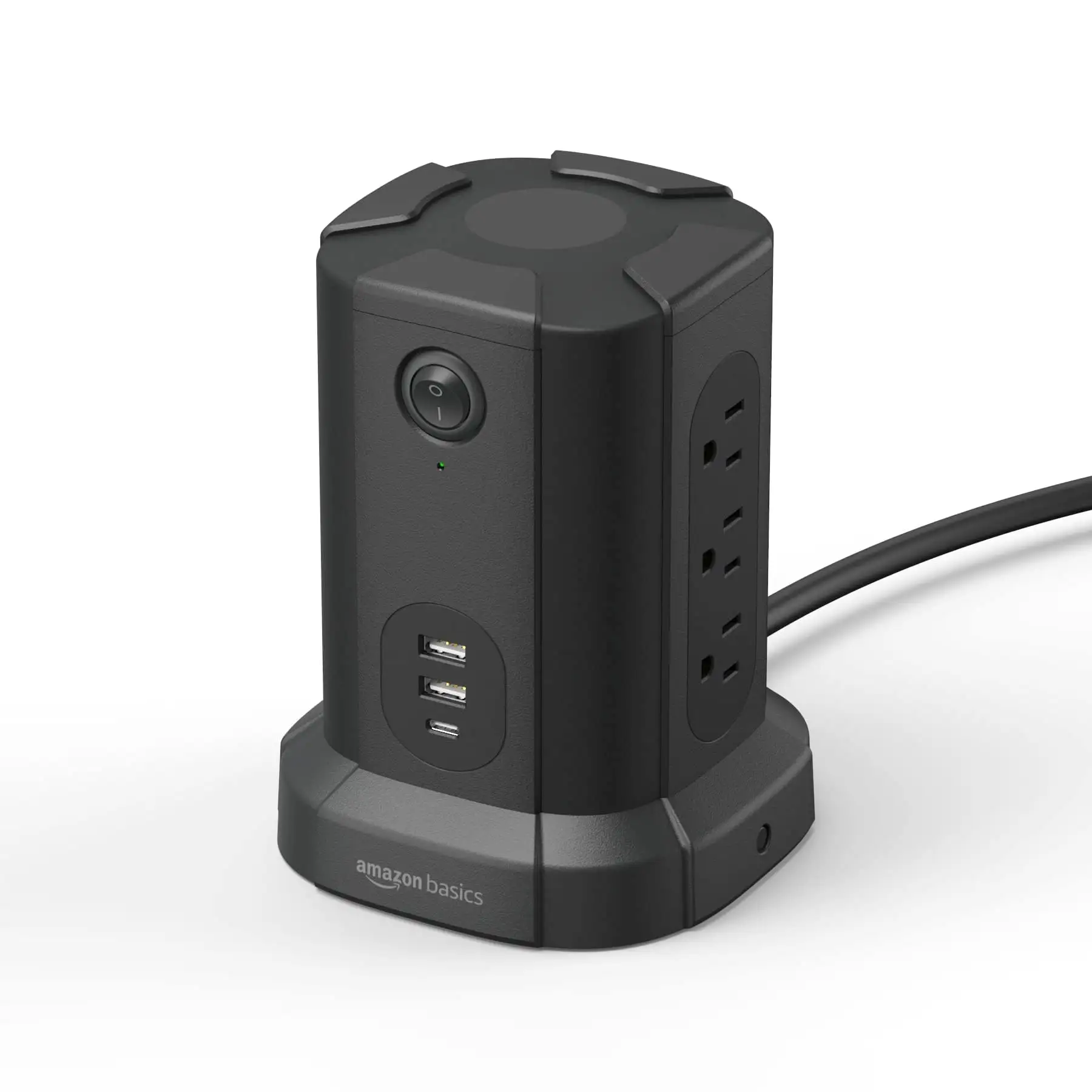
A recurring theme across shoppers is that this little cube “replaced an extension cord” and quietly became the default charging hub on desks and end tables. The Amazon Basics Power Strip Cube with Outlets and USB Ports draws praise for its convenience and price, but a few users flag bulk, fit, and niche use‑case drawbacks. Overall verdict from the provided feedback: practical and well‑liked for everyday household charging, with some caveats for tight spaces and sensitive audio gear. Score: 8/10.
Quick Verdict
Conditional Yes.
| What stands out | Evidence from users | Who it matters to |
|---|---|---|
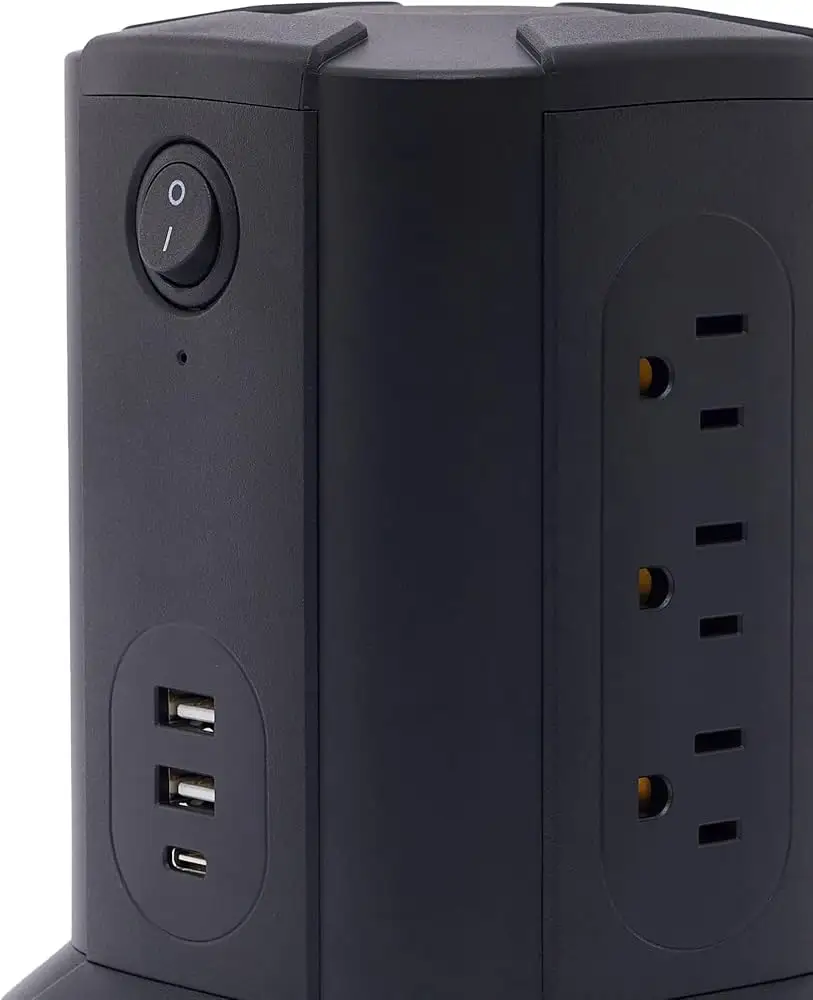
| Handy USB‑C fast charge | A Woot buyer wrote that the USB‑C port “charges our Motorola phones… rapidly; they say ‘turbopower connected.’” | Phone/tablet users who want fewer bricks |
| Useful on/off switch | The same Woot buyer liked “an on/off switch: press button to turn on, press to turn off.” | People who want to cut standby draw |
| Stable, grippy base | They noted “four soft, grippy ‘feet’ that might help it stand in place.” | Nightstand/desk setups |
| Cube is bulky | “The cube part is a little bulky, of course.” | Anyone trying to hide it behind furniture |
| Good basic power delivery | Amazon reviewers repeatedly summed it up as “does what it’s supposed to do.” | General home/office users |
Claims vs Reality
Amazon markets multiple Amazon Basics strips and cubes as turning “one outlet into multiple power hubs” with USB charging built in. Digging deeper into user reports, that claim largely holds for day‑to‑day charging. A Woot forum buyer described the cube as “perfectly suited and potentially much more useful” than the extension cord it replaced, emphasizing how having three AC outlets plus three USB ports let their family charge several devices at once without hunting for adapters.
The company also highlights USB performance, especially the inclusion of USB‑C on some cube variants. User feedback supports a meaningful difference between ports. The Woot buyer said the center USB‑C “charges… rapidly,” while “the two USB‑A ports are normal… not as fast as the USB‑C port.” For users juggling newer phones alongside older accessories, this aligns with the marketing idea of a mixed‑port charging hub, but also sets expectations: USB‑A is fine for slower top‑offs, not peak fast‑charge.
Another implied claim is space‑saving. While a cube footprint is smaller than a long strip, multiple users note a tradeoff in thickness. The Woot buyer was blunt: “The cube part is a little bulky.” This suggests that the cube’s compactness works on open surfaces like end tables or desks, but could feel awkward in very tight behind‑furniture installs.
Cross-Platform Consensus
Universally Praised
The most consistent applause is for how the cube simplifies charging clutter. A recurring pattern emerged around people replacing older extension cords or strips with something more organized. On Woot, one buyer said the cube “replaced an extension cord that she only used for plugging in her phone charger,” and now feels “perfectly suited” because it adds outlets and USB in one block. For apartment dwellers or home‑office users who don’t want a “forest of charging bricks,” this kind of consolidation is the core appeal.
USB convenience itself is treated as the standout feature. Multiple Amazon reviews of similar Amazon Basics USB strips point to the relief of not needing separate adapters. An Amazon reviewer on the 6‑outlet USB strip said: “There are two USB ports. I find this extremely useful, as I tend to have the cords and be continually searching for the adapters.” Even though that quote comes from a strip rather than the cube specifically, it’s still Amazon Basics users describing the same value proposition: built‑in USB reduces desk clutter and makes casual charging easier.
Charging speed, especially via USB‑C, is another praised point where users get specific. The Woot buyer’s story about Motorola phones showing “turbopower connected” is the clearest example. For people with newer phones or tablets, that kind of fast‑charge confirmation makes the cube feel like more than just a convenience add‑on; it becomes a primary charger.
Finally, basic build and stability get positive notes. The cube’s grippy feet were mentioned as a practical help: “four soft, grippy ‘feet’ that might help it stand in place.” That matters for bedside and living‑room use where a power hub sliding around can be annoying.
- Built‑in USB (especially USB‑C) reduces adapter clutter and supports fast charging for newer phones.
- On/off switch is appreciated for simple control and energy savings.
- Grippy feet help keep the cube steady on desks or end tables.
Common Complaints
The clearest, repeated downside is physical bulk. Even users who like the cube acknowledge it’s not discreet. The Woot buyer called it “a little bulky,” framing it as an expected tradeoff but still a limitation. For tight spaces behind a couch or TV stand, that thickness can be the difference between a tidy setup and a visible block.
Another complaint that surfaces in Amazon Basics surge strips more broadly is outlet spacing for chunky plugs. An Amazon reviewer said: “There are no dedicated sockets for larger plugs… a larger plug… is likely to take up two (or more) sockets.” Cube owners using big laptop bricks or wall‑warts may run into similar “plug tetris,” especially since cube faces cluster outlets close together.
A smaller but notable concern comes from niche users of Amazon Basics surge protectors: audio interference. On Revain, one reviewer warned, “I wouldn’t recommend this to anyone using it for audio equipment as it has a ton of noise.” That’s not cube‑specific, but it’s still Amazon Basics surge hardware feedback. For musicians or hi‑fi listeners, even a low‑probability noise issue is worth noting.
- Cube thickness can feel bulky in hidden installs.
- Larger plugs can crowd neighboring outlets.
- Sensitive audio setups may be better served by a different surge solution, per some Amazon Basics users.
Divisive Features
The on/off switch and compact cube form split opinions depending on setup. Some users see the switch as a big win for easy shutdown. The Woot buyer reminded others: “Don’t forget to turn it off when unused. On again when you need it!” That framing shows the switch as an intentional habit‑builder for power control.
But the cube’s shape itself can be either a perk or a nuisance. For open‑surface users, the cube replaces a long strip and feels neater; for people who need a low‑profile strip behind furniture, the cube’s bulk becomes the issue. The available feedback doesn’t show outright hostility to the cube form, but it does show clear situational tradeoffs.
Trust & Reliability
Concerns about scams or widespread failures don’t appear in the provided Trustpilot‑style data; what’s visible instead is steady long‑term satisfaction. An Amazon reviewer of the 6‑outlet USB surge strip wrote that after heavy daily loads and storms, “I’ve had zero problems in the nine months of owning my first protector,” and it felt “solid and sturdy, rather than flimsy.” Another Amazon user emphasized safety and stability in plain terms: “Mine has not smoked, heated up, caught fire or acted negatively in any way.” These are not cube‑specific anecdotes, but they reflect how Amazon Basics power accessories are performing in real homes over months.
The absence of frequent failure stories in the dataset, paired with multiple “still works like new”‑type comments on Amazon Basics strips, points to a reliability profile that matches the brand’s budget‑but‑functional positioning. Users seem to treat these as trustworthy enough for everyday electronics, with only isolated negative stories.
Alternatives
Only one competitor is explicitly mentioned in the data: Anker. A Woot buyer said, “I got the same device in Anker brand for our other sister, and she loves it.” That brief comparison implies that Anker offers a similar cube‑style product and that satisfaction is comparable. No direct downsides or advantages are spelled out beyond that, so the safest synthesis is that shoppers who like the Amazon Basics cube concept also find Anker’s equivalent appealing.
Price & Value
Price talk in the community centers on the cube being a good deal relative to utility. The Woot buyer purchased three units and still framed it positively, highlighting daily use across rooms. On Amazon for similar Amazon Basics USB surge strips, users often describe them as “great reasonably priced” and a “good buy,” reinforcing a value‑first perception.
Resale listings on eBay show Amazon Basics USB surge strips and cubes typically selling higher than Amazon’s new retail pricing, often in the $20–$30 range plus shipping. That spread suggests convenience demand and occasional scarcity, but the dataset doesn’t include cube‑specific resale commentary, so it mainly signals that used Amazon Basics power accessories hold some baseline market value.
Buying tips from users are practical: the Woot buyer recommends remembering the on/off switch habit and acknowledges the cube’s bulk so buyers aren’t surprised. The implied guidance is to choose it for visible, accessible spots rather than hidden low‑clearance installs.
FAQ
Q: Does the Amazon Basics power strip cube fast‑charge phones through USB‑C?
A: Users say yes for compatible phones. A Woot forum buyer reported the USB‑C port “charges our Motorola phones… rapidly” and phones display “turbopower connected,” while USB‑A ports are “normal” speed. Expect the fastest performance on the USB‑C port.
Q: Is the cube too bulky for behind‑furniture use?
A: It can be. One buyer who otherwise liked it noted, “The cube part is a little bulky.” For nightstands and desktops it’s fine, but for ultra‑tight gaps behind sofas or wall‑hugging furniture, a flat strip may fit better.
Q: Are the USB‑A ports worth using or only the USB‑C?
A: Both are used, but for different needs. The Woot buyer said USB‑A ports are “normal… faster than your oldest charger but not as fast as the USB‑C port,” and they use USB‑A for slower charging or older devices.
Q: Is this safe and reliable long term?
A: In Amazon Basics surge products, long‑term stories are mostly positive. An Amazon reviewer said they had “zero problems in the nine months” and another noted no overheating or smoke. The dataset doesn’t show widespread failure patterns.
Q: Any devices it’s not ideal for?
A: Some Amazon Basics surge owners caution about audio gear. A Revain reviewer said it produced “a ton of noise” with their audio setup. Most household electronics users report normal operation, but sensitive hi‑fi users may want a different solution.
Final Verdict
Buy if you want a compact, all‑in‑one charging hub for desks, end tables, bedrooms, or travel‑light setups, especially if you’ll use the USB‑C fast‑charge port. Avoid if your main need is a low‑profile strip hidden behind furniture or if you’re powering sensitive audio equipment. Pro tip from the community: use the on/off switch deliberately — “Don’t forget to turn it off when unused. On again when you need it!”