Amazon Basics 15-Sheet Shredder Review: Strong Value, Mixed Reliability
“Never jammed and never overheated” sits right next to “it worked well until it stopped”—and that tension defines Amazon Basics Paper Shredder, 15-Sheet Cross Cut, Black. Verdict: a strong-value home shredder with real satisfaction around ease-of-use and capacity, but enough reliability and return-window frustration to keep expectations grounded. Score: 7.4/10.
Quick Verdict
For light-to-moderate home office shredding, yes—conditionally. Users who shred daily mail in small batches tend to sound thrilled; people who buy it for heavy purges or expect long-term durability are more likely to report jams, shutdowns, or failures.
| Decision | Evidence from feedback | Who it fits best |
|---|---|---|
| Conditional Buy | “very quiet and easy to use” (ReviewIndex) | Home office, routine mail shredding |
| Best Strength | “cost a fraction of the price of other name brands” (ReviewIndex) | Budget shoppers |
| Biggest Risk | “it worked well until it stopped” (ReviewIndex) | Anyone expecting years of heavy use |
| Biggest Annoyance | “missed window… unable to return” (ReviewIndex) | Buyers who don’t test immediately |
| Real-world Capacity | “best for 5–8 pieces of paper at a time” (ReviewIndex) | People who don’t max the 15-sheet claim |
| Jam Reality | “paper got jammed… stopped working completely” (ReviewIndex) | Users feeding thick stacks/envelopes |
| Card Shredding Caveat | “does not work to shred amazon prime credit cards” (Amazon verified review) | People shredding rigid/tough cards |
Claims vs Reality
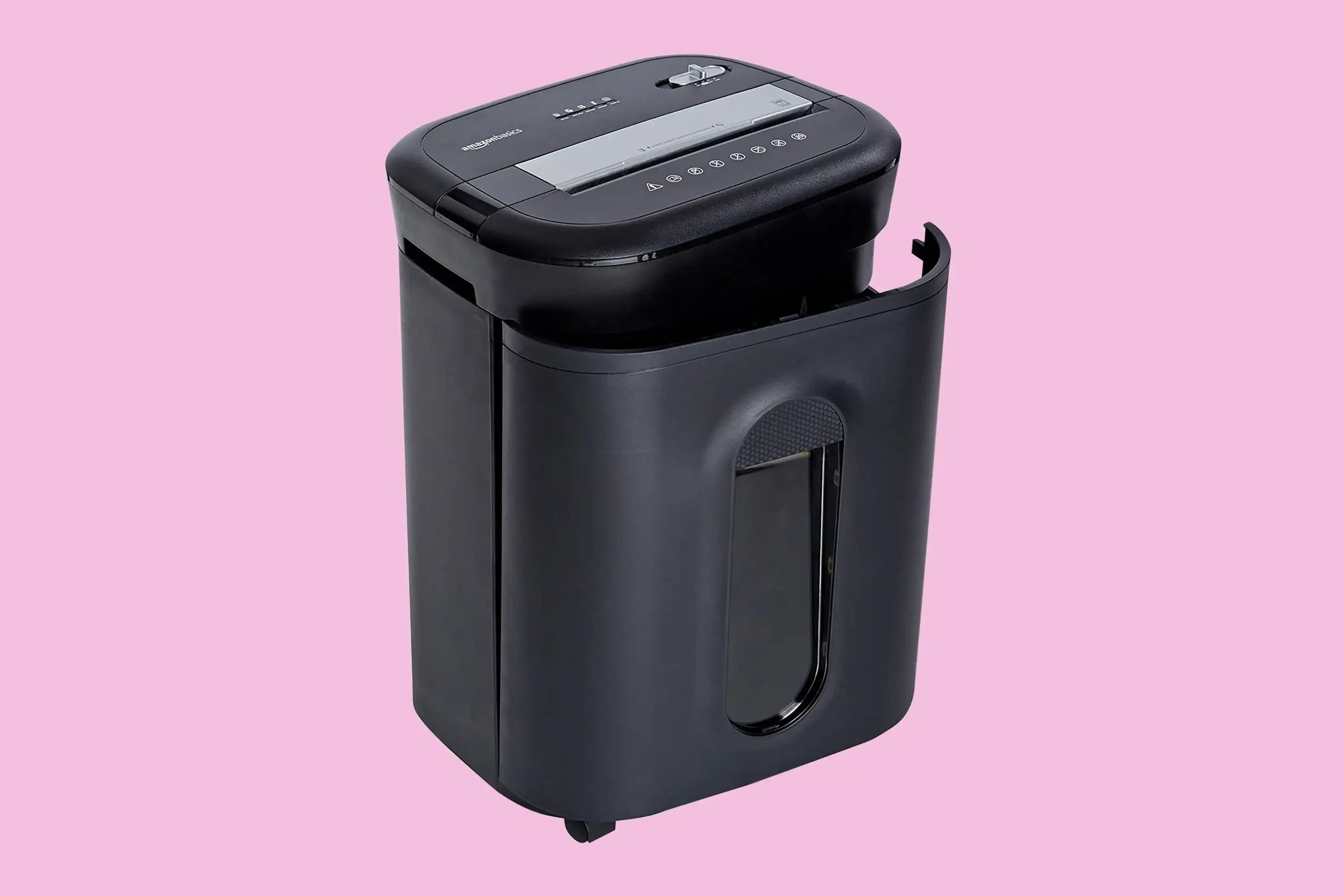
Amazon positions the Amazon Basics Paper Shredder, 15-Sheet Cross Cut, Black as a higher-capacity cross-cut unit with a P‑4 security level, a 20‑minute runtime, and the ability to destroy credit cards, CDs/DVDs, staples, and small paper clips (Amazon specs). On paper, that reads like “workhorse” territory—especially for anyone trying to clear out years of statements.
Digging deeper into user feedback, the “15-sheet” promise often gets treated as an upper boundary, not a daily operating mode. A recurring pattern emerged in the advice users give each other: run it under the stated limit for longevity. One verified buyer on Amazon said: “I bought the 12 page shredder but plan to consistently feed half that amount… Try to avoid ‘big batches’.” Another verified buyer framed the same strategy as routine behavior: “we generally shred… daily… small bits… means less stress on the machine over time.”
Claim: Handles high volume with long runtime (20 minutes).
While the official spec highlights a 20‑minute continuous run time (Amazon specs), user stories show two very different outcomes depending on pace. On the positive side, an Amazon Q&A respondent described the 15‑sheet cross cut as a “work horse” that “never skipped a beat” during a big shredding session. But elsewhere, durability complaints cluster around stoppages: ReviewIndex excerpts include “shredder malfunctioned after about 30% of the job,” and “used it a total of 5 times and then it broke.” The gap isn’t just about runtime—it’s about how consistently the unit survives extended projects.
Claim: Easily shreds credit cards (and more).
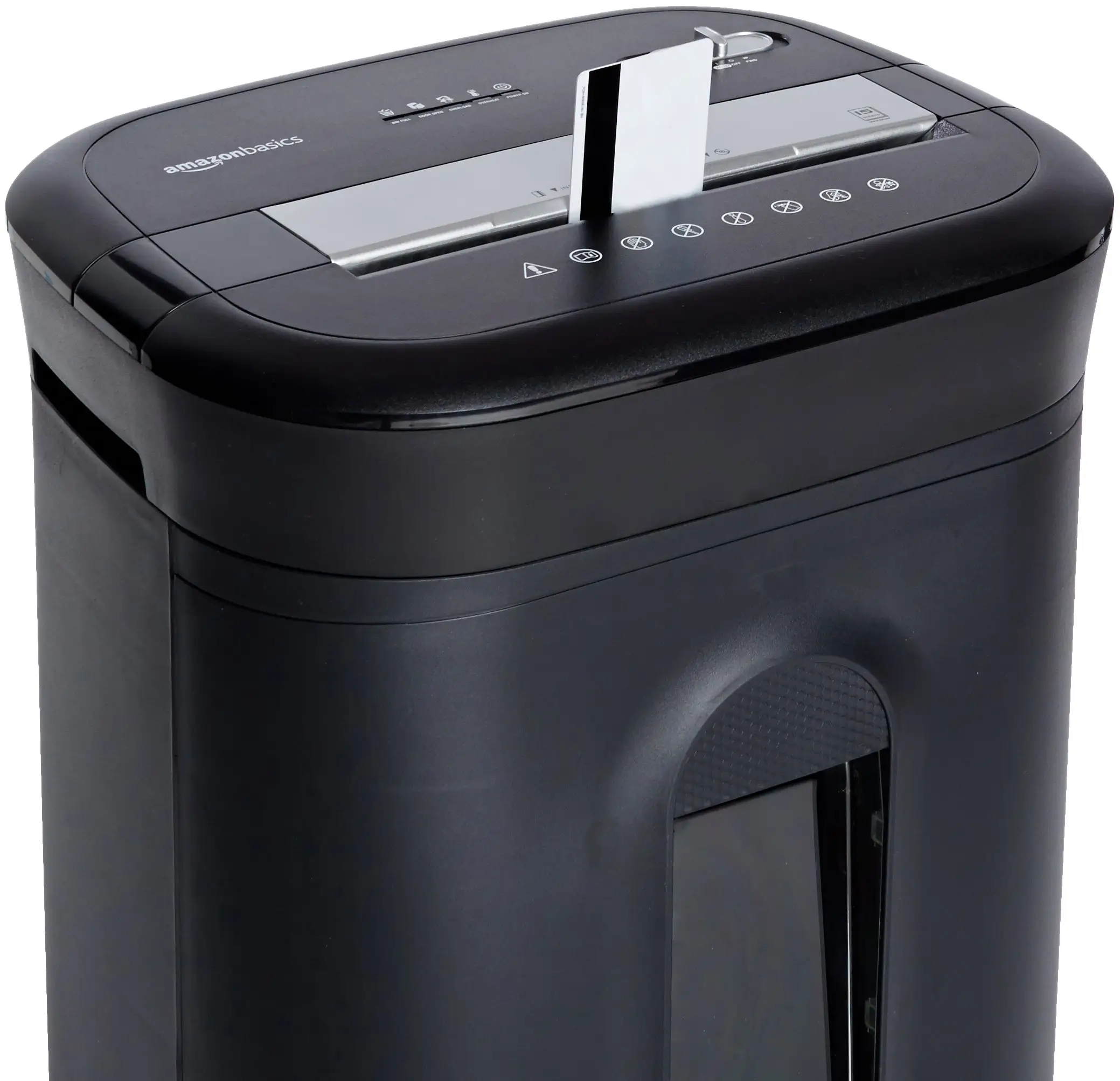
The product promise includes destroying credit cards (Amazon specs), and many users echo success in general terms. ReviewIndex highlights include: “handles credit cards like a champ.” Yet at least one verified buyer described a sharp edge-case: “the amazon paper/credit card shredder does not work to shred amazon prime credit cards… one got stuck mid-way… much blood and punctures later.” That kind of story matters for users who shred tougher “metallic” or rigid cards—especially since the spec warning also cautions against shredding “metallic credit cards” (Amazon specs).
Claim: Quiet and convenient for home use.
Noise and convenience are where feedback trends more favorable, but not universally. One verified buyer called their unit “very quiet,” while another noted the opposite: “it can be slightly loud during operation.” ReviewIndex mirrors that split with both “minimal noise” and “still makes a good bit of noise.” The practical takeaway from the stories is that the shredder’s sound is acceptable for many home offices, but anyone expecting near-silent operation should expect normal shredder noise—especially under heavier loads.
Cross-Platform Consensus
Universally Praised
The strongest throughline across platforms is how often users describe the Amazon Basics Paper Shredder, 15-Sheet Cross Cut, Black as “good enough” to become a habit. For home users drowning in junk mail, the biggest win isn’t a technical spec—it’s that the machine lowers friction. A verified buyer on Amazon celebrated not having to fold paper anymore: “No more having to fold sheets… not having to fold each paper makes me not procrastinate shredding anymore.” For a home-office user, that translates into consistent identity-protection routines rather than once-a-year panic purges.
Value-for-money is another repeated motif, often framed as “name brand performance without the name brand price.” ReviewIndex quotes users saying: “works absolutely great and cost a fraction of the price of other name brands,” and “wanted a low cost paper shredder with a bin and this exactly fits the bill.” The user type benefiting most here is the practical buyer: someone who wants cross-cut security for bills, receipts, and bank mail, but doesn’t want to spend premium prices for a shredder that will live under a desk.
Ease of use also shows up as a real-world differentiator. One verified buyer described the on/off switch initially seeming “flimsy,” but then realized “on is also auto… the motor doesn’t run constantly.” That’s a specific usability story: less fiddling, less noise when idle, and less wear from continuous running. ReviewIndex echoes that operational simplicity: “good value, easy to use and clear,” and “no frills… does the job.”
Finally, portability and size are praised by people with limited space or physical constraints. A verified buyer said: “it is light weight… easy to work and move around… I have a very bad back.” Another review called it “compact and space-saving,” fitting “perfectly in my home office.” For apartment dwellers or anyone who has to tuck it under a desk, those “fits anywhere” stories matter as much as cut size.
Summary of praised themes
- Value: “good bang for the buck” (ReviewIndex)
- Routine usability: “very quiet and easy to use” (ReviewIndex)
- Home-office fit: “compact… space-saving design” (Amazon verified review)
- Auto behavior: “on stand-by and ready to shred” (Amazon verified review)
Common Complaints
Reliability is the complaint category with the sharpest edges, especially in aggregated excerpts. ReviewIndex highlights include: “it worked well until it stopped,” “broken very easily and didn’t last,” and “paper got jammed and it stoped working completely.” These aren’t nuanced gripes—they read like abrupt failures that leave users with a dead machine mid-project. The people most affected are exactly the ones trying to do “one big cleanout,” where downtime feels catastrophic.
A second recurring pattern emerged around paper jams and feeding issues—sometimes even at low sheet counts. ReviewIndex includes complaints like: “this jams on just 2 sheets of paper,” and “within 30 minutes… it no longer feeds paper through.” Users who shred envelopes, folded stacks, or thicker mailers seem more exposed, which aligns with a verified buyer’s experience: “Sometimes it struggles… if I’m throwing an entire envelope in there… Once in a while… it’s jammed up.” That same reviewer clarified the context: “this is pushing it above its stated limits,” suggesting misuse can be a factor—but the frustration remains.
The third complaint theme isn’t about the shredder itself—it’s about the buying experience and return timing. ReviewIndex captures the anger around short windows: “of course after the return window it stopped working,” and “missed window… unable to return.” The user impact is straightforward: people who don’t test immediately—or buy it ahead of a move, tax season, or an office cleanup—risk discovering defects too late.
Summary of complaint themes
- Durability: “used it a total of 5 times and then it broke” (ReviewIndex)
- Jams/feeding: “green light goes on but… will not accept the paper” (ReviewIndex)
- Returns: “very disappointed - unable to return” (ReviewIndex)
Divisive Features
Noise is divisive because users define “quiet” differently and likely shred in different environments. One verified buyer praised “quiet operation… not disruptive,” while another called it “slightly loud,” and yet another shrugged: “it’s loud but… I’ve yet to see a home office paper shredder that isn’t.” The throughline is less about decibels and more about expectations: if you’re shredding at night in a shared apartment, “slightly loud” becomes a real drawback; if you shred in a garage, it’s irrelevant.
Cut quality and security are also interpreted differently. Amazon specs list P‑4 with 3/16" x 1‑7/32" cross-cut (Amazon specs), and many users feel that’s secure enough for everyday documents. But some feedback hints at a perceived mismatch in what “cross cut” should look like. ReviewIndex even includes a contradictory quote: “this is a low-cost, basic shredder, not a cross-cut.” Whether that’s mislabeling in a review excerpt or a user misunderstanding, it flags that some buyers expect “confetti” micro-cut when they buy cross-cut. For paranoid shredding (or high-security needs), users in the Amazon Q&A effectively steer people toward micro-cut—but frame P‑4 as adequate for most households.
Trust & Reliability
Trust concerns show up less as “scam” allegations and more as suspicion around review integrity and marketplace friction. Fakespot claims its system detected review alterations and estimates “reviews altered up to 3736,” while also stating “73.7% of the reviews are reliable” (Fakespot). That creates an uneasy middle ground: enough noise in the ecosystem that shoppers lean more heavily on detailed narratives and verified-purchase stories rather than star averages alone.
Long-term durability stories are mixed and often indirect. On the encouraging side, a verified buyer on Amazon said their previous Amazon-brand shredder lasted “at least 8 years,” and another said their old shredder lasted “20+ years,” implying they value longevity and are sensitive to build quality. But aggregated reliability excerpts paint a more fragile picture, including reports of failures within months. While officially positioned as capable of extended runs (Amazon specs), multiple users report premature stoppages like “it stop working after couple of use” (ReviewIndex).
Reddit community snippets are sparse but illustrative of niche use cases—especially shredding cardboard. A Reddit user (username not provided in the dataset) wrote: “already gone through like 60 lbs of cardboard boxes… it can take pretty much any cardboard easily, and only struggles with heavy card-stock.” That kind of story suggests some units handle abusive workloads surprisingly well, even if other owners report early failures. The tension reinforces the “conditional” verdict: outcome seems highly dependent on the individual unit, load discipline, and maintenance.
Alternatives
The dataset mentions a few adjacent options, mostly within the Amazon Basics line and a handful of other brands via marketplace listings. The most practical “alternative” comparison in user conversation is cross-cut versus micro-cut, not brand-versus-brand.
In Amazon’s own Q&A ecosystem, one responder advised choosing cross-cut over micro-cut unless you’re “shredding documents for a secret government department,” arguing cross-cut is “secure for privacy” and praising the 15-sheet model’s ability to feed “stuffy junk mail envelopes without opening” (Amazon Q&A). Another answered more bluntly: “skip the micro shredding and go for the higher sheet capacity, for more durability.” That frames the 15-sheet cross-cut as the “throughput and convenience” pick.
On the other hand, micro-cut fans in Amazon reviews describe cross-cut as potentially leaving longer pieces than they want. A verified buyer reviewing a micro-cut Amazon Basics model complained that modern “cross cut” can become “inch long strips,” and celebrated micro-cut for producing “tiny confetti.” For users whose threat model is identity theft paranoia—or who simply hate readable fragments—micro-cut alternatives within Amazon Basics are repeatedly framed as “actual shredding,” at the cost of speed and dust.
From marketplace data, competing brands appear (Bonsaii, Aurora, Fellowes) as commonly shopped alternatives, but the dataset provides prices and ratings rather than direct user narratives for those items. Given the rules, the strongest alternative guidance comes from the Amazon Q&A: cross-cut for durability/speed; micro-cut for smaller particles and perceived security.
Price & Value
Value is where the Amazon Basics Paper Shredder, 15-Sheet Cross Cut, Black earns its reputation. ReviewIndex repeatedly surfaces price satisfaction: “good value for the money,” “best for the price,” and “cost a fraction of… name brands.” For budget-focused households, that means getting cross-cut security without paying office-supply-store premiums.
Resale and market pricing signals show wide spread. On eBay, the Amazon Basics PBH 49976 15-sheet cross-cut model appears around $59.99 new and $40.00 used (eBay listing snapshot). That suggests the model holds some secondary-market value, but also competes in a crowded field of low-cost shredders.
Buying tips from user behavior are consistent: test immediately, shred below rated capacity, and maintain the cutters. One verified buyer offered routine guidance: “drizzle some oil over a piece of paper… run it through.” Another emphasized discipline: “try to avoid ‘big batches’… heat… will shorten the life of the unit.” These aren’t brand slogans—they’re survival strategies from people trying to make a budget shredder last.
FAQ
Q: Is the Amazon Basics 15-sheet cross-cut shredder actually quiet?
A: It depends on expectations and load. Some users call it “very quiet and easy to use” (ReviewIndex), while others say it’s “slightly loud during operation” (Amazon verified review). People shredding small daily batches tend to describe it as home-office friendly, but heavier stacks can make it noticeably louder.
Q: Can it really shred 15 sheets at once?
A: Many owners treat 15 sheets as a maximum, not a routine setting. A verified buyer said they plan to “consistently feed half that amount” to reduce stress and heat buildup. ReviewIndex also quotes: “best for 5–8 pieces of paper at a time,” suggesting real-world reliability improves when you underfeed.
Q: Does it shred credit cards reliably?
A: Some feedback says yes—ReviewIndex includes: “handles credit cards like a champ.” But at least one verified buyer reported trouble with especially tough cards: “does not work to shred amazon prime credit cards… got stuck mid-way.” If your cards are rigid or reinforced, go slowly and be ready to reverse.
Q: What’s the biggest risk buyers mention?
A: Premature failure and return-window frustration. ReviewIndex includes reports like “it worked well until it stopped” and complaints such as “of course after the return window it stopped working.” The practical implication is to test the shredder immediately after delivery, not weeks later.
Q: Is cross-cut secure enough, or should I buy micro-cut instead?
A: For most household document shredding, users in Amazon Q&A frame cross-cut as “secure for privacy” and recommend higher sheet capacity for convenience and durability. Micro-cut is repeatedly described by buyers as producing smaller “confetti,” which some prefer for higher perceived security—but it may be slower and dustier.
Final Verdict
Buy if you’re a home-office user shredding bills and junk mail in steady, small batches and you want a budget-friendly cross-cut shredder that feels easy to live with. Avoid if you’re planning a massive one-day purge, you expect long-term heavy-duty durability, or you can’t test the unit immediately after purchase.
Pro tip from the community: don’t chase the max-sheet number—one verified buyer advised, “try to avoid ‘big batches’… heat… will shorten the life,” and another suggested routine upkeep: “drizzle some oil over a piece of paper… run it through.”