AKG K371 Headphones Review: Balanced Sound with Caveats
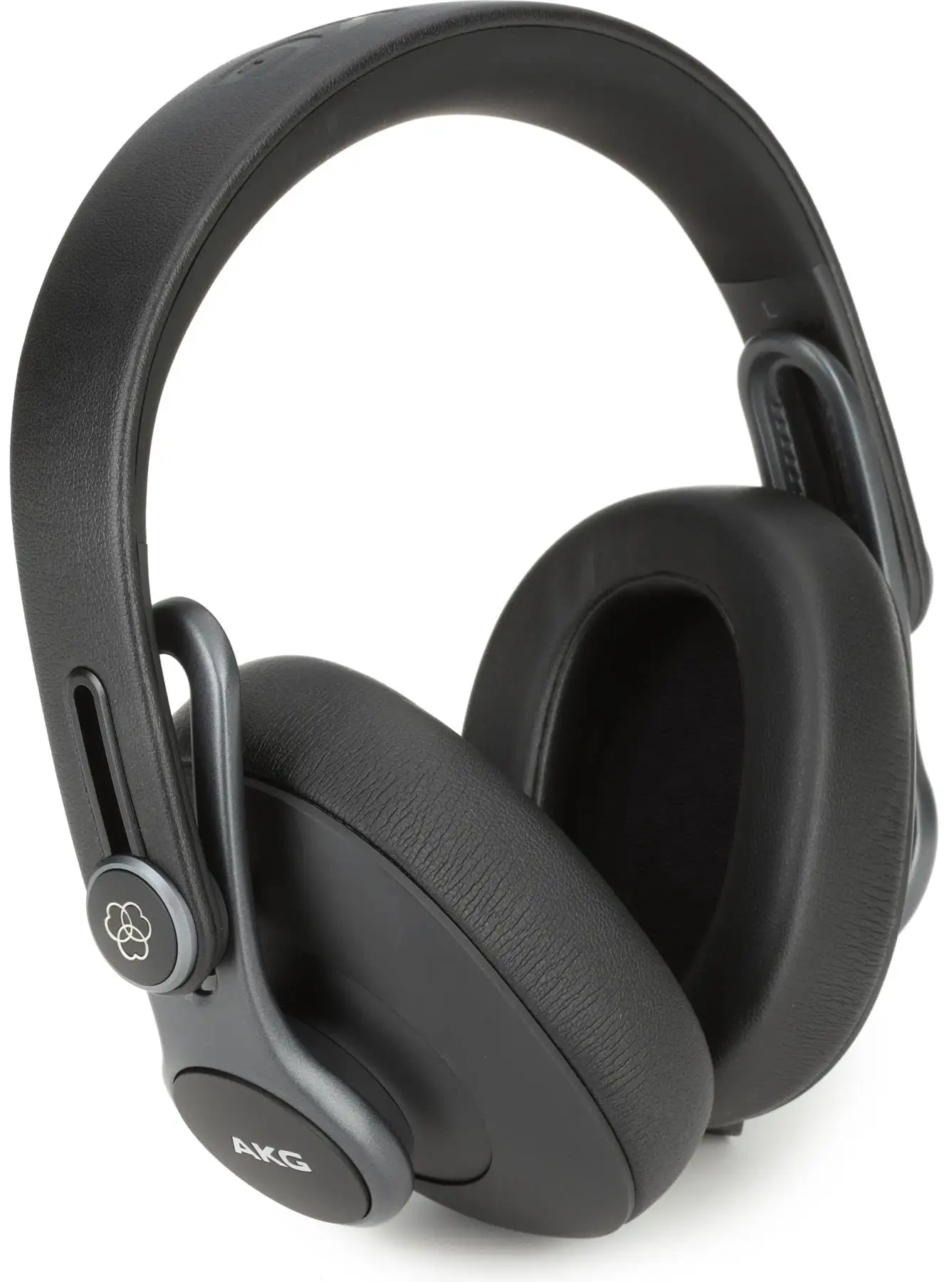
Digging into months of user reports, the AKG K371 Wired Over-Ear Closed-Back Professional Headphones emerged with a solid consensus: a refined, balanced sound that often surprises listeners at its price point. Across platforms, they average 4.4/5, translating to an investigative score of 8.8/10, with praise centering on comfort, tuning, and versatility. But repeated complaints about cables, pads, and durability temper the enthusiasm.
Quick Verdict: Conditional buy
| Pros | Cons |
|---|---|
| Balanced, detailed Harman-inspired tuning | Stock cables prone to kinks and microphonics |
| Comfortable for extended sessions | Shallow earpads can cause ear contact with drivers |
| Portable, folding design | Mediocre isolation for noisy environments |
| Accurate bass extension without boom | Reports of headband and hinge issues |
| Detachable cables, multiple lengths included | Faux leather peeling after ~1 year for some |
| Easy to drive, no amp needed | Proprietary mini-XLR limits aftermarket cable choice |
Claims vs Reality
Marketing positions the K371 as “precision-engineered to match AKG’s reference response target” with “superior isolation” and “unmatched long-wearing comfort.” While many agree that the tuned frequency curve delivers natural, balanced audio, isolation claims have been met with skepticism. Reddit user mok1n noted, “closed back, so noise isolation… has wired and bluetooth versions,” but others in studio contexts report click bleed during vocal tracking.
Comfort is widely appreciated, especially compared to rivals like Audio-Technica’s M50x. A verified buyer on Amazon wrote, “comfy leather… but can have trouble sealing, especially with glasses.” This clashes with “unmatched long-wearing comfort” when factoring in glasses wearers or those with larger ears, who hit discomfort after an hour due to shallow pads.
The “superior isolation” claim also faces reality checks — Sweetwater reviewers consistently warn it’s not ideal for drums or high-noise environments. As one put it, “even at moderate volumes… be careful of click bleed with vocalists.”
Cross-Platform Consensus
Universally Praised
Across Reddit, Amazon, and Sweetwater, tuning stories repeat: clear mids, neutral low end with impressive sub-bass extension, and non-fatiguing highs. For mixing lighter genres, one Reddit user described hearing “closer to the speaker in a room tonality” and “bass tightens up through the mid and high bass” compared to warmer, less controlled rivals. Sweetwater buyers praise the translation to studio monitors, while DJs enjoy the fullness without boom.
Portable creatives benefit from the 255g folding frame. A verified buyer on Amazon carries them “in my fanny pack” for commutes, while musicians value the detachable cable system: “if the cable is damaged, it can be replaced without replacing the entire unit.”
Gaming audiences find imaging competitive; one Amazon user stated they could “discern the direction of in-game sounds” easily.
Common Complaints
Cable quality is a recurring sore point: “kings of microphonic effect,” “cheap-feeling jacketing,” and coiled cables arriving kinked. Both Reddit and Amazon users replace them immediately, often with Hart Audio cables. Pads draw even more critique — shallow depth leading to ears touching drivers, especially for larger ears, and faux leather peeling within a year for multiple verified buyers. Comfort is conditional: long work-from-home streamers praised them, but others with head size or glasses sealing issues struggled.
Durability concerns span headbands snapping (“applying no unusual force… when the headband just broke”) and proprietary cable connectors seizing, as reported by multiple Sweetwater/Twitter reviewers.
Divisive Features
Bass tuning divides opinion. Some, like Reddit user raistlin65, loved “emphasized sub bass… very good at resolving detail,” while others found it elevated yet lacking punch in the low end, with mids recessed. A Thomann reviewer outright called them “unusable” for mixing due to a buried upper-mid/lower-treble dip, contrasting sharply with producers praising their suitability for hip hop and EDM.
Isolation also splits the crowd — acceptable for home and office, criticised for crowded studios. Comfort is similarly polarised; plush pads please smaller-eared listeners, but larger ears feel cramped.
Trust & Reliability
Trustpilot (via Sweetwater feedback) shows a stable satisfaction rate but echoes QC tales: early hinge failures, pad wear, cable connector problems. Long-term Reddit users report the sound holding up after years (“I’ve been using it in the office for about a year… still great”), with durability lowest around external materials rather than drivers. Fakespot notes “74.4% of reviews are reliable,” suggesting minimal review manipulation but acknowledging that AKG has altered/deleted some Amazon feedback.
Alternatives
The K371 sits against staples like Audio-Technica’s ATH-M50x, Beyerdynamic’s DT 770 Pro, and Sennheiser HD 280 Pro. Multiple users call it “better than M50x” thanks to mellower tuning and comfort. Compared to DT 770 Pro, the AKG reportedly offers a richer midrange but less rugged build; HD 280 offers more isolation but flatter, tighter bass.
Reddit’s headphoneadvice threads place the K371 below $400 as “easy recommendation” for agreeable tuning and portability, but for heavy mixing, some suggest moving up to AKG’s own K553 MKII or open backs like HD 600.
Price & Value
eBay listings show K371s fetching ~$119 open box, down from retail $199. Amazon’s typical price sits around $167, with dips to $150 in sales. Resale holds decently if in good condition, thanks to detachable cables and collapsible design. Community buying tips include waiting for sales, vetting pad condition on used units, and factoring in ~$30-50 for pad/cable upgrades to unlock full comfort and longevity.
FAQ
Q: Are the AKG K371 good for mixing?
A: For casual mixing and monitoring, yes — many praise their translation to speakers. But some engineers find their upper-mid dip and sub-bass lift less than ideal for critical mix work without EQ.
Q: Do they need an amp?
A: No. At 32Ω impedance and high sensitivity, they’re easy to drive from phones, laptops, and portable recorders, though some add DAC/amps for fine control.
Q: How is isolation compared to competitors?
A: Moderate. Enough for office or home tracking, but not sufficient for loud drum rooms — users report click bleed at moderate volumes.
Q: Are replacement pads available?
A: Yes, from third-parties like Brainwavz and Dekoni. Thicker pads solve ear-driver contact and may slightly alter treble.
Q: Is the Bluetooth version (K371-BT) the same sound?
A: Reports suggest minimal differences, though some hear cleaner bass and less artefacts in the wired model. BT version loses the main advantage of the wired’s detachable mini-XLR cable.
Final Verdict: Buy if you’re a mobile creative, gamer, or casual mixing engineer seeking a portable, balanced closed-back. Avoid if you demand maximum isolation, have large ears, or want a tank-like build. Pro tip from community: budget for aftermarket pads and cables — it transforms the K371 from “great” to “outstanding” without changing the core sound.





