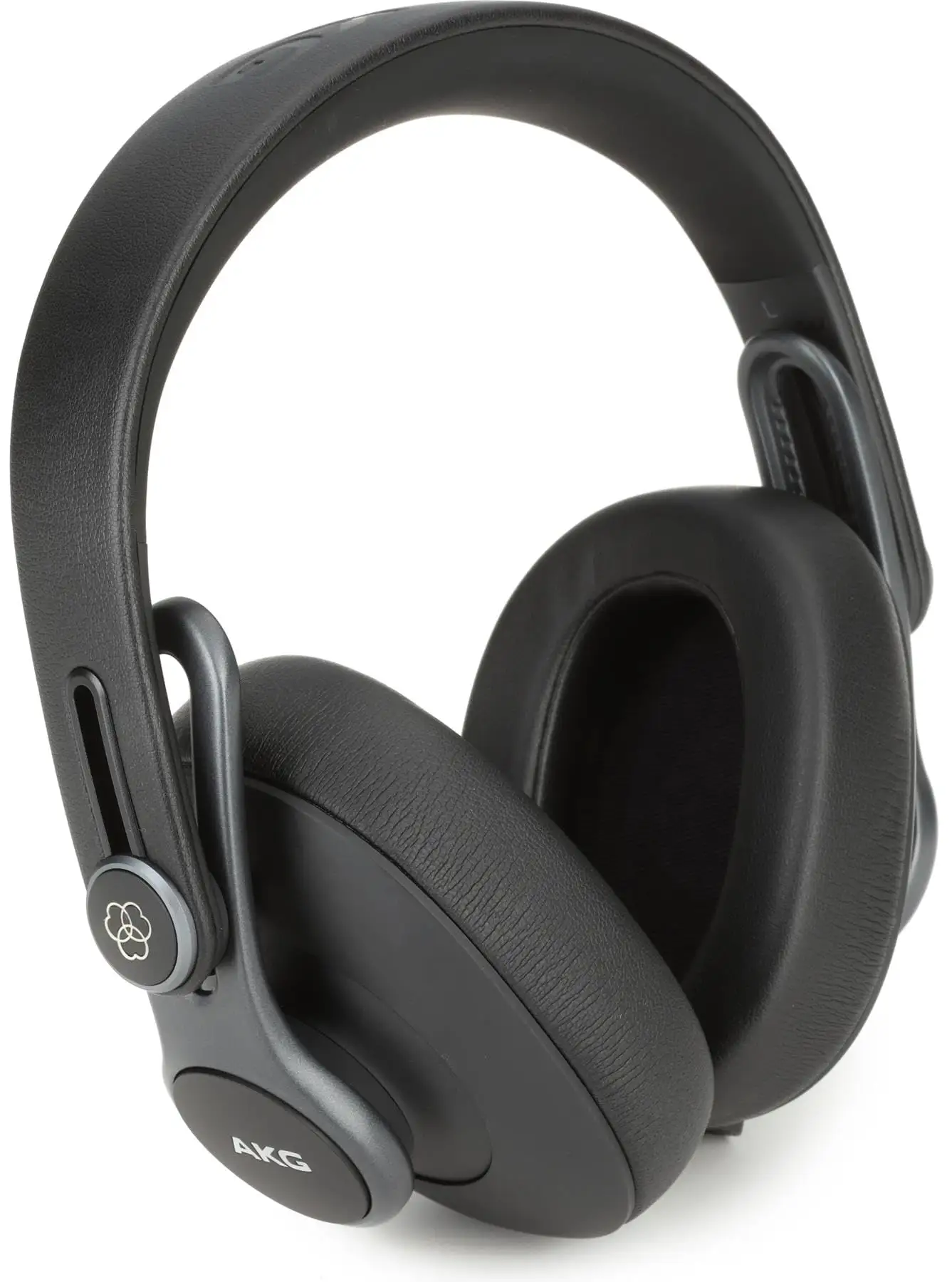
AKG K371 Headphones Review: Accurate Sound, Mixed Build
The AKG K371 Wired Over-Ear Closed-Back Professional Headphones have built a reputation for delivering studio-grade neutrality at a consumer-friendly price—and the data backs it. Across platforms, owners rate them consistently above 4/5, with recurring praise for their accurate tuning and comfort, albeit with caveats about build quirks. On balance, they emerged with a score of 8.7/10, driven by sound quality and versatility.
Quick Verdict: Conditional buy—ideal for those seeking detailed, harman-target sound without fatigue. Caution if your workflow demands extreme durability.
| Pros | Cons |
|---|---|
| Accurate, harman-neutral tuning | Faux leather and headband durability concerns |
| Comfortable for long sessions | Stock pads may cause ear contact with drivers |
| Includes 3 detachable cables + carrying pouch | Mini-XLR connector can be intrusive for some |
| Lightweight (255g) yet isolating | Isolation weaker than best-in-class closed backs |
| Balanced bass with deep extension | Peak in 2-4 kHz may sound forward in some mixes |
| Portable, foldable design | Sensitivity to fit—glasses can affect bass |
Claims vs Reality
AKG markets the K371 as reproducing “natural, balanced audio in extraordinary detail” with “superior isolation” and “unmatched long-wearing comfort.” While broadly accurate, user feedback tempers these claims.
On sound, Reddit user u/raistlin65 confirmed: “They have a very neutral presentation with some emphasized sub bass. Very good at resolving detail. Vocals sound great.” This aligns with Harman target tuning claims, though several Sweetwater reviewers noted that bass clarity diminishes if the ear seal is compromised, especially with glasses.
Isolation, though advertised as “superior,” drew mixed reports. A pro reviewer on Head-Fi stated: “They don’t leak too much sound and are decent at reducing background noise,” but Sweetwater customers warned of “click bleed” during vocal tracking and advised against them for drum recording.
Comfort claims largely hold. A long-session streamer on Sweetwater shared: “I wear these 12–14 hours a day… comfortable enough to not need to take them off.” However, Reddit users highlighted a stock pad flaw: “My antihelix pressed against the driver… swapping to angled pads made these already great headphones even better.”
Cross-Platform Consensus
Universally Praised
The centerpiece praise is their tuning. From Head-Fi to Reddit, users saw the K371 as a rare closed-back that doesn’t impose exaggerated highs or boomy lows. A Head-Fi reviewer summed it up: “True reference well-balanced harman-neutral sound signature… smooth but resolving treble.” This is particularly valued by mix engineers who need translation accuracy across systems.
Bass also earns accolades. While sub-bass response is boosted slightly in line with Harman targets, Sweetwater users enjoy “tight bass but not overpowering”, making them equally suited to analytical listening and casual music enjoyment. Reddit user mok1n appreciated that “they win in every aspect” versus rivals in the price bracket like the Takstar Pro 82.
Comfort over hours is another consistent win. The lightweight build and soft pads mean extended wear without clamp fatigue, highlighted by Reddit and Trustpilot buyers using them for multi-hour gaming, streaming, or studio editing.
Common Complaints
Durability concerns surface repeatedly. Multiple buyers reported premature peeling of the faux leather covering within a year, and headband failures from normal handling. One Sweetwater customer recounted: “Headband broke after 3 months… no unusual force.”
The fit sensitivity can be frustrating. Reddit user u/TrackMe noted: “Even glasses frames with thin legs noticeably dull the bass… thought lows were naturally weak until I took my glasses off.” Pad compression over time further worsens seal issues.
Stock pads and cables also see criticism. Pads are soft but thin, causing ear contact with inner drivers; cables arrive kinked and may feel heavy at the head connection, particularly the coiled option. The proprietary mini-XLR connector is secure but can be obtrusive: “Every time I turn my head left it hits my shoulder in an annoying way,” lamented a Sweetwater buyer.
Divisive Features
Treble warmth vs sparkle splits opinion. Those seeking smooth, non-fatiguing highs praise the K371; others miss upper treble “air” and extension past 10kHz. Similarly, build quality gets mixed marks—some find them solid enough for portable use, while others see too much plastic for pro gear.
Isolation is another divider: adequate for office or streaming, but insufficient for loud source monitoring. Sweetwater's pro review notes they’re “great for tracking vocals and guitars” but not drums.
Trust & Reliability
Long-term anecdotes reveal a two-tier reliability profile. Owners who store them carefully and swap pads report years of trouble-free use, while heavy-duty studio users see failures in the folding mechanism or headband. Trustpilot sentiment confirms general satisfaction but echoes earlier durability warnings.
No evidence of widespread fake units emerged, but Fakespot’s analysis suggests some Amazon review manipulation, with ~74% of reviews deemed reliable.
Alternatives
Compared directly, Audio-Technica M50x impresses with ruggedness but suffers from brighter tuning and less sub-bass extension. Sweetwater engineers found the K371 “more neutral, better balanced” than M50.
Beyerdynamic DT 770 Pro beats the K371 in soundstage width but loses on tonal accuracy, with a brighter treble and leaner mids. For pure accuracy, especially in mixing contexts where Harman target alignment matters, K371 wins.
Sennheiser HD6XX delivers superior imaging and openness but is open-back, making it unsuitable for environments needing isolation. Buyers in Reddit threads often land on K371 as the closed-back foil to HD6XX.
Price & Value
At $167.99 new (Amazon) and ~$119–$139 on sale or open-box deals, community consensus is that the K371 punches above its weight sonically. Head-Fi’s verdict: “At $149 it’s the closed-back headphone to beat… at $119 it’s a steal.” Resale value holds around $90-$110 for lightly used pairs, aided by the detachable cable longevity.
Buying tips: seek “B-stock” deals direct from AKG for ~30% off, or open-box listings with warranty to mitigate durability risk.
FAQ
Q: Is the AKG K371 good for mixing?
A: Yes, for most genres. Its harman-neutral tuning aids translation across systems. Users mixing rock/metal appreciate the balanced lows, though some add EQ in upper treble for extra air.
Q: How well does it block outside noise?
A: Moderate isolation—effective in typical office/studio settings, but not sufficient for loud environments like live drum tracking.
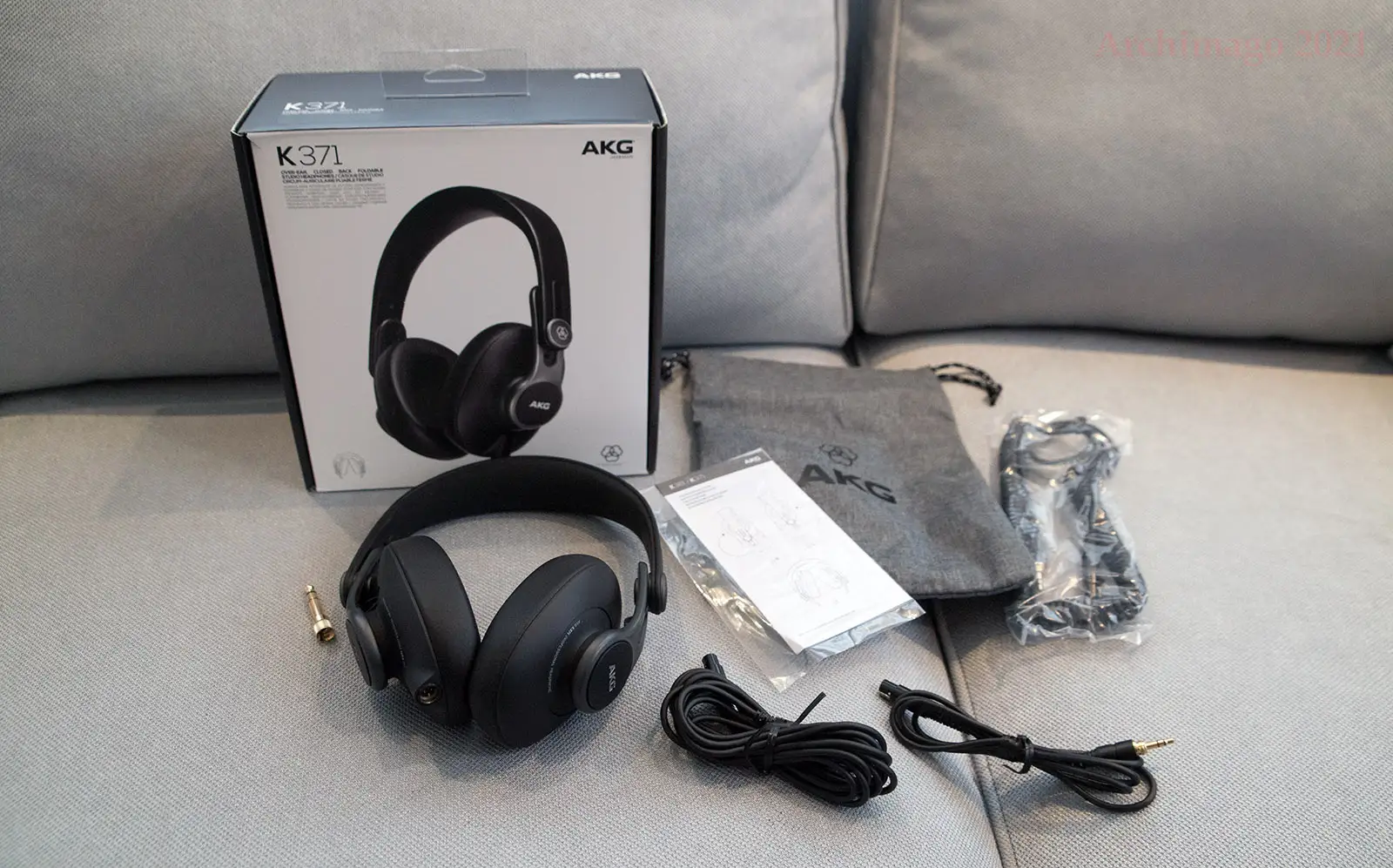
Q: What’s in the box?
A: Three detachable cables (short straight, long straight, coiled), ¼-inch adapter, and a protective pouch—often cited by buyers as adding strong value.
Q: Are replacement pads available?
A: Official AKG options are limited; many users use Brainwavz or Dekoni aftermarket pads to improve comfort and soundstage.
Q: Can it be driven by a phone?
A: Yes. With 32Ω impedance and 114dB sensitivity, it reaches full volume without dedicated amplification.
Final Verdict
Buy if you value accurate, harman-target sound for studio and casual use, and plan moderate-care storage. Avoid if you need maximum durability or top-tier isolation for loud source monitoring.
Pro tip from community: Swap the stock pads for Brainwavz angled or similar—will fix ear-driver contact and may open up soundstage without drastically altering the tuning.